
Choosing the right shelter for your vehicle is an important investment that affects your home’s functionality, value, and long-term maintenance costs. One of the most common questions Australian homeowners ask is carport vs garage: which option offers the best combination of protection, affordability, and convenience?
The answer depends on your budget, available space, local council requirements, security needs, and how you plan to use the structure. While garages provide fully enclosed storage and enhanced security, modern carports have become increasingly popular because they are more affordable, faster to install, and well suited to Australia’s diverse climate.
If you’re planning to protect your vehicle or create a functional outdoor space, this comprehensive guide compares every important factor to help you make an informed decision.
If you’re looking for a simple comparison, here’s the short answer:
| Feature | Carport | Garage |
| Initial Cost | Lower | Higher |
| Installation Time | Faster | Longer |
| Vehicle Protection | Excellent from sun, rain and hail | Maximum protection |
| Security | Moderate | Excellent |
| Ventilation | Excellent | Limited |
| Maintenance | Low | Moderate to High |
| DIY Friendly | Yes | Rarely |
| Best For | Budget-conscious homeowners | Maximum security and storage |
For many Australian homeowners, a high-quality DIY aluminium carport provides an excellent balance between affordability, durability, and weather protection without the significant cost of building a traditional garage.
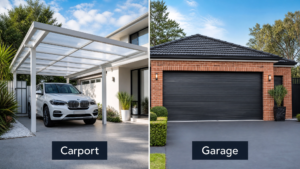
A carport is an open-sided structure designed to protect vehicles from Australia’s harsh weather conditions. Unlike a garage, a carport typically has a roof supported by posts while leaving one or more sides open.
Modern DIY carport kits have evolved significantly over the past decade. Many are manufactured using powder-coated aluminium frames with durable roofing materials such as polycarbonate, making them suitable for Australia’s demanding climate.
Carports are commonly used for:
Because they require fewer construction materials than enclosed garages, they generally cost less and can often be installed much more quickly.
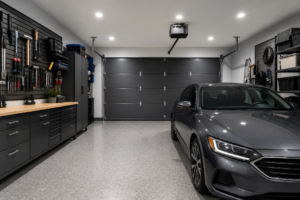
A garage is a fully enclosed structure with walls, doors, and a permanent roof. It provides complete protection for vehicles while also offering secure storage for tools, equipment, bicycles, and household belongings.
Garages may be:
Many homeowners also convert garages into workshops, gyms, hobby rooms, or additional storage areas.
Although garages provide superior security and enclosed protection, they require a much larger financial investment and often involve more complex construction and approval processes.
While both structures serve the same primary purpose of protecting vehicles, they differ in several important ways.
A carport features an open design that allows unrestricted airflow and easy vehicle access. This makes parking convenient while helping moisture evaporate more quickly after rain.
A garage, on the other hand, is completely enclosed with walls and lockable doors. This creates a secure environment but reduces natural ventilation.
Carports generally use fewer materials and have a simpler structural design. Many DIY kits include pre-engineered components that can be assembled with basic tools.
Garages require:
This increases both construction time and overall costs.
Carports offer greater flexibility because they can often be installed beside existing homes without major structural modifications.
Many homeowners also use their carport as:
Garages are less adaptable because they are enclosed and usually dedicated to storage or parking.
For most buyers, cost is the biggest deciding factor.
A DIY carport typically costs significantly less than constructing a garage because it uses fewer materials, requires less labour, and is generally quicker to install.
Some of the factors that influence pricing include:
The total cost depends on:
DIY kits reduce labour expenses substantially because homeowners can complete much of the installation themselves.
Building a garage involves considerably more expenses, including:
Additional site preparation and drainage work may also increase the overall project budget.
If your primary goal is protecting your vehicle from:
a quality carport often delivers outstanding value for money while requiring a much lower upfront investment.
Another major advantage of choosing a carport is installation speed.
Because modern DIY kits are engineered for straightforward assembly, many projects can be completed much faster than traditional building work, provided the site has been properly prepared and any required approvals are in place.
Garage construction is more time consuming because multiple stages must be completed, including:
Unexpected weather or contractor availability can further extend the project timeline.
One of the most common questions homeowners ask is whether a carport or garage requires council approval.
The answer varies depending on:
Some smaller structures may qualify for exemptions, while larger or more permanent installations may require development approval or building permits.
Before starting any project, always check the latest requirements with your local council or relevant building authority.
Australia’s climate can be extremely demanding on vehicles.
From intense summer UV radiation to heavy rain, hailstorms, coastal salt exposure, and strong winds, choosing the right protective structure is essential.
Modern aluminium carports are designed to withstand challenging Australian weather conditions when properly engineered and installed.
Benefits include:
Open-sided designs also reduce heat accumulation compared with enclosed spaces, making them particularly practical in warmer regions.
Garages offer the highest level of protection because vehicles remain fully enclosed.
They provide protection against:
However, enclosed spaces can trap heat and humidity if ventilation is inadequate, particularly during Australia’s hotter months.
When comparing carport vs garage, security is one area where garages generally have an advantage.
A garage provides:
A traditional open carport does not provide the same level of physical security, as vehicles remain accessible from one or more sides.
That said, many homeowners enhance the security of their carports by installing:
For many suburban properties, these measures provide a practical level of protection while retaining the affordability and convenience that make carports an attractive choice.
Both carports and garages offer valuable benefits, but the right choice depends on your priorities.
If your focus is affordability, quick installation, excellent ventilation, and reliable protection from Australia’s harsh weather, a modern DIY carport can be an outstanding investment.
If maximum security, enclosed storage, and additional indoor space are your highest priorities, a garage may better suit your needs despite the higher cost and longer construction time.
In the next part of this guide, we’ll compare maintenance requirements, property value, long-term durability, insurance considerations, the best option for different homeowner needs, frequently asked questions, and provide a final verdict to help you confidently decide between a carport and a garage.
When comparing carport vs garage, maintenance is another important factor that affects the long-term cost of ownership.
Because carports have a simpler structure with fewer components, they generally require less maintenance than enclosed garages. Modern aluminium carports are particularly popular in Australia because they are resistant to rust, corrosion, and termites while requiring very little upkeep.
Typical carport maintenance includes:
A well-maintained aluminium carport can provide reliable protection for many years with minimal effort.
Garages, on the other hand, often require additional maintenance such as:
Over time, these additional maintenance tasks can increase the overall cost of ownership.
Both carports and garages can have a long lifespan when constructed using quality materials and maintained properly.
Modern aluminium carports are engineered to withstand Australia’s challenging weather conditions, including strong sunlight, heavy rain, and high winds. Powder-coated aluminium frames are especially valued for their durability because they resist rust and require minimal maintenance.
Garages are also highly durable, but their lifespan depends on the quality of construction, roofing materials, foundations, and ongoing maintenance.
Ultimately, choosing high-quality materials and following the manufacturer’s maintenance recommendations will help maximise the lifespan of either option.
Many homeowners wonder whether building a carport or garage is a worthwhile investment.
The answer depends on several factors, including your property’s location, local market demand, and the quality of the structure.
A professionally designed and well-maintained carport can increase your home’s appeal by providing:
Garages may contribute more value in some markets because they provide secure parking and additional storage space. However, they also require a much larger financial investment.
For many homeowners, a stylish aluminium carport delivers an excellent balance between affordability and added property appeal.
Australia experiences a wide range of weather conditions, from tropical humidity in the north to coastal salt exposure and intense summer heat across much of the country.
Modern carports are specifically designed to help protect vehicles from:
Their open design also promotes natural airflow, reducing heat build-up around parked vehicles.
Garages offer complete enclosure, providing additional protection from dust, storms, and debris. However, enclosed spaces may become extremely hot during summer if ventilation is limited.
For many Australian households, a quality carport provides more than enough protection for everyday vehicle use while remaining cost-effective.
Choosing a carport offers several practical benefits.
Carports generally require fewer construction materials and less labour, making them a more budget-friendly option.
Many DIY carport kits are engineered for efficient installation, helping homeowners complete projects much sooner than traditional garage construction.
The open design allows air to circulate freely, reducing moisture build-up and helping vehicles dry more quickly after rain.
Carports can be used for much more than vehicle storage. Many Australian homeowners also use them as:
Powder-coated aluminium structures require minimal upkeep compared with enclosed buildings.
Despite their advantages, carports do have some limitations.
These include:
However, many homeowners address these concerns by adding lighting, security cameras, gates, or partial side panels.
Garages provide several unique benefits.
These include:
For homeowners who need secure storage for expensive equipment, a garage may be the preferred choice.
Garages also have disadvantages.
These may include:
For homeowners with limited budgets, these additional costs can be significant.
There is no single answer to the carport vs garage debate because every homeowner has different priorities.
A carport may be the better choice if you:
A garage may be more suitable if you:
Considering your lifestyle, property layout, and long-term goals will help you make the right decision.
Yes, in many cases you will need council approval for both carports and garages. Requirements vary by state, property zoning, structure size, height, and boundary distance. Some small or temporary carports may be exempt, but it is always best to check with your local council before installation.
A carport is often better for caravans, boats, and large vehicles because it offers higher clearance, easier access, and flexible sizing. Garages are usually limited in height and entry width, which can make them less practical for oversized vehicles.
Yes, in many cases a carport can be upgraded into a garage by adding walls, doors, and structural reinforcements. However, this may require additional engineering approval and council permission depending on your location
A carport is often better in hot climates because it allows natural airflow, reducing heat build-up around the vehicle. Garages can trap heat unless they are properly ventilated or insulated.
Yes, if they are engineered correctly. High-quality DIY carport kits designed for Australian conditions are built with wind-rated structures. Always choose a certified system suitable for your local wind zone and follow installation guidelines carefully.
A carport is generally easier to expand. You can extend its length, add additional bays, or modify the structure more easily than a fully enclosed garage, which often requires major structural changes.
Some insurance providers may consider garages lower risk due to added security, which can sometimes affect premiums. However, proper security measures like lighting and cameras can help reduce risk for carports as well.
A carport typically adds more flexible usable space because it can function as a shaded outdoor area for gatherings, storage, or workspace, while still protecting vehicles.
The most common mistake is focusing only on cost without considering long-term needs such as storage, security, vehicle size, and council regulations. Many homeowners later realize they needed more flexibility or space than initially planned.
Not always. While garages may add more enclosed space, a well-designed carport can provide excellent value, lower maintenance, and strong return on investment—especially when tailored to Australian weather conditions and property layouts
When evaluating carport vs garage, the best option depends on your budget, property, and lifestyle.
If your priority is maximum security, enclosed storage, and additional indoor space, a garage is a worthwhile investment. However, it comes with higher construction costs, longer installation times, and greater maintenance requirements.
For many Australian homeowners, a modern aluminium carport offers a practical and cost-effective alternative. It provides excellent protection from the sun, rain, hail, and everyday weather while being quicker to install, easier to maintain, and significantly more affordable than a traditional garage.
Whether you’re protecting a family car, caravan, boat, or 4WD, investing in a high-quality carport can enhance your property’s functionality without the complexity and expense of building a fully enclosed structure.
If you’re looking for engineered DIY carport kits designed for Australian conditions, ShadeKits offers a range of durable aluminium solutions that combine quality materials, straightforward installation, and reliable weather protection. Exploring the available options can help you find a structure that suits your property, budget, and long-term needs.
The carport vs garage decision isn’t about which structure is universally better, it’s about which one best fits your specific needs.
A garage excels in security and enclosed storage, making it ideal for homeowners who want a multifunctional indoor space. A carport, meanwhile, stands out for its affordability, ease of installation, low maintenance, and dependable protection from Australia’s harsh climate.
Before making your decision, consider your available space, budget, council requirements, and how you intend to use the structure in the years ahead. By choosing a solution that aligns with your lifestyle, you’ll make an investment that protects your vehicles while adding lasting value and convenience to your home.