
Is your outdoor area actually a sanctuary, or is it just a ticking clock before the sun turns your roofing brittle and yellow? We all know the Australian sun is relentless. Whether you’re protecting a new car or trying to enjoy a weekend barbecue, the fear of hail damage or UV exposure is always at the back of your mind. It’s frustrating when materials that looked great last year start to crack or discolour today. You might feel overwhelmed by technical jargon regarding plastic grades and UV ratings, but finding the right solution doesn’t have to be complicated.
Understanding the specific benefits of polycarbonate roofing can change how you view your home’s exterior projects. You’ll discover why this material is the superior choice for durable, UV-resistant, and DIY-friendly outdoor roofing that stands up to our harsh climate. This guide will break down the technical details and show you how to achieve a professional finish without hiring a contractor. We’ll explore how to ensure high UV protection for your family and vehicles while creating a structure that lasts well over a decade.
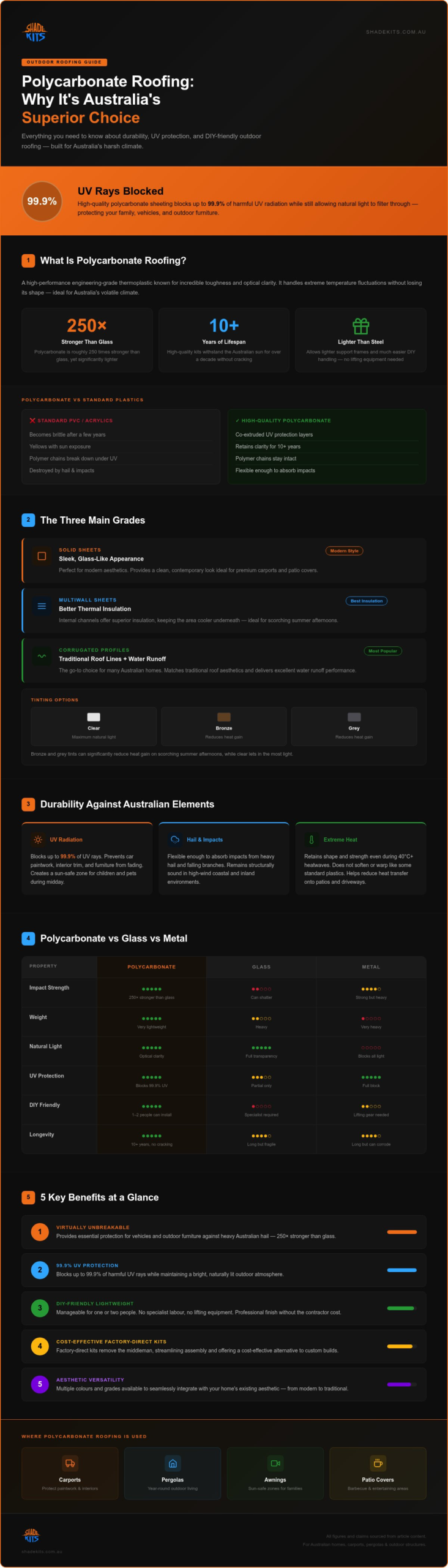
Polycarbonate is far more than just a standard sheet of plastic. It’s a high-performance thermoplastic known for its incredible toughness and optical clarity. Because of these unique polycarbonate material properties, it has become the gold standard for modern Australian outdoor structures. It’s an engineering-grade material that handles extreme temperature fluctuations without losing its shape or structural integrity, making it ideal for our local environment.
In the past, homeowners often had to choose between heavy glass that could shatter or metal sheets that blocked all natural light. Polycarbonate offers a superior middle ground. It’s roughly 250 times stronger than glass, yet it’s significantly lighter than steel. This unique combination is one of the standout benefits of polycarbonate roofing for those building carports or patio covers. It allows for lighter support frames and much easier handling during the assembly process.
You’ll see this material used across a variety of residential applications, including carports, pergolas, and awnings. It’s the preferred choice for DIY kits because it’s manageable for one or two people to install safely. By choosing this material, you get a structure that feels permanent and sturdy without the logistical headache of heavy lifting or the need for specialised lifting equipment.
Selecting the right profile depends on your project’s specific goals. Understanding the different grades is essential to maximising the benefits of polycarbonate roofing for your site. Solid sheets provide a sleek, glass-like appearance that’s perfect for modern aesthetics. Multiwall sheets feature internal channels that offer better thermal insulation, keeping the area cooler. For many Australian homes, corrugated profiles are the go-to choice because they match traditional roof lines and offer excellent water runoff. Tinting also plays a huge role; while clear sheets let in the most light, bronze or grey tints can significantly reduce heat gain on those scorching summer afternoons.
Don’t confuse polycarbonate with cheap PVC or standard acrylics. Standard plastics often become brittle and turn yellow after just a few years of sun exposure. Polycarbonate is different because it includes co-extruded UV protection layers. This chemical engineering prevents the polymer chains from breaking down under intense radiation. It’s why high-quality kits can withstand the Australian sun for over a decade without cracking. It remains flexible enough to absorb impacts, such as falling branches or heavy hail, which would destroy lesser materials or standard plastic alternatives.
Australian weather isn’t just a bit warm; it’s notoriously volatile. From scorching 40-degree heatwaves to sudden, violent hailstorms, your outdoor structures face a punishing environment. This is where the practical benefits of polycarbonate roofing really shine. Unlike traditional materials that might buckle or crack under pressure, polycarbonate is engineered for resilience. It remains structurally sound in high-wind coastal environments and inland areas alike, providing a reliable barrier that doesn’t require constant repairs after a storm.
Thermal stability is another critical factor for any Aussie homeowner. While some plastics might soften or warp when the mercury rises, polycarbonate retains its shape and strength. By selecting a roofing material that manages light transmission effectively, you also contribute to better climate control around your home. This approach supports the goals of Australian energy efficiency standards by reducing the heat transfer onto your patio or driveway, making the entire property feel more comfortable during the peak of summer.
The sun is a silent destroyer of both health and property. High-quality polycarbonate sheeting is designed to block up to 99.9% of harmful UV radiation while still allowing natural light to filter through. This protection is vital for anyone using carport kits to house their vehicles. Without it, your car’s paintwork and interior trim will eventually succumb to fade and sun damage. Beyond vehicle care, this roofing creates a genuine sun-safe zone. It allows children and pets to enjoy the outdoors during the middle of the day without the risk of direct UV exposure, effectively turning your pergola into a year-round living space.
Hail is perhaps the most feared element for Australian car owners. Traditional glass is too fragile, and standard plastics often shatter upon impact. Polycarbonate is virtually unbreakable, offering impact strength up to 250 times greater than glass. It doesn’t just block the hail; it absorbs and disperses the energy of the impact. This protective quality is a core feature of the CarCave foldable protector, which relies on the material’s flexibility and strength to safeguard high-value assets. If you’re looking for a permanent solution, exploring our range of durable carport kits is a great first step toward total peace of mind.
Choosing the right material for an outdoor structure often involves a comparison between polycarbonate, glass, and traditional metal sheets. While each has its place in Australian architecture, polycarbonate consistently comes out on top for residential DIY projects. One of the primary benefits of polycarbonate roofing is its incredible weight-to-strength ratio. Because it’s roughly half the weight of glass, it places significantly less stress on the supporting frame. This allows you to use more streamlined, cost-effective aluminium structures rather than the heavy, expensive reinforcements required for glass or thick steel.
Safety is a major factor that often gets overlooked until an accident happens. Glass, even when tempered, poses a risk of shattering into dangerous shards if hit by a heavy object. Metal roofing, while sturdy, can have incredibly sharp edges that make handling difficult for the average homeowner. Polycarbonate is a non-shattering material. It’s easy to cut and move into place, making it the safest option for a weekend project. Additionally, the ability of these sheets to transmit natural light reduces the need for artificial lighting under your patio or carport, lowering your energy usage over time.
From a financial perspective, factory-direct kits offer a clear advantage. When you factor in the initial purchase price, the lack of specialised installation equipment needed, and the minimal long-term maintenance, polycarbonate is hard to beat. It provides a premium look and high performance without the “custom-build” price tag often associated with architectural glass or professional metal roofing installations.
Traditional metal roofing is common across Australia, but it has distinct limitations for outdoor living areas. The most obvious is the total loss of natural light. A metal roof creates a dark “cave” effect, whereas polycarbonate keeps the area bright and inviting. Noise is another consideration. During a heavy downpour, the sound of rain on a metal roof can be deafening, making conversation nearly impossible. Polycarbonate tends to dampen this sound more effectively. Furthermore, metal absorbs and radiates heat downwards, which can make a carport feel like an oven on a mid-summer afternoon.
While glass looks stunning, it’s rarely practical for a DIY enthusiast. The weight alone usually requires professional cranes or multiple workers to install safely. Polycarbonate offers a similar aesthetic of transparency but with far greater flexibility. It can be curved to fit specific designs that glass simply cannot match without extremely expensive custom fabrication. By choosing a high-quality kit, you’re getting the clarity and style of glass with the impact resistance and ease of use that only an engineering-grade thermoplastic can provide.
Outdoor living is a core part of the Australian identity. Whether it’s a Sunday brunch or a quiet evening outside, your environment dictates your comfort. One of the most significant lifestyle-focused benefits of polycarbonate roofing is the ability to reclaim your outdoor space regardless of the forecast. It turns a weather-dependent deck into a reliable extension of your home. You’re no longer forced inside by a sudden afternoon shower or the intense midday heat.
A common concern with traditional extensions is the “cave effect” where adjacent indoor rooms lose their natural light. Polycarbonate solves this by allowing sunlight to permeate through to your windows. This maintains a bright, airy feel inside your kitchen or lounge room while providing full overhead protection outside. It effectively blurs the line between your interior and exterior, creating a cohesive flow that makes your property feel much larger. This transparency is one of the key benefits of polycarbonate roofing that metal alternatives simply cannot provide.
Maintaining these structures is remarkably simple, which is perfect for busy families. You don’t need to worry about the constant painting or staining required by timber pergolas. A simple rinse with a garden hose and a soft sponge with mild soapy water will keep the panels clear and functional for years. This low-maintenance profile ensures your weekend is spent relaxing under the roof rather than working on it. It’s a pragmatic solution for those who value long-term value without the ongoing elbow grease.
Thermal comfort is essential for any patio or deck. Multiwall sheets are particularly effective here because they contain internal air channels that provide a layer of insulation. This helps regulate the temperature beneath the structure. By choosing specific solar tints, you can block out the harsh glare of the midday sun without losing visibility. Pairing these panels with aluminium pergola kits creates a ventilated, shaded sanctuary that remains comfortable even on a humid afternoon. It’s about creating a space where you actually want to spend time.
Achieving a premium look is easier than ever with modern materials. Flat-panel designs offer a contemporary aesthetic that mimics the appearance of high-end glass. When these panels are integrated with precision-engineered aluminium frames, the result is a sophisticated structure that enhances your home’s kerb appeal. High-quality outdoor additions are known to boost property value, as they provide a finished, functional space that buyers find highly desirable. Ready to upgrade your backyard? Browse our range of DIY patio covers and pergola kits to find the perfect match for your home.
Choosing a factory-direct kit is the most efficient way to secure the benefits of polycarbonate roofing without the inflated costs of a custom architectural build. By opting for a pre-engineered solution, you eliminate the guesswork involved in material compatibility. High-quality kits are designed so that the polycarbonate sheets and the aluminium frames work in perfect harmony, ensuring that every screw hole and join aligns correctly. This “dream team” of materials is ideal for the Australian climate because neither component will rust, rot, or succumb to termite damage, providing a maintenance-free life cycle that spans decades.
When planning your project, accurate measurement is your best friend. You’ll need to decide on a roof profile that suits your home’s existing lines. Corrugated sheets offer a classic look, while flat or multiwall panels provide a more contemporary finish. Beyond aesthetics, check the UV ratings of the specific kit you’re considering. A quality kit should offer 99.9% UV protection to ensure the longevity of the panels and the safety of everything underneath. Selecting a kit that includes all necessary fixings and flashing ensures you won’t have to make multiple trips to the hardware store mid-project.
Pre-cut sheets are a game-changer for the weekend warrior. They significantly reduce the time and labour required to get your structure standing. Following a well-structured carport kit guide allows you to achieve professional results with just a few standard tools, such as a cordless drill, a spirit level, and a tape measure. One critical tip for success is accounting for thermal expansion. Polycarbonate expands and contracts with temperature changes, so using slightly oversized pre-drilled holes for your fixings prevents the sheets from warping or “popping” during a heatwave. Correct screw placement, typically on the crest of the wave for corrugated profiles, ensures a watertight seal that lasts.
While polycarbonate is incredibly durable, a little bit of care goes a long way. To keep the panels looking crystal clear, avoid using harsh chemicals or abrasive brushes that could scratch the UV-protective coating. A simple mixture of mild soapy water and a soft sponge is usually all that’s required. It’s also a good habit to check your seals and fixings after extreme weather events like a severe hailstorm or high-wind gale. Ensuring your gutters and drainage channels remain clear of leaf litter will prevent water from backing up, which is essential for maintaining the structural integrity of your patio or carport over the long term.
Investing in a high-quality roofing solution is about more than just shelter. It’s about creating a functional, sun-safe environment that adds genuine value to your property. By choosing engineering-grade materials, you ensure your carport or pergola remains a permanent fixture that won’t yellow or crack under the intense Australian sun. The benefits of polycarbonate roofing extend from its incredible hail resistance to the simple, stress-free nature of a DIY installation.
You don’t need to be a professional builder to achieve a premium finish. With factory-direct pricing and UV-resistant materials designed specifically for our local conditions, you can protect your vehicles and family with confidence. We provide Australia-wide shipping to help you get your project started without the typical middleman markups. Take the next step toward a more comfortable home and explore our range of durable DIY Carport and Pergola Kits. You’ll be surprised at how easily a single weekend project can transform your outdoor lifestyle for years to come.
No, high-quality polycarbonate is specifically engineered for UV resistance. It features a co-extruded protective layer that stops the polymer chains from breaking down over time. This ensures the sheets remain flexible and clear rather than turning yellow or brittle. Shade Kits uses panels that block 99.9% of harmful UV radiation. This level of protection is essential for the longevity of your carport or pergola in harsh local conditions.
While it produces some sound during heavy downpours, it’s generally much quieter than traditional corrugated metal roofing. The material’s natural flexibility helps to dampen the impact of raindrops rather than amplifying them. If you’re concerned about noise, choosing multiwall profiles can provide even better sound insulation. This makes it easier to maintain a conversation in your outdoor entertainment area during a typical Australian summer storm without being drowned out.
You can expect a professional-grade polycarbonate roof to last between 10 and 15 years with basic maintenance. The total lifespan depends on the quality of the UV protection layer and the structural integrity of the frame. Because Shade Kits pairs these panels with durable aluminium frames, the overall structure resists rust and environmental wear. This ensures you get maximum value from the benefits of polycarbonate roofing over its long life cycle.
No, you should never walk directly on polycarbonate sheets. While they are virtually unbreakable and impact-resistant, they aren’t designed to support the concentrated weight of a person. Walking on them can cause structural damage or scratch the UV-protective surface. For installation or cleaning, always use crawl boards or a sturdy ladder that spans the supporting rafters. This allows you to distribute your weight safely across the aluminium frame without damaging the panels.
Yes, it blocks heat effectively, though the performance depends on the specific tint and profile you choose. Clear sheets allow for high light transmission but let in more heat, while tinted or multiwall options reflect more infrared radiation. This allows you to enjoy a bright, natural atmosphere without the scorching temperatures associated with direct sunlight. It’s a great way to maintain a comfortable temperature for your family and vehicles throughout the year.
Cutting these sheets is a straightforward task for most DIY enthusiasts. You can use a fine-tooth circular saw or a jigsaw with a blade designed for plastics to achieve a clean edge. It’s important to keep the protective film on during the cutting process to prevent surface scratches. This flexibility is one of the key benefits of polycarbonate roofing, as it allows you to tailor your kit to any unique site requirements easily.
Bronze, grey, or solar-tinted sheets are generally the best choices for heat reduction. These darker tints absorb and reflect more solar energy than clear or opal alternatives. If you want to keep your patio or carport as cool as possible, a grey tint is often the most effective. It provides a sleek aesthetic while significantly lowering the temperature underneath, making it a pragmatic choice for homes across the country.
Regular cleaning is the most effective way to prevent organic growth. You should rinse your roof every few months with a garden hose to remove dust and leaf litter that can trap moisture. If you notice algae forming, use a soft sponge with mild, non-abrasive soapy water to gently wipe the area. Avoid using high-pressure washers or harsh chemicals, as these can strip the UV coating and reduce the material’s overall lifespan.