
Could a patio roof block harsh sun yet make the space too dark or hot to enjoy? Choosing UV resistant patio covers isn’t just about the roofing material. Protection also depends on the product specifications, how the cover suits your site and how well you maintain it over time.
You may want more than shade. Natural light, airflow and shelter from changing weather can all matter. But “UV-resistant” doesn’t tell you exactly how a product performs, and materials can differ. Check the product information rather than relying on a label alone.
This guide explains what UV resistance means, compares common patio-cover materials and highlights what to check before choosing a shade solution. You’ll also learn how to balance sun protection with daylight and ventilation, assess your site and plan for installation and care. If you’re considering a DIY option, purpose-designed kits can pair UV-resistant polycarbonate roofing with an aluminium frame.
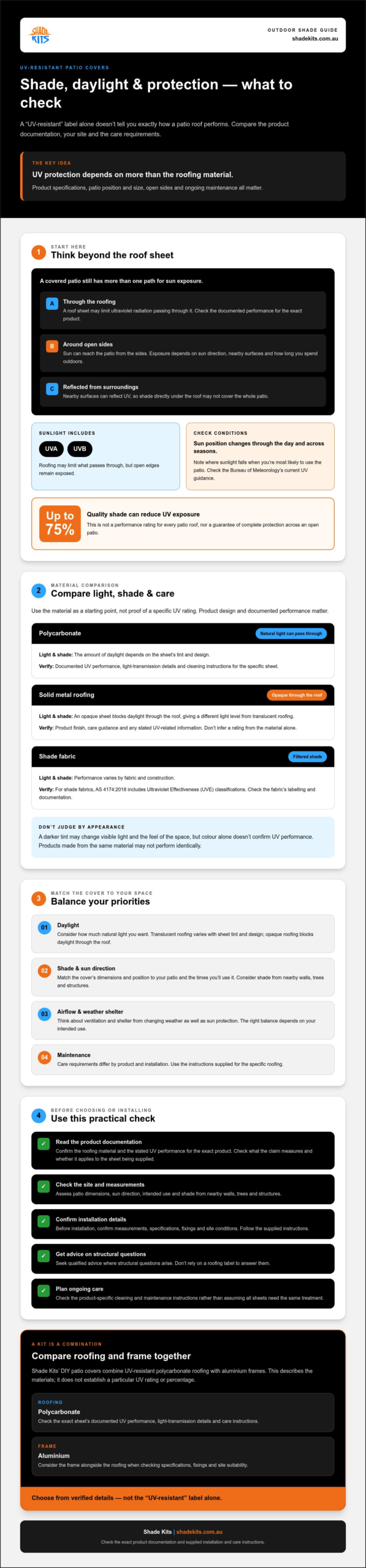
UV-resistant roofing is designed to limit ultraviolet radiation passing through the roof sheet, but the term alone doesn’t explain how much is reduced. Unless current product documentation specifies its performance, don’t assume the cover blocks all UV. Sun can also reach the patio from the sides, depending on its direction, nearby surfaces and how long you spend outdoors.
UV-resistant roofing can help reduce UV exposure through the covered area, but it doesn’t guarantee complete protection across an open patio. The roof is only one part of the solution. Its position and size, along with the surrounding environment, affect the shade you experience.
Sunlight includes UVA and UVB, two types of ultraviolet radiation. A roof sheet may limit what passes through it, but open edges remain exposed to direct sunlight. UV can also reflect from nearby surfaces, so shade directly under the roof may not extend across the whole patio.
Conditions change throughout the day and across seasons. Check the Bureau of Meteorology’s current UV guidance when planning outdoor time in Australia. Also note where sunlight falls on your patio at the times you’re most likely to use it.
Look for manufacturer documentation that identifies the roofing material and explains its UV performance. Check that the information applies to the specific sheet or product you’re considering. Don’t assume every product made from the same material performs identically. If a claim includes a rating or percentage, check its meaning and basis in current product documentation.
Appearance isn’t proof. A darker tint may affect visible light and the feel of the space, but colour alone doesn’t confirm UV performance. Polycarbonate is a transparent and durable material, but a general overview of Polycarbonates (PC) isn’t evidence of a particular roofing product’s UV rating.
Separate documented product properties from assumptions before choosing a cover. Ask what the stated performance measures, whether it applies to the roofing supplied and what shade to expect around the patio’s open sides. This gives you a sounder basis for comparing options than treating “UV-resistant” as a promise of total protection.
Roofing material affects how much daylight enters and how shaded the area feels, but the material name alone doesn’t establish a specific level of UV protection. Product design and documented performance matter. Choose based on the roofing’s verified specifications, not its appearance alone.
Use this comparison as a starting point, then check the technical documents for the exact product. Care requirements vary by product and installation, so follow the supplied instructions rather than assuming all roofing of one type needs the same treatment.
| Roofing type | Light and shade | Maintenance and details to verify |
|---|---|---|
| Polycarbonate | Can let natural light through. The amount depends on the sheet’s tint and design. | Check documented UV performance, light-transmission details and cleaning instructions for the specific sheet. |
| Solid metal roofing | An opaque sheet blocks daylight through the roof, creating a different light level from translucent roofing. | Check the product’s finish, care guidance and any stated UV-related information. Don’t infer a rating from the material alone. |
| Shade fabric | Provides filtered shade, with performance varying by fabric and construction. | For shade fabrics, AS 4174:2018 includes Ultraviolet Effectiveness (UVE) classifications. Check the fabric’s labelling and documentation. |
Shade Kits’ DIY patio covers use UV-resistant polycarbonate roofing with aluminium frames. This identifies the material category, but it doesn’t establish a particular UV rating or percentage. Before choosing, review current technical documents for the exact roofing supplied and confirm what its stated UV performance measures.
Consider how you’ll use the patio. Clearer or more translucent roofing may suit a space where daylight matters, while a more shaded feel may better suit long periods outdoors. The Cancer Council explains that quality shade is an important part of sun protection and can reduce UV exposure by up to 75%. That figure relates to shade generally, not a guarantee for a particular patio roof or site.
Colour and translucency influence the amount and quality of daylight beneath a cover. Consider how the space looks at the times you’ll use it, but don’t treat appearance as proof of UV performance. Check cleaning guidance and care requirements before purchase, especially if the patio is exposed to dust, leaves or other debris.
Compare the roofing with the frame and overall structure. If you’re considering a DIY patio cover, review Shade Kits’ product information alongside your site’s daylight and shade needs.
The right cover depends on how the patio works for your household, not just its roofing material. Before comparing options, map the space and note when sunlight reaches it. This can help you decide where shade matters most and whether you want to preserve daylight indoors or overhead.
A dining area may need shade over the table during mealtimes, while an entertaining space may call for a balance of shelter and airflow. Think about how the cover will feel across different seasons. Privacy, reflected light from nearby surfaces and access for cleaning can also affect your choice.
Sketch the proposed covered area and mark doors, windows, steps, outdoor furniture and obstacles such as pipes or branches. Then consider:
Walls, trees and neighbouring structures can change the shade across the day. A tree might shade one section in the afternoon but leave another exposed earlier. Nearby walls can block sunlight or reflect light into the space, so don’t assume the whole patio has the same conditions.
If you’re comparing a roofed patio cover with an aluminium awning, consider which option suits the area you want covered, your preferred level of shelter and how you’ll use the space.
Observe the patio at different times of day before settling on a design. Note where direct sunlight falls, when the space becomes too bright or warm for comfort, and whether the pattern changes with the seasons. These observations can help you choose a suitable footprint and decide whether you may need additional shade at the sides.
Check likely fixing locations and the condition of the supporting structure. Don’t guess whether a wall, fascia or other part of the home can carry the proposed loads. Seek qualified advice if you’re uncertain about structural suitability or fixings.
Verify the approval and building requirements that apply to your project with your local council or a suitable building professional. Requirements can depend on the site and proposed structure. Checking early helps you assess UV resistant patio covers against practical site constraints, not just appearance and shade preference.
Good performance starts before assembly. Even roofing designed to resist UV can’t compensate for incorrect measurements, unsuitable fixings or poor upkeep. Use this checklist to plan the work and identify questions to resolve before installation.
Follow the supplied instructions in sequence, including guidance on handling roofing sheets and securing frame components. DIY kits can be designed for straightforward self-installation, but you still need to confirm that the project suits your site. Stop if measurements, fixing details or structural conditions don’t match the instructions. Get appropriate advice before proceeding.
At sensible intervals, visually check the roofing, joins and fixings for damage, movement or anything that appears loose. Pay attention after severe weather or if you notice a change, such as a sheet shifting or water entering where it didn’t before. Don’t climb onto the roof to inspect it unless the manufacturer’s instructions and safe access arrangements allow this.
Clean the roofing and frame only with methods and products approved by the manufacturer. Abrasive tools or unsuitable cleaners may damage surfaces, so check the care instructions first. Appropriate care can help you spot issues early, but don’t assume a fixed lifespan. Exposure, installation quality and maintenance all affect how materials perform over time.
Shade Kits supplies DIY patio covers with aluminium frames and UV-resistant polycarbonate roofing. If you’re comparing options for a self-install project, explore Shade Kits’ patio-cover options and review the specifications and instructions for the kit you’re considering.
A suitable kit brings several decisions together: documented UV performance, roofing material, frame, shade requirements and a realistic installation plan. A label or material description is just a starting point. Check the exact product specifications and consider how the proposed cover will work with your home, site conditions and intended use.
Shade Kits’ DIY patio covers combine UV-resistant polycarbonate roofing with aluminium frames. These are kit attributes, but they don’t mean every kit has identical dimensions or performance. Review information for the particular option you’re considering, including roofing details, frame components and assembly instructions.
A kit may suit you if you’re comfortable following assembly instructions and can organise the tools, safe access and help the job requires. Shade Kits supplies DIY kits, not on-site installation labour. Consider the project’s complexity before starting, and seek qualified advice if you’re uncertain about the supporting structure, fixing points or other structural requirements.
These checks help you compare UV resistant patio covers based on evidence and suitability, not appearance alone. They can also reveal unanswered questions before you commit to a design or begin assembly. If the documentation doesn’t clarify a product claim, check with the supplier before deciding.
For a DIY project, review the kit information alongside your measurements and installation plan. Explore patio-cover and outdoor shade options from Shade Kits as you compare what may suit your home.
Choosing UV resistant patio covers involves more than selecting a roofing material. Check the product’s documented UV properties, then consider how the roof, frame and open sides will work with your patio’s sunlight, shade and everyday use. Careful measurements and a clear installation plan help you assess whether an option suits your home.
For a DIY approach, Shade Kits’ patio-cover kits feature aluminium frames and UV-resistant polycarbonate roofing, and are designed for straightforward self-installation. Review the exact specifications and instructions for the kit you’re considering. Seek qualified advice if you have questions about the structure or installation requirements.
Ready to compare options? Explore practical outdoor shade options from Shade Kits and use what you’ve learned to narrow down a solution for your space and priorities. With the right checks in place, you can plan a more comfortable outdoor area with greater confidence.
UV-resistant roofing is made to resist or reduce the effects of ultraviolet exposure, but the term doesn’t mean all UV is blocked. Check the manufacturer’s technical information for the exact roofing product rather than relying on its label or appearance. Shade also depends on the cover’s size and position, nearby structures and the sun’s angle. Open sides and reflected sunlight can leave parts of a patio exposed.
Not necessarily. Polycarbonate roofing products can have different specifications, so check current manufacturer documentation for the exact sheet you’re considering. Don’t assume every product performs identically based on material alone. A roof can provide shade while sunlight still enters through open sides or reflects from nearby surfaces. If the stated UV performance or its meaning isn’t clear, ask the supplier for product-specific information before deciding.
Start by measuring the patio and observing where direct sunlight falls at the times you use the space. Decide how much shade, daylight and airflow you want, then compare roofing specifications, frame suitability and care requirements. Check that the proposed cover suits your site and intended use. Before buying, review the assembly instructions and ask your local council or a qualified professional about any project-specific approval or building requirements.
Polycarbonate is used for outdoor roofing, including the UV-resistant roofing supplied with Shade Kits’ DIY patio covers. Whether a particular product suits your home depends on its documented specifications, site conditions and how you’ll use the patio. Consider how much daylight and shade you want, along with ventilation and maintenance. Check current product information for the specific roofing option rather than assuming all polycarbonate sheets have the same properties.
There isn’t one lifespan that applies to all patio roofing. Exposure, product specifications, site conditions, installation and maintenance can affect performance over time. Check the manufacturer’s current documentation for guidance specific to the roofing you’re considering, and follow its care instructions. Periodically inspect the roof and fixings for visible damage or movement. A general UV-resistant description isn’t a durability guarantee, so don’t rely on it as a promise of service life.
A DIY kit may suit you if you’re comfortable following assembly instructions and can work safely, but site and structural requirements vary. Before starting, confirm measurements, fixing locations, site conditions and any applicable approvals. Shade Kits supplies DIY kits designed for straightforward self-installation, but doesn’t provide on-site installation labour. If you’re unsure whether the structure or fixings are suitable, pause and seek qualified advice before assembling the cover.