
The largest structure isn’t always the best fit. When comparing DIY outdoor shade kits Australia homeowners can choose from, start with what needs shade and how you’ll use the space, not just the area you want to cover. A carport, pergola and awning each serve a different purpose, so the right option depends on your plans.
Look beyond appearance before ordering. Sun and wind exposure, available ground or wall space, site preparation and structural requirements can all affect whether a kit suits your home. Approval rules can also vary by location, so check with your local council before you begin.
This guide will help you match a carport, pergola or awning kit to your intended use and site conditions. You’ll learn what to check about your space, materials and assembly, and where to find product information. With a clear plan, you can decide whether a DIY project is a practical fit for your skills and property.
A DIY outdoor shade kit is a packaged structure intended for homeowner assembly. Components, instructions and configurations vary, so check what’s supplied rather than assuming everything needed for your site is included. Options include carports, pergolas, awnings and patio covers. Each can provide shade, but they suit different spaces and uses.
Start by deciding what needs covering, how much room is available and what weather exposure the site receives. A parking area has different requirements from an outdoor living space or a small area beside a doorway. Let the intended use guide your shortlist before comparing kit details.
Carports are intended to cover vehicles, but a particular design won’t suit every property. Consider the space needed for vehicle access and movement, as well as where the structure could sit. For more on vehicle-covering structures, read the DIY carport kits Australia guide.
Pergolas and patio covers are commonly used to create shade over outdoor living areas. Their level of shelter depends on the roof configuration, so check whether the design suits how you plan to use the space. Awnings can provide more targeted cover over an opening or selected area, depending on their design and where they can be fixed.
Shade sails are another type of outdoor shade structure. They use tensioned fabric rather than a framed roof. The Shade sails overview provides background on their materials and installation methods. They’re distinct from the carport, pergola, awning and patio-cover kits discussed here.
A kit is supplied for assembly, but inclusions vary. Before ordering, confirm the current dimensions, frame and roof components, fixings, instructions and any other items specified for that kit. Shade Kits’ kits feature aluminium frames and UV-resistant polycarbonate roofing. Check the details of the configuration you’re considering rather than assuming every option is identical.
DIY supply doesn’t necessarily include installation labour or site preparation. Establish what work your site requires and whether you have the skills, tools and help to manage assembly safely. Factory-direct supply may suit homeowners comfortable coordinating their own project, while Australia-wide delivery makes kit options available across the country. Confirm the kit and site requirements before committing.
A suitable location depends on more than the available footprint. Track where direct sun falls in the morning and afternoon, and note how nearby walls, trees and buildings affect shade and airflow. This helps you judge whether a structure will cover the area when you need it, rather than simply fit the space.
Consider exposure and the proposed kit configuration together. Local sun, wind and rain conditions can affect where a structure belongs and what its documentation needs to address.
Observe the site at different times of day. A spot shaded in the morning may receive direct afternoon sun, while a nearby building can funnel wind or shelter one side of the area. Consider UV exposure and heat, as well as rain, wind and possible hail. These are site factors to assess, not guarantees that a particular kit will withstand them.
Rainfall and wind exposure can affect drainage, fixing points and anchoring requirements. Before choosing a location or configuration, check the manufacturer’s documentation for guidance relevant to the proposed structure and site. If the information doesn’t address your conditions, clarify whether further assessment may be needed before proceeding.
Shade Kits’ kits feature aluminium frames and UV-resistant polycarbonate roofing. Aluminium forms the frame, while the roofing material is designed to resist UV exposure. These material descriptions don’t establish a specific lifespan or confirm suitability for every location. Review the details for the exact kit and consider how you’ll inspect and maintain it over time.
Roof coverage also affects the shade beneath a structure. For health guidance, quality shade for UV protection is discussed by Cancer Council Australia, which notes that good-quality shade can reduce UV exposure by up to 75%. This is general shade guidance, not a performance rating for a particular kit. If you’re considering a pergola for outdoor living, check its roof configuration and site requirements alongside the material information.
The right fit depends on what you want to shade and where a structure can sit. Use this comparison to narrow your options, then confirm the proposed kit’s dimensions, roof configuration and site requirements before ordering.
| Kit type | Primary use | Typical placement | Roof coverage | Key site checks |
|---|---|---|---|---|
| Carport | Shade for a vehicle | Parking area with suitable vehicle access | Overhead cover, depending on the design | Vehicle dimensions, access path, parking position and available footprint |
| Pergola or patio cover | Outdoor dining or seating | Over a patio, deck or other outdoor living area | Varies by kit and roof configuration | Seating layout, connection points, drainage and intended level of shelter |
| Awning | Targeted shade over an opening or selected area | Attached to a suitable part of the home, subject to kit design | Focused coverage for the area the awning is designed to serve | Suitable fixing surface, projection, clearance and intended application |
Start with the main purpose. If you want cover for a vehicle, a carport is the relevant category to investigate. If you’re creating a shaded spot for another activity, compare structures intended for that use instead. Measure the vehicle, allow for its access path and mark the parking position to assess how much space the structure needs to cover.
Every design and site is different, so check dimensions and requirements rather than assuming a carport will fit. Browse carport kit options for category information, and refer to the dedicated carport guide for more detailed planning advice.
For outdoor dining or seating, compare a pergola or patio cover with the layout of the area and the kit’s roof configuration. An open design may provide a different experience from a roofed option, so confirm the actual coverage rather than relying on the product category alone.
An awning may suit a specific opening or smaller area where targeted shade is the goal. Check that the selected kit is intended for that application and that the proposed fixing location is suitable. With DIY outdoor shade kits Australia offers, the useful comparison isn’t which type is universally best. It’s which design, coverage and placement match your needs and site constraints.
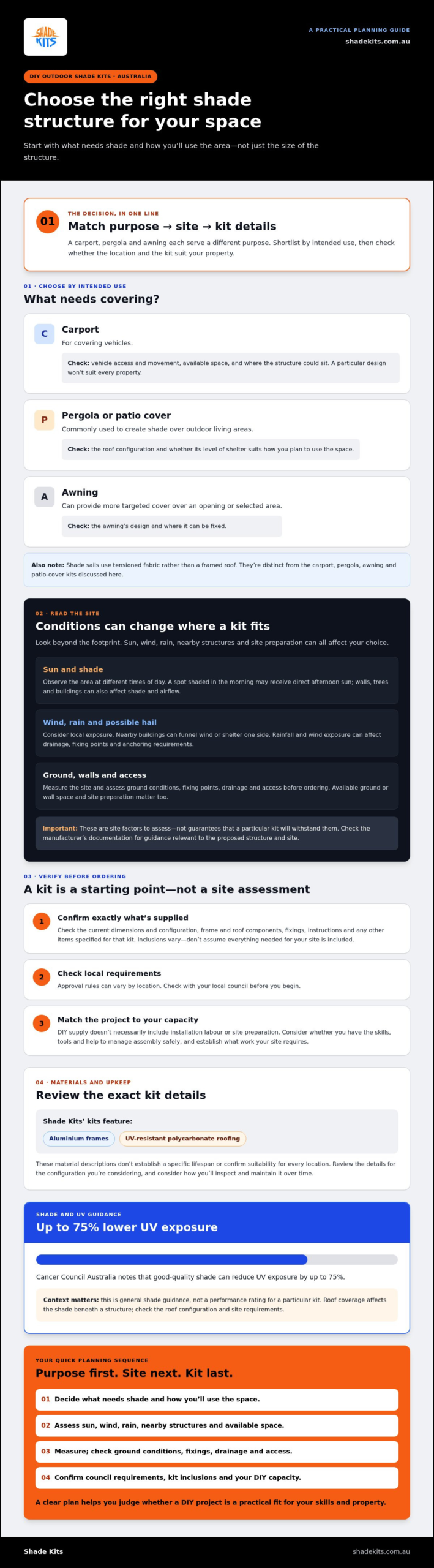
A site check before choosing a kit can help prevent a mismatch between the structure and your property. Work through the decisions in order: define the intended use, measure the space, assess site conditions, check approval requirements, then confirm the kit details. This helps identify constraints before you settle on a design.
Record the proposed footprint and available clearance, including access for people, vehicles or equipment. Note nearby doors, windows, paths and visible services that could affect placement or use. Measure for how you’ll use the area, not just the roof dimensions shown for a kit.
Next, check the proposed fixing locations and ground conditions against the kit instructions. Soil, existing paving and concrete may each affect the preparation or fixing approach, so don’t assume they’re interchangeable. Identify where rainwater currently flows and consider how the structure could change drainage or direct runoff. If any site condition is unclear, seek a site-specific assessment before proceeding.
Approval requirements depend on the project and its jurisdiction, so confirm them with your local council or a qualified professional before committing to a design. Ask whether your proposed structure, placement and dimensions trigger local planning or building requirements. Check current National Construction Code information and relevant official guidance, then verify how they apply to your project rather than relying on a general rule.
Before ordering, match the proposed design with the manufacturer’s current documentation. Confirm its dimensions, configuration, supplied components, fixing instructions and any site conditions specified for that kit. For DIY outdoor shade kits Australia homeowners should also consider the assembly task realistically: check the required tools, whether you’ll need assistance and whether you can work safely at the proposed location. Kit supply doesn’t necessarily include site preparation or installation labour.
Pause if the ground, fixing points, drainage or approval pathway remains uncertain. Resolving those questions first can help you decide whether the project suits your skills and site, or whether you need further advice. Once you’ve completed these checks, explore DIY shade kit options and compare the available product information with your site notes.
Before choosing a kit, bring the main decisions together: what you need to shade, the available space, local exposure, approval requirements, documented kit details and your capacity to manage assembly. Use this checklist to compare options against your actual project rather than choosing by appearance alone.
Ask for current dimensions, available configuration options, component inclusions and assembly documentation. Check these details against your measurements and any advice you’ve received about the site or approvals. If something isn’t clear, ask for clarification before ordering rather than assuming the kit will suit your conditions.
Shade Kits supplies factory-direct DIY kits with aluminium frames and UV-resistant polycarbonate roofing, alongside customisable options. These features describe the materials and options available, not a guarantee of suitability for every site. Confirm the specifications for the kit you’re considering. Shade Kits also offers Australia-wide delivery. Check delivery coverage and practical arrangements for your project before ordering. DIY kit supply doesn’t mean installation labour is included.
Shortlist the structure type that matches your main purpose, then review the relevant product information alongside your site notes. If vehicle shade is your priority, start by comparing DIY carport kit options with your available space, access and project requirements.
There’s no need to rush the decision. Once you’ve confirmed the site, approvals, kit details and your readiness to assemble, you’ll be better placed to decide whether a DIY option is right for you.
The right choice starts with the job: vehicle cover, a more comfortable outdoor living area or shade over a specific opening. Then compare the available space and exposure with each structure’s placement and roof coverage. Before ordering, measure carefully, check approval requirements for your location and confirm the kit’s current dimensions, components and assembly information.
DIY outdoor shade kits Australia homeowners consider can vary by design and site suitability. Take the time to match product details to your project and DIY capacity. Shade Kits supplies factory-direct kits with aluminium frames and UV-resistant polycarbonate roofing, plus customisable options and Australia-wide delivery. Check the details of the specific kit before deciding it’s right for your site.
Ready to compare options? Explore DIY outdoor shade kits and shortlist a structure that fits your plans. With the right checks in place, you can move towards your outdoor project with greater confidence.
A DIY outdoor shade kit is a packaged structure intended for homeowner assembly. Options include carport, pergola, awning and patio-cover kits, each designed for a different use. Inclusions can vary, so check the specific kit’s dimensions, configuration, components, fixings and assembly instructions before ordering. You’ll also need to establish whether your site requires preparation or other items not included in the package.
A carport kit is generally the relevant structure to consider if your main goal is to shade a parked vehicle. Measure the vehicle and assess the space needed for access, parking and movement around it. Then check that the proposed carport’s dimensions and placement suit your property and site conditions. No design suits every site, so confirm kit details and applicable approval requirements before ordering.
You may be able to assemble a kit yourself if its instructions, site requirements and assembly demands match your skills and available tools. Check whether you’ll need help to handle components or work safely at height, and allow for any site preparation. DIY supply doesn’t necessarily include installation labour. If you’re unsure about structural requirements, fixing points or safe assembly, seek advice from a suitably qualified professional before starting.
Whether approval is needed depends on the project and the rules that apply where you live. Requirements can vary with the structure, its dimensions, location and other site factors. Contact your local council and, where appropriate, a qualified professional before committing to a design or beginning work. Check current official guidance, including whether National Construction Code requirements apply to your project. Don’t assume a kit is automatically exempt or approved.
Aluminium frames and UV-resistant polycarbonate roofing are materials used in Shade Kits’ outdoor structures. They may suit a range of residential shade projects, but material names alone don’t confirm whether a specific kit is right for your site or exposure. Review the kit’s current documentation for relevant specifications, configuration and care instructions. Consider sun, wind, rain and other local conditions, and ask for clarification if the information doesn’t address your intended use.
Choose according to what you want to cover. A carport is intended for vehicle shade, while a pergola or patio cover can provide coverage for an outdoor living area. An awning may suit a selected opening or smaller area, depending on its design. Compare the proposed placement, roof coverage and dimensions with your plans. The right choice depends on your use and site, not on one structure being best for everyone.
When comparing DIY outdoor shade kits Australia homeowners should start with intended use and accurate site measurements. Check sun and weather exposure, ground conditions, fixing points, drainage, access and any local approval requirements. Then confirm the kit’s current dimensions, configuration, component inclusions and assembly instructions. Check delivery arrangements and whether you have the tools, assistance and skills to manage the project. Resolve uncertainties before placing your order.