
Could the tool you reach for to clean a cloudy patio roof be causing more damage than the dirt? When dust, leaves or bird droppings build up, cleaning a polycarbonate patio roof calls for a balance: clear the surface without scratching the panels or compromising their protective layer.
A cautious clean doesn’t need harsh chemicals or heavy scrubbing. Start by removing loose debris, then rinse away dust and wash everyday grime with gentle methods suited to polycarbonate, including twin-wall panels.
This guide explains which tools and cleaners to use or avoid, how to keep water and dirt out of internal channels, and when to stop rather than reach or climb. You’ll also find practical ways to clean from a safe position and reduce future build-up without taking unnecessary risks.
The aim is to remove surface dirt without abrading, scratching or putting unnecessary stress on the panels. A patio roof needs a gentle wash, not aggressive scrubbing or tools that could mark its surface. Cleaning polycarbonate patio roof panels carefully refreshes their appearance while helping leave the material and its protective finish undisturbed.
A clean roof can look brighter and let more natural light into the covered area. Dust, leaf litter and dried marks can make panels appear dull, but they don’t automatically mean the material is damaged. Shade Kits Patio Cover Kits use aluminium frames with twin-wall polycarbonate roof panels, so understanding the panel construction helps set realistic expectations for routine care.
Twin-wall polycarbonate has two outer layers joined by internal channels, creating enclosed spaces within each panel. For a plain-language overview of the material, see What is Polycarbonate? Surface washing cleans the outside only. It won’t remove debris trapped between the layers. Don’t dismantle panels or push brushes, cloths or other tools into the channels, as this can cause damage or leave more dirt behind.
The channels are part of the panel’s construction, not open grooves to scrub. If you can see moisture, dirt or discolouration inside them, treat it as a separate issue from ordinary surface grime and refer to the panel manufacturer’s care instructions.
Common surface debris includes windblown dust, leaves, pollen and bird droppings. How quickly it becomes noticeable depends on the roof’s exposure and surroundings. A patio beneath trees may collect leaves and sap, while a roof exposed to wind or nearby dust may need more frequent attention. These deposits are normal cleaning concerns. Their presence alone doesn’t prove the panel has deteriorated.
Look for the difference between removable grime and changes that remain after a gentle clean. Persistent clouding, yellowing, cracks or marks that seem to sit beneath the surface may be a problem beyond routine washing. Don’t scrub harder to remove them. Check the panel manufacturer’s guidance before trying another cleaning method, and keep cleaning separate from repairs or seal maintenance.
Surface cleaning won’t fix loose fittings, damaged seals or leaks. Those concerns need their own assessment, while a suspected issue inside twin-wall cavities shouldn’t be treated by probing into the channels. Knowing what cleaning can and can’t do helps you stop at the right point: remove dirt that lifts easily, but don’t mistake a cosmetic clean for a repair or use force to chase a mark that may be part of the panel itself.
Preparation makes cleaning polycarbonate patio roof panels safer and more controlled. Choose a cool, overcast day where practical. Hot panels can dry water and cleaning solution quickly, leaving residue, while wet ground or strong wind can make access unsafe. If conditions change or you can’t reach the surface from a stable position, stop and leave the job for another time.
Move furniture and belongings out of the work area, and cover nearby plants if runoff may reach them. Plan to work from the ground or a stable platform rather than climbing onto the roof. Polycarbonate panels shouldn’t be walked on unless the roof system is specifically designed for access. Check the panel maker’s care instructions before using any cleaning product.
Stop if you notice cracked panels, loose-looking fixings, unusual movement or a leak, or if your access becomes slippery or unstable. Cleaning isn’t a repair, and reaching further across the roof can increase risk. If you can’t complete the task from a secure position, don’t climb onto the panels or improvise a platform. If you’re planning a new covered outdoor area, explore DIY patio cover kits as one option.
Start with the mildest approach. For cleaning polycarbonate patio roof panels, plain water and a soft cloth or sponge are a cautious choice. The aim is to lift dirt, not scour it away. Even a product that seems suitable for glass or outdoor surfaces may not be compatible with polycarbonate, so follow the panel manufacturer’s care instructions before applying detergent or another cleaner.
Tool choice matters as much as the cleaning solution. Use a clean, soft cloth or non-abrasive sponge, and rinse away grit before wiping. Avoid anything that could scratch the surface or wear at its protective layer:
Don’t assume a general-purpose cleaner, disinfectant or glass spray is safe just because it’s commonly used around the home. If the instructions allow detergent, use the recommended type and dilute or apply it as directed. Avoid mixing cleaning products. If guidance is unavailable, plain water is a more cautious choice than experimenting with chemicals.
Wet a deposit first and give the water time to soften it, then wipe gently with a clean, soft sponge or cloth. Don’t dry-rub grit or scrape at a mark. If it doesn’t lift easily, stop and check the panel maker’s stated method and product guidance rather than switching to a harsher cleaner or applying more pressure.
Bird droppings or dried residue may take more than one gentle pass. Re-wet the area instead of pushing harder, and rinse the cloth or sponge often so loosened grit isn’t dragged across the panel. A mark that remains after careful cleaning may be staining, surface damage or a change within the material, rather than removable grime. Don’t try stronger chemicals to force a result.
Treat pressure washing as unsuitable by default. A concentrated jet can put unnecessary force on panels and may affect joints or seals, particularly if directed close to an edge. Use it only if the specific panel manufacturer explicitly allows pressure washing and provides instructions for doing so.
For routine rinsing, use a gentle flow of clean water instead. It can help remove loose dirt without the concentrated impact of a pressure washer. Avoid directing water into panel edges or joints, and don’t use a strong jet to reach difficult spots from an unsafe position. If a mark needs more force than a soft cloth and water can provide, leave it and consult the manufacturer’s care guidance.
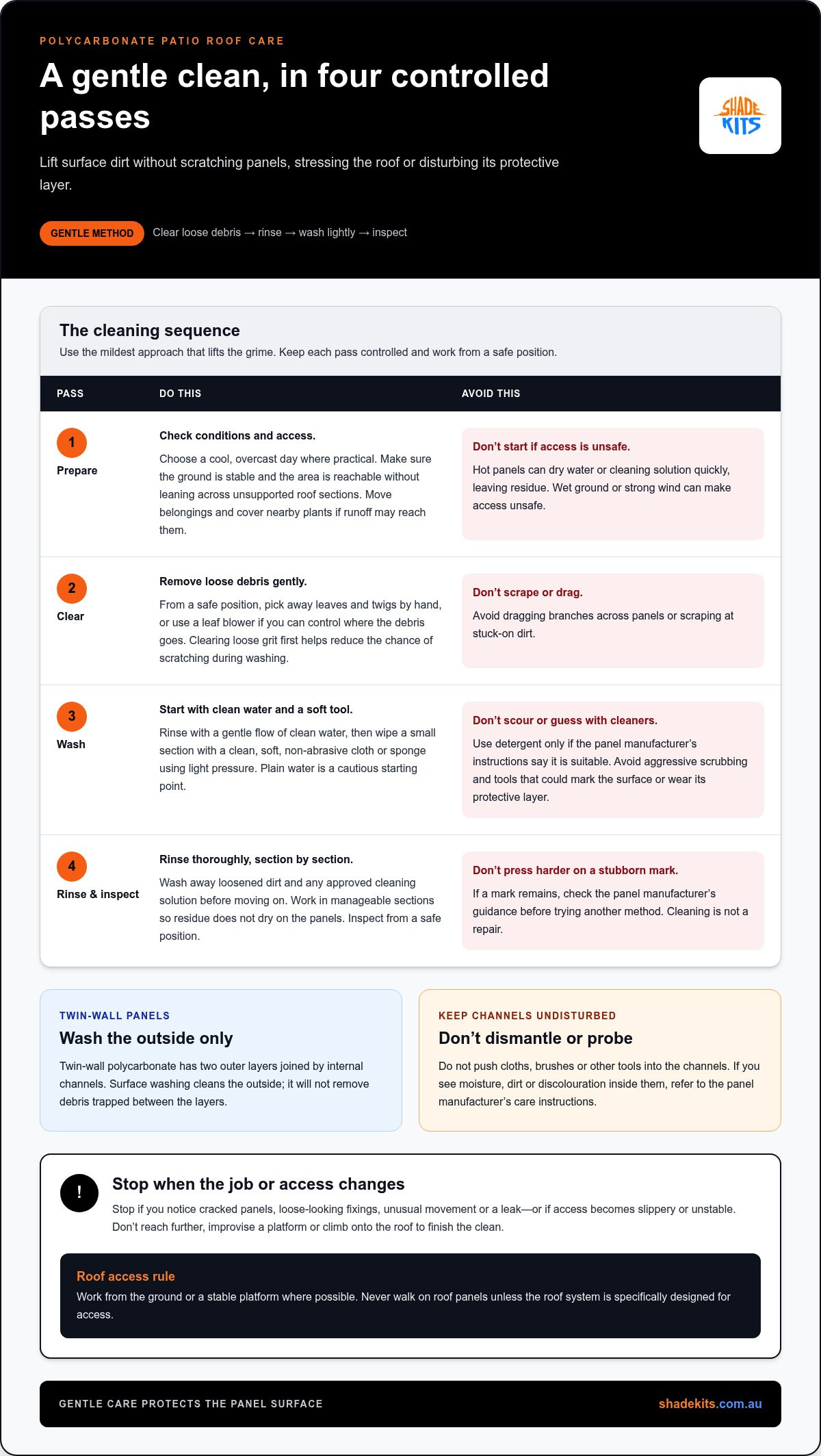
Safe access matters as much as choosing a compatible cleaning method. A gentle cleaner won’t make the job safe if you’re balancing on a ladder, reaching across a roof or working in slippery conditions. Where possible, clean from the ground or a stable platform, using tools that let you reach the panels without putting your weight on them.
Polycarbonate roof panels aren’t a walking surface unless the roof system is specifically designed for access. Don’t stand on them, use them for support or lean across an unsupported area to reach dirt. Twin-wall panels can look firm while still being unsuitable for someone’s weight. If you can’t reach the roof safely from below, don’t improvise by climbing onto it.
Leave the task if the roof is wet, damaged, unstable or difficult to reach. Rain can make surfaces and access equipment slippery; wind can affect your balance or move equipment, while extreme heat can make the work uncomfortable and panels hot to handle. Wait for safer conditions. If the panels or fixings look compromised, treat that as a possible repair or structural issue, not a cleaning job.
Before starting, consider the whole route: where you’ll stand, how you’ll reach the roof and whether runoff could make the ground slippery. Keep the area below clear, and don’t stretch sideways from a ladder or platform. Reposition safely rather than overreaching. Stop if your footing shifts, your reach feels strained or you can’t maintain a stable position.
A simple routine can make each clean more manageable. From a safe position, look for loose leaves, branches or other visible debris. Clear what you can reach safely before it becomes compacted or harder to remove, and inspect again after severe weather or when debris has noticeably accumulated.
There’s no single cleaning timetable that suits every patio roof. A roof beneath overhanging trees may collect leaves more quickly than one in a more open spot. Exposure and the panel maker’s care guidance also affect what’s appropriate. Let what you see guide your routine rather than cleaning to a rigid schedule, and don’t reach or climb just to keep to a calendar.
Shade Kits Patio Cover Kits have twin-wall polycarbonate roof panels supported by an aluminium frame. Whatever the roof’s make, use its manufacturer’s instructions to guide cleaning and care. Don’t remove panels or probe internal channels to clear debris. Surface maintenance won’t address material trapped between layers.
If you’re considering a new outdoor cover, explore DIY patio cover kits designed for Australian homes.
A straightforward routine helps you spot build-up early without turning roof care into a major job. From a safe viewing position, observe the panels and clear loose debris you can reach safely. Wash gently when visible dirt calls for it. There’s no need to clean to a rigid timetable: trees, wind exposure and other surroundings affect how quickly debris collects.
Use the panel manufacturer’s care instructions whenever you’re unsure about a cleaning product or method. Guidance for one type of polycarbonate panel may not apply to another, so don’t guess with solvents, detergents or specialist stain removers. If a mark remains after gentle washing, check the recommended care method rather than scrubbing harder.
Look over the roof periodically, and after severe weather or noticeable debris build-up. Check for leaves, twigs and residue, as well as changes such as cracks, persistent clouding or unusual marks. Make a brief note of any change that doesn’t lift with a gentle wash. This can help you tell whether it’s new or something you’ve already observed.
Persistent clouding or a suspected fault is a reason to consult the manufacturer’s guidance, not to try a stronger chemical or apply more force. Routine washing supports appearance, but it doesn’t replace checking the roof’s panels and structural components.
Consider the material and the care it may need when choosing a patio cover. Shade Kits Patio Cover Kits use aluminium frames and twin-wall polycarbonate roof panels. As with any roofing material, follow the relevant panel maker’s care instructions for cleaning and maintenance rather than assuming all panels can be treated the same way.
For an easy routine, think: observe, clear loose debris safely and wash gently when needed. That keeps ordinary upkeep focused while helping you recognise when a mark or change may need a closer look. If you’re planning a covered patio, explore Shade Kits’ Patio Cover Kits as an option for your outdoor space.
Give your next roof check a clear purpose: note what has changed, what cleans away easily and what needs the panel maker’s guidance. A brief record can help you recognise recurring build-up and avoid repeating a method that didn’t work. If a mark or change remains, pause before trying a stronger product or reaching further. The safest next step is one that suits both the panel and your access.
Add a visual check to your outdoor-area upkeep, particularly after rough weather or when you notice debris collecting. Keep it practical rather than setting a cleaning schedule that doesn’t suit your surroundings. With cleaning polycarbonate patio roof panels, knowing when not to proceed is part of making a sound maintenance decision.
If you’re planning a covered outdoor area, consider how the roof material and its care instructions will fit your space and routine. Shade Kits supplies DIY outdoor shade kits Australia-wide, with options to explore as you plan your project. Explore Patio Cover Kits and take a confident next step towards a covered patio that suits your home.
Only use dishwashing liquid if the panel manufacturer’s care instructions allow it. A product’s everyday use on dishes doesn’t confirm it’s suitable for roofing, and detergent formulas can vary. If the instructions permit detergent, follow their directions for dilution and use, then rinse the surface thoroughly. If you can’t find product-specific guidance, use clean water and consult the panel maker before trying another cleaner.
Don’t pressure wash polycarbonate panels unless their manufacturer explicitly permits it. A forceful, concentrated jet may stress panels or drive water towards joints and seals, and there’s no universal pressure setting that makes every roof safe to wash this way. For a routine clean, a gentle rinse is the more cautious option. If dirt remains, check the panel guidance rather than increasing the water pressure.
Soften bird droppings with clean water before wiping them away. Wet the area, then use a clean, soft cloth or sponge with light pressure. Rinse the cloth as needed so grit isn’t dragged across the panel. Don’t pick at dried deposits with a fingernail or tool. If a mark remains after gentle cleaning, check the manufacturer’s instructions before using a spot cleaner.
No. Don’t walk on polycarbonate panels unless the roof system is specifically designed for access. A panel can appear solid without being able to support a person, and damage may not be obvious straight away. Keep your weight off the sheets and avoid leaning across them from a ladder. If you can’t reach the area from a stable position, leave it rather than risk a fall or panel damage.
There isn’t one cleaning interval that suits every roof. Check the panels when visible debris gathers, or after weather that leaves branches or other material on the roof. A patio beneath trees may need attention sooner than one with little overhead debris. Follow the panel manufacturer’s maintenance guidance, and avoid climbing or cleaning simply to meet a fixed calendar date.
Don’t dismantle panels or push a brush, cloth or other tool into the internal channels. Surface cleaning won’t remove anything trapped between the layers, and probing inside could damage the panel or leave more debris behind. If you notice moisture or dirt within a channel, refer to the manufacturer’s instructions for that panel. Treat it as separate from ordinary surface washing.
Avoid abrasive pads, steel wool, stiff brushes and scraping tools, which can scratch the surface. Don’t use solvent-based or strongly alkaline cleaners unless the panel maker permits them, and avoid pressure washing unless the manufacturer specifically allows it. Don’t dry-rub gritty dirt or walk on panels that aren’t designed for access. If cleaning polycarbonate patio roof panels doesn’t remove a mark gently, stop and check the care guidance.