
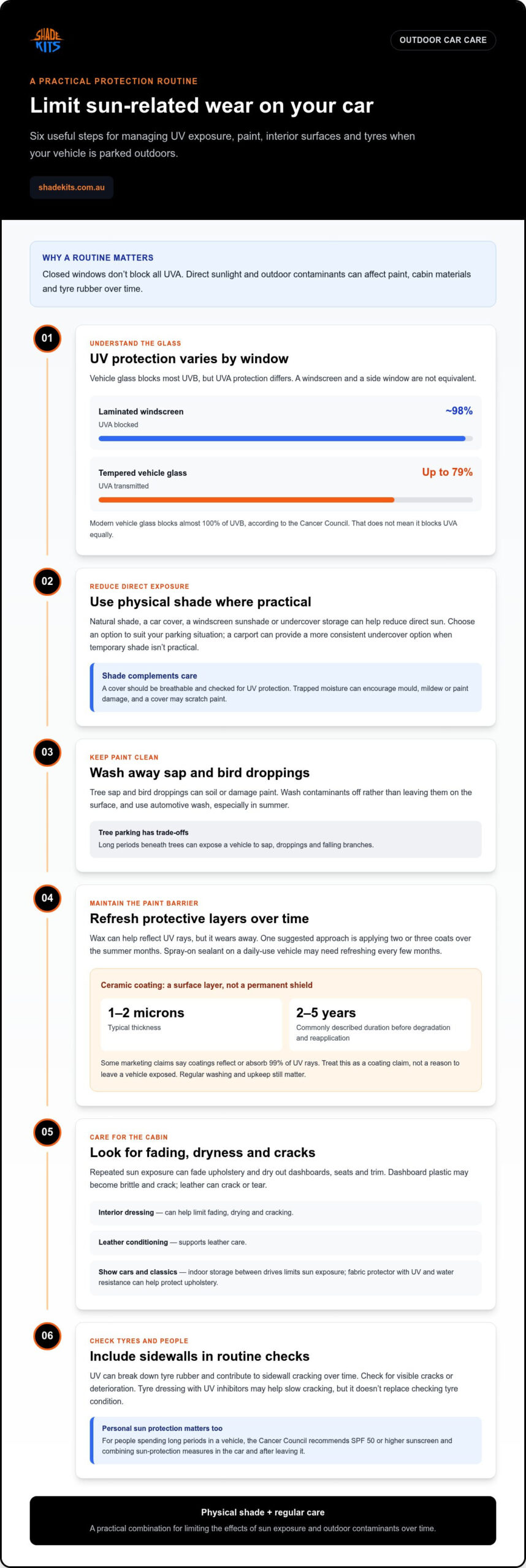
Car windows block most UVB, but they don’t fully shield a car from UVA. Laminated windscreens block about 98% of UVA, while tempered vehicle glass can transmit as much as 79%, so glass alone isn’t a complete answer for UV protection for cars outdoors in Australia.
It’s easy to assume a parked car is protected once its windows are closed. But Australian summer sunlight can affect paint, interior surfaces and tyres, while direct sun can heat the cabin considerably. Understanding what glass protects against, and where that protection has limits, makes it easier to reduce exposure.
This guide explains how sunlight affects your vehicle and compares four outdoor protection options: parking in shade, using a car cover, adding a windscreen sunshade and creating undercover storage. You’ll also learn how each option suits different parking needs, what to consider when storing a car outdoors, and how basic care for paint, interiors and tyres can complement physical shelter.
Australian summer sunlight can expose a parked vehicle to very high UV levels. UV radiation contributes to paint oxidation, which gradually dulls the finish and can leave it looking faded or chalky. The clear coat is part of the paint system, so its protective finish can deteriorate with weathering. A glossy panel may lose its shine first, while more extensive damage can make the colour look uneven.
Interior surfaces can show clear signs of sun exposure. Repeated exposure can fade upholstery and dry out dashboards, seats and trim. Dashboard plastic may become brittle and crack; leather seats can crack or tear. These changes may be more noticeable on the sun-facing side of the cabin, such as a dashboard exposed to direct light through the windscreen. A UV-protectant interior dressing can help limit fading, drying and cracking. Regular conditioning supports leather care.
Paint protection works best alongside regular washing and maintenance. Wax forms a barrier over the paint and can help reflect UV rays, but it wears away over time. Applying two or three coats over the summer months is one suggested approach. Spray-on sealant on a daily-use vehicle may need refreshing every few months. Sealants and ceramic coatings can also help guard against UV and oxidation, but require regular upkeep.
Ceramic coating is a surface layer, not a permanent shield. Its typical thickness is 1-2 microns, and its duration is commonly described as 2-5 years before degradation and reapplication. Some marketing claims say coatings reflect or absorb 99% of UV rays. Treat that figure as a coating claim, not a reason to leave a vehicle exposed. Washing still matters because contaminants can speed paint breakdown, even when a protective layer is present.
Bird droppings and tree sap can soil or damage paint, adding to the risks of outdoor parking. Avoid leaving a vehicle beneath trees for long periods, where sap, droppings and falling branches can affect its finish. If these contaminants land on the paint, wash them away rather than letting them sit. Regular washing removes contaminants before they contribute to surface deterioration; use automotive wash, especially in summer.
Tyres need attention too. UV exposure can break down rubber and contribute to sidewall cracking over time. Inspect the sidewalls during routine vehicle checks for visible cracks or deterioration. Tyre dressing with UV inhibitors can help slow cracking, but it doesn’t replace checking tyre condition. A vehicle parked outdoors for extended periods may need more consistent care for its paint, interior and tyres.
Small care steps make damage easier to manage. Wash away sap and bird droppings, refresh wax or sealant, and use an interior dressing suited to the surfaces. Check dashboard plastic, leather and tyre sidewalls for early signs such as fading, dryness or cracking. These steps support protective layers and reduce the time direct sunlight and outdoor contaminants can affect the vehicle.
A common mistake is assuming closed windows block every type of UV. Vehicle glass blocks most UVB, and the Cancer Council says modern vehicle glass blocks almost 100% of UVB. UVA is different: estimates suggest tempered vehicle glass can transmit as much as 79%, while laminated windscreens block about 98%. A windscreen and a side window therefore don’t provide identical protection.
Another mistake is treating a UV-protection label as a complete measure of performance. No single figure makes every product claim directly comparable. Check whether a claim refers to UVA, UVB or both, and which surface or material it covers. A high UVB claim alone doesn’t show how well a product addresses UVA exposure.
Are there Australian standards or consumer rules for claims that car products provide UV protection? The figures above describe different types of vehicle glass, not a universal rating for every car-care product. Compare the wording and scope of each claim, especially whether it describes UVA, UVB or both, rather than treating a percentage as proof of complete protection.
Tinting is not a substitute for understanding glass performance, and Australian windscreen rules set limits. Windscreens must have visible light transmission of at least 75%. A tinted band may cover no more than 10% of the windscreen area when it meets the required placement conditions. These figures concern visibility and placement; they don’t mean all vehicle windows block the same amount of UVA.
Show cars and classic vehicles need a different routine from daily drivers. Indoor storage between drives limits sun exposure, while fabric protector with UV and water resistance can help protect upholstery. A parked classic with valuable or delicate interior materials may benefit from both steps. Relying only on a cover or upholstery treatment leaves the rest of the vehicle exposed.
Are there risks from leaving a car under a tree or using a car cover outdoors? Yes. Sap, bird droppings and falling branches can soil or damage a car under trees. A cover can provide UV protection, but trapped moisture may encourage mould, mildew or paint damage. Choose a breathable design and check its specifications for UV protection.
Occupant protection is another commonly missed part of outdoor parking. The Cancer Council recommends SPF 50 or higher sunscreen for people who spend long periods in a vehicle, and combining sun-protection measures in the car and after leaving it. Closed windows and tinted glass don’t remove the need to consider personal exposure, particularly on long drives in Australian sunlight.
Parking in shade reduces the amount of sun falling directly on a vehicle. It helps limit exposure across the roof, bonnet and windows, rather than relying on a barrier placed over just one surface. For a car parked outside during the day, even partial shade can reduce direct sunlight on its paint and interior.
Shade can also help reduce cabin heat. A car parked in full sun can reach cabin temperatures of 60°C or higher. Choosing a shaded space before leaving the vehicle limits direct solar heating through the windows and windscreen. This is particularly useful when the car will remain parked while the sun is strong.
Consider the whole parking period, not just the shade when you arrive. A tree or building may cast shade in the morning, then leave the car exposed as the sun moves. For example, check whether the roof and windscreen stay shaded during the hours the vehicle is usually parked. This makes your parking choice more practical.
Natural shade provides partial UV protection, not a complete shield. Gaps between branches can let sunlight reach the vehicle, and shaded areas shift. Treat a tree as a way to reduce direct exposure, not as a guaranteed UV barrier. Avoid spots where branches, sap or bird droppings could create other problems for the car.
If suitable shade isn’t available, a windscreen sunshade can reduce direct sunlight on dashboard plastics. Fit it across the inside of the windscreen while the vehicle is parked, with its reflective surface facing outwards if designed that way. It won’t cover the side windows or the full exterior, so treat it as one targeted measure.
When parking in direct sun is unavoidable, opening the windows a crack can help lower interior temperature and equalise air pressure. This is a limited measure, not a replacement for shade or a windscreen cover. Consider the parking location and conditions before leaving windows open, especially if the vehicle is unattended or rain is possible.
For regular parking, compare the protection each option provides. A shaded driveway can reduce direct sun during the hours the car sits there, while a car cover or shelter offers more consistent coverage. Natural shade provides partial protection; car covers and car shelters offer high UV protection. Match your choice to how long the vehicle stays parked and which areas receive sunlight.
Use shade alongside basic care. After parking beneath trees, inspect the roof and bonnet for sap or bird droppings, then clean affected areas. If the windscreen is exposed, place a sunshade before leaving. These small steps help protect your car’s surfaces and reduce heat build-up without relying on any single source of shade as a complete solution.
Do car covers protect against UV, and what features should I look for? A quality UV-resistant cover can block sunlight and help protect paint from scratches. For outdoor parking in Australia, choose a breathable cover that lets trapped moisture escape, and check its specifications for UV protection. Waterproofing alone doesn’t show whether it blocks UV.
Breathability matters because moisture trapped between the fabric and vehicle can contribute to mould, mildew and paint damage. Before fitting a cover, make sure the vehicle is clean; grit caught underneath can rub against the paint as the cover shifts. Follow the cover’s care instructions, and remove it when practical to inspect the surface and let it dry.
Compare a cover with a car shelter by considering how much of the vehicle each protects. A cover follows the vehicle’s shape, while a shelter creates overhead protection without wrapping the paintwork. Car shelters provide stronger hail protection than covers, which offer limited hail protection. Both provide high UV protection compared with natural shade, which offers partial protection.
Direct sun can affect more than the exterior coating. Over time, exposure can fade interior materials and dry leather, while the roof and bonnet receive sustained sunlight. A cover can shield those surfaces while fitted; a shelter provides an overhead barrier during storage. Neither replaces care such as washing away contaminants or maintaining paint protection.
For longer outdoor storage, prepare the car before covering it. Wash off dirt, sap and bird droppings, then let the vehicle dry before fitting a breathable cover. Check that the fabric sits securely and doesn’t drag across dirty panels. After summer storms, inspect for trapped moisture, debris or signs of rubbing, then clean and dry the cover as directed.
Consider the weather exposure at the parking spot, too. A cover provides limited hail protection, while a shelter offers stronger protection against hail. If falling branches or tree sap are concerns, avoid parking beneath trees for extended periods. A covered space can also reduce direct sun exposure across the vehicle’s surfaces.
Choose based on how the vehicle is stored and what you need to protect. A breathable, UV-resistant cover suits outdoor storage when full coverage is useful and regular fitting is manageable. A car shelter is a more permanent overhead option for a vehicle parked in the same place. With either approach, keep up routine washing and care for leather, paint and other surfaces.
A dependable approach combines shade, targeted window protection and regular care. For example, park under cover when possible, use a windscreen sunshade when the car sits outside, and maintain paint protection. Each step addresses a different type of exposure, so no single measure has to do every job.
Start with the parking spot. Undercover parking can help preserve a vehicle’s exterior and interior by reducing direct sunlight. Natural shade helps too, but offers partial UV protection and can shift as the sun moves. If a car stays outdoors through summer, consider how long its roof, bonnet and windows are exposed each day.
Glass doesn’t block all UV equally. Laminated vehicle windscreens block about 98% of UVA radiation, while clear or tinted films can reduce total UV radiation passing through tempered vehicle glass by over 99%. These figures describe different materials and measures. They don’t mean the whole car is protected, especially if sunlight reaches other surfaces.
For a parked car, an internal windscreen shade reduces direct sunlight and helps protect dashboard plastics. Fit it across the windscreen before leaving the vehicle, and remember that it doesn’t cover the side windows, roof or paintwork. Window tints and covers provide UV protection only while windows are closed.
Choose a breathable cover that lets trapped moisture escape, and check its specifications for UV protection. Before covering the vehicle, wash off grit and let the surface dry. This helps reduce the chance of trapped dirt rubbing against the paint.
Routine care supports these physical measures. Wash away contaminants that can speed paint breakdown, then refresh wax or sealant as it wears. Use a UV-protectant interior dressing on the dashboard and trim, and inspect tyres for sidewall cracking. A cover can shield surfaces while fitted, but it doesn’t replace cleaning or maintenance.
Match the setup to where the car is parked and how often it moves. A sunshade suits short periods outside; a breathable cover provides broader temporary coverage; fixed undercover parking reduces direct exposure during regular storage. For more consistent shelter, consider a carport. Combining suitable parking with practical care helps protect the vehicle’s paint, interior and tyres.
Breathable cover material is especially useful outdoors because it lets trapped moisture escape, reducing the risk of mould, mildew and paint damage. In cases of extreme sun damage, paint may need sanding before preparation and respraying with a new undercoat and clear top coat.
Shade Kits offers Carport Kits for drivers looking to create a dedicated covered parking space at home. A carport can be a practical next step when a vehicle regularly sits outdoors and you want a more consistent alternative to shifting natural shade or fitting a cover each time.
A carport kit is one option to consider alongside your parking layout and storage needs. Think about where the vehicle is usually parked and how overhead shelter could fit into that space. Shade Kits also offers Pergola Kits, Awning Kits and Patio Covers for other outdoor shelter needs.
If covered parking suits your property, contact Shade Kits to discuss the available options for your project.
The most useful next step is to look at where your car spends its usual parked hours. Consider whether a lasting overhead shelter would suit your home better than relying on temporary shade, and how the available space needs to work day to day. That decision can make outdoor UV protection easier to maintain as part of your regular routine.
Shade Kits offers Carport Kits for covered vehicle parking, alongside Pergola Kits and Awning Kits for other outdoor shade needs. Choose the option that best fits your space and intended use, rather than expecting one solution to suit every property.
If you’re ready to explore a practical setup for UV protection for cars outdoors, contact Shade Kits about car shade. A considered parking plan is a straightforward place to start.
Yes, but protection varies between the windscreen and side windows. Vehicle windscreens are typically laminated, while side windows are often tempered, so their UVA protection can differ. For UV protection for cars outdoors, treat glass as one part of a broader approach rather than assuming the whole cabin is shielded. A windscreen shade is a useful extra when the car is parked, especially if direct light falls across the dashboard.
Reduce direct exposure and keep the paint surface clean before adding protection. For example, wash the bonnet and roof before applying wax or sealant, so grit and residue aren’t trapped beneath the coating. Park under cover when you can, and follow the care instructions for whichever paint product you use. If you use a cover, fit it over a clean, dry vehicle to help avoid rubbing dirt across the finish.
Repeated sunlight can oxidise paint, fade interior materials and dry plastics, while UV exposure can also break down tyre rubber over time. The effects can build across different parts of a parked car: the bonnet may lose gloss, the dashboard may fade, and tyre sidewalls may show cracking. Heat adds another concern, as high temperatures accelerate wear in both 12-volt batteries and high-voltage EV batteries.