
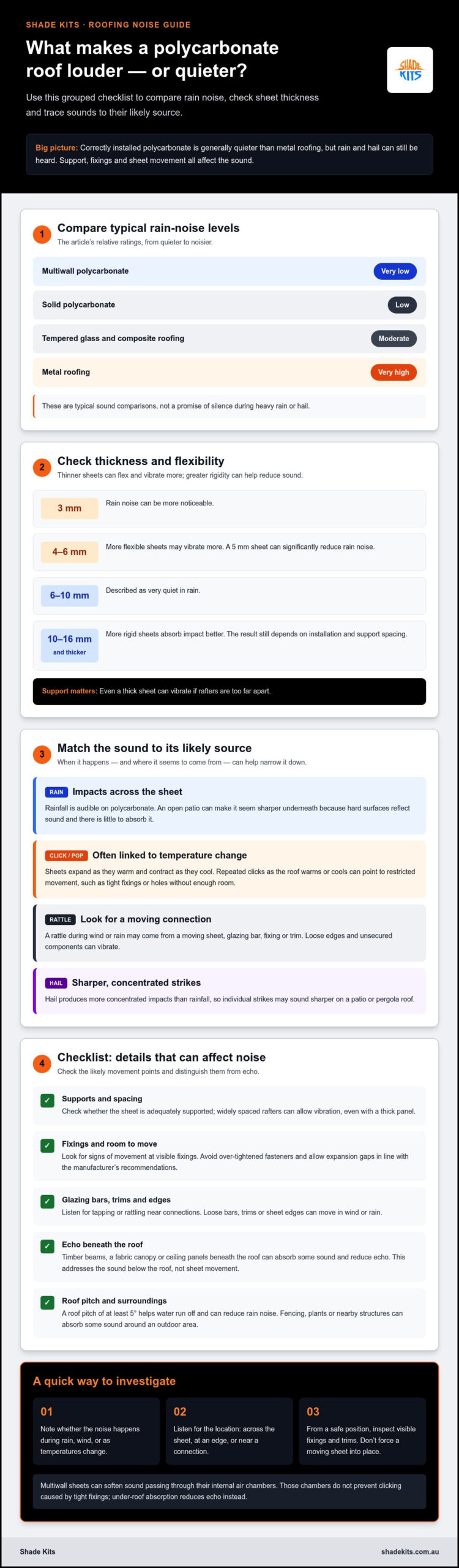
A polycarbonate roof can make some noise in heavy rain, but a correctly installed one is generally quieter than a metal roof. If you’re wondering whether polycarbonate roofing is noisy in rain, the panel type and thickness matter: solid sheets are rated low for rain noise, while multiwall sheets are rated very low. Thinner sheets, such as 4–6 mm, can flex and vibrate more; thicker sheets, such as 10–16 mm and thicker, are more rigid and tend to sound quieter.
Rain noise is only part of the picture. Clicking as temperatures change and rattling in wind can also result from how the sheets are supported, fixed and sealed. Persistent noise may point to an installation detail rather than the roofing material alone.
This guide explains what causes each sound and how panel type, fixings, expansion gaps and rubber gaskets affect it. You’ll also learn which checks can help identify the source, so you can make an informed decision about reducing noise or planning a roof.
Yes, you can hear rain on polycarbonate, but a correctly installed polycarbonate roof is generally quieter than a metal roof. The difference depends on the material and how the roof is supported. Metal roofing rates very high for rain noise, while tempered glass and composite roofing rate moderate. Solid polycarbonate rates low, and multiwall polycarbonate rates very low. These comparisons describe typical sound, not a promise of silence during heavy rain or hail.
Thickness changes how much a sheet flexes when drops strike. A 3 mm polycarbonate sheet can make rain noise more noticeable, while 4–6 mm sheets are more flexible and may vibrate more. A 5 mm sheet can significantly reduce rain noise, and 6–10 mm sheets are described as very quiet in rain. Sheets that are 10–16 mm and thicker are more rigid and absorb impact better. Thicker polycarbonate sheets may reduce sound, though the effect depends on installation. Support spacing still matters: even a thick sheet can vibrate if rafters are too far apart.
Hail produces more concentrated impacts than rainfall, so individual strikes may sound sharper on a patio or pergola roof. During storms, wind can also move loose sheets, glazing bars or trims, adding rattles to the sound of rain. Listen for whether noise comes from impacts across the sheet or movement at its edges. A roof pitch of at least 5° helps water run off and can reduce rain noise.
Do Australian building regulations or acoustic standards for polycarbonate roofing address rain noise? Rain-noise rankings alone don’t establish compliance with Australian building requirements. Consider structural design and noise comfort separately when planning a patio or pergola roof.
What are the pros and cons of polycarbonate roofing for patios and pergolas in Australia? Polycarbonate typically makes less rain noise than metal, and multiwall sheets can soften sound further. The trade-off is that rain and hail remain audible, while thin or poorly supported sheets may flex and vibrate.
To compare options, start with sheet type and thickness, then consider support and fixing details. Opal or tinted sheets can slightly soften rainfall noise and reduce glare, although the sound difference isn’t dramatic. Fencing, plants or nearby structures can absorb some sound around an outdoor area. If noise is already a concern, inspect for movement, loose fixings and gaps before assuming the sheet material is the only cause.
A click or pop on a polycarbonate roof often comes from sheets moving as temperatures change. Sun warms the panels, then cooler evening air causes them to contract. If a sheet is fixed too tightly or its fixing holes leave no room for movement, it can catch against fasteners or glazing bars. The resulting sound may occur in clear weather, not just during rain.
Listen for when the noise occurs. Repeated clicks as the roof warms or cools point to thermal movement; a rattle during wind or rainfall suggests a sheet, trim or fixing may be moving. Note which panel makes the sound and whether it comes from a connection or across the sheet. This pattern can help distinguish expansion noise from raindrop impacts.
A polycarbonate roof can also sound loud in rain when hard surfaces reflect the impacts back into the space below. An open patio has little to absorb the sound, so rainfall can seem sharper underneath than outside. Timber beams, a fabric canopy or ceiling panels beneath the roof can absorb some sound and reduce echo. The benefit depends on how much of the underside is covered and how the materials sit beneath the sheets.
Multiwall polycarbonate sheets contain internal air chambers that reduce sound transmission. These chambers can soften the sound passing through the roof, while a solid sheet has no internal air spaces. However, chambers don’t prevent clicking caused by tight fixings, and under-roof absorption reduces echo rather than stopping sheet movement. The two treatments address different parts of the noise problem.
Weather changes affect both sound and movement. Strong sun can warm exposed panels; a cool change can then cause contraction, while rain adds repeated impacts. Wind may also make a loose edge or trim vibrate. If noise appears after a hot day, check the panel edges and fixings for movement rather than assuming rainfall is responsible. Don’t force a moving sheet into place, as that can increase stress at its supports.
How much does sound insulation for polycarbonate roofing cost in Australia? The cost depends on the treatment, roof area and access beneath it. Adding a ceiling or canopy involves different materials and work from improving sound absorption with existing structures.
For a practical check, observe the roof as the weather changes and note whether the sound comes from impact, echo or movement. Then inspect visible fixings and trims from a safe position. Installation guidance recommends avoiding over-tightened fasteners and leaving expansion gaps in line with the manufacturer’s recommendations. These details allow sheets to move without catching, helping reduce clicks while keeping the roof assembled as intended.
Rattling often comes from movement between polycarbonate sheets and their supports. Loose glazing bars, fixings, unsecured trims and gaps can vibrate as wind or rain hits the roof. A small movement at one connection may create repeated tapping, while a loose panel edge can produce a broader rattle. The sound may seem to come from the sheet, even when a bar or trim is moving.
Start by locating the noise. Note whether it occurs during wind, rainfall or both, then listen for where it comes from. From a safe position, look for visibly loose trims, lifted edges, damaged sheets or gaps at joins. Don’t climb onto the roof to investigate. A sound that changes with wind direction may point to a loose edge or connection exposed to airflow.
Support layout matters too. If rafters are spaced too far apart, sheets can flex more under rainfall and movement. Glazing bars should align with rafters, with additional support where the roof design requires it. A weak frame or excessive spacing between purlins can also increase vibration. Inspect the supporting structure as well as the panels, because tightening a fixing won’t correct a moving frame.
During installation, fasteners that are too tight can restrict sheet movement as temperatures change. Polycarbonate installation guidance recommends avoiding over-tightening and leaving expansion gaps in line with the manufacturer’s recommendations. Use dedicated polycarbonate screws, and follow the specified fixing positions and preparation. The right clearance allows movement without leaving the panel loose in its glazing system.
Incorrect overlaps or missing sealing components can leave parts of the roof free to move, increasing noise during rain. Check that sheet overlaps sit correctly and sealing components remain in place. Don’t fill a gap with improvised material; the roofing system needs to accommodate movement while maintaining its intended seal.
Once you identify a likely source, address the connection rather than masking the sound. A loose glazing bar, trim or fixing needs attention at that point; adding material beneath the roof may soften echo but won’t stop components rattling. Recheck for movement after adjustments, especially during wind or rain. If a sheet flexes excessively or shows visible damage, don’t treat it as a simple noise issue: the panel or its support may need further attention.
Rubber gaskets cushion contact between polycarbonate sheets and their supporting components. This soft layer absorbs vibration instead of letting a panel or glazing bar knock directly against a harder surface. On a roof that rattles in wind, correctly fitted gaskets can reduce vibration, soften impact noise and improve water sealing. They help at connection points, but won’t correct a weak frame or loose support.
Placement matters. A gasket needs to sit where the roofing system brings components together, such as between a sheet and its glazing bar. If it’s misplaced, folded or missing from a connection, the parts may still move against each other. Check the roof’s existing layout and component instructions before changing seals. Improvised packing can interfere with panel movement or the intended water seal.
Think of gaskets as one part of a complete noise check. First identify whether the sound is a rattle from movement or rainfall striking the panel. Then inspect visible connections for loose glazing bars, fixings, trims and gaps. If a gasket is present but the adjoining bar remains loose, replacing the seal alone won’t stop the movement. The connection must be secure and assembled as intended.
Rubber seals also need periodic inspection after long-term use. Look for sections that have shifted, split, hardened or no longer sit evenly against adjoining parts. Check the roof screws and seals together, since a sound connection relies on both. Avoid tightening screws just to press a gasket harder. Excessive tightening can restrict sheet movement as temperatures change, while an uneven seal may still leave contact points exposed.
Water sealing is another reason to maintain the gasket, not just noise reduction. A damaged or displaced seal may leave a path for water, while a correctly seated gasket cushions contact and supports the intended seal. After inspection, keep the roof clean enough to see its joins and connection points clearly. Dirt can hide a small gap or make a seal appear seated when its edge has shifted.
For a patio roof, the practical goal is a stable connection that still accommodates sheet movement. Gaskets reduce vibration where surfaces meet, while secure glazing bars and sound fixings address movement elsewhere. If rattling continues after correcting the seals and visible connections, inspect the support structure and panel condition rather than adding more rubber. Durable performance depends on the whole assembly working together.
Solid and multiwall polycarbonate differ in construction, which affects how rain sounds beneath the roof. A solid sheet is one continuous panel, while a multiwall sheet contains internal air chambers. In typical rain-noise comparisons, solid polycarbonate rates low and multiwall rates very low. The chambers reduce sound transmission, so multiwall can soften the sound reaching the space beneath it. Neither type makes rainfall inaudible, especially during heavy showers or hail.
For a patio or pergola, consider where people sit and how they use the space. If conversations or quiet activities happen directly beneath the roof, multiwall’s air chambers may be a useful sound consideration. Rain noise may be less intrusive in a more open outdoor area than in an enclosed space, where sound can reflect off nearby hard surfaces. Compare the setting, not just the sheet type.
Thickness also matters within either choice. Thinner polycarbonate sheets, including 4–6 mm sheets, are more flexible and can vibrate more when rain hits. Sheets measuring 10–16 mm and thicker are more rigid and absorb impact better. The correct comparison is therefore not simply solid against multiwall: consider sheet construction, thickness and support together. A poorly supported panel can still move and make noise.
Before choosing, check the product’s intended use and installation instructions. Compare the specified support layout and glazing system with the roof design, then consider the sound level you can accept beneath it. For example, a multiwall sheet’s chambers may reduce transmitted sound, but loose glazing bars can still rattle. A solid sheet with secure supports may be quieter than a multiwall sheet assembled with moving connections.
Opal or tinted polycarbonate is another consideration if glare and rain sound both matter. These finishes can slightly soften rainfall noise and reduce glare, though the sound difference isn’t dramatic. Don’t use a tint as a substitute for choosing the right sheet construction or support. If sound is the priority, start with multiwall’s very low rain-noise rating, then assess thickness and installation details.
Use this simple comparison when weighing the options:
For a roof exposed to regular rain, multiwall is the quieter starting point based on typical ratings. Whichever type you choose, follow the manufacturer’s installation guidance and ensure the panels are properly supported. That combination helps you assess sound realistically, rather than relying on material alone.
Shade Kits’ Carport Kits offer a practical next step if you’re planning covered vehicle protection and weighing roofing noise alongside weather protection. The kits use durable aluminium frames and UV-resistant polycarbonate roofing, designed for Australian homes and conditions.
The same considerations apply when comparing a carport roof with a Patio Cover or pergola: panel type, support and correct assembly all influence sound. Polycarbonate can still be heard in heavy rain, so use the earlier guidance on thickness, movement and sealing when deciding what matters for your space. The kits are designed for straightforward self-installation, making installation details part of your planning.
If you’re considering a polycarbonate-roofed structure, explore Shade Kits’ kits to find an option suited to your project.
Choosing a roof is also a chance to consider how you want your outdoor area to feel day to day. Think about whether it will mainly shelter a vehicle, provide a place to relax or create shade beside the house. That intended use can help you weigh sound comfort alongside appearance and weather protection.
If you’re still weighing whether polycarbonate roofing is noisy in rain, let your priorities guide the next decision. Shade Kits offers Carport Kits, Pergola Kits and Awning Kits for different covered-space needs. Note the area you want to cover and how you plan to use it, then explore which option fits your project.
Contact Shade Kits for roofing advice and take the next step towards a covered space that works for your home.
Yes, rain, hail and wind can all be heard on a polycarbonate roof. The sound may come from drops hitting the panels or components moving during gusts. For a useful first check, note whether the noise happens only during rainfall or also on a dry, windy day. That distinction helps narrow down whether impact or movement is the more likely source.
Yes, polycarbonate roofing is used for residential outdoor areas such as patios, pergolas and carports. It can provide a covered space while allowing daylight through, depending on the sheet’s colour and finish. Before choosing it, consider how the area will be used, how much light you want, and whether rain noise matters beneath the roof. A residential design also needs suitable support and correct assembly.
Compared with metal roofing, polycarbonate is generally quieter in rain when correctly installed. Available material comparisons describe metal as very noisy and polycarbonate as quieter. They don’t establish a direct noise ranking against tile roofing, so don’t assume every tiled roof will sound the same. For a practical comparison, consider the complete roof assembly and whether the area below is enclosed or open.
There isn’t a single decibel figure that describes rain on every polycarbonate roof. The reading changes with rainfall intensity, panel construction, roof supports and the sound meter’s position. A measurement beneath an open patio can also differ from one taken inside an enclosed room. If comparing readings, use the same meter position and similar weather conditions for each roof.
Rain intensity, sheet construction, support spacing and the condition of connections all influence what you hear. Nearby walls can reflect sound into a patio, while plants or fencing may soften noise around the space. To assess your roof, note the weather, where the sound seems strongest and whether it changes with wind direction. Those observations help distinguish rainfall impact from vibration or reflected sound.
Start by identifying the noise source before changing the roof. Check visible joins, glazing bars, trims and seals for movement or damage, and keep the panels clean enough to inspect. Surrounding plants or fencing can help absorb sound outdoors. If you’re planning a new roof, consider how its position, supports and the space beneath it affect the sound you’ll hear.
Yes. Thicker sheets are generally more rigid and can reduce impact noise compared with thinner, more flexible sheets. The profile also needs to sit correctly within its supports, since poor support can let panels move and vibrate. When comparing options, look at thickness and profile alongside the required support layout. A panel’s stated characteristics alone don’t describe how the assembled roof will sound.
A ceiling or sound-absorbing material beneath the roof can reduce echo and soften the sound heard below. Timber beams, fabric canopies and ceiling panels are examples of materials that may absorb sound. This treatment affects the space beneath the roof rather than preventing rain from striking the panels. Consider how much of the underside is covered and whether the added layer suits the intended outdoor area.