
A covered patio doesn’t always need a new structure. An existing outdoor area may suit a pergola, awning, shade sail or umbrella, depending on how much sun and rain protection you need. For budget patio cover ideas in Australia, start with the space you already have and consider how its orientation, exposure and layout affect comfort. A roof offers a different balance of shelter and airflow from a lighter, removable shade cover.
It makes sense to find an affordable way to make outdoor dining more comfortable without taking on more work than the space needs. The right option depends on whether you want shade at certain times of day, better rain protection or a flexible setup you can adapt as conditions change.
This guide compares practical cover designs and materials, explains what to consider before adapting an existing patio, and shows how to plan the space for dining and everyday use. You’ll have a clearer basis for choosing an option that suits your home and the weather it needs to handle.
A dining cover needs to shelter people and furniture, not just the tabletop. Start by mapping the area used for meals, food preparation and movement between the house and outdoor kitchen. A 3 m dining table, for example, needs a different coverage plan from a compact setting. Include chair space when measuring, so guests can pull seats out without leaving the sheltered area. This practical step helps shape a covered outdoor entertaining area around how people actually use it.
For a six-seat outdoor dining setting, allow for the chairs as well as the table. Positioning the table 600 mm in from the cover’s front opening can improve protection underneath. Rain can still blow in from the sides, so consider the direction of exposure before placing the setting. Also picture the patio at 6 pm in summer, when low sun may shine into diners’ eyes. A screen or side shade can help manage glare without closing off the living space.
Outdoor fabric and woven shades offer lighter ways to create shade over a dining zone. They can suit spaces where a solid roof feels too enclosed, while a pergola can provide partial shade and ventilation. Shade-sail fabric may sag and fade within 3-5 years, so include upkeep and replacement in your planning. For flexibility, consider a removable shade above the table and keep the rest of the patio open. Think about how the area will work at 7 pm, too: evening lighting and a clear path between the kitchen and table make entertaining easier.
Covered cooking areas need careful placement. Grills and fire pits should be in well-ventilated areas where smoke can escape freely. Follow the grill manufacturer’s clearance guidelines and keep heat sources a safe distance from walls, ceilings and flammable materials. A fireproof mat beneath a grill or fire pit can help protect patio flooring from heat and stray embers. Before using either under a cover, check whether local fire safety rules allow it. Never leave an open flame unattended, and keep a fire extinguisher or bucket of sand nearby.
Comfort details can make a covered patio more usable in changing conditions. Screens can help keep bugs out while letting a breeze through. Waterproof cushions and rugs add colour without making the dining area difficult to maintain. Position outdoor lighting to illuminate the table and cooking area without shining into guests’ eyes. A portable fire pit may add warmth, but use it only with suitable ventilation and clear space around it. These choices help the patio work for both relaxed outdoor living and practical meals.
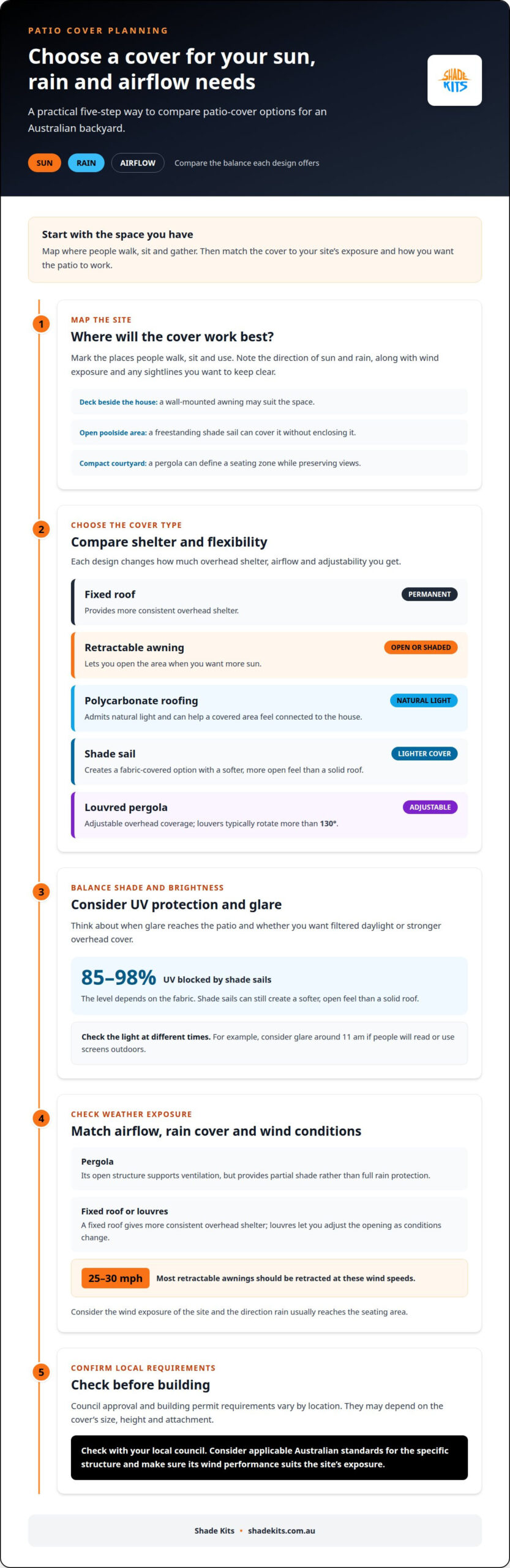
Council approval and building permit requirements vary by location and may depend on the cover’s size, height and attachment. Check with your local council before building. Wind performance should suit the site’s exposure and the cover’s design, with applicable Australian standards considered for the specific structure.
Fixed roofs provide permanent shelter, while retractable awnings let you open the area when you want more sun. Polycarbonate roofing allows natural light through, whereas shade sails create a lighter, fabric-covered option. A louvred pergola offers adjustable overhead coverage, with louvers typically rotating more than 130 degrees. Compare how each option handles sun, rain and airflow, then consider how it could transform your backyard into an outdoor room.
Shade sails can block 85-98% of UV, depending on the fabric, while still creating a softer, open feel than a solid roof. Polycarbonate roofing also admits natural light, which can help a covered area feel connected to the house. Think about the patio at 11 am, when glare may affect reading or screen use. Choose the balance of shade and brightness that suits your outdoor living plans.
A deck beside the house may suit a wall-mounted awning, while a freestanding shade sail can cover an open poolside area without enclosing it. In a compact courtyard, a pergola can define a seating zone while preserving views across the space. Map where people walk, sit and swim before choosing a cover. Plan the layout to leave clear access around furniture and avoid blocking useful sightlines.
A pergola’s open structure supports ventilation, but it provides partial shade rather than full rain protection. A fixed roof gives more consistent overhead shelter, while louvres let you adjust the opening as conditions change. Retractable awnings can provide shade when needed, though most should be retracted at wind speeds of 25-30 mph. Consider the wind exposure of an exposed deck and the direction rain usually reaches your seating area.
For a covered patio with several uses, combine overhead shade with a layout that preserves airflow and access. A woven shade can soften direct sun over a courtyard table, while a sturdier roof may better suit a frequently used outdoor kitchen. Compare options with your backyard’s exposure and how you want the space to work throughout the day.
Lower-cost designs often focus coverage where it’s needed, rather than roofing the entire patio. Compare lighter shade, partial roofing and a simple pergola against how you use the dining area. For budget patio cover ideas in Australia, first decide which part of the space needs shelter most.
For a small dining area, a large umbrella or shade sail can cover the seating without enclosing the whole patio. Fabric canopies, outdoor curtains and removable shades can also target a sunny section while leaving other areas open. A simple pergola or trellis provides a frame for partial shade, while bamboo rolls can add a lightweight overhead screen. Each option offers a different balance of coverage, airflow and upkeep.
Plan the layout first. Mark the table, space for pulled-out chairs and the route between the house and outdoor kitchen, then focus the cover over the busiest area. For example, a shade sail over a breakfast table may suit a patio used mainly for morning meals. If the whole space needs reliable rain protection, a small removable shade may not be enough. Compare the protected area with how you use it.
Roofing options range from a partial pergola with a trellis to a more complete cover. A trellis can support climbing plants such as wisteria, creating filtered shade rather than a fully enclosed roof. Fabric awnings often cost less than solid roof extensions, while a prefabricated cover can shelter an existing patio. Polycarbonate roofing offers a more permanent overhead option while letting light through.
Match the material to the result you want. If natural light matters, translucent roofing can keep the area brighter than a solid roof. If you want a less permanent shade zone, fabric or a removable canopy can cover part of the patio. Consider how much rain reaches the dining area and whether partial coverage leaves furniture exposed. The best value comes from covering a space with a clear purpose.
There’s no single useful average cost for a professionally installed patio cover across Australia. The total depends on the patio’s size, the cover material, whether the structure attaches to the home and local labour rates. A fabric awning and a solid roof extension involve different materials and work, so their costs aren’t directly comparable.
To plan a realistic budget, first decide whether you need shade, rain protection or both. Then define the covered area, such as the dining setting rather than the whole paved space. That choice affects material quantities and structural requirements. An attached cover also differs from a freestanding one because the connection to the house is part of the design. These factors explain why a broad average may not reflect your project.
Keep comparisons consistent by assessing each design against the same coverage area and intended use. These budget patio cover ideas in Australia suit different needs, from occasional outdoor dining to a frequently used entertaining area. Include the structure, roofing and installation scope in your comparison, rather than judging options by material alone. This makes it easier to see which design provides the coverage your patio needs.
For an affordable patio cover suited to Australian conditions, compare metal roofing, polycarbonate and durable frame materials. The best choice depends on how much rain protection, natural light and maintenance your outdoor area needs.
Metal roofing, including COLORBOND steel, creates a solid overhead option for a patio used in varied weather. Metal patio roofs can last 40 to 60 years with virtually no maintenance, according to the market information available for this topic. Consider how a solid roof will affect light beneath it, especially beside an indoor living area or garden.
Polycarbonate panels let natural light through while providing overhead cover. Quality panels can maintain their clarity for 10 to 15 years. They may suit an outdoor kitchen or entertaining space where daylight matters, while still defining a sheltered area. Compare the roof material with the frame and intended use, rather than choosing by appearance alone.
Timber can create a warm, natural look for a freestanding pergola beside a garden or outdoor kitchen. It may need regular maintenance to protect it from weather and pests, so include ongoing care in your material choice. A timber trellis can also provide partial shade, rather than the complete rain protection of solid roofing.
Aluminium offers a different balance: aluminium patio covers resist rust and corrosion and require little maintenance. A durable frame can support the roof while keeping upkeep manageable. Consider the frame and roofing as a system, along with the site’s exposure to sun and rain. A covered entertaining area, for example, may need dependable overhead shelter, while a garden seating nook may suit a lighter structure.
The surface beneath the cover also affects the project. Concrete is a durable, relatively inexpensive patio surface, while gravel is quick and easy to install. Stone pavers are highly durable and natural-looking, but cost more. Brick is relatively easy to lay and adds warm colour to traditional homes.
Choose a surface that suits the patio’s use. Concrete can work well for furniture around an outdoor kitchen, while gravel offers a simpler base for garden seating. If you prefer stone or brick, consider how it will look with the roofing and frame. Coordinating the surface, structure and cover creates a cohesive outdoor space without adding materials that serve no clear purpose.
An existing paved area, deck or courtyard can provide the starting point for a covered outdoor space. First, map how people use it: mark the dining area, outdoor furniture, access to the house and route to the garden. This shows where coverage matters most and helps avoid extending a roof over parts of the yard rarely used for outdoor living.
Next, decide how the structure will relate to the house. A cover can attach to the home or stand independently, and that choice affects its layout and connection points. For an attached cover, consider where it meets the building and how rainwater will drain away. A freestanding design may suit a patio set apart from the house, such as a poolside seating area.
Existing paving can help define the footprint, but it doesn’t automatically mean the surface or nearby structure is suitable for a new cover. Note the patio’s edges, changes in level and obstacles such as a garden bed or path. These details shape the design and installation. Keep supports clear of everyday routes so the new structure doesn’t obstruct movement between the house and outdoor space.
Then match the cover to local weather exposure. Note where strong sun reaches the patio and which side receives wind-driven rain. A cover that shades a table from above may still leave seating exposed from the side. In a compact courtyard, partial roofing could preserve light; a more exposed entertaining area may need broader overhead protection.
Before building, check local requirements with the relevant council. Patio-cover approval rules vary by location and may depend on the structure’s size, height and whether it attaches to the home. These factors can shape the design before installation begins. Include the proposed attachment and dimensions in your planning, rather than leaving approval until the end.
Plan drainage and use together. A covered dining area, for example, should remain accessible in the rain without directing runoff into a doorway or across a path. Consider where water will go, where furniture will sit and how people will enter the space. Planning these details early can prevent a layout that shelters the table but makes the rest of the patio awkward.
Finally, build the plan around what the existing space already does well. Keep useful paving, retain clear access to doors and paths, and add coverage where it improves the patio’s function. A defined extension over a seating area may suit a home that needs to preserve open garden space. The practical takeaway is to consider the existing layout, weather exposure and daily use before choosing a structure.
Shade Kits offers Patio Covers for homeowners planning a more sheltered outdoor area. If you’re adapting an existing patio, a cover can define the space for dining and everyday use. For a more open design, Pergola Kits provide another option, while Awning Kits suit areas where shade from the house is the priority.
Choose a structure based on the space’s main purpose, exposure to sun and rain, and how much of the patio needs coverage. Shade Kits’ DIY kits are designed for Australian homes and weather conditions, with durable aluminium frames and UV-resistant polycarbonate roofing. This can help you choose between a more open pergola and a roofed cover.
Contact Shade Kits to discuss a patio cover for your outdoor space.
Before choosing from budget patio cover ideas in Australia, decide what you want the outdoor area to do. A space for family meals may need a different layout from a quiet courtyard or a sheltered spot beside the garden. Let that purpose guide the covered area and the balance of shade, daylight and weather protection.
Then consider how the new structure will sit alongside your home and existing outdoor areas. A well-planned cover can make an underused paved space more purposeful while keeping parts of the yard you value open. Shade Kits offers Carport Kits, Pergola Kits and Awning Kits, alongside Patio Covers, for different shelter needs.
If you’re ready to explore a cover for your patio, contact Shade Kits about your patio. A clear idea of how you want to use the space is a helpful place to begin.
Start with a corner that already works, such as a paved spot beside the back door. Move a small table there and observe how sun and rain affect it during the day. A removable umbrella can help you test whether the location suits outdoor meals before planning a larger structure. If the space feels cramped, rearrange the furniture first; a better layout may reduce how much area needs covering.
Shade sails, fabric canopies and large patio umbrellas are lightweight, removable ways to shade a defined area. Keep the project focused by covering the table or seating zone rather than the entire patio. A trellis can also provide partial shade, especially where filtered light suits the space. These options offer less rain protection than a solid roof, so choose based on the shelter you need.
DIY costs depend on the cover type, the area covered and any site preparation needed before assembly. A removable shade, pergola and roofed structure each require different materials and preparation. Allow for the full project scope, including the frame, roofing, fixings, tools and surface preparation. Comparing designs with the same footprint and coverage goal gives a more useful budget comparison than comparing materials alone.
Shade sails are among the lower-cost removable options; a large umbrella or fabric canopy can also shade a smaller area. A pergola provides partial shade and ventilation, while polycarbonate roofing creates a more permanent covered area. A verandah is a larger structural option, so its scope differs from a simple shade solution. Compare the area each covers and whether it provides the rain protection you need.
Budget designs can need more upkeep when materials are exposed to sun, rain or wind. Fabric may sag, fade or need replacing, while timber needs care against weather and pests. Poor drainage can also leave water where it disrupts patio use. Plan for occasional cleaning, inspecting fixings and maintaining the chosen material. These tasks affect ongoing costs, even when the initial design is simple.
For a DIY patio-cover kit, Shade Kits offers Patio Covers, Pergola Kits and Awning Kits for Australian homes. Choose the category that suits your space: a roofed cover for a sheltered patio, a pergola for partial shade or an awning for shade extending from the house. For separate materials, match the frame, roofing and fixings to the design and intended use.