
A pergola or roof overhang creates a more settled area of shade, while an umbrella gives you flexible coverage where you need it. The best outdoor shade for entertaining guests depends on how you use your space and how much shelter you want when the weather changes.
Plan for more than sunshine. Check where the shade falls at the time you’ll be hosting, and have an indoor or covered alternative ready in case conditions change. Close an outdoor umbrella when conditions are unsuitable or the area is unattended.
This guide compares umbrellas, roof overhangs and pergolas to help you choose a sheltered spot for your gathering. You’ll also learn what to consider when choosing fixed or adjustable shade, how a pergola can help protect an entertaining area from harsh sun and rain, and how to plan a setup that suits the way you host.
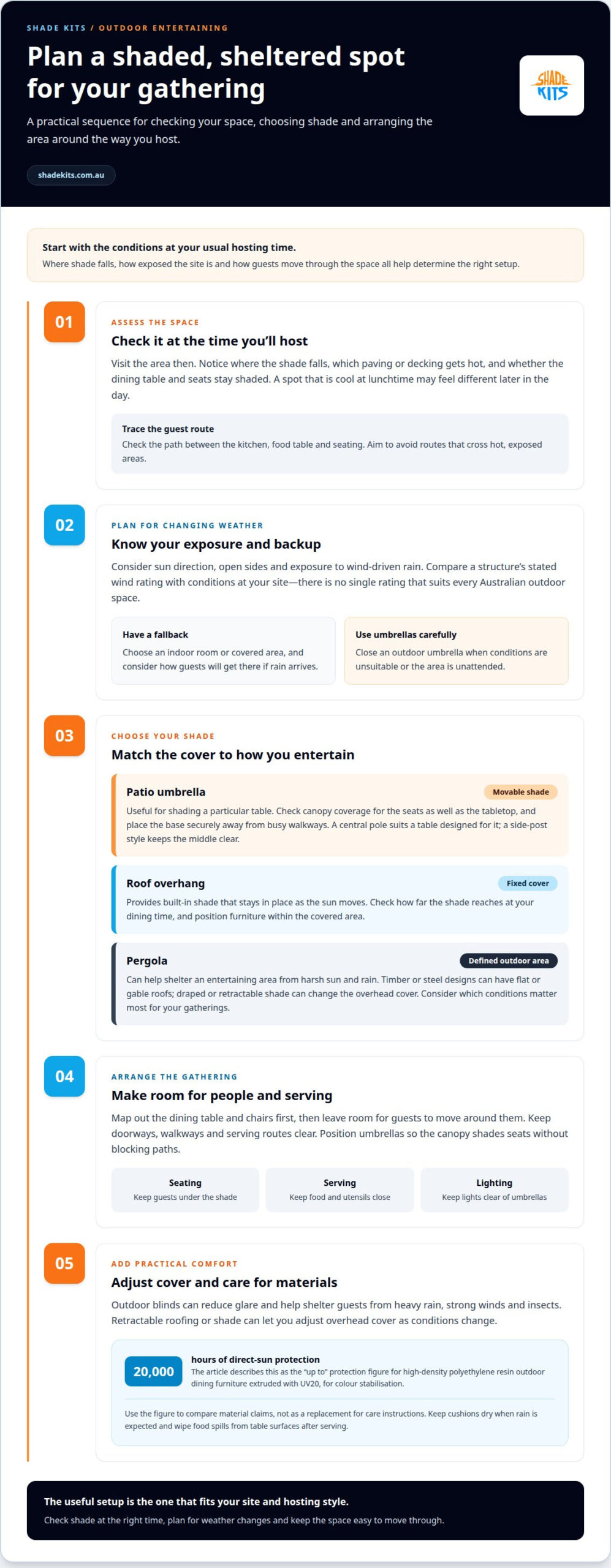
Visit the entertaining area at the time you plan to host. Notice where the shade falls, which paving or decking gets hot, and whether the dining table stays shaded. For an afternoon gathering, the coolest spot at lunchtime may be uncomfortable later. Check the route between the kitchen, food table and seating too, so guests can move without crossing a hot, exposed area.
Plan for changing conditions before arranging furniture. Choose an indoor room or covered area as a backup, and decide how guests can get there if rain arrives. Consider the direction of the sun and any open sides exposed to wind-driven rain. A sheltered corner beside the house may work better than the middle of an open lawn, especially if the forecast changes during the event.
There is no single wind rating that suits every Australian outdoor space. Compare a shade structure’s stated rating with the exposure at your site, including gusts, heavy rain and wind direction. Don’t assume a canopy or umbrella is suitable just because it fits the space. Close outdoor umbrellas when conditions are unsuitable or the area is unattended, and keep a covered alternative ready for sudden changes in the weather.
Choose furniture for the elements as well as appearance. High-density polyethylene resin outdoor dining furniture extruded with UV20 is described as offering up to 20,000 hours of protection against direct sunlight for colour stabilisation. That figure can help when comparing material claims, but it doesn’t replace checking care instructions. For example, keep cushions dry when rain is expected and wipe food spills from table surfaces after serving.
Position umbrellas to shade the table without blocking walkways or serving routes. Secure the base, then check that the canopy covers the seats as well as the tabletop. If the sun moves during your event, reposition a movable umbrella; lower or close it when the weather becomes unsuitable. Outdoor blinds are another option. Lowering them can reduce glare and help shelter guests from heavy rain, strong winds and insects.
Keep warm-weather menus simple to serve under cover. Prepare cold drinks and a platter before guests arrive, then place them on a stable surface out of direct sun. Choose food you can serve in batches, such as salads alongside barbecue items, so you’re not repeatedly carrying dishes through exposed areas. Place rubbish bins and serving utensils near the table, leaving room for guests to gather comfortably.
A patio umbrella suits outdoor dining when you want shade over a particular table. Measure the dining area and allow room for seated guests when choosing the canopy shape and size. A canopy that covers only the tabletop may leave chairs exposed as the sun moves. Check how the umbrella opens and where its pole sits, so it doesn’t block a seat or the path between the house and backyard.
Match the umbrella design to the way you host. A central pole can work with a table designed to accommodate it, while a side-post style keeps the middle of the table clear. Either way, place the base securely and away from busy walkways. For summer gatherings, position the umbrella to shade the seats, then adjust it if the sun shifts.
Umbrellas offer flexible coverage, but need attention when conditions change. Close one if the wind picks up, rain becomes heavy, or the area is unattended. Don’t leave an open canopy where it could catch gusts or block a route indoors. Keep the closing mechanism accessible, and make sure lights and serving equipment won’t interfere with the umbrella’s movement.
A roof overhang provides shade without needing to move a canopy. For example, a home with a large overhang on both its courtyard and patio sides can shade two outdoor spaces. This fixed cover can make hosting easier because the shaded area stays in place as the sun moves. It also helps distinguish the covered dining area from the open part of the backyard.
Check how far an overhang’s shade reaches at your usual dining time. Place the table and chairs within the shaded area instead of assuming the roof covers the whole patio. The roof’s depth and direction affect where the shade falls, so the covered space may suit lunch but need a different furniture arrangement later in the day. Keep doorways clear when positioning furniture.
Consider lighting under a fixed overhang too. For an evening gathering, a pendant or wall light can make the dining table easier to use without putting equipment on the floor. With an umbrella, keep freestanding lights clear of the canopy and pole. The best choice depends on whether you want movable shade over one table or consistent cover across a larger outdoor dining space.
A pergola can define an outdoor living area and provide shelter from harsh sun and rain. Added to a deck or patio, it can make more of the space usable for meals and gatherings. Before choosing a position, map out where the dining table and chairs will go, then leave room for guests to move around them. This helps the structure serve everyday outdoor living, rather than just create a shaded patch.
The roof design affects the look and feel of the area. Pergolas can be made from timber or steel, with gable or flat roofs. A flat roof gives the space a clean, simple profile, while a gable roof creates a different shape overhead. Choose a design that suits your home and patio layout, then consider how its coverage will shelter the table and seating when you usually entertain.
Integrated shade can make a pergola more comfortable in strong sun. A draped covering provides shade, while a retractable option lets you adjust the overhead cover as conditions change. A pergola designed to shelter from rain can also help keep the dining area usable during showers. The level of protection depends on the roof or canopy, so consider whether sun, rain or both matter most for your gatherings.
Do I need council approval or a building permit for a pergola or shade sail in Australia? There isn’t one Australia-wide answer; requirements depend on the property and proposed structure. Ask your local council what applies to your site before building, rather than assuming a pergola or shade sail is exempt.
Plan the furniture layout before deciding on the structure’s footprint. Set out the dining table and chairs, then check that people can pass between the house, seating and serving area. For example, a pergola over a patio can bring the table and chairs together in one sheltered zone. Keep edges clear where guests need access, and consider how the roof shape affects light reaching nearby rooms.
A pergola suits hosts who want a more defined entertaining area than a movable umbrella provides. It can also connect a deck or patio with the home’s outdoor living space. Consider the structure, roof style and coverage together. The best arrangement shelters the places where guests actually sit, dine and gather.
For a cocktail gathering, arrange the outdoor area around serving and conversation. Set drinks on a stable surface away from the barbecue, then place seating where guests can talk without crowding the cook. Separate appetisers and drinks to encourage people to mingle. For example, set a small drinks station near the dining area and appetisers closer to the lounge seating.
Prepare a signature cocktail ahead of time and keep it chilled until guests arrive. This makes serving drinks simpler during the evening, especially when the barbecue needs attention. Set out glasses, a jug of water and non-alcoholic options together so guests can serve themselves. Keep these items under cover and away from hot cooking surfaces, leaving the main dining table clear for food.
For a barbecue party, plan the route between the cooking area, serving surface and seating. An outdoor kitchen can help you cook and socialise without repeated trips inside for small items. Keep frequently used things, such as serving plates and utensils, within easy reach. Place guest seating outside the cook’s working route, and leave a clear path for carrying food from the barbecue to the table.
Lighting helps the space work as daylight fades. Plan light for dining and moving around, and choose fittings that suit the mood of the event. A pendant or focused light above the table makes food easier to see, while softer lighting around seating creates a relaxed setting. Keep pathways visible and avoid placing cords or lamps where guests could trip or brush against them.
For a beautiful table setting, use votive candles as a small accent among plates and serving dishes. Keep flames away from decorations and anything that could catch fire. Combine candlelight with practical outdoor lighting so the table remains usable after sunset. If the event shifts from dinner to conversation, move a few chairs towards the drinks area rather than gathering guests around the cooking space.
Shade matters at an evening event too, particularly if guests arrive before sunset. A covered dining area gives people a comfortable place to eat, while open seating suits those who prefer fresh air. Match the arrangement to the menu: keep barbecue service close to the table, but set drinks apart to encourage conversation. This layout makes hosting easier without making the cook the centre of every activity.
A Smith & Sons Ryde balcony design uses a folding window to connect the kitchen with an outdoor bar and barbecue area. A Smith & Sons Manly outdoor entertaining area includes a barbecue, pizza oven, fridge and sink, with seating for guests. Votive candles on the outdoor dining table create ambience.
The right patio shade depends on how you use the space. A pergola suits a defined dining area, while an umbrella can move to follow the table. A shade sail provides overhead coverage, and a retractable awning lets you adjust the shade as conditions change. Choose based on the area you want covered, how flexible the layout needs to be, and whether you also want shelter from rain.
Think beyond midday sun when planning an outdoor entertaining area. Outdoor blinds can add privacy while preserving views, and help shield guests from wind, rain and insects. Lowering a blind can also turn a clear wall into a screen for an open-air cinema. For example, arrange chairs facing the blind and keep the dining table clear for snacks and drinks.
The cost depends on the structure and project scope, including the area’s size, shade type, materials and installation needs. Compare these elements together: a movable umbrella and a fixed overhead structure solve different problems, so their costs aren’t directly interchangeable. For a useful budget, first define the space to be covered and the level of weather protection you want.
Choose lighting, heating and ventilation to suit the covered area and the way you host. For an evening gathering, plan lighting over the dining area and along routes between the house and seating. Keep sides open where possible to support airflow, and choose heating designed for outdoor use. Arrange each element around the furniture so lights, heaters and tables don’t block guests or serving routes.
Make the shade work with your lifestyle by deciding which pieces should stay fixed and which should move. A permanent cover can establish a reliable dining area, while portable seating and side tables let you rearrange the space for a barbecue or relaxed drinks. If weather protection is a priority, combine overhead shelter with adjustable blinds.
Before settling on a layout, picture a typical gathering from arrival through to evening. Consider where guests will sit, where food will be served and which parts of the patio need cover. This practical test helps balance comfort, appearance and effort, rather than choosing shade on looks alone. The best arrangement supports the way you regularly use the space.
Explore shade options for your outdoor entertaining area and plan a layout that fits your home and hosting needs.
Shade Kits offers practical shade options for the way you entertain. If an umbrella no longer provides enough coverage, or your outdoor dining area needs more defined shelter, compare Pergola Kits, Awning Kits and Patio Cover Kits. The right choice depends on your space, the areas you want shaded and how you plan to use them.
Consider whether you need cover over a dining table, a broader patio or a space beside the house. These priorities can help narrow down a structure that suits your outdoor setup. Shade Kits also offers Carport Kits, while pergolas, awnings and patio covers are designed to provide shade over outdoor living areas.
Contact Shade Kits to discuss a shade option for your entertaining space.
Your outdoor area can evolve with the way you host. Start with the gatherings you want to make easier, whether you need a shaded dining spot, room to move between seats or a more sheltered setting for evening entertaining. The best outdoor shade for entertaining guests is the option that suits your routines and home, not a structure chosen on appearance alone.
If you’re ready to explore a more permanent setup, Shade Kits offers Carport Kits, Pergola Kits and Awning Kits. Consider which part of your outdoor space needs cover and how you want to use it, then discuss the options that suit your plans.
Contact Shade Kits about outdoor shade to take the next step towards a more useful entertaining space. With a clear idea of your priorities, you can plan a setup that feels considered and welcoming for future gatherings.
Have a clear plan for moving the gathering indoors or under more reliable cover. Keep cushions, table settings and serving items easy to bring inside, and leave the route to the backup area clear. If a shower interrupts dinner, guests can move first while food and breakable items are carried in. Close an umbrella when conditions become unsuitable rather than leaving it open as the weather changes.
The best outdoor shade for entertaining guests in Australia depends on your layout and the shelter you need. An umbrella suits a dining table that may move, while a roof overhang provides fixed shade beside the house. A pergola can define a separate entertaining area, and an awning offers adjustable cover attached to the home. Consider your hosting routine and how guests move between seating and food.
To choose the best outdoor shade for entertaining guests, plan coverage around the full dining setup, not just the tabletop. Mark where the table, pulled-out chairs and serving space will go, then consider whether guests can move around without leaving the shade. Include nearby lounge seating if people will gather there too. One umbrella may suit a single table, while a broader patio layout may need cover across several pieces of furniture.
Look for clear information about the shade material and the weather protection it provides. A fixed roof or pergola can provide overhead shelter, while outdoor blinds can add protection at the sides. Shade Kits’ patio covers use UV-proof, rain-proof, translucent twin-wall polycarbonate roof panels. They provide overhead cover while letting natural light through, which can suit a dining area beside the house.
Observe the patio during the hours you expect to entertain, then position the table so the sun doesn’t shine directly across guests’ faces. Account for shade from nearby walls, trees and rooflines, which can change how much of the area is usable. If an umbrella is movable, reposition it as needed. With fixed cover, place chairs and serving surfaces within the shaded area, not at its exposed edge.