
A lower upfront quote does not always mean better value. Aluminium vs steel pergola cost depends on more than the frame: roof type, structure size and installation affect the total. In humid or coastal conditions, aluminium naturally resists rust, while steel relies on protective coatings to guard against corrosion.
It’s natural to start with the purchase price, especially when comparing materials that can look similar once built. But a price per square metre can be misleading if quotes include different roofing, footings or installation work.
This guide shows how to compare purchase and installation costs, what can affect the price per square metre, and how aluminium and steel perform in exposed Australian conditions. Use the practical comparison steps to weigh upfront costs against upkeep and choose a material suited to your pergola’s size, setting and intended use.
Use this range as a starting point, then compare quotes with matching dimensions and inclusions. A frame-only price is not comparable to a roofed structure that includes site preparation and installation.
Installation can add substantially to the purchase cost. Steel frames may require specialist equipment and two or more people for assembly. Pre-engineered metal designs can reduce labour if they are quicker to install.
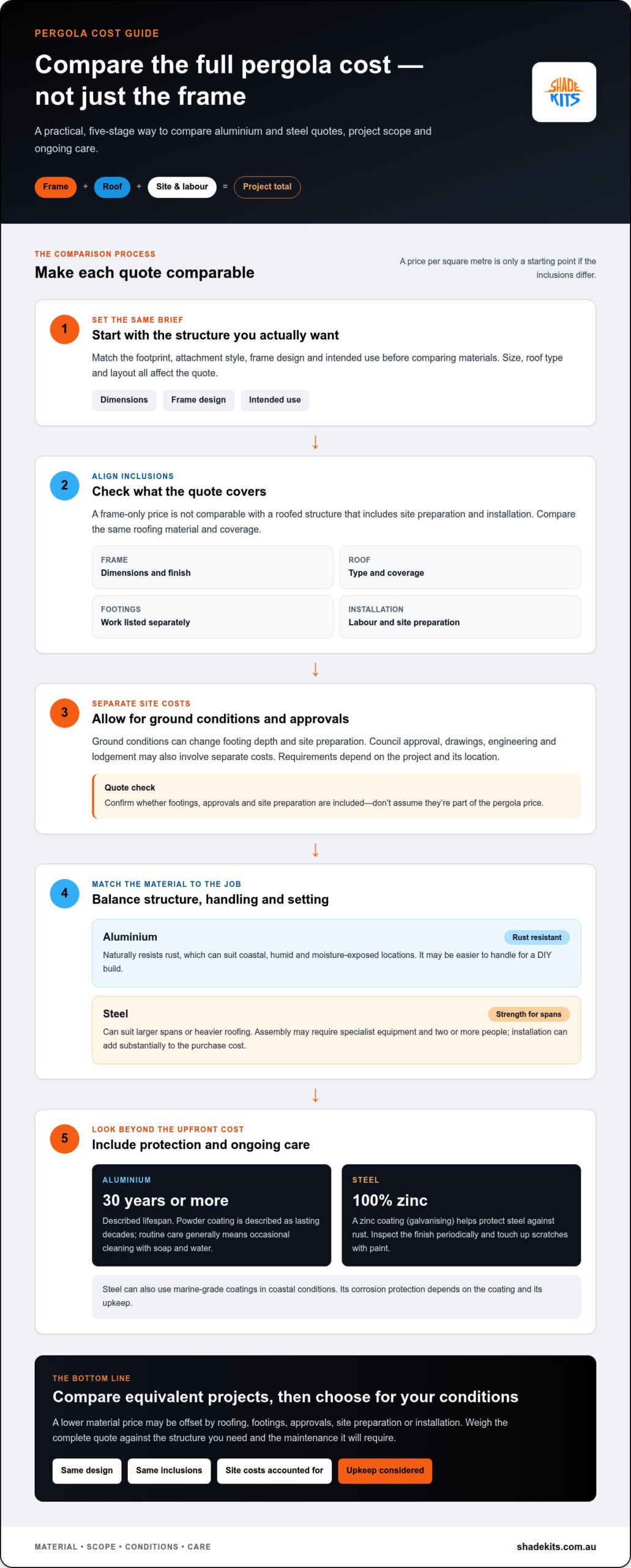
Footings and approvals also affect the budget. Ground conditions can determine footing depth and the amount of site preparation needed, so compare footing work as a separate line item. Council approval, drawings, engineering and lodgement may also involve separate costs. Requirements and costs depend on the project and its location, so don’t assume they’re included in the pergola price.
The aluminium vs steel pergola cost comparison shows why material alone doesn’t settle the budget. Size, roof type, ground conditions and labour all affect the total. Timber is another option: treated pine often costs less upfront, but compare materials and project scope on an equivalent basis.
| Option | Typical Australian cost | Key cost consideration |
|---|---|---|
| Steel pergola | Span, roofing and installation | |
| Aluminium pergola | Size and roof specification | |
| Basic pergola installation | Labour scope and site conditions | |
| Professional installation labour | Time and assembly requirements |
Choose steel when the design calls for its structural capacity, then assess the full project scope. Compare frame dimensions, roofing, footings, approval allowances and labour. A lower material price can be offset by site preparation or installation needs, while a simpler design may keep those costs down.
Material, dimensions and roofing all shape a pergola’s initial cost. Compare equivalent designs and inclusions instead of judging by frame material alone.
Aluminium pergolas usually cost more upfront than timber pergolas, but the final quote depends on the structure and its specifications. Roofing, custom dimensions and a more involved layout can all change the price. For a fair comparison, match the footprint, roof type and installation scope. This helps separate the cost of the material from that of a larger or more elaborate design.
Steel can sometimes cost less than timber or aluminium, depending on the project. Its structural strength may suit large builds, long spans or heavier roofing, where requirements differ from those of a standard backyard structure. Compare equivalent specifications, including frame finish and roof. A lower initial material cost does not necessarily mean a lower total project cost.
Timber provides a useful benchmark. These ranges show how timber type and project scope affect the upfront cost. Hardwood’s higher starting range doesn’t automatically make it the better choice: appearance, maintenance and intended use matter too.
Timber pergolas bring a natural finish to an outdoor area, while aluminium and steel offer metal-frame alternatives. Treated pine is the lower-cost timber example, while hardwood sits higher. Timber can cost less initially than aluminium, but generally needs more maintenance. Consider whether you value a particular look or prefer less ongoing frame care.
Roofing also affects comparisons. An open-beam timber design isn’t directly comparable with a structure that includes weather protection. Set out the scope before reviewing estimates:
For a practical comparison, start with the design you want, then assess material alternatives against it. Treated pine may suit a tighter upfront budget, while a metal frame may better meet a preference for reduced maintenance or a particular structural requirement. Focus on the complete specification: roof choice and installation can change the overall project scope.
Aluminium naturally resists rust, making it suitable for coastal, humid and moisture-exposed Australian locations. Steel can also work in exposed settings, but its corrosion protection depends on coatings and their upkeep.
Aluminium pergolas are described as having a lifespan of 30 years or more. Their powder coating is also described as lasting decades, and routine care generally means occasional cleaning with soap and water. This combination makes aluminium a practical option for a coastal backyard where rust resistance and a simple maintenance routine matter.
Keep the frame clean to prevent dirt and residue from building up. As part of regular outdoor maintenance, check the finish and joints for grime or damage. Aluminium’s natural rust resistance doesn’t mean it needs no care: cleaning helps maintain its appearance. Unlike coated steel, aluminium doesn’t rely on a protective layer to prevent the base metal from rusting.
Steel can suit pergolas requiring greater strength, but the frame needs anti-corrosion protection. A 100% zinc coating, also known as galvanising, helps protect steel posts against rust and corrosion. Marine-grade coatings can also help protect steel pergolas in coastal conditions. The protective finish is central to steel’s durability in humid or salt-exposed settings.
Steel can rust if its protective coating isn’t properly maintained. Inspect the surface periodically and touch up scratches with paint to protect exposed areas. Powder-coated steel pergolas are described as having a lifespan of 30 years or more in the cited example, while the powder coat may need touch-up after 15-20 years. The finish condition therefore matters when assessing expected service life.
For durability, maintenance and lifespan, aluminium generally offers lower-maintenance rust resistance, while steel combines strength with corrosion protection that needs monitoring. Aluminium pergolas are described as lasting 30 years or more. Steel’s longevity depends on the coating, exposure and care, so inspect its finish rather than assuming the frame is protected indefinitely.
Use a simple care routine to help preserve either frame:
In a humid or coastal location, choose aluminium if natural rust resistance and straightforward care are priorities. Steel may suit a structure where strength is important, provided its finish receives regular attention. Balance the frame’s structural role against the maintenance you’re prepared to do over time.
Aluminium can offer value when a standard-size pergola, DIY assembly and lower maintenance suit the project. Its initial cost is only part of the decision: roofing, structure layout and ongoing care also affect what you spend. For an outdoor living area, compare the complete build rather than treating the frame as the whole project.
It also gives aluminium pergolas a lifespan of 30+ years. These figures point to a key value consideration: the material’s low-maintenance profile can matter more over time than a lower initial price for another option.
Roofing can change the upfront budget. Compare options by the protection and flexibility you want, not just the frame material.
Those extras can quickly shift a value comparison. A simpler roofing choice may suit a compact attached structure, while a freestanding design or upgraded roof changes the project scope. List each addition separately in your budget to see what contributes most.
Attachment can affect the initial price too. Pergolas attached to a house wall are typically 10 to 20 per cent cheaper than freestanding structures. Compare equivalent layouts before attributing that difference to aluminium. Hardwood timber pergolas can cost less upfront, while their maintenance needs affect longer-term value. The right comparison accounts for both the material and the structure’s position.
Use these checks to assess value:
Aluminium’s strongest value case is a standard-size pergola where DIY assembly and minimal maintenance suit the project. For a large, freestanding design with upgraded roofing, extras and structure size may matter more than the frame alone. Compare the full specification with how you plan to use the outdoor area, then choose a combination that fits your budget and weather-protection needs.
Size, roofing, design complexity and installation all affect the price of an aluminium or steel pergola. Climate matters too: coastal exposure can call for added corrosion protection, while heavier roofing can affect structural requirements.
Comparing cost per square metre helps normalise different-sized structures, but it isn’t a complete quote. Divide the total project cost by the covered area, then compare what each figure includes. For example, a 4 × 4 metre pergola covers 16 square metres. Check whether quotes cover the same frame, roof, footings and installation before comparing their unit costs.
These ranges overlap, so material alone doesn’t determine which option costs less. The aluminium vs steel pergola cost difference depends on each estimate’s specifications, including span, finish, roof and site preparation.
Roof selection can shift the project total. Shade cloth, polycarbonate, Colorbond and adjustable louvres have different material and structural requirements. A solid or heavier roof may need a frame designed to support it. Check how the roof is included in the area-based estimate instead of comparing a bare frame with a complete covered structure.
Design also affects the calculation. A simple rectangular structure is easier to compare than a custom layout with unusual spans or additional features. Freestanding structures may need different support arrangements from attached ones. In coastal conditions, protective coatings and suitable fixings can influence the specification. A premium finish or more complex design can therefore increase the final cost.
Use this comparison process for any quote:
These steps make unlike structures easier to assess. They also reveal whether a lower unit price reflects a simpler specification rather than better value for equivalent work. For Australian homes, consider climate alongside span and roofing. Steel may suit structures that need greater strength, while aluminium can suit standard-size projects and DIY assembly.
For a covered outdoor area, compare the options and specifications in Shade Kits pergola kits with your project requirements.
Shade Kits offers Carport Kits to protect vehicles from sun and weather, alongside Pergola Kits for creating a covered outdoor area. For a pergola, its factory-direct DIY kits feature durable aluminium frames and UV-resistant polycarbonate roofing, designed for Australian homes and weather conditions.
The kits suit homeowners who want to assemble a structure themselves and are comparing frame material, roof coverage and project scope. Shade Kits also offers Awning Kits and Patio Covers for other outdoor cover needs. The kits don’t include on-site installation labour, so they’re best suited to projects you plan to assemble yourself.
Visit shadekits.com.au to explore the options or contact Shade Kits.
Before choosing a frame, decide how you’ll use the space and what matters most: shade, weather protection, appearance or a structure you can assemble yourself. Sketch the proposed footprint and note your roof preferences, attachment points and site conditions. This gives you a clear brief for comparing suitable options.
The aluminium vs steel pergola cost comparison is most useful when it helps you assess the whole project, not just the material. Set your priorities first, then weigh the design and specifications against them. A well-matched pergola can make your outdoor area more practical without adding features you don’t need.
Shade Kits offers Pergola Kits, alongside Carport Kits and Awning Kits for other outdoor-cover needs. Explore the options and consider which best suits your plans, then contact Shade Kits about your pergola.
Once you know your space and priorities, you’re ready to choose a pergola that works for your home.
There isn’t one useful average for every Australian pergola because projects differ in size, materials and inclusions. A small open-beam structure and a roofed pergola with electrical features have different scopes. For a meaningful estimate, define the footprint, choose the roofing, and separate the frame, site preparation and installation. Compare quotes for the same work rather than relying on a single headline figure.
Choose the material that best fits your structure, setting and maintenance preferences. Aluminium suits standard-size projects and DIY assembly, while steel may suit larger spans or heavier roofing. Timber offers a natural finish and can cost less initially, but generally needs more upkeep. In coastal locations, corrosion resistance matters too. Decide which factors matter most, then compare equivalent designs and roofing options.
The installed cost of an aluminium pergola depends on the frame, roof, site and labour included. A frame-only quote doesn’t represent the installed total. Check whether the scope includes footings, roofing, electrical additions and assembly. A roof upgrade or difficult ground conditions, for example, changes the work involved. Compare complete specifications so the quoted totals reflect the same finished structure.
The installed cost of a steel pergola depends on its design, roofing, site preparation and assembly requirements. Steel construction may involve specialist equipment, so labour scope matters as much as the frame specification. Check whether the quote separates materials from labour and includes footings and any required approval costs. Comparing an installed steel build with an aluminium kit price alone won’t show the true difference between project options.
These ranges overlap, so the aluminium vs steel pergola cost comparison depends on the structure and inclusions. Divide each comparable project total by its covered area. Before drawing a conclusion, make sure both figures include equivalent roofing, installation and site preparation.
DIY kit pricing depends on dimensions, frame specifications, roofing and the components included. A frame-only kit and a roofed kit aren’t equivalent purchases. For a useful comparison, list the frame parts, roofing, fixings and instructions included, then identify any separate site preparation or approval costs. Steel can also require more involved assembly than a lighter aluminium structure, affecting the effort needed for a DIY build.
The final labour cost depends on time on site and installation scope, so an hourly rate alone isn’t the full picture. Steel assembly may need specialist equipment and two or more people. Compare the labour allowance, crew requirements and material exclusions in each estimate before assessing the project total.
Aluminium naturally resists rust, making it practical for coastal or humid locations. Steel can also suit exposed settings when protected by galvanising or suitable coatings, but its coating needs periodic inspection. For example, touch up scratches in a steel finish to help protect the surface. Consider local exposure and the ongoing care you’re prepared to give the frame.