
A permanent carport isn’t automatically the right answer for every driveway. The best DIY car storage kits match the protection you need with the space you have and how often you use your vehicle. In Australia, where cars can face harsh sun and rain, choosing between a fixed shelter and a foldable option is a practical decision, not just a matter of appearance.
Before choosing, consider how much room you can commit, how you use your vehicle and whether you want a permanent structure. A DIY carport kit with an aluminium frame and UV-resistant polycarbonate roofing provides a fixed shade option for a suitable site. The foldable CarCave offers a different approach to vehicle protection at home, with flexibility to fold it away when it isn’t in use.
This guide compares the main options and explains what to assess before choosing, including your vehicle’s dimensions, available space, access, ground conditions and local council requirements. You’ll also get a clearer picture of the planning and assembly involved, so you can choose a solution that fits your home and routine.
DIY car storage kits are owner-assembled solutions that create shelter or a protective cover for a vehicle at home. They range from permanent structures, such as carports, to foldable options that can be set up when needed. The type of protection depends on the format, site and product design, so start by deciding what you want to protect your vehicle from and how often you’ll use the shelter.
A carport kit combines a frame and roof to create an open-sided parking shelter. Shade Kits’ carport kits use aluminium frames and UV-resistant polycarbonate roofing, providing a permanent shade option for a suitable home site. A carport offers overhead cover, but it isn’t enclosed or lockable like a garage. Your choice depends on available space, exposure to sun, rain, hail and wind, how often you use the vehicle, and whether you prefer a permanent or flexible setup.
A carport is an open-sided structure intended to shelter a parked vehicle, while an enclosed garage surrounds it with walls and a door. That distinction matters: a carport can provide overhead shade and shelter, but it doesn’t offer the enclosed storage or access control of a garage. For a general overview of carport designs, see Carport Wikipedia. Explore DIY carport kits in Australia to review the structural option for a suitable home site.
For a more permanent parking space, a carport kit provides a fixed structure assembled at home. It needs a suitable location and enough space for the frame, roof and vehicle, so consider it as part of your property’s layout rather than as a cover to move around. Once in place, it can provide a consistent shaded parking area for a vehicle you use regularly.
Foldable protection suits a different routine. It can be set up or folded away as your storage needs change, without committing to a permanent structure. Shade Kits’ CarCave is a foldable vehicle-protection solution designed to defend against hail, rain and harsh sun. Its fast DIY setup design makes it a flexible option for people who want protection they can put away when it isn’t needed.
Neither format is right for every property. Consider whether a fixed shelter fits your site and daily parking habits, or whether the ability to fold away protection is more useful. Also distinguish shelter from security: neither an open carport nor a foldable cover should be treated as enclosed, lockable garage storage. Keeping that difference in mind helps set realistic expectations before you compare options.
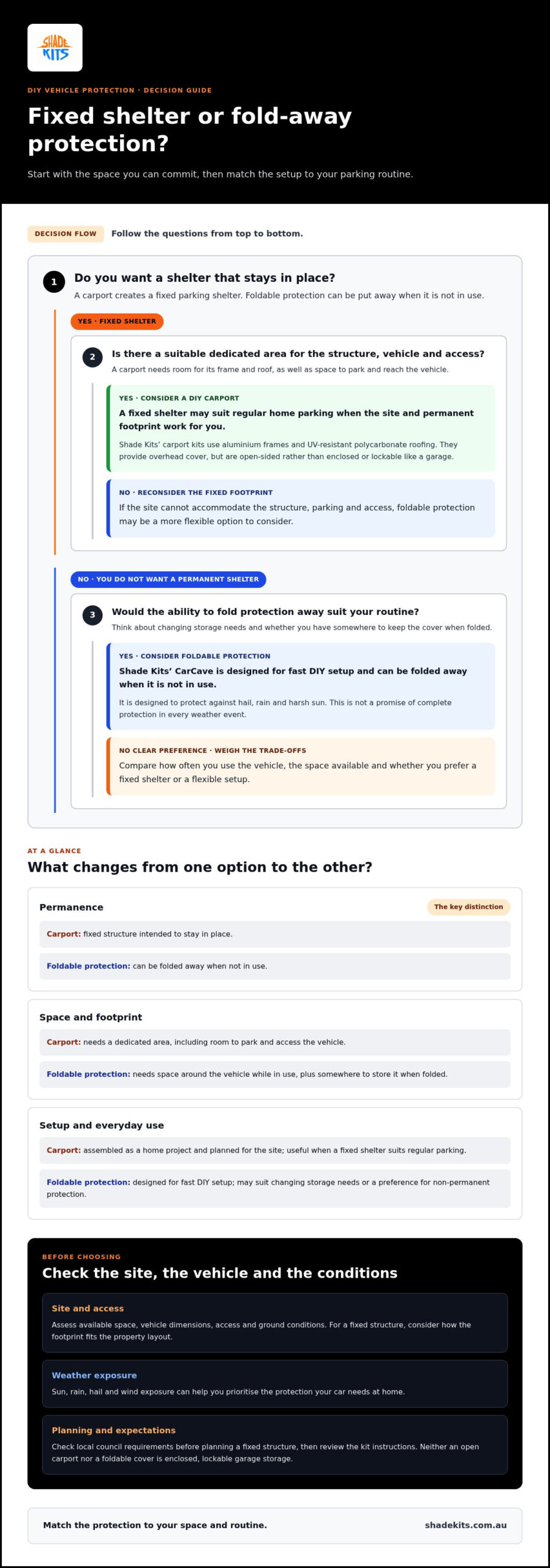
The everyday difference is whether protection stays in place or is brought into use as needed. A carport creates a dedicated parking shelter, while a foldable option offers a more flexible way to cover a vehicle. Consider how regularly you park at home, how much space you can commit and whether you want a fixed structure.
| Factor | DIY carport | Foldable protection |
|---|---|---|
| Permanence | Fixed structure intended to stay in place. | Can be folded away when not in use. |
| Footprint | Occupies a dedicated area, including room to park and access the vehicle. | Needs space around the vehicle while in use, plus a place to store it when folded. |
| Setup | Assembled as a home project and planned for the site. | Designed for fast DIY setup. |
| Typical use | Regular parking where a suitable site and fixed shelter make sense. | Changing storage needs or a preference for non-permanent protection. |
A carport is a permanent shelter built around a parking spot; a foldable option is protection you can put away when your routine changes. Keep this distinction in mind as you weigh the two formats.
A carport may suit you if you park at home regularly, have enough room for a dedicated structure and prefer not to set up protection each time. Shade Kits’ carport kits use aluminium frames and UV-resistant polycarbonate roofing. Compare the kit options with your available space and intended use.
Daily convenience is a key advantage: the shelter is already in place when you arrive or leave. The trade-off is a lasting footprint. The parking area needs to work for your vehicle, access and property layout. A fixed shelter also calls for more site planning than a cover you can fold away. Assess your site before deciding that a permanent structure is the practical fit.
Foldable protection can suit a household that doesn’t want to dedicate part of the property to a permanent shelter, or whose vehicle storage needs vary. Shade Kits’ CarCave is designed for fast DIY setup and vehicle protection from hail, rain and harsh sun. Its intended use isn’t a promise of complete protection in every weather event.
Consider your routine as well as the product: will you use the cover often enough to make setting it up worthwhile, and do you have somewhere to keep it when folded? If flexibility is a priority, explore foldable car protection as an alternative to a fixed parking shelter. If a permanent structure fits your site better, compare the carport kit range as part of your decision.
The best fit depends on the conditions at your home and the way you use your car. A permanent carport can provide a consistent parking shelter, but it needs a suitable site and a footprint you’re happy to keep. Foldable protection takes a more flexible approach, though you’ll need time and space to use and store it. Neither format is automatically right for every property.
Site suitability matters because a DIY structure must fit your property, vehicle and local requirements before assembly can begin.
Weather exposure helps clarify what you want protection from. Regular direct sun may make overhead shade a priority; rain, hail and wind can raise different concerns. A roof or cover’s performance depends on its specific design, correct assembly and the conditions it faces. Don’t assume every kit offers the same level of protection or that any option can prevent damage in every weather event. Check the relevant product information for the conditions it’s designed to address.
Start with the space your vehicle needs, not just the area the shelter appears to occupy. Measure parking width and vehicle length, then allow room to turn in, open doors and move around the car. Check overhead clearance too, including roof accessories if your vehicle has them. A footprint that looks adequate on a plan may feel tight in daily use.
Next, assess the surface and drainage, access to the parking spot, and how close the proposed structure would be to buildings or boundaries. These details can affect where a shelter fits and how practical it is to use. A level, clear work area also makes it easier to follow assembly instructions accurately.
Planning and building requirements can vary by location and project. Before choosing or assembling a permanent structure, check current requirements with your local council and relevant building authority. Don’t rely on a rule you’ve heard applies elsewhere; confirm what applies to your property and proposed project.
Compare your vehicle’s actual dimensions with the space available, including any accessories that increase its height or length. Then consider how often it’s parked at home, whether you need frequent, clear access, and how much room you can reserve. A carport may suit regular parking if you want a dedicated shelter and have a suitable site. A foldable option may make more sense if your storage needs change or you prefer not to keep a permanent structure in place.
Exposure can influence your decision. For a car parked in direct sun, shade may be a main priority; where rain or hail is a concern, consider the protection described for the specific product. Wind exposure also matters for a fixed structure or foldable cover, but suitability depends on the product’s documented limits and correct setup. Match those details to your property rather than relying on a general weather-resistance claim.
Use this assessment to narrow down the DIY car storage kits that could work for your home. A permanent structure asks more of the site; a foldable one asks more of your day-to-day routine. If either option looks suitable, plan the project carefully before assembly.
A manageable assembly starts well before you open the kit. Measure the proposed location, check whether the structure suits the site, understand any approvals or other work involved, then prepare to follow the product documentation. This sequence helps identify fit and planning issues early.
Measure the vehicle and the intended structure position separately, then compare them with the product requirements. A car may fit within the marked footprint but still be difficult to park if turning room is limited or doors open onto an obstacle. Check clearance above the vehicle as well as around it. Note slopes, runoff and surface conditions so you can assess them against the kit instructions rather than relying on assumptions.
A clear work area matters too. It gives you room to organise components, consult the instructions and work without avoidable obstructions. Keep access routes in mind, and don’t begin assembly if the site conditions conflict with the product documentation or safety directions.
DIY doesn’t mean guessing your way through the job. Read every step first, check components before assembly and use the tools and methods specified in the supplied documentation. Don’t rely on generic online advice for details that depend on a particular kit. Installation time, crew size and tools can differ by product, so avoid planning around assumptions that aren’t supported by its instructions.
Keep assembly separate from regulatory approvals and specialist work. A kit may be owner-assembled, but the project still needs to meet applicable requirements, and some site or structural tasks may call for expertise beyond assembly. Once your measurements and planning are in order, explore DIY carport kits as a permanent vehicle-shelter option for a suitable site.
Start with the site, not the product. If a permanent structure fits your property, parking needs and preferred routine, a carport kit may be worth considering. If you’d rather avoid a fixed shelter or your storage needs change, foldable protection may be a better match. This simple rule helps narrow your options without assuming one format is right for everyone.
Before making a shortlist, bring together four practical details:
Compare these needs against the two formats. A carport kit may suit regular parking and a property with room for a dedicated structure. Foldable protection may better suit a changing routine or a preference for a non-permanent option. Choose between a carport and foldable vehicle protection based on site fit and daily use, not on an assumed model or bundle.
Write down your vehicle measurements and the space you can realistically use, then decide whether you want a structure that stays in place. Note the weather conditions you most want to address, too. If your answers point to regular parking, a suitable footprint and a fixed shelter, shortlist carport kits. If flexibility matters more, shortlist foldable protection. An Australian carport planning checklist can also help organise the questions to resolve before committing to a structure.
Before purchase or assembly, recheck the vehicle and site dimensions against the product requirements. Review the complete instructions, make sure the surface and work area are suitable, and verify current local approval and building requirements for a permanent structure. If hail is a concern, compare the protection described for the product with the conditions you want to address.
That final review helps turn a broad preference into a practical decision. Shade Kits’ carport kits use aluminium frames and UV-resistant polycarbonate roofing, while the foldable CarCave offers a non-permanent vehicle-protection format. Match the option to your site and routine, then explore DIY carport kits from Shade Kits if a permanent shelter is the right next step for your home.
Use your site measurements and day-to-day parking needs to turn a broad idea into a practical shortlist. Before settling on one of the DIY car storage kits, make sure the protection style fits your property and the way you’ll use it. A permanent carport and foldable protection solve different needs, so choose the one you can plan and use comfortably.
Shade Kits offers DIY carport kits with aluminium frames and UV-resistant polycarbonate roofing, alongside the foldable CarCave, designed for protection from hail, rain and harsh sun. With Australia-wide delivery, you can explore these vehicle-protection options wherever you’re based in Australia.
Ready to consider a permanent shelter? Explore DIY carport kits from Shade Kits and take the next step with your site and routine in mind. A little planning now can help you choose protection that feels right for your home.
Possibly; requirements depend on your property and proposed structure, so check before purchasing or starting work. Ask your local council or relevant building authority whether planning or building approval applies to your design and site. Have the proposed dimensions and position on your block to hand. Also check any property-specific restrictions that may affect what you can build, rather than relying on advice that applies to a different location.
Yes, a DIY kit is intended for owner assembly, provided you can follow its instructions and meet the project’s safety requirements. Read the full documentation first and be realistic about the work involved, including handling components and preparing the site. A kit doesn’t necessarily cover approvals or specialist tasks. If any part of the project falls beyond your skills, pause and arrange appropriate qualified help before proceeding.
No carport should be assumed to prevent all hail damage. A roof can provide overhead shelter, but outcomes depend on the specific product, correct assembly and the conditions during a storm, including hail size and direction. Check the product documentation for its stated performance and limitations. If hail is your main concern, compare those details with your vehicle’s exposure rather than treating a general claim of protection as a guarantee.
A carport kit creates a fixed parking structure, while a foldable shelter is a non-permanent option that can be put away when it isn’t in use. The first commits part of your property to vehicle shelter; the second makes flexibility part of the routine. Neither is enclosed garage storage. Think about whether you’d rather preserve a dedicated parking space or have protection that doesn’t remain set up all the time.
No. The surface and site must suit the particular kit and its assembly requirements. A sloping or uneven area, poor drainage or an unsuitable surface may affect whether the proposed position works. Don’t assume grass, paving or a concrete slab is automatically appropriate, and don’t choose a footing method based on guesswork. Check the product documentation for site preparation and fixing requirements before selecting a location.
It can be part of an ongoing vehicle-storage routine if the product is used and cared for according to its instructions. Suitability depends on the product’s intended conditions and how often it’s set up, folded and stored. Follow its guidance for use, cleaning and storage, and inspect it regularly for wear or damage. If it no longer appears in suitable condition, don’t rely on it for the protection you need.