
What if the best DIY patio cover kit isn’t the largest or most feature-packed option, but the one that suits your site and local conditions? Choosing between DIY patio cover kits Australia homeowners can buy starts with more than appearance. Your roof style, available space and exposure to wind and sun all affect which kit may be suitable.
It’s understandable to have questions about whether a kit is manageable to assemble, how to check its structural requirements and whether you need approval before building. A little planning can help you avoid choosing a cover that doesn’t fit your home, skills or local requirements.
This guide explains how to assess your space, compare materials such as aluminium frames and UV-resistant polycarbonate roofing, and prepare for a realistic DIY project. You’ll also learn what to check about site conditions, structural information and planning or building approval, which can vary across Australia. By working through these decisions before you order, you can make a more informed choice and know what to verify next.
A DIY patio cover kit is a supplied system intended to let a buyer assemble a roofed outdoor cover themselves, rather than commission a fully custom-built project with construction managed from start to finish. The frame supports the roof, while the roof material and configuration help determine the area covered and the light that reaches the patio. What’s supplied varies, so check the current specifications rather than assuming fixings, posts or other components are included.
In Australia, “patio” can refer to a roofed outdoor space as well as an open area beside a home. For context, What is a patio? outlines how the term is used in different places. A well-planned cover can provide shade and make an outdoor area more usable for everyday activities, but the right size and configuration depend on the home, the site and how you intend to use the space. DIY patio cover kits Australia buyers consider should be assessed on those practical factors, not appearance alone.
A kit gives you a defined starting point for planning the supporting frame and roof as a coordinated structure. Dimensions, roof configuration, attachment to the home or freestanding placement, and site conditions all affect suitability. Before ordering, compare the proposed footprint with doors, windows, boundaries, existing structures and the direction of surface drainage. Check the supplier’s current product specifications for dimensions, configuration and inclusions.
Be honest about your experience measuring accurately, following assembly instructions and working safely at height. Some tasks may be easier with a second pair of hands, while uncertainty about the structure or attachment points is a reason to seek qualified trade advice before proceeding. DIY assembly isn’t the same as structural design, electrical work or other specialist tasks, which may need appropriately qualified professionals.
These kits may suit confident DIYers who can prepare the site, understand the instructions and organise any help the work requires. They can also suit homeowners who want to manage parts of a project while seeking trade advice for tasks outside their skills. Shade Kits supplies DIY patio covers with aluminium frames and UV-resistant polycarbonate roofing, with customisable options; check the specific product details before deciding if they suit your project.
There’s no single answer to whether a kit is right for your home. Site suitability, assembly effort and approval requirements vary with the property and project. Confirm these details before ordering, and don’t treat a DIY-oriented design as confirmation that the structure is suitable or exempt from local requirements.
Start with the job the cover needs to do. A space for outdoor meals may need different coverage from an area used to shelter a doorway or provide shade beside the house. Consider how people will move between indoors and outdoors, where furniture will sit and whether the proposed footprint leaves clear access to doors, paths and other parts of the yard.
Site exposure means the conditions the structure will face at its specific location, including sun, rain, wind and, where relevant, coastal exposure. These factors can affect material and configuration choices, so a kit suitable for one property may not suit another. For DIY patio cover kits Australia homeowners are comparing, match the proposed design to the actual site rather than relying on a broad regional assumption.
Measure the usable footprint and record clearances, eaves, doors, windows, nearby services, surface type and ground levels. Mark obstacles such as downpipes and note where rainwater currently drains, so the proposed cover won’t obstruct access or direct runoff somewhere unsuitable. Also identify where supports could sit; the ground and footing requirements need to suit the product and site.
Put measurements on a simple sketch and compare them with the supplier’s current drawings and installation instructions. Check dimensions and fixing points carefully, and ask for clarification if the drawings don’t show how the kit relates to your home or proposed support locations. Don’t assume a measurement taken from an uneven surface or wall is enough to confirm the structure will fit.
Assess the conditions at the property, not just the general climate. Note when direct sun reaches the area, how rain runs across the site and whether the proposed position is exposed to strong winds. Coastal conditions may also matter for material selection. These observations help you ask more useful questions, but they don’t establish whether a particular kit is suitable.
Before choosing a design, ask the supplier or a qualified building professional which site-specific ratings and supporting evidence apply to the proposed structure. Check requirements with your local council and relevant building professional as well; don’t assume approval rules are uniform across Australia.
A careful site check turns “will it fit?” into a more useful set of questions about placement, exposure and suitability. Keep your measurements and notes together so you can use them when comparing specifications and discussing your project with a supplier or qualified professional.
A useful comparison starts with the exact kit, not broad claims about a material. For DIY patio cover kits Australia homeowners are considering, check the frame and roof specifications together, then weigh coverage, upkeep and verified site suitability. Shade Kits’ confirmed options include aluminium frames and UV-resistant polycarbonate roofing. That identifies the materials, but it doesn’t replace checking product-specific details or establish structural performance for your site.
Ask for the frame material and finish details, along with the supplier’s maintenance guidance. For the roofing, check what the product information says about light transmission, UV-related claims and care. Don’t infer wind suitability, structural ratings or compliance from the material alone. Request the relevant evidence for the specific kit and conditions at your property.
| Comparison point | What to check | Question to ask |
|---|---|---|
| Frame | Material, finish and care instructions for the exact kit. | What maintenance does the supplier recommend? |
| Roofing | Roof material, light transmission information, UV-related claims and care requirements. | Where can I find the product-specific roofing details? |
| Coverage and configuration | Current drawings, available dimensions and whether the proposed arrangement suits the site. | Which configurations are confirmed for this kit? |
| Structural evidence | Applicable ratings, supporting documentation and any stated limitations. | What evidence applies to my site conditions? |
Think about the area you’ll actually use. Allow for furniture, movement around the space and access to doors or paths, rather than choosing coverage by appearance alone. Compare attached and freestanding arrangements only if the supplier confirms the options and provides specifications for them. Check current drawings before assuming a particular dimension or roof configuration is available.
If you’re weighing a more open structure against a roofed patio cover, comparing aluminium pergola designs may help clarify the difference in form and intended use. If your priority is a different type of shade solution, consider aluminium awnings as another category to research. Availability and suitability depend on the product and property, so compare specifications rather than treating these options as interchangeable.
Keep a shortlist of the questions that matter to your project: material and finish, roof information, care requirements, configuration, and structural evidence. Written answers make it easier to compare kits on what’s documented, rather than assumptions about what a material or design should provide.
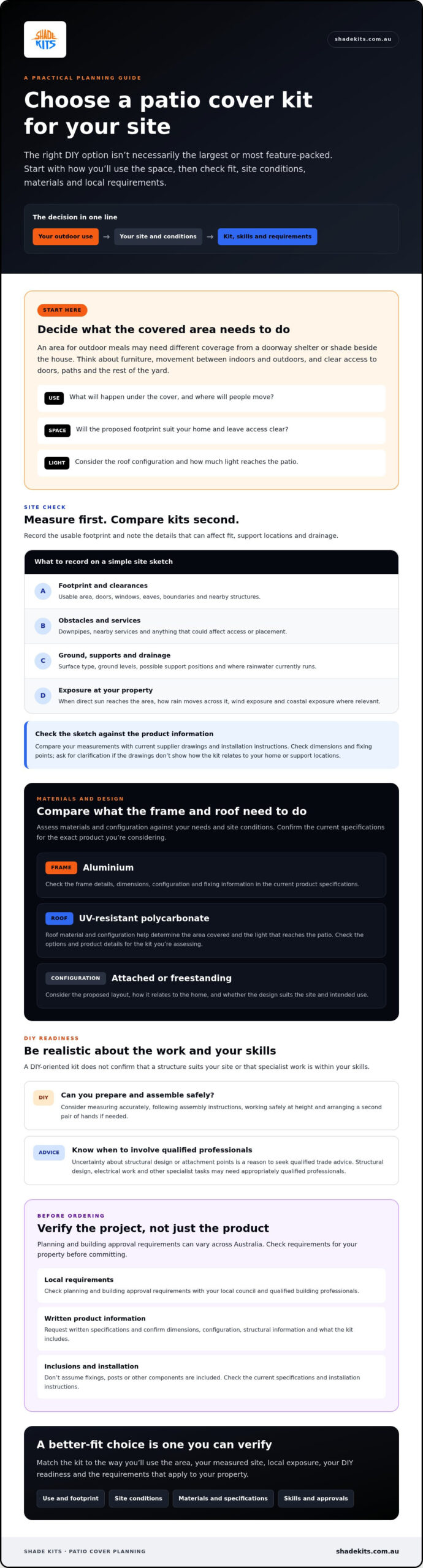
A kit’s DIY design doesn’t confirm that it can be built on your property without approval or professional input. Requirements can depend on the structure, its location and the rules that apply in your area. Before ordering, check the proposed design with your local council and a qualified building professional. This is especially important if the cover will attach to your home or sit near a boundary.
There’s no single yes-or-no answer for every Australian project. Planning or development approval and a building permit are separate matters, and the requirements can vary between jurisdictions and properties. Ask your local authority what applies to your proposed size, position and roof type. Have a qualified professional verify relevant National Construction Code provisions and applicable standards for the specific design. Don’t treat a supplier’s product information as confirmation that your project is approved.
Read the current assembly instructions before committing. Check the tools, lifting and access needs, sequence of work, and how many people the supplier recommends for assembly. Plan a stable work area and safe access, and choose suitable weather conditions for the work. If the instructions don’t cover your site, or the work exceeds your experience, pause and seek qualified help rather than improvising.
Use this pre-order checklist to identify gaps early:
For DIY patio cover kits Australia buyers, the safest order of decisions is straightforward: verify the site and approvals, understand the product documentation, then decide whether you can assemble it confidently. If a structural detail, fixing method or approval question remains unclear, get it resolved before purchasing rather than relying on guesswork.
Once you’ve checked your site and DIY readiness, explore Shade Kits’ DIY patio covers and review the current product information for options that may suit your project.
A clear decision process helps turn your shortlist into a manageable project. First, confirm the site measurements and intended position. Next, check approval requirements with your local authority and relevant building professional. Then compare current product specifications and written inclusions before deciding whether the assembly work suits your skills, tools and available help.
This order matters. A kit that appears suitable in a product description may not match your site, approval conditions or assembly experience. For DIY patio cover kits Australia homeowners are comparing, written details make it easier to identify what’s confirmed and what still needs checking.
Ask for information about the exact kit you’re considering, rather than relying on general descriptions. Confirm which dimensions, roof configurations and customisation choices are currently available, and request written specifications that you can compare with your measurements.
Clarify what remains your responsibility, including approval checks, site preparation and organising any qualified professional input. Don’t assume a feature or component is included unless the supplier confirms it in writing.
Before selecting or ordering, recheck the measurements against the latest drawings and make sure approval questions are resolved. Then consider practical logistics: can the delivery reach the intended drop-off area, do you have a suitable place to store materials, and can you organise the help and safe working conditions assembly may require? Confirm delivery arrangements with the supplier rather than assuming they’ll suit your property.
Shade Kits supplies factory-direct DIY patio covers across Australia, with aluminium frames, UV-resistant polycarbonate roofing and customisable options. These are product details to compare, not a substitute for checking the specific kit’s current specifications or suitability for your site. If you’re ready to review available information, explore DIY patio cover kits from Shade Kits and confirm the details that matter for your project before committing.
A successful kit choice starts with your property, not a product description. Confirm the proposed position and measurements, check approval requirements with your local authority and a qualified building professional, then compare current specifications and assess whether you can assemble the kit safely. Before committing, get written details of dimensions, configurations and inclusions so you know what the project involves.
These steps help narrow down DIY patio cover kits Australia homeowners can consider while keeping site suitability, local conditions and your own skills in view. Shade Kits supplies DIY patio covers factory-direct across Australia, with aluminium frames and UV-resistant polycarbonate roofing among its confirmed product materials. Check the current information for each option, as materials alone don’t confirm suitability for your property.
Ready to take the next step? Explore DIY patio cover kits from Shade Kits and review the product details alongside your project notes. With the right checks in place, you can move forward with a plan that feels manageable and well considered.
Inclusions vary by supplier and kit, so check the current product specifications before ordering. A kit is generally planned around a supporting frame and roofing, but don’t assume posts, fixings, tools or other materials are included unless they’re listed. Ask for a written inclusions list and installation instructions for the exact option you’re considering. This helps you identify what you may need to source separately and plan your DIY patio cover kits Australia project more accurately.
You may need approval, but requirements depend on the project, property and local rules. Planning or development approval and a building permit are separate checks, and a roofed patio may be treated differently from an open structure. Before ordering, describe the proposed size, location and design to your local council and ask what approvals apply. A qualified building professional can help verify relevant National Construction Code provisions and standards for your specific project.
Yes, a DIY kit may suit you if you can follow the instructions, measure accurately and work safely, but suitability depends on the project and your experience. Read the current assembly guide first and check the tools, lifting requirements and help needed. Some tasks may call for another person or qualified professional input. Don’t attempt structural work or other specialist tasks beyond your skills, and resolve unclear instructions before starting assembly.
Measure the usable area, then consider furniture, movement, doors, windows, eaves, boundaries and nearby services. Note ground levels, support locations and drainage direction as well. Put these details on a site sketch and compare them with the supplier’s current drawings, rather than choosing by roof area alone. Check clearances and the proposed attachment points, and seek advice if measurements or site conditions make the fit uncertain.
Aluminium is one frame material to consider, but the material alone can’t confirm a kit is suitable for every Australian property. Check the exact product’s finish, care guidance and any structural or wind-related documentation relevant to your site. Shade Kits’ confirmed patio cover materials include aluminium frames and UV-resistant polycarbonate roofing. Ask for current specifications and have a qualified professional verify whether the product evidence matches your local conditions and project.
A patio cover generally refers to a roofed structure that provides shelter over an outdoor area. A pergola traditionally has an open framework, although designs and terminology can vary, and some structures may have roofing added. The roof type can affect the structure’s function and may influence approval requirements. Compare the actual design and specifications rather than relying on the product label, and confirm local requirements for the structure you plan to build.
Some kits offer customisable options, but available dimensions and configurations depend on the supplier and current product range. Shade Kits supplies DIY patio covers with customisable options, so check the specifications for the particular kit you’re considering. Share accurate site measurements and ask which choices are available, what each option changes and whether the resulting design suits your property. Get the details in writing before ordering, and verify approvals separately.