
A drip beneath a polycarbonate roof doesn’t always mean there’s a leak. Moisture can form on the underside of the sheets or become trapped inside the flutes, especially when humid air meets a cooler roof. Knowing how to prevent condensation under polycarbonate roofing starts with working out which source of moisture you’re dealing with.
That can be tricky when droplets land on patio furniture, a vehicle or stored belongings. Advice for an enclosed room may not suit an open-sided pergola or carport, where airflow and exposure to the weather are different.
This guide explains how to distinguish likely condensation from water entering through a roof fault, then covers practical ways to reduce moisture, improve airflow and check drainage. You’ll also learn why correct installation matters, what to check in the roofing manufacturer’s instructions, and when to contact your supplier or a qualified professional. If you inspect the roof, don’t walk or stand on polycarbonate panels. Safe checks can help you choose the right next step without risking damage or mistaking a leak for condensation.
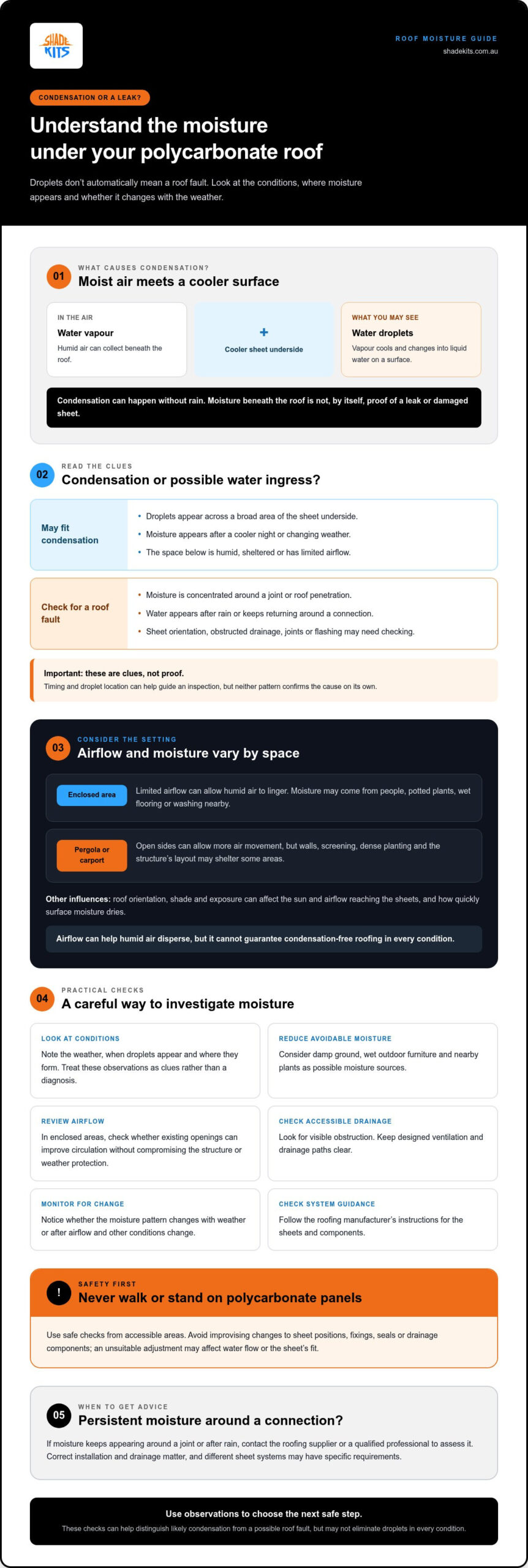
Condensation forms when water vapour in the air cools and changes into liquid water on a surface. Beneath a polycarbonate roof, humid air can meet a cooler sheet underside and leave droplets behind. This can happen without rain, so moisture under the roof isn’t automatically a sign of a leak or a damaged sheet.
Condensation occurs when moisture-laden air meets a surface cool enough for water vapour to turn into droplets. The basic process is explained in the science of condensation. The amount of moisture in the air, the temperature of the roofing and the conditions in the space below all play a part. Understanding those factors is a useful first step in working out how to prevent condensation under polycarbonate roofing.
Droplets may appear when the air below the roof is warmer or more humid than the sheet surface. A covered area can hold moisture from damp ground, wet outdoor furniture or nearby plants. In an enclosed space, limited airflow may also allow humid air to linger beneath the roof.
People often notice moisture in the morning, after a cooler night, or when changing weather affects the roof’s temperature. These conditions are clues, not a diagnosis: timing alone can’t confirm whether water is condensation or entering through a roof fault. An open-sided pergola or carport may have different airflow and moisture conditions from an enclosed area, so consider the setting as well as the weather.
A smooth, transparent or translucent sheet underside can make droplets easy to see, especially when light catches them. That visibility doesn’t mean polycarbonate necessarily produces more condensation than another roofing material, or that the sheet has failed. It simply makes moisture on the surface more noticeable.
Check where the water appears. Droplets across a broad area may be consistent with condensation, while moisture concentrated around a joint or roof penetration could point to water ingress. Neither pattern proves the cause on its own. If you’re planning a new covered outdoor area, consider how it will be used and ventilated, and follow the roofing manufacturer’s instructions for the selected sheets and components.
Air movement, moisture levels and roof layout all influence how quickly damp air disperses and surfaces dry. In an enclosed area, moisture can come from people, potted plants, wet flooring or washing nearby. If humid air lingers beneath a cooler roof, conditions may favour condensation.
An open-sided pergola or carport usually allows more air to move through than a poorly ventilated enclosed space, but the structure’s layout and surroundings matter. Nearby walls, screening or dense planting may shelter some areas from breezes. The roof’s orientation, shade and exposure can also affect how much sun and airflow reach the sheets, influencing how quickly surface moisture dries. These factors may explain why one part of a roof behaves differently from another, but they don’t establish the cause by themselves.
Airflow helps humid air disperse, but it can’t guarantee condensation-free roofing in every temperature and weather condition. Improving ventilation can be part of how to prevent condensation under polycarbonate roofing, not a guaranteed fix for every damp patch.
Suitable air movement can carry humid air away and reduce how long it remains near the roof’s underside. In an enclosed area, check whether existing openings can be used to improve circulation without compromising the structure or weather protection. Don’t block designed ventilation or drainage paths in an attempt to stop drips. Follow the roofing system manufacturer’s installation and maintenance guidance, as different sheet systems may have specific requirements.
Yes, but distinguish surface condensation from water-management problems. Incorrect sheet orientation or obstructed drainage may prevent water from moving as intended, while poorly fitted joints or flashing can let rain enter. Water ingress may appear near a particular connection, while condensation can form across cooler surfaces. These patterns are clues, not proof.
Before changing sheet positions, fixings, seals or drainage components, check the instructions for your roof system. Avoid improvising adjustments, as an unsuitable change may affect water flow or the sheet’s fit. If moisture keeps appearing around a joint or after rain, ask the roofing supplier or a qualified professional to assess it.
If you’re planning a covered parking area, consider the intended layout and exposure when choosing a structure. Explore DIY carport kits as one option for planning a covered space. A new roof alone isn’t a guaranteed condensation remedy.
Water beneath a polycarbonate roof can have more than one cause, and a quick glance may not settle it. Condensation often appears as fine droplets over a broader area of the underside. A leak may leave a concentrated wet patch near a joint, fixing or roof penetration, but either can behave differently depending on the roof and weather.
Recurring localised water ingress warrants inspection rather than assumption. Timing helps narrow down what to check, but it can’t confirm the source by itself. Wind-driven rain may enter at a particular point, while condensation can also collect unevenly across the roof.
A spread of small droplets after humid conditions may be consistent with condensation, particularly if the moisture lessens as the air or roof temperature changes, or as airflow improves. Note whether droplets appear across several sheets or in one isolated spot. These are useful clues, not definitive proof, and a broad pattern doesn’t rule out an installation issue.
Look more closely if a damp patch persists, drips recur after rain, or moisture appears around fixings, sheet joins or penetrations. From a safe position on the ground, check for visible signs of damage or water collecting in one area. Don’t climb onto the roof or stand on polycarbonate sheets. Arrange a qualified inspection if access is unsafe, or if you’re concerned about nearby electrical equipment or the roof’s structure.
To make the pattern easier to assess, keep a brief record across different days or weather conditions:
This information can help you explain the issue to a roofing supplier or qualified professional. Avoid sealing or adjusting parts of the roof based on one observation. Check the manufacturer’s instructions before making changes. Correctly identifying the source is a practical first step in how to prevent condensation under polycarbonate roofing. It can help you avoid treating condensation as a leak, or overlooking water ingress as harmless droplets.
Work through the likely causes before changing the roof. A measured approach helps you check whether moisture levels, airflow or drainage may be contributing, and avoids unnecessary changes to the sheets.
Start with the surrounding space. Keep nearby surfaces and stored belongings dry where practical, and improve suitable airflow without modifying the roof. Then watch for changes across different weather conditions. If droplets persist, return or appear in a specific spot, reassess the likely cause rather than assuming the first change has solved it.
Read the instructions for your exact roofing system before adjusting sheets, fixings, seals or drainage components. Don’t apply sealants, coatings or cleaning chemicals unless the manufacturer confirms they’re compatible with the polycarbonate and associated parts. An unsuitable product or alteration can damage components or interfere with the roof’s intended water management.
Keep DIY checks to what you can inspect safely from the ground. Stop and seek appropriately qualified advice if the next step involves working at height, removing sheets, complex repairs, electrical equipment or concerns about the roof’s structure. Never walk or stand directly on polycarbonate panels. A qualified professional can assess persistent moisture or a suspected defect when a safe visual check isn’t enough.
If you’re planning a new covered area, consider its intended use, airflow and roof layout as part of the design process. Explore DIY carport kits for your covered space, and check the relevant product instructions before installation. A kit may suit your project, but it isn’t a guaranteed condensation cure.
Good maintenance can help manage condensation, but it may not prevent droplets in every combination of humidity, temperature and weather. The aim is to keep the roof and surrounding area in sound condition, spot changes early and identify when moisture needs closer assessment.
Use the cleaning and inspection methods specified by the roofing manufacturer. Polycarbonate surfaces and roof components can have particular care requirements, so don’t assume a product suitable for another roofing material is safe here. Avoid abrasive tools and unverified chemicals, which may scratch or otherwise affect the sheet surface. Before using a cleaner, coating or sealant, ask the supplier to confirm it’s compatible with your roof system.
From a safe position, periodically check for visible changes to the sheets, joints and accessible drainage paths. Look for recurring damp areas, debris or signs that water isn’t draining as expected. Keep a brief record of where and when moisture appears, along with any visible changes. This makes it easier to explain the issue to a supplier and decide whether professional assessment is warranted. Don’t climb onto polycarbonate sheets to inspect them.
If condensation keeps returning, replacement shouldn’t be the first assumption. The cause may relate to the conditions beneath the roof, drainage, installation or a separate defect. Ask the roofing supplier or a qualified professional to assess the existing structure and recommend suitable next steps before deciding that a new roof is needed.
If you’re planning a new covered parking area, consider the site, intended use and airflow as part of the planning process. Shade Kits supplies DIY carport kits with polycarbonate roofing, which may suit some Australian homes. A new kit is a structure option, not a condensation treatment, so check the relevant product and roofing instructions for installation and care guidance.
For ongoing care, keep the manufacturer’s instructions handy and revisit them before cleaning or changing any roof component. If moisture is localised, persistent or associated with a suspected leak, seek advice rather than relying on general condensation fixes. A measured approach helps you manage how to prevent condensation under polycarbonate roofing while protecting the sheets and the structure.
Managing roof moisture starts with identifying its likely source. Widespread droplets may be condensation, while recurring water near a joint or fixing deserves closer investigation. Use airflow, moisture reduction and clear drainage as practical measures, then monitor what changes. These steps can help you understand how to prevent condensation under polycarbonate roofing, although droplets may still occur in some conditions.
Keep up with visual checks and follow the roofing manufacturer’s guidance before cleaning or altering components. If moisture persists or a repair would involve working at height, get advice from a qualified professional.
If you’re planning a new covered parking area, Shade Kits’ DIY carport kits feature aluminium frames and UV-resistant polycarbonate roofing, with Australia-wide delivery. They’re an option to explore for your project, not a guaranteed condensation solution. Explore Shade Kits carport kits and review the product information as you plan.
Careful checks and a considered approach can help you maintain a covered space and decide when it needs further assessment.
Yes, condensation can occur beneath polycarbonate roofing when humid air meets a cooler sheet surface. It doesn’t automatically mean the roof is leaking or damaged. The amount and location of moisture can vary with airflow, humidity and weather. If dampness persists, appears in one spot or returns after rain, record the pattern and check the roof safely from the ground. Ask the roofing supplier or a qualified professional if you’re unsure of the cause.
Start by checking where and when moisture appears, then reduce avoidable dampness around the covered area. Dry wet furniture or flooring where practical, improve suitable airflow in enclosed spaces, and check accessible drainage paths for visible blockages. Monitor whether these steps help. They’re practical ways to approach how to prevent condensation under polycarbonate roofing, but may not eliminate it in every condition. Follow the roofing manufacturer’s guidance before changing sheets or components.
Ventilation can help disperse humid air, which may reduce conditions that contribute to condensation. Use suitable openings to improve airflow in an enclosed or partly enclosed area, but don’t block designed ventilation or drainage paths. Air movement isn’t a guaranteed cure: droplets may still form when the roof surface is cool and the air is humid. If moisture continues or seems localised around a joint, investigate other possible causes as well.
Droplets usually form when water vapour in humid air cools on the underside of the roofing and becomes liquid. Moisture may come from people, plants, wet surfaces or nearby activities, particularly where air circulation is limited. Temperature changes can also affect when droplets appear. Rain isn’t required for condensation to occur. If water appears near a particular joint or fixing, consider a possible leak too, and check the pattern over time.
Widespread fine droplets may be consistent with condensation, while a recurring damp patch near a joint, fixing or penetration may suggest water ingress. Neither pattern proves the cause. Note where moisture appears and whether it follows rainfall, humid conditions or both. Check only from a safe position on the ground. If drips persist after rain, or access, electrical equipment or structural concerns are involved, arrange assessment by a qualified professional.
Don’t apply a coating unless the roofing manufacturer or supplier confirms it’s compatible with your specific sheets and roof system. An unverified product may affect the sheet surface or other components, and a coating may not address the source of moisture. Check the supplied maintenance instructions before using any coating, sealant or cleaning chemical. If droplets continue, first review the likely moisture source, airflow and drainage rather than treating the sheet without advice.
It can cause problems if droplets repeatedly land on stored belongings or nearby surfaces. Persistent dampness may affect items that don’t tolerate moisture, such as cardboard or fabric, and can leave surfaces wet. Where practical, move vulnerable belongings, dry nearby surfaces and monitor where drips fall. If moisture is frequent or concentrated in one area, investigate whether it’s condensation or a leak so you can choose an appropriate next step.
Planning a covered parking area? Explore Shade Kits’ DIY carport kits and review the product information to see whether a kit suits your project.