
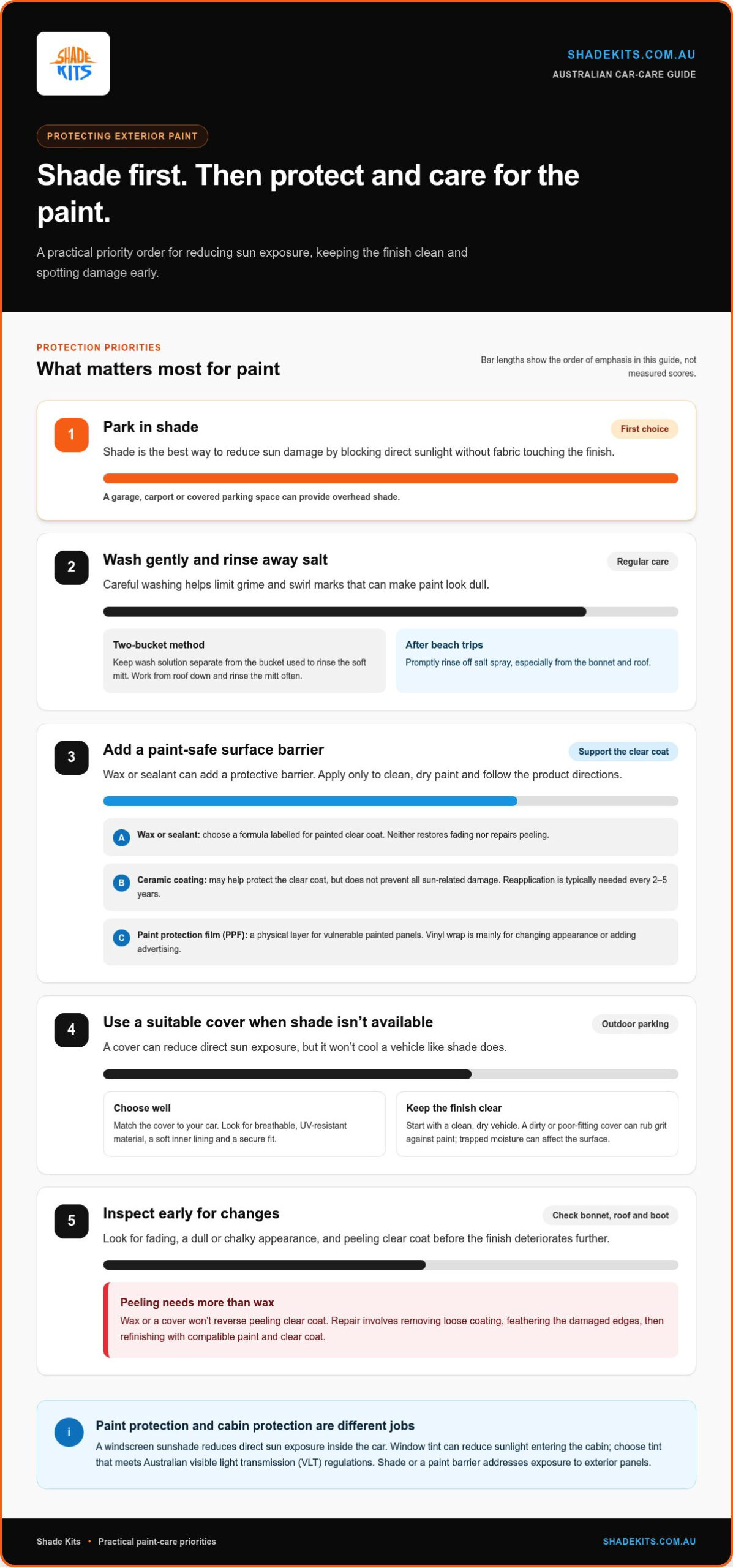
A car cover can help protect paint from sun exposure, but parking in shade is the best way to reduce sun damage. If you cover your car, choose a breathable, UV-resistant cover with a soft lining and a secure fit. Knowing how to stop sun damage on car paint also means spotting early changes before the finish looks dull or begins to peel.
It’s easy to focus on cabin heat, but the paintwork is exposed to the sun whenever a car sits outdoors. Wax, sealants and covers can help, but work best alongside gentle washing and shaded parking.
This guide covers washing, wax and sealants, when a cover or sunshade can help, and signs of sun damage. You’ll learn to distinguish a tired-looking finish from damage that needs more attention, then choose practical ways to protect your car in Australian conditions.
A car cover can reduce direct sun exposure, but it won’t cool a vehicle like shade does. For paint protection, choose a breathable, UV-resistant cover with a soft lining and a secure fit.
Repairing peeling clear coat involves removing loose coating, feathering the damaged edges, then refinishing the area with compatible paint and clear coat. Wax can’t restore peeling clear coat.
Parking in shade or using a suitable cover can help limit fading by reducing direct sunlight. A poor-fitting or dirty cover may rub grit against the finish, and trapped moisture can affect the surface.
Use careful washing and a suitable surface barrier to limit grime and help maintain the clear coat. Treat window tint and paint protection film as separate protections, each with a different purpose.
Wash using a gentle two-bucket method: keep wash solution in one bucket and rinse the soft mitt in the other. This helps reduce swirl marks that can make paint look dull. Work from the roof down, rinsing the mitt often, and avoid rubbing grit across the bonnet. After beach trips, rinse away salt spray, especially from the bonnet and roof.
Clean paint also provides a better surface for wax or sealant. Don’t apply either over dust or salt, as particles can become trapped beneath the layer and affect the finish.
Choose automotive wax or sealant labelled for painted clear coat, and follow the application directions. Which car wax, sealant or UV protectant works best for sun-damaged paint? There’s no single best choice. Match the product to the paint’s condition and use a clear-coat-safe formula. Wax and sealant can add a protective barrier, but they won’t repair fading or peeling.
Ceramic coatings may help protect a vehicle’s clear coat, but they do not prevent all sun-related damage. They protect UV inhibitors in the vehicle’s clear coat. Reapplication is typically needed every 2-5 years. A coating doesn’t make paint scratch-proof, so gentle washing still matters. For wax or sealant, inspect the surface first and avoid applying over loose or flaking clear coat.
Consider paint protection film (PPF) as a physical layer over vulnerable painted panels. PPF differs from vinyl wrap, which is mainly used to change a car’s appearance or add advertising. Neither film nor wrap repairs existing sun damage, so assess peeling or faded paint before covering it.
Keep window protection in perspective. Modern vehicle glass blocks almost 100% of UVB, according to the Cancer Council, but that doesn’t mean every window blocks all sunlight. If adding tint, choose a product that meets Australian visible light transmission (VLT) regulations. Window tint can reduce sunlight entering the cabin, while a paint barrier or shade addresses exposure to exterior panels. Treat these as complementary measures, not substitutes for caring for the paintwork.
After beach trips, promptly rinse off salt spray to help protect the paint, particularly on the bonnet and roof. When applying car paint sealant, spread a thin layer with a foam applicator and follow the product directions.
PPF is a physical covering for paint, while vinyl wrap is primarily used to change a car’s appearance or add advertising. Ceramic coatings support the UV inhibitors in the vehicle’s clear coat rather than directly blocking UV rays.
Apply sealant to clean, dry paint, following the product directions from preparation through curing. A thin, even layer helps prevent excess residue and uneven patches.
Sealant is one part of paint care, not a substitute for reducing sun exposure. Pair a correctly applied layer with regular washing and shaded parking to help protect the clear coat over time.
Apply sealant consistently across each area. Use the foam applicator to spread a modest amount of car paint sealant rather than leaving a visibly heavy film. Work methodically to keep the thin layer even, and don’t load the applicator with extra product to compensate for a missed area. Aim for a light, controlled spread across the paint.
As you move across each panel, check that the sealant is evenly distributed, without obvious gaps or concentrated patches. Continue with the same thin-layer approach instead of applying extra material to make the coating look more substantial. A foam applicator helps keep the application controlled. Consistency matters more than leaving a thick deposit on the surface.
Parking out of direct sun is the best way to protect paint from sun damage. Use a windscreen sunshade as an extra measure, not a substitute for overhead shade.
Check the roof, bonnet and boot first, as these broad panels receive direct sunlight. Compare their colour and surface with a shaded door panel to spot changes more easily.
Sunlight gradually breaks down paint protection, while heat and weather exposure can contribute to clear-coat failure. Look for fading, oxidation, chalkiness or peeling rather than treating every dull patch as the same problem.
Polishing can improve mild oxidation if the clear coat remains intact. Repainting is needed when clear coat has peeled or the colour layer is exposed, because polishing can’t replace missing coating.
Shade Kits offers Carport Kits for drivers who want a dedicated shaded parking space at home. By reducing direct sun exposure over the vehicle, a carport can complement washing, wax and other paint-care steps.
If your driveway leaves the car exposed through the day, an overhead cover is a practical alternative to relying on a removable car cover every time you park. Consider the available space, where the vehicle will sit and how you’ll use the area. Shade Kits also offers Pergola Kits, Awning Kits and Patio Covers for other outdoor shade needs.
Explore carport options to see whether a covered parking space suits your home. For an ongoing way to reduce direct sun on your car, visit Shade Kits online.
A practical next step in protecting car paint from sun damage is to make your usual parking space work harder for your vehicle. Consider when and where it sits outdoors, then decide whether a lasting shaded area would make daily protection easier. A permanent shade structure can make paint care part of how you use your driveway.
Shade Kits offers Carport Kits for vehicle parking, alongside Pergola Kits and Awning Kits for other outdoor shade needs. The right option depends on how you want to use your space, as well as where your car is parked. Think about the area you want covered and how shade could fit into your home before taking the next step.
Explore the available options or contact Shade Kits to discuss shade options. A considered change to your parking setup can help make protecting your car’s finish simpler over time.
To stop sun damage to car paint, reduce direct exposure and keep the finish clean. If you park outdoors at work, choose a spot that stays shaded for as much of the day as possible, then use a windscreen shade to protect the dashboard and cabin. Check the roof and bonnet during routine washes. Early inspection helps distinguish surface grime from fading or clear-coat damage.
In Australia, preventing sun damage to car paint starts with making shade part of your regular parking plan, especially if the car sits outside for long periods. At home, consider whether an existing covered area can protect its usual parking position. For street or workplace parking, use a suitable cover only on a clean, dry car and remove it carefully. A windscreen shade protects the cabin, not exterior panels.
Wash when dirt, bird droppings, tree sap or salt spray accumulate, rather than waiting for the paint to look dull. A beach trip, for example, is a good reason to rinse the car promptly. Apply wax according to the product label and the finish’s condition. Washing needs depend on where and how the car is driven. Regular inspection helps you spot grime or fading that remains after cleaning.
Both can add protection, but they work differently and don’t make paint immune to damage. Ceramic coatings support the clear coat’s UV inhibitors, while paint protection film forms a physical layer over selected panels. Neither fixes peeling or paint that has already faded. Consider the car’s exposure and which panels need protection, then maintain the finish with careful washing and shaded parking.