
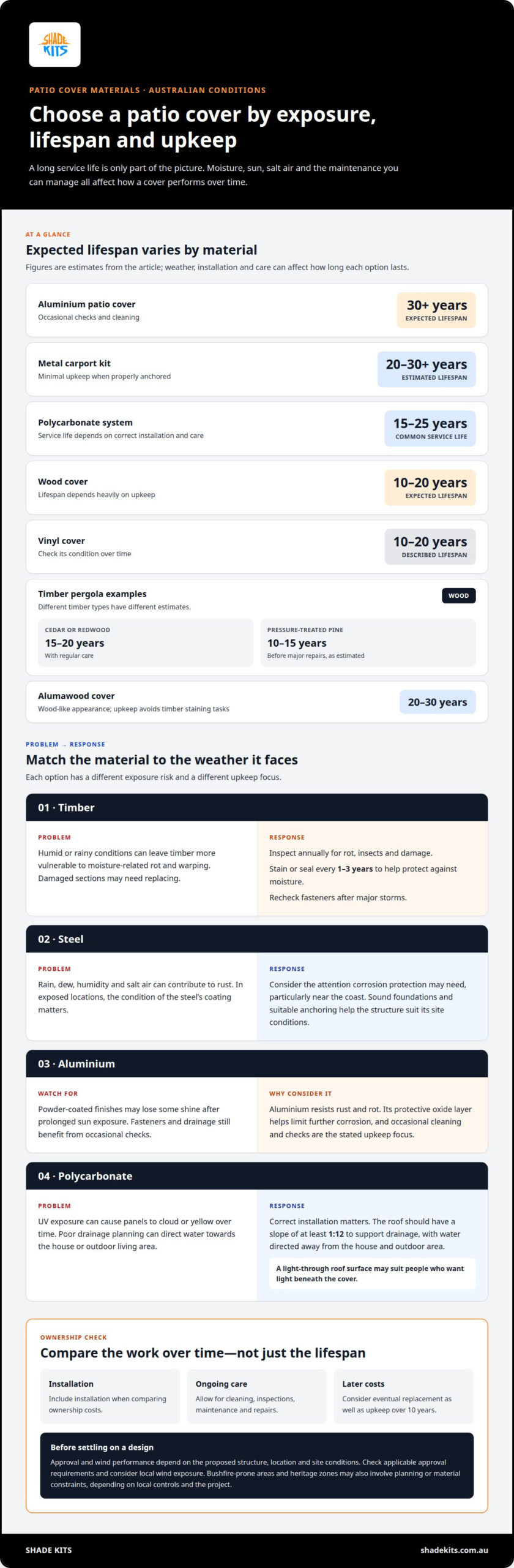
The longest-lasting patio cover isn’t automatically the best value over time. Among long lasting patio cover materials, aluminium covers are described as lasting 30+ years, polycarbonate systems commonly last 15-25 years when correctly installed, and wood covers are described as lasting 10-20 years depending heavily on upkeep. Weather exposure and maintenance can shift how well each option suits your home.
Look beyond the initial cost: materials that need regular sealing or repairs can demand more attention over time than those that mainly need occasional cleaning. Australian patios also face strong sun, rain and, in some locations, coastal conditions, all of which affect material choice.
This comparison explains how wood, aluminium and polycarbonate perform in different weather, what upkeep they need, and how warranties and lifespan shape ownership costs over 10 years. You’ll get a clear way to compare the trade-offs, so you can focus on a cover that fits your climate, maintenance preferences and plans for the space.
Key Takeaways
- Compare materials by expected lifespan and upkeep, not just their initial cost; regular treatment can add time and expense to wood ownership.
- Match the cover to local weather: moisture, strong sun and coastal exposure can affect materials differently.
- Include cleaning, inspections and repairs when estimating what a cover may cost to own over 10 years.
- Read warranty terms alongside lifespan estimates, as coverage can differ between a frame and its roof or fabric.
- Use the decision guide to weigh durability, maintenance effort and the type of shade or shelter you need.
Expected lifespan and upkeep of wood patio covers
In Australia, wood patio covers are described as lasting 10-20 years, depending heavily on upkeep. Timber is more vulnerable to rot and warping in humid, rainy climates, so the lifespan depends on moisture exposure and regular maintenance. Cedar or redwood pergolas can last 15-20 years with regular care; pressure-treated pine pergolas are estimated to last 10-15 years before major repairs.
Inspect wood annually for rot, insects and damage. Sealing helps keep moisture out, while staining or sealing every 1-3 years may help wood covers last longer. Recheck fasteners after major storms, especially where weather has stressed joints or supports. A missed leak or damaged section can turn a small repair into a larger upkeep task.
Which patio cover materials last longest in Australia? Aluminium patio covers are described as lasting 30+ years, while metal carport kits are estimated to last 20-30+ years with minimal upkeep when properly anchored. Polycarbonate systems commonly have a 15-25-year service life when correctly installed; weather, installation and care affect the lifespan of every material.
How long do Colorbond steel, aluminium, polycarbonate, timber and tiled patio roofs last? The figures available here put aluminium at 30+ years, polycarbonate at 15-25 years, and timber covers at 10-20 years. For Colorbond steel and tiled roofs, coating condition, exposure and maintenance shape longevity.
Alumawood covers are described as lasting 20-30 years. Their wood-like appearance offers a timber look, while the material choice shifts upkeep away from tasks such as staining wood. Vinyl covers are described as lasting 10-20 years, with an expected 10-15 years under normal conditions. Climate and product condition influence what that means for a specific cover.
What Australian building approvals and wind-rating rules apply to patio covers? Approval and wind performance depend on the proposed structure, its location and site conditions. The design needs to suit the site’s wind exposure, and you should consider applicable approval requirements before starting the project.
| Material | Expected lifespan | Upkeep focus |
|---|---|---|
| Wood | 10-20 years | Annual inspection; sealing or staining |
| Aluminium | 30+ years | Occasional checks and cleaning |
| Polycarbonate | 15-25 years | Correct installation and panel care |
| Vinyl | 10-20 years | Check condition over time |
| Metal carport kit | 20-30+ years | Proper anchoring |
Compare expected lifespan with installation, maintenance, repair and eventual replacement costs. A lower-maintenance option can reduce ongoing work, while timber may suit homeowners willing to maintain its finish and inspect it regularly.
What Should I Consider about Weather and Materials When Picking my Patio?
Timber, steel, aluminium and polycarbonate respond differently to outdoor conditions, so the right choice depends on exposure and the upkeep you can manage. Bushfire-prone areas and heritage zones may also involve planning or material constraints, depending on local controls and the project.
Timber Patio Cover Risks
Timber is vulnerable to moisture-related rot and warping, particularly in humid or rainy conditions. Unlike aluminium, it needs ongoing protection and inspection, and damaged sections may need replacing. For a timber pergola, consider whether regular sealing or staining fits your maintenance plans. Its natural appearance may appeal, but durability depends on care as well as the material itself.
Steel Patio Cover Risks
Steel can rust when exposed to rain, dew, humidity or salt air, so the condition of its coating matters in exposed locations. Aluminium differs because it forms a protective oxide layer. Sound foundations and suitable anchoring help a structure handle site conditions. If you’re considering a steel cover near the coast, factor in the attention its corrosion protection may need.
Aluminium Patio Cover Risks
Aluminium resists rust and rot, and its oxide layer helps limit further corrosion. It can suit homeowners seeking low maintenance, but still benefits from occasional checks of fasteners and drainage. Powder-coated finishes may lose some shine after prolonged sun exposure. Compare the finish and structure with the climate where the patio will be.
Polycarbonate Patio Cover Risks
Polycarbonate provides a roof surface that allows light through, but UV exposure can cause panels to cloud or yellow over time. Correct installation matters: the roof should have a slope of at least 1:12 to support drainage. Check that the design directs water away from the house and outdoor living area. This material suits people who want light beneath the cover, rather than a fully opaque roof.
Installation references can help you assess durability beyond product descriptions. Look for reviews discussing how a structure performs after years of local weather, not just how it looks when new. References for installations more than five years old can show how finishes, joints and drainage have held up. Compare examples from a climate and site exposure similar to yours.
For a DIY installation, begin with the site layout, then plan footings, drainage and the roof’s water path before assembly. Stable foundations support the frame, while clear drainage helps prevent water pooling beside posts or the house. Follow the supplied assembly sequence and use the specified fixings. With polycarbonate, maintain the required 1:12 slope; for other materials, match the roof design to its drainage system.
Choose a solution that balances local weather exposure, installation needs and the level of upkeep you’re prepared to manage.
Maintenance costs and upkeep for traditional wooden patio covers
Timber’s ownership cost goes beyond the initial structure. Allow for recurring sealing or staining, cleaning, inspections and occasional repairs to damaged sections. The total depends on the timber, its exposure to sun and moisture, and how consistently you maintain the finish. These tasks take time or may involve paid labour, so include them when comparing long-term value.
Moisture protection is central to timber upkeep. Wood patio covers should be sealed at least once a year to help keep moisture out. For wood pergolas, staining or sealing is typically recommended every 1-3 years, with more frequent treatment advised in sunny or coastal areas. These intervals describe different maintenance guidance, so follow the care requirements for the finish and material used.
Before applying stain or sealant, inspect the structure for damage. Look for peeling or worn finishes, soft or discoloured timber, insect activity and sections needing repair. Fix damaged areas before recoating rather than sealing over a problem. A sound surface helps the treatment protect the timber, while missed rot or loose components can lead to more extensive work later.
Weather affects how often maintenance is needed. A pergola exposed to intense sun or coastal conditions may need treatment more often than one in a sheltered position. Rain and persistent dampness also make moisture protection important. Annual inspections can reveal changes early, while checks after major storms may uncover loosened fasteners or new damage before it worsens.
Timber maintenance costs vary rather than adding up to one predictable charge. The amount of timber, finish selected, condition of the cover and access for maintenance all affect the work involved. Repairs may add to routine treatment if sections warp, rot or become damaged. For a fair ownership comparison, list recurring tasks and likely repairs alongside the initial purchase cost.
Other materials have different maintenance needs. Aluminium patio covers resist rust and rot and don’t need regular upkeep to maintain their appearance. You can hose them off once or twice a year and check fasteners and gutters occasionally. This is less finish work than timber requires, but no cover is entirely maintenance-free: drainage and structural condition still matter.
If you’re planning a timber outdoor living space, weigh its natural appearance against the time needed to protect it. Regular sealing and timely repairs support longevity, but skipping them can mean more work later. If low maintenance is a priority, compare aluminium’s simpler cleaning routine with timber’s repeated treatment before choosing.
Warranty coverage and material longevity
A patio cover’s lifespan and its warranty period measure different things. Aluminium covers are described as lasting 30+ years, but that does not mean a warranty covers every year of service. Compare the material’s expected durability with the written warranty, then identify which components and faults it covers.
Assess the frame, roof panels and finish separately. A frame warranty may not cover polycarbonate sheets, fasteners or drainage components. For an attached cover, check which parts connect to the home and whether the warranty treats those connections differently. Clear, component-by-component terms make the protection easier to understand.
Read the warranty before choosing a material, and note its duration, coverage and conditions. Look for written details on defects, corrosion, moisture damage, fading and structural issues, as well as what happens if a covered fault arises. A longer term may sound reassuring, but it is useful only if its scope covers the parts that matter to your decision.
Temperature changes and weather exposure affect materials differently. Timber needs protection from moisture, while steel can rust in rain, humidity or salt air. Aluminium resists rust and rot, and polycarbonate panels can cloud or yellow under UV exposure. These differences help explain why warranty terms vary across materials and components.
For retractable awnings, fabric and frame coverage are often separate. Fabric warranties are often 5-10 years, while frame warranties are often 5-15 years. Compare both periods rather than treating the awning as one item. The fabric faces sun and weather directly, while the frame supports the moving structure, so each part has distinct coverage considerations.
Custom dimensions or a non-standard roof shape can affect how a project is specified. Keep the agreed design, product description and warranty document together. If the cover attaches to a house, include that configuration in your records. This gives you a clear reference for the installed materials and helps distinguish the structure from later alterations or repairs.
Use a simple comparison when reviewing options:
- Material: Compare expected lifespan with local exposure to sun, moisture and salt air.
- Components: Identify separate frame, roof-panel and finish coverage.
- Conditions: Note maintenance requirements and any stated limits.
- Records: Keep the written warranty and product details together.
A material with a longer expected lifespan may still need regular care, while a shorter warranty may cover only the frame. Compare each written term with the cover’s expected upkeep and service life, rather than choosing by warranty length alone.
Patio cover material costs and 10-year ownership
A 10-year comparison should include more than the initial material price. For homeowners comparing long lasting patio cover materials, add framing, footings, drainage, installation effort, routine maintenance, repairs and any replacement needed during that period. In Australia, site dimensions, weather exposure and the chosen roof finish affect the final calculation. Compare like-for-like areas and designs, rather than treating unlike covers as equivalent.
Use a simple ownership worksheet: record the purchase cost, required components, scheduled care, likely repairs and replacement needs. Then compare the total across the same 10-year period. This approach shows how a lower starting cost can be offset by repeated staining or sealing. It also makes occasional cleaning and less frequent repair easier to account for.
| Material | Expected lifespan | 10-year ownership factors |
|---|---|---|
| Timber | 10-20 years | Staining, sealing, inspections and damaged-section repairs |
| Aluminium | 30+ years | Cleaning, fastener checks and drainage care |
| Polycarbonate | 15-25 years | Panels, framing, installation and possible UV-related wear |
| Vinyl | 10-20 years | Condition checks and potential replacement within the period |
| Fibreglass | Up to 30 years | Coating condition, cleaning and repairs |
The table highlights why lifespan alone doesn’t settle the value question. A timber cover may remain in use throughout 10 years, but its finish needs ongoing attention. Aluminium’s longer expected lifespan can reduce replacement pressure within the same comparison period. Polycarbonate panels may show UV wear before the framing, so homeowners should consider roof and frame condition separately.
Initial costs also depend on what the structure includes. A roof-only material cost doesn’t represent a complete cover if it also needs framing, fasteners, flashing, posts or drainage. Footings and the design of the outdoor living space may add further requirements. Compare the same scope and finish before deciding, and account for the work needed to direct water away from the structure.
For each option, note when maintenance occurs and whether it requires materials, labour or both. Timber staining or sealing every 1-3 years creates a recurring task. Aluminium can be hosed off once or twice a year, while gutters and fasteners still need occasional attention. These schedules help map effort across the full ownership period without assuming every material is completely maintenance-free.
Choosing among long lasting patio cover materials means balancing the initial outlay against upkeep, expected lifespan and replacement risk. Compare patio cover options with the same 10-year checklist, then prioritise the finish and maintenance pattern that suit your home.
Shade Kits: Patio Covers
Shade Kits supplies patio covers for homeowners comparing weather protection, upkeep and long-term value. Its DIY kits feature durable aluminium frames and UV-resistant polycarbonate roofing, making them a practical option when you want a covered outdoor area with straightforward self-installation.
Consider this option if you’re weighing timber’s recurring sealing against a roof that lets light through. Climate, site exposure, drainage and installation quality also affect how a cover performs. Shade Kits offers pergola, awning and carport kits for different shelter needs.
Before choosing, match the cover’s design and maintenance needs to your space and plans. Explore Shade Kits’ patio cover options and contact the team to discuss your project.
Plan a cover that suits your next few years
Before settling on long lasting patio cover materials, consider how you’ll use the space as your household’s needs change. A dining area may need a different balance of light and shelter from a quiet seating spot. Decide whether you want filtered daylight, a more enclosed roof or flexibility to adjust shade. These preferences can help narrow the design before you commit.
Consider what else around your home needs shelter, too. Shade Kits offers Patio Covers, Pergola Kits, Awning Kits and Carport Kits for different outdoor needs. Matching the structure to its purpose keeps your decision focused on how you’ll use the space, not just its appearance.
If you’re ready to discuss a patio cover for your home, contact Shade Kits about your project. A clear idea of your priorities is a practical place to start, and the right design can make your outdoor space more useful for everyday living.
Frequently Asked Questions
What are the costs per square metre of patio cover materials in Australia?
Cost per square metre varies with the roof, frame and project scope. When comparing long lasting patio cover materials, compare equivalent designs and include posts, footings, drainage, fixings and installation requirements, not just panels. A roof-only estimate won’t reflect the cost of a complete structure. Then factor in upkeep and possible repairs over your planned ownership period.
Which patio cover materials withstand Australian UV, heat, hail, wind and coastal salt?
No single material performs the same way in every Australian weather condition. Aluminium resists rust and rot, while steel can rust in damp or salty conditions. Polycarbonate provides UV-resistant roofing, though panels can cloud or yellow over time. Hail and wind performance also depend on the complete structure, including its frame, fixings and anchoring. Match the design to the site’s exposure and the weather it needs to handle.
How much maintenance does each patio cover material require?
Timber needs regular inspections and repeat sealing or staining, while aluminium generally needs cleaning and occasional checks of fasteners and gutters. Polycarbonate needs checks for panel condition and drainage; vinyl doesn’t need painting or sealing to withstand weather. Upkeep also depends on exposure. For example, a cover near salt air or persistent moisture may need closer attention than one in a sheltered position.
Which patio roof materials provide the best shade, insulation and rain protection?
The right roof depends on whether you value shade, insulation or daylight most. Polycarbonate panels transmit light, with transmission varying from 35-80% according to tint and wall structure. An insulated or more opaque roof may better suit a space where limiting heat or light is the priority. Rain protection can also be affected by roof design and drainage. Polycarbonate roofs should have a slope of at least 1:12.
How should homeowners compare warranties and corrosion resistance for patio materials?
Compare the written warranty for each component, including the frame, roof panels and finish, and note its conditions and exclusions. Corrosion resistance is a separate consideration: aluminium forms a protective oxide layer, while steel can rust in rain, humidity or salt air. A longer warranty doesn’t automatically mean greater resistance. Check whether the material and coverage suit your site’s moisture and coastal exposure.
How do you choose and install a durable patio cover for an Australian climate?
Start by matching the cover to local sun, rain, wind and salt exposure, then plan drainage, footings and anchoring for the site. Choosing long lasting patio cover materials also means considering the upkeep you’re prepared to manage and how you’ll use the space. Follow the kit’s assembly instructions so parts fit correctly and water drains away. Allow for local approval requirements before construction begins.