
What makes a pergola easier to care for: a durable frame, a roof that’s practical to clean, or a design that suits your outdoor space? Choosing low maintenance pergola kits means weighing all three. Sun, rain, dust and loose fixings can still call for attention, even when the structure is designed for straightforward upkeep.
It’s reasonable to want useful shade without signing up for repeated repairs, repainting or complicated cleaning. Low maintenance doesn’t mean maintenance-free. It means choosing a structure that’s easier to look after and understanding the basic care it still needs.
This guide explains what to look for in 2026, from frame materials and roof design to access for cleaning and inspections. You’ll also learn how aluminium frames and UV-resistant polycarbonate roofing fit into the decision, and how to plan a simple care routine. Match the kit to your site, shade requirements and maintenance preferences, and a DIY pergola can be a practical outdoor improvement rather than another demanding job.
A pergola provides an open framework for shade and outdoor living. The Pergola entry offers a useful overview of this traditional garden structure, but the amount of care yours needs depends on more than its basic form. Materials, roof design, exposure to the elements and access to surfaces all affect the work involved.
A low-maintenance pergola needs simpler or less frequent care than a higher-upkeep alternative. It still needs occasional cleaning and checks, and may need attention after severe weather. That’s different from “maintenance-free”, which can imply that cleaning, inspections and repairs will never be needed. Plan for manageable care rather than none at all.
Think of upkeep in two parts. Routine care, such as removing dirt and checking visible components, can follow the product instructions. Weather-related checks are less predictable: strong winds or heavy rain may leave debris, reveal wear or call for a closer look at exposed areas.
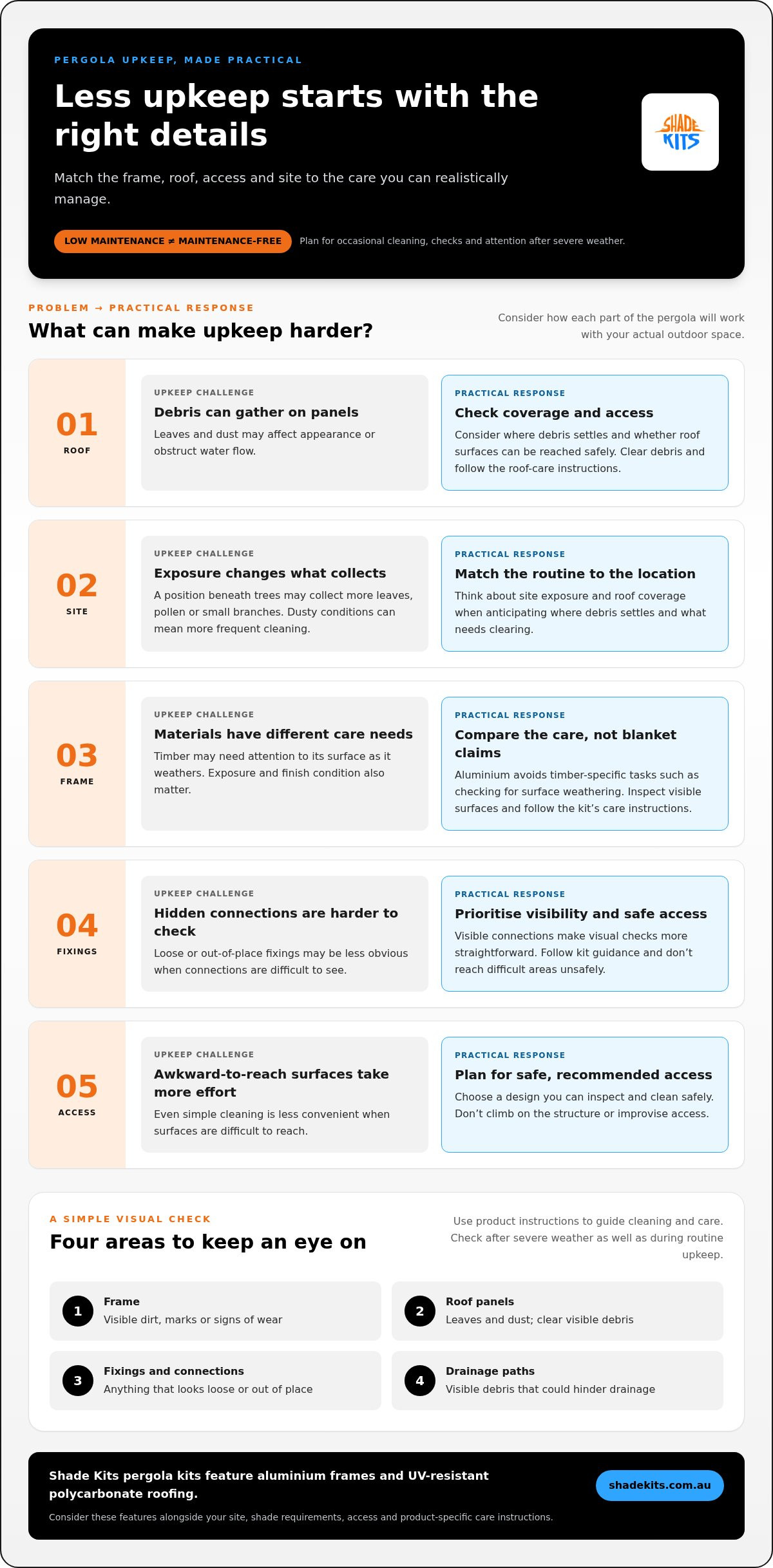
Your site also matters. A pergola beneath trees may collect more leaves, pollen or small branches than one in a more open position. Dusty conditions can mean more frequent cleaning, while roof coverage affects where debris settles and how easy it is to remove. These factors don’t necessarily make a spot unsuitable, but they shape the routine you’ll need.
Pay attention to parts that collect debris or connect to other components. A simple visual check can help you notice changes early.
Access is part of the maintenance decision. A surface that’s awkward to reach makes even simple cleaning less convenient. Don’t climb on the structure or improvise access. Follow the kit’s care and safety instructions. The aim is a sensible, repeatable check, not constant monitoring.
Shade Kits’ DIY pergola kits for Australian homes feature aluminium frames and UV-resistant polycarbonate roofing. These are practical attributes to consider when comparing materials and roof coverage. Use the relevant product instructions to guide cleaning and care.
Choosing low maintenance pergola kits means looking beyond the frame. The roof can collect debris, fixings need to remain accessible for inspection, and a structure that’s awkward to reach may take longer to clean. Consider how each part will suit your site and the care instructions supplied with the kit.
A pergola’s upkeep depends on the frame, roof and site working together, not on one material in isolation. Shade Kits’ pergola kits feature aluminium frames and UV-resistant polycarbonate roofing. Weigh those features against your space and follow the product-specific instructions for cleaning and care.
Different frame materials involve different care considerations. Timber may need attention to its surface as it weathers, while aluminium avoids timber-specific tasks such as checking for surface weathering. Neither comparison replaces the kit’s care instructions. For any frame, inspect the visible finish for changes and consider how much sun, rain and airborne debris it will encounter.
Don’t assume a particular finish needs no attention. Its condition, exposure and the manufacturer’s guidance all matter. Compare the care you can realistically manage rather than relying on a blanket claim that one material never needs maintenance.
Roof design affects where leaves and dust settle and how easily you can see or reach those areas. A more open design may let debris pass through, while roof panels can provide more coverage but need accessible surfaces for cleaning and inspection. Shade Kits’ UV-resistant polycarbonate roofing is one option to consider. Use the kit-specific instructions for panel care.
Fixings are another practical detail. Connections that are easy to see make visual checks more straightforward, but don’t try to reach difficult areas unsafely. Follow the kit instructions for inspecting fixings and cleaning the roof.
| Area | What to consider | Likely care task |
|---|---|---|
| Frame material | How the material and finish suit your site’s exposure | Clean as directed; inspect visible surfaces |
| Roofing | Coverage, debris build-up and access to panels | Clear debris and follow roof-care instructions |
| Fixings | Whether connections are visible for inspection | Check for visible changes; follow kit guidance |
| Cleaning access | Whether surfaces can be reached safely | Use only the access method recommended |
Use this comparison to identify what will shape your own routine, then explore pergola kit options with those priorities in mind.
Two pergolas made from similar materials can need different care if one sits beneath trees or is harder to reach. When comparing low maintenance pergola kits, look at the layout and roof in relation to your actual site, not just the frame. If you can see where debris collects and reach surfaces safely, routine checks are easier to manage.
Neither layout is automatically easier to maintain. A freestanding pergola may leave room to walk around its posts, making visual inspections more convenient. Nearby garden beds, fences or outdoor furniture can still block access, and trees overhead may mean more leaves to clear.
A wall-mounted layout can be convenient beside the house, but the wall connection and the area where the roof meets the building need to remain visible for checks. Consider whether furniture, doors or narrow paths will make cleaning awkward. Plan safe access to the frame, roof and connections before settling on a position.
Conditions vary across Australia, and even parts of the same property can have different exposure. Strong sun can leave outdoor surfaces more exposed to weathering. Wind can carry dust and loose debris into the roof area, while rain may move leaves towards drainage paths. A sheltered spot may receive less windblown debris but still collect material from overhanging branches.
Roof coverage changes the task, too. A more open design may let some debris pass through, while broader coverage can mean more surface area to inspect and clean. Consider the shade you need alongside what you can safely reach. If trees or structures surround the pergola, account for their effect on access and debris build-up.
Match the layout to the space you can maintain rather than assuming one configuration will always need less care. Check the relevant local planning and building requirements separately before you choose a position, as these can depend on the project and location.
A straightforward routine can help keep a pergola tidy and make visible issues easier to notice. Use care suited to the kit rather than assuming every frame or roof can be cleaned the same way. Check the product instructions before choosing tools or cleaning products, and don’t climb onto the roof to reach a surface.
Keep pergola care gentle: clear debris, clean as directed and check visible parts for changes. That practical approach helps you look after low maintenance pergola kits without mistaking “low maintenance” for no care at all.
Start with the kit-specific care instructions. They’re the best guide to suitable cleaning methods for the frame, roof panels and fixings. Don’t assume a tool or product is appropriate if the instructions don’t recommend it. Gentle cleaning is a sensible default until you know what the manufacturer advises.
From a stable position on the ground, clear accessible leaves and loose debris. Don’t climb onto the pergola or roof panels, and don’t reach beyond a stable position. If an area is difficult to access safely, leave it rather than improvising.
After severe weather, or when changing conditions bring more debris, visually check accessible parts. Look for apparent movement or damage, components that seem loose or out of place, and leaves or other material blocking drainage paths. These checks help you spot visible changes, but they aren’t a substitute for a closer assessment if something looks wrong.
If you can see structural damage, stop using the pergola and arrange an appropriate assessment before using it again. Don’t try to correct damage or tighten components unless the kit instructions explain how to do so safely.
Use this simple sequence, guided by your product instructions:
There’s no universal cleaning interval for every pergola. Let the amount of debris around your site, recent weather and the manufacturer’s instructions guide when to check and clean yours. For a DIY shade project, explore Shade Kits pergola kits and consider how their care guidance fits your routine.
Start with your outdoor space and the care you can realistically manage. Low maintenance pergola kits should suit how you’ll use the area, the conditions around it and the access available for cleaning and checks. Work through these points before choosing a kit.
A kit brings its components and assembly steps together, helping you plan how the structure will go together and how you’ll look after it. Shade Kits’ DIY pergola kits are designed for straightforward self-installation. Reviewing the assembly instructions beforehand helps you understand the steps and prepare your space. The instructions for the particular kit are the practical guide to assembly.
Before starting, check that the intended location, access and assembly plan work together. If you’re comparing aluminium frames, a broader aluminium pergola kits guide can help with planning considerations beyond routine upkeep.
Keep the decision grounded in your needs: measure carefully, match the roof to the shade you want and make sure routine checks will be practical. Explore Shade Kits’ pergola kits to see whether their aluminium-frame and UV-resistant polycarbonate-roofing combination suits your outdoor space.
The right low maintenance pergola kit should suit your outdoor space, not just look good on paper. Consider the shade you need, how exposed the site is to sun, wind and debris, and whether you can safely reach the areas that need cleaning and visual checks.
Low maintenance doesn’t mean maintenance-free. A pergola still needs care guided by its product instructions, and its frame, roof design and surroundings all influence the effort involved. Shade Kits supplies factory-direct DIY pergola kits for Australian homes, featuring aluminium frames and UV-resistant polycarbonate roofing. These features provide a practical starting point as you compare options and plan for ongoing upkeep.
Match the structure to your intended use and site conditions, then review the assembly and care guidance before getting started. A considered choice can make outdoor shade easier to enjoy and simpler to look after. Explore pergola kits for your outdoor space and take the next step towards a more usable backyard.
No. Low maintenance means care is simpler or less frequent, not that cleaning, checks or repairs will never be needed. Dust, leaves and weather can still affect a pergola, and visible components may need attention over time. Treat “maintenance-free” claims cautiously. Check the kit’s care instructions to learn how to clean its frame and roof and what to look for during visual checks.
Aluminium pergolas can be a practical option to care for, but they still need cleaning and occasional checks. Site conditions matter: airborne dust, overhanging trees, sun and rain can influence how much attention a structure needs. Inspect the visible frame and finish for changes, and use the kit’s instructions to guide cleaning. Shade Kits’ pergola kits feature aluminium frames paired with UV-resistant polycarbonate roofing.
There’s no single cleaning schedule that suits every pergola kit. Timing depends on the kit instructions, surrounding trees, airborne dust and the weather your outdoor space experiences. Check for visible dirt or leaf build-up and clean as needed, rather than relying on a fixed interval. A visual check after strong winds or heavy rain can also help you spot debris or changes that may need attention.
Follow the kit’s instructions for cleaning its polycarbonate roof, including any guidance on tools and products. If you’re unsure whether a cleaner or tool is suitable, don’t use it unless the manufacturer’s instructions say it’s appropriate. Clear accessible loose debris from a stable position, and don’t climb or walk on the roof panels. If a surface can’t be reached safely, don’t improvise an unsafe way to access it.
Not necessarily. Maintenance depends on the layout and site, rather than one configuration always needing more care. A freestanding structure may be easier to walk around, while a wall-mounted pergola may make some areas less accessible. Nearby trees, walls and outdoor furniture can affect debris build-up and safe access. Consider whether you can see and reach the frame, roof edges and connections for cleaning and visual checks.
From a safe position, look for visible movement, damage or components that appear loose or out of place. Check accessible roof areas and drainage paths for leaves or other debris. Follow the kit instructions before attempting any adjustment. If you can see structural damage, stop using the pergola and arrange an appropriate assessment before using it again. Don’t climb onto the roof to inspect it.
There isn’t one answer that applies to every Australian pergola project. Planning and building requirements can depend on where you live and details such as the structure’s size, location and design. Before buying or starting assembly, check the requirements that apply to your property with your local council and relevant state or territory building authority. Don’t assume a DIY kit is automatically exempt from approvals or other local requirements.