
What if the roof that lets daylight into your carport also lets in more heat than you’d like? A polycarbonate carport roof can suit a home where natural light matters, but the result depends on the panel’s properties and how the roof fits your site. It’s worth weighing those details against metal roofing and considering how each option will handle your local weather, shade your vehicle and feel in everyday use.
This guide explains the strengths and trade-offs of polycarbonate so you can compare options with clearer expectations. You’ll learn which panel details to review, how light and heat performance can vary, and which site conditions may influence your choice. We’ll also cover practical DIY planning and ongoing care, including why the manufacturer’s guidance matters when selecting and installing panels.
Shade Kits supplies factory-direct DIY carport kits for Australian homes, with aluminium frames and UV-resistant polycarbonate roofing. Use the information below to assess whether that combination suits your priorities, compare it with metal roofing and plan a carport roof for your home.
A polycarbonate carport roof is the covering over a carport, not the whole structure. It uses panels made from a light-transmitting plastic, fixed to a supporting frame to shelter a vehicle. The frame carries the roof, while the panels form its surface. This distinction matters because the roof material, frame and installation system each play a different role.
In short, polycarbonate roofing is a panel material that can admit daylight while covering a carport. Its performance depends on the panel and how it’s installed. It’s worth considering when you want overhead cover without blocking as much natural light as an opaque roof may.
Polycarbonate is a thermoplastic polymer known for its strength and transparency. Roofing panels are made in different profiles and may have specific coatings or treatments. Their properties aren’t interchangeable, so the product documentation is the practical guide to what a particular panel is designed to do.
Panels are arranged to create the roof surface and secured to a supporting structure using the fixing system specified for that product. The frame provides structural support, and the panels provide the covering. Fixings connect the two, while the roof design and drainage details help direct rainwater away. These parts work together, but none replaces the function of another.
Light transmission varies by panel. A clear or translucent appearance doesn’t tell you exactly how much daylight will pass through or how the roof will feel underneath. Compare the manufacturer’s information for the selected profile and any coating. Use the specified support spacing and fixing details rather than assuming one panel system suits every frame.
The main appeal is daylight. If a carport sits beside a window, doorway or outdoor area, a light-transmitting roof may help retain some natural light that an opaque covering would block. The amount and quality of light depend on the panel and the site. Consider where the sun falls and what will sit beneath the roof at different times of day.
UV protection is another product-specific consideration. Some carport kits, including those supplied by Shade Kits, feature UV-resistant polycarbonate roofing. For any panel, match expectations to the manufacturer’s documentation. A UV-resistant description doesn’t mean that every panel offers identical protection or that it controls heat and glare.
A polycarbonate carport roof can be a useful fit when daylight is a priority, but it isn’t a complete heat, glare or impact solution by itself. Shade Kits’ DIY carport kits pair aluminium frames with UV-resistant polycarbonate roofing. Compare the panel details with your site, vehicle coverage needs and preferred level of light before choosing.
Australian conditions vary from site to site. A carport in an exposed position may face different wind, sun and rain loads from one sheltered by nearby buildings or trees. Consider the actual site: how much direct sun reaches the roof, which direction weather usually comes from, and whether overhanging branches or nearby structures could affect it. These observations help you identify which panel information is most relevant.
Panel performance depends on its specification and installation system. Assess a polycarbonate carport roof as a complete roofing system, not by material name alone. Panel construction, profile, thickness, coatings, support spacing and fixing details can all influence what it’s designed to do. Follow the documentation for the exact product, since instructions for one system may not suit another.
Start with the manufacturer’s stated applications and compare panels on the same basis. Check whether the panel is solid or multiwall, its profile and thickness, and the conditions it’s intended for. Then look for documented information on UV treatment and light transmission. Don’t assume that similar-looking panels have similar performance.
Installation guidance matters just as much. Check the specified handling, cleaning and fixing methods, along with any environmental limitations. The National Roofing Contractors Association (NRCA) is a leading authority on roofing practices and standards. Its general roofing resources can provide useful background, but the selected panel manufacturer’s instructions should guide that product’s installation and care.
Heat under the roof depends on more than the panel material. Colour, panel construction, roof orientation and airflow may all affect the space, so treat them as factors to compare rather than a promise of a particular temperature. If the carport is close to a window or outdoor living area, consider how sunlight and reflected glare may affect those spots at different times of day.
Rain performance depends on the designed roof system, including its profile, slope, overlaps, drainage and correctly installed fixings. Check the product instructions for suitable installation conditions and drainage details. The panel alone can’t determine how water is directed away from the structure.
Hail and other severe-weather performance also need product-specific evidence. Don’t assume that polycarbonate as a category guarantees a particular impact outcome. Look for relevant manufacturer information and make sure the product is used within its stated limits. If the documentation doesn’t describe the exposure you’re concerned about, don’t treat a general material claim as proof of suitability.
For DIY planning, keep the panel instructions with the kit documentation and use them to guide your choices from the outset. Shade Kits supplies DIY carport kits with aluminium frames and UV-resistant polycarbonate roofing, giving you a practical starting point for comparing the roof system with your site conditions.
Choosing between polycarbonate and metal is less about finding a universally better roof and more about deciding what matters beneath it. Polycarbonate can transmit daylight, while opaque metal roofing blocks it. That difference can affect nearby windows, outdoor areas and how open the carport feels. Compare the actual products and site conditions, not just the material names.
| Consideration | Polycarbonate | Opaque metal |
|---|---|---|
| Daylight | Can let daylight through; the amount depends on the panel. | Blocks daylight through the roof. |
| Visual privacy | May allow views or shadows through, depending on panel transparency. | Provides an opaque surface overhead. |
| Weather claims | Check the selected panel’s documented limits and installation requirements. | Check the specific product’s stated performance and installation requirements. |
| Maintenance | Follow the panel maker’s cleaning and care instructions. | Follow the roofing product’s maintenance guidance. |
| Design fit | May suit a brief that values natural light. | May suit a brief that prioritises an opaque roof. |
Consider polycarbonate if retaining daylight under the carport is a key design goal, particularly where the roof could shade a window or adjacent outdoor space. Compare the selected panel’s documented light transmission and suitability for the site’s exposure. A more transparent panel may also affect privacy or create glare, so think about nearby sightlines and how sunlight reaches the area.
Metal may be a better match if blocking light and creating an opaque overhead surface matter more than daylight transmission. Compare the appearance, coverage, care guidance and documented performance of the specific roofing products you’re considering. A mixed-material layout could be explored as a design approach, but it needs to suit the structure and shouldn’t be assumed to be part of every kit configuration.
Use this simple rule to narrow the choice: if daylight beneath the carport is a priority, investigate polycarbonate panels; if an opaque roof matters more, compare metal options. Then test that preference against the site, intended use and product documentation. Neither material automatically guarantees a particular result for heat, privacy, weather protection or maintenance.
For a polycarbonate option, Shade Kits supplies DIY carport kits with aluminium frames and UV-resistant polycarbonate roofing. Explore DIY carport kit options as part of comparing the roof material with your priorities.
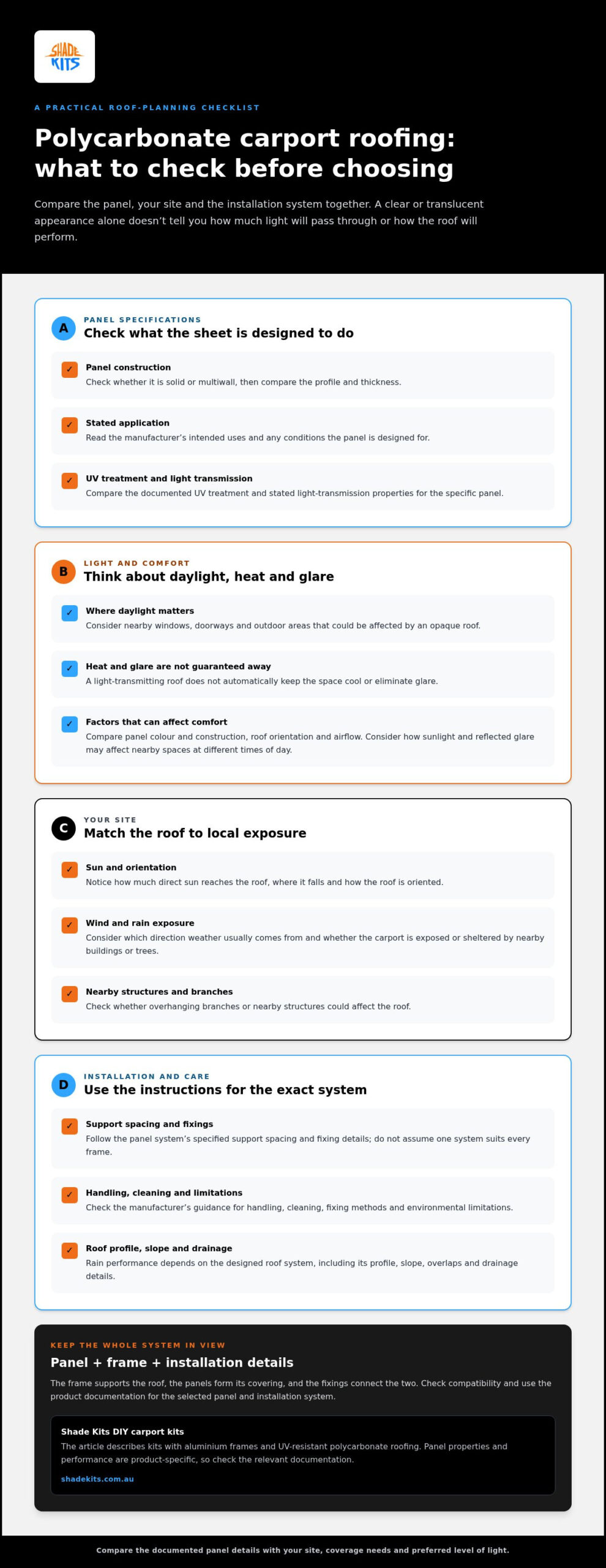
Site planning can help prevent avoidable changes during a DIY build. Work through these checks in order, keeping the selected kit and panel instructions nearby as your reference. A polycarbonate carport roof needs to suit both the space and the roofing system, so don’t estimate key dimensions or fixing details from appearance alone.
Take measurements from fixed points and record them clearly. Look beyond the parking footprint: access paths, existing structures, nearby openings and boundaries can all affect where the carport fits. Think about where runoff will travel, including whether it could collect near a doorway or flow towards an adjoining area. The Australian carport checklist can help you organise wider project considerations alongside your site notes.
Follow the kit and panel instructions for panel orientation, fixing and thermal movement. Panels can expand and contract as temperatures change, so the specified clearances and fixing method matter. Don’t clamp or alter them based on guesswork. Plan how panels will be handled and lifted, using the people and equipment required by the instructions. Keep the work area clear and follow the kit’s assembly sequence.
Before assembly, match the roof components to the documented layout. Dimensions, support spacing and fixings must follow the selected system, not a generic rule of thumb. As you plan a roof for your home and site, explore Shade Kits’ factory-direct DIY carport kits with aluminium frames and UV-resistant polycarbonate roofing.
A suitable kit brings the roof, supporting frame and assembly guidance together as a system. Before choosing, match the intended coverage to your measurements, decide how much daylight you want beneath the roof, and read the panel information rather than relying on broad material claims. Use a checklist to compare options without overlooking practical details.
Assess the structure and roof as one coordinated kit. For example, a roof that covers the parked vehicle but leaves access or door-opening areas exposed may not meet your intended use. Compare the stated dimensions with your site measurements, then check that the panel and frame documentation align. Clear instructions for installation, fixing and ongoing care help you understand what the system requires.
Factory-direct DIY supply gives you a kit-based option to plan around. Shade Kits supplies DIY carport kits with aluminium frames and UV-resistant polycarbonate roofing, designed for straightforward self-installation. The kit instructions remain central: follow the specified assembly sequence and product guidance, and plan handling and lifting in line with those directions.
Before settling on a polycarbonate carport roof, use your checklist to compare coverage, daylight preference, panel documentation, frame compatibility and assembly information. If those details align with your site and priorities, you’ll have a clearer basis for choosing. When you’re ready, explore carport kits and options.
Turn your priorities into a practical brief: note the coverage you need, how much daylight you want to retain and the site details that could affect your choice. With those decisions in view, it’s easier to judge whether a polycarbonate carport roof is right for your home and compare suitable kit options without relying on assumptions.
Before settling on a design, keep the product documentation and site measurements together. That gives you a useful reference as you consider the roof, supporting structure and assembly requirements as one project. If your plans are still taking shape, start with the key needs and refine the details as you go.
Shade Kits supplies factory-direct DIY carport kits with aluminium frames and UV-resistant polycarbonate roofing, with Australia-wide delivery. Explore carport kit options and take the next step towards planning a carport that suits your home.
Some polycarbonate roofing products are designed with UV-resistant properties, but performance varies by sheet. Check the exact panel documentation for its stated UV performance and required orientation, since installing it incorrectly may affect the intended result. For vehicle protection, also consider how much of the car is covered and how sunlight reaches it during the day. A UV-related claim alone doesn’t describe the protection provided by the full carport design.
It can feel different beneath a polycarbonate carport roof than beneath an opaque roof, but the result depends on the panel, colour, orientation, airflow and surrounding conditions. For example, a roof over a frequently used driveway may feel different from one over a breezy, open parking area. Compare the product information and consider how much daylight and shade you want in that specific spot rather than relying on a general claim about all polycarbonate roofing.
The sound varies with panel construction, supporting structure, fixing details and the intensity of the rain, so there’s no single answer for every roof. If the carport sits beside a bedroom or living room, think about how close the roof is to windows and where you spend time indoors. Review information for the specific system you’re considering, and don’t assume a particular noise level without evidence for that product and installation.
Replacement may be possible, but the new sheet needs to match the existing roofing system. Compare its profile, dimensions and fixing method with the original installation information before choosing a replacement. Also consider how the sheet connects to adjacent panels and seals around the supporting structure. Mixing incompatible components can affect how the roof fits together, so follow the relevant product instructions for removal and installation.
No. The word “polycarbonate” alone doesn’t establish how a particular panel will perform during hail. Impact performance depends on the product’s documented limits, installation and weather conditions. If hail is a concern at your property, look for relevant evidence for the exact panel and roofing system, and compare it with your needs. Don’t interpret a broad material description as a guarantee of protection against severe weather.
Follow the panel manufacturer’s care instructions, including advice on cleaning products and methods, as these can vary between sheets. Avoid abrasive tools or strong chemicals unless the documentation says they’re suitable. From a safe position, keep an eye out for debris build-up or visible damage that may need attention. If cleaning requires reaching the roof, don’t take risks from a ladder or by walking on the panels. Prioritise safe access.