
A solid roof isn’t automatically the better patio roof. The right choice depends on whether you want full shade or natural light. In a polycarbonate vs Colorbond patio roof comparison, polycarbonate lets daylight through while filtering harmful UV radiation, whereas Colorbond blocks sunlight for fuller shade. Both can provide rain cover.
It makes sense to weigh more than appearance when choosing a patio roof. Rain noise, heat, installation and drainage can all affect how comfortable and practical the space feels, and the best fit depends on how you plan to use it. This guide compares the two materials across those points, including how roof design and water runoff influence performance in Australian weather. You’ll come away with a clearer idea of which option suits your patio and what to consider before settling on a design.
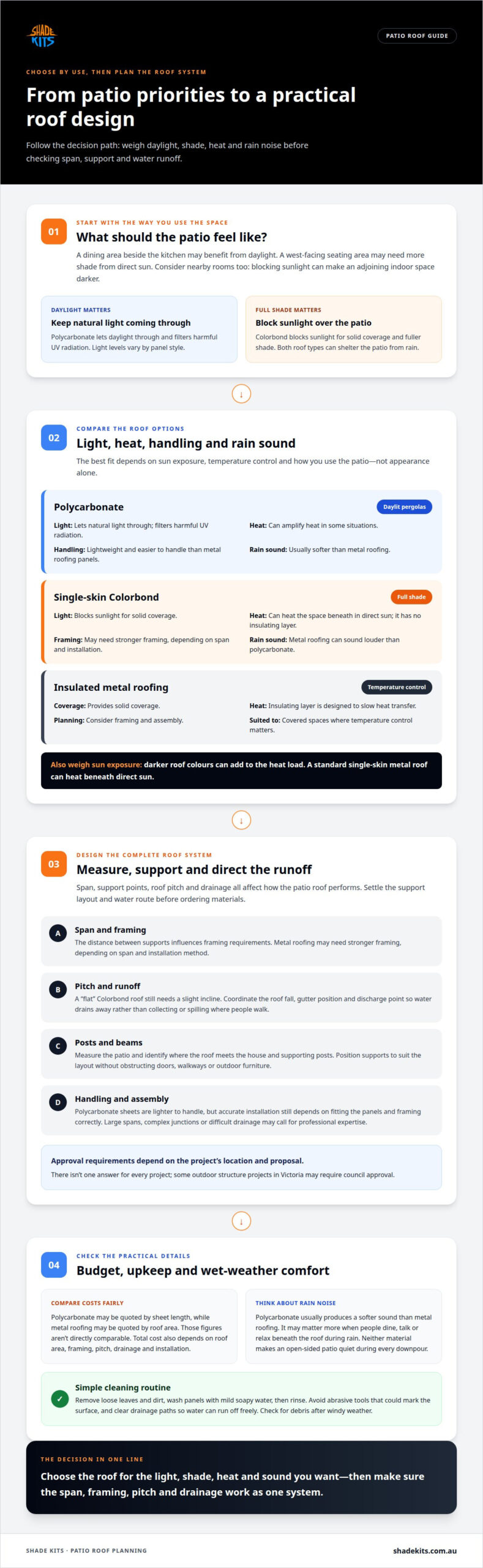
Start by picturing how you’ll use the patio. A dining area beside the kitchen may benefit from daylight, while a west-facing seating area may need more shade from direct sun. Polycarbonate lets natural light through and filters harmful UV radiation; Colorbond blocks sunlight for full shade. Both can shelter the patio from rain.
Consider heat as well as light. A standard single-skin metal roof has no insulating layer, so sunlight can heat the roof and the space beneath it. Insulated roofing is designed to slow heat transfer and can improve temperature control. Polycarbonate can also amplify heat in some situations, and darker roof colours can add to the heat load. The better choice depends on sun exposure and how you’ll use the patio.
For a pergola, match the panels to the purpose. Polycarbonate suits spaces where you want daylight beneath the roof, with light levels varying by panel style. Colorbond is a better fit when solid coverage and full shade matter more. Consider nearby rooms, too: a roof that blocks sunlight may make an adjoining indoor space darker.
How much does a polycarbonate patio roof cost compared with Colorbond in Australia? Compare like with like: polycarbonate may be quoted by sheet length and metal roofing by roof area, so those figures aren’t directly comparable. The total also depends on roof area, framing, pitch, drainage and installation.
Cleaning is straightforward with gentle methods. Remove loose leaves and dirt, wash panels with mild soapy water, then rinse. Avoid abrasive tools that could mark the surface, and clear drainage paths so water can run off freely. Check for debris after windy weather.
| Option | Light and shade | Heat consideration | Handling | Best suited to |
|---|---|---|---|---|
| Polycarbonate | Lets light through | Can amplify heat | Lightweight and easier to handle | Daylit pergolas |
| Single-skin Colourbond | Blocks sunlight | Can heat beneath direct sun | May need stronger framing, depending on span and installation | Full shade |
| Insulated metal roofing | Provides solid coverage | Insulating layer slows heat transfer | Consider framing and assembly | Covered spaces where temperature control matters |
Both polycarbonate and Colorbond roofs can work well. Choose based on how you use the patio, the light and shade you want, heat exposure and the roof structure. For a pergola, weigh daylight against full shade before selecting panels.
Plan the roof as a complete system, not just a choice between polycarbonate and Colorbond sheets. Span, support points, roof pitch and runoff all affect the design. A broad patio beside the house, for example, needs a clear route for rainwater to drain away and framing suited to the roof material.
A flat Colorbond roof can span wide patio areas with minimal vertical support. Even so, “flat” doesn’t mean perfectly level: a slight incline helps water run off. The roof’s fall, gutter position and discharge point should work together to prevent water collecting or spilling where people walk.
Before choosing panels, measure the patio and identify where the roof meets the house and supporting posts. Then consider these design factors:
DIY installation can be practical when the roof design, tools and assembly steps match your experience. Polycarbonate sheets are lighter to handle, but safe, accurate installation still depends on fitting the panels and framing correctly. A large span, complex junctions or difficult drainage may call for professional expertise. Include the installation method in your plans, rather than comparing roofing materials alone.
Do Australian councils require planning approval or building permits for a patio roof? There isn’t one answer for every project: requirements depend on the location and proposal. Some outdoor structure projects in Victoria may require council approval.
For a sound design, settle the drainage route and support layout before ordering materials. Check that the roof system suits the span and that rainwater can flow away from the patio. A well-planned fall matters for both polycarbonate and Colorbond, even though their weight and framing needs can differ.
When planning your roofing budget, consider whether the material suits DIY installation or requires professional expertise. Large patio areas covered by cantilevered retractable awnings may need additional support posts.
Rain sounds different on different patio roof materials. Polycarbonate panels usually produce a softer sound than metal roofing, which can be helpful when people dine or talk beneath the roof. The difference matters most when rain coincides with a meal, conversation or time spent relaxing outdoors. Both materials provide rain cover, but neither makes an open-sided patio quiet during every downpour.
Think about how you use the space in wet weather. If you regularly sit beneath the patio during rain, a softer roof sound may suit you better. If the area mainly protects furniture or provides shade between showers, sound may matter less. Consider nearby rooms, too, especially if the roof adjoins a living or sleeping area.
Use these practical checks to compare acoustic comfort before choosing:
Roof style can also affect how you manage changing weather. Some louvred roof models have rain sensors that automatically close the louvres when rain is detected. This can help keep the area covered without someone closing the roof manually. Fixed polycarbonate or metal panels take a different approach: they stay in place rather than adjusting as conditions change.
Rain protection isn’t the only consideration in Australian conditions. Translucent polycarbonate lets sunlight through while filtering harmful UV radiation, whereas metal roofing blocks sunlight and provides full shade. Compare the sound of rainfall with the daytime feel you want beneath the roof. A space for reading or family meals may call for a different balance from a patio used mainly for storage or occasional shelter.
For a clear decision, rank your priorities: rain cover, acoustic comfort, daylight and shade. Then compare the materials against the activities that matter most. Polycarbonate tends to suit people who value a softer rain sound and filtered daylight; metal roofing suits those seeking full shade. The best acoustic choice is the one that fits how you’ll use the patio in wet weather.
A patio roof changes both the outdoor light and the feel of adjoining rooms. Polycarbonate sheets let natural light through, while Colorbond blocks sunlight. Consider that difference beside a kitchen window or shaded garden. The roofing that feels comfortable over an outdoor table may leave an indoor room darker.
Polycarbonate doesn’t offer just one light level. Panel styles vary in how much light passes through, so think about the result you want beneath the roof. A brighter patio can suit reading or daytime meals. A more enclosed feel may work better when reducing direct sunlight is the priority.
Colorbond provides solid coverage and full shade. That can suit a patio exposed to intense direct sun or a seating area where glare is unwelcome. The trade-off is less daylight beneath the roof. Metal roofing can make the covered area feel darker and more enclosed, particularly beside a wall or under a deep patio extension.
Use these practical steps to compare light and coverage:
For a pergola used throughout the day, consider where the sun falls and how the space changes. Polycarbonate lets light through, with the amount depending on panel style. Colorbond creates a solid barrier to sunlight. Neither changes the patio’s orientation, so existing sun exposure remains important when deciding how much shade feels comfortable.
Light also affects the character of the space. Translucent roofing can maintain a connection to the sky, while a solid metal roof creates a more sheltered ceiling. If the patio connects to a living room, consider whether natural light through the roof matters indoors, too. If your main goal is a shaded outdoor retreat, prioritise coverage over brightness.
Before selecting panels, stand in the patio at the time you use it most. Notice direct sun, glare and the light entering nearby rooms. Then choose polycarbonate for filtered daylight or Colorbond for full shade, depending on what the roof needs to do.
Durability depends on more than the roofing sheet. A Colorbond patio roof must work with its supporting frame, fixings, pitch and drainage. In Australian weather, these elements face rain, sun and changing conditions together. Even a sound material choice can underperform if water cannot drain or the structure doesn’t suit the span.
Colorbond is a strong option when lasting coverage, a consistent appearance and street appeal matter. Its solid metal surface blocks sunlight and provides rain shelter. Polycarbonate also covers a patio, but its translucent panels let light through. The practical distinction is whether you prioritise full shade or daylight alongside weather protection.
Before settling on a roof, consider how each part of the system handles exposure:
For a patio exposed to intense direct sun, Colorbond’s full shade may suit people who want less sunlight beneath the roof. However, dark roof colours can increase heat load, so colour is part of the comfort decision. Polycarbonate offers filtered daylight, but its effect on heat varies with the situation. Match the roof to the patio’s exposure and use rather than assuming one material stays cooler in every setting.
Weather performance also depends on the details. A slight incline helps a flat Colorbond roof shed water, while gutters and drainage routes direct runoff away from the patio. Polycarbonate also needs suitable support and a clear runoff path. Leaves or debris around drainage points can interfere with water flow, so plan for periodic clearing.
To assess durability, consider the complete roof, not just the sheets. Look at framing, span, runoff, sun exposure and the appearance you want over time. Colorbond is often favoured for longevity, visual quality and street appeal; polycarbonate may better suit a pergola where natural light is a priority. The right material is the one that meets your weather, shade and design needs together.
Use those criteria to compare patio roof options and choose a design that suits your home.
Shade Kits offers Patio Cover Kits and Pergola Kits for homeowners planning an outdoor roof. If you want a sheltered patio, compare the roof material with the daylight, shade and rain cover you need. For a pergola, consider whether a roof that lets light through suits the space better than full shade.
Shade Kits’ DIY kits feature aluminium frames and UV-resistant polycarbonate roofing, offering a practical option for homeowners who want to self-install. Choose the structure that fits your project, then compare its roof style with your priorities for light and coverage.
For a closer look at options for your project, visit shadekits.com.au.
Choosing between a polycarbonate and Colorbond patio roof is also a chance to think beyond the roof itself. Consider how the new structure will connect with your home, where you’ll place outdoor furniture, and whether the patio should feel like an extension of your living area. A clear idea of how you’ll use the space can make the next design decisions easier.
Shade Kits offers Carport Kits, Pergola Kits and Awning Kits for different outdoor shelter needs. If you’re planning a patio project, explore the options and consider how the structure can suit your home and intended use.
Contact Shade Kits to discuss your patio and take the next step towards a roof that fits your plans.
Choose according to the activities you want the pergola to support. Polycarbonate is a practical fit where daylight matters, such as a garden workspace or breakfast area. Metal roofing creates a more shaded setting for a lounge or dining space where direct sunlight is unwelcome. Check the effect on nearby windows, too, especially if the pergola adjoins an indoor living area.
In a polycarbonate-versus-Colourbond patio-roof comparison, polycarbonate lets daylight through and is lighter to handle. Its trade-offs can include heat build-up and a less solid appearance. Colourbond provides full shade and is often favoured for visual quality and street appeal, but it blocks sunlight and can sound louder in rain. Compare those trade-offs with your patio’s exposure, structure and intended use.
Neither material is automatically cooler in every patio. Polycarbonate can amplify heat in some situations, while dark metal roofing colours can increase heat load. A standard single-skin metal roof also lacks an insulating layer; insulated roofing is designed to slow heat transfer. For summer comfort, consider roof colour, sun exposure, insulation and airflow together rather than judging by material alone.
Translucent polycarbonate lets sunlight through while filtering harmful UV radiation, with the amount of light varying by panel style. Colourbond blocks sunlight, creating solid shade beneath the roof. Neither covers open sides, so light can still enter around the structure. Consider where the sun reaches the patio and nearby rooms before choosing panel style or a solid roof.
Hail resistance depends on the specific roofing panel, while wind performance depends on the complete roof assembly. Assess the panel alongside framing, support spacing, fixings and the structure’s exposure. A material name alone doesn’t establish how a particular roof will handle hail or strong winds. For either option, the roof structure and its connections are central to weather performance.
Polycarbonate panels usually sound softer in rainfall than metal roofing, making them a potentially more comfortable choice for conversations beneath a patio roof. Metal transmits a more noticeable rain sound. If you often use the area in wet weather, consider whether noise will affect meals, calls or relaxation. The best match is the roof sound you’re comfortable hearing during those activities.
Insulated roofing is designed to slow heat transfer, while ventilation relies on air movement through the space. Neither solid polycarbonate nor Colourbond panels provide ventilation by themselves. Open sides allow airflow; a louvred roof offers an adjustable alternative, and some models have rain sensors that close the louvres when rain is detected. Consider insulation, shade and airflow as separate parts of your design.
Polycarbonate patio roofs generally have a lower upfront material cost compared to Colourbond options, making them a budget-friendly choice for homeowners. Colourbond roofing typically involves a higher initial investment due to the premium metal material, durability, and aesthetic finish. When shopping with Shade Kits, it helps to weigh these initial expenses against your long-term maintenance preferences and desired aesthetic to find the best value for your outdoor living space.