
The most substantial shelter isn’t always the most practical choice when you’re renting. A temporary carport for renters needs to balance weather protection with landlord permission, site suitability and the possibility of moving later. You may want cover for your car without risking damage to the property or committing to a structure that won’t suit your next home.
The right option depends on how much shelter you need and what your rental can accommodate. This guide compares foldable protection, including the CarCave, with more substantial carport kits. You’ll also learn what to check in your lease, when to contact your local council about requirements, and how available space and ground conditions can affect your choice. Considering permissions and practical constraints first helps you narrow down an option without assuming a permanent installation.
Renting doesn’t mean you have to leave your car exposed to every shower or stretch of harsh sun. But adding shelter involves a trade-off: you want useful weather protection without making changes that are difficult to reverse or could conflict with your rental agreement.
Temporary car protection ranges from foldable covers to freestanding shelters and more substantial carport kits. A Carport is generally an open-sided structure that shelters a vehicle. For renters, consider how much the setup changes the site and how readily it can be removed.
Compare coverage, storage and setup together. Foldable protection is designed to be packed away or relocated. Portable shelters provide a more defined covered space, but their setup and anchoring depend on the product. Carport kits create a more substantial shelter, so the property, installation method and permissions need closer attention. The foldable CarCave is designed to defend a vehicle against hail, rain and harsh sun. Carport kits have aluminium frames and UV-resistant polycarbonate roofing.
| Option | Typical trade-off for renters |
|---|---|
| Foldable cover | Easy to store or relocate; less like a full structural shelter. |
| Portable shelter | More defined cover; setup and anchoring depend on the product and site. |
| DIY carport kit | More substantial sheltered parking; needs careful site and permission checks. |
Explore DIY carport kits to compare their structure and materials. A shelter isn’t automatically exempt from permission or approval just because it can be moved.
Temporary describes how a shelter is designed to be removed or relocated. It doesn’t establish a renter’s right to install it. Your lease, landlord or property manager, site conditions and applicable local requirements may all matter. Check these before setting up, and seek written permission where needed. Anchoring a shelter or altering the surface can make the setup less reversible, so consider what removal will involve before choosing.
A renter-friendly shelter is removable, suitable for the site and chosen with the right permissions in mind. That’s a practical starting point for comparing foldable protection with a larger structure, without assuming “temporary” means obligation-free.
The best fit depends on more than how much cover you want. Consider how long you expect to stay, the space available for parking and storage, the weather exposure you want to address, and how much assembly you’re prepared to take on. A temporary carport for renters also needs to suit the site. Being movable doesn’t remove the need for a stable, suitable setup.
Protection isn’t a blanket promise. A shelter’s design and setup affect how it performs, and no option should be assumed to withstand every weather event. Insurance is a separate consideration: Renters insurance generally concerns a renter’s belongings rather than the building itself. Check your policy wording rather than assuming it covers a vehicle or shelter.
Foldable protection may suit renters whose parking needs could change or who want to pack the cover away when it’s not needed. CarCave is a foldable vehicle-protection option designed to defend against hail, rain and harsh sun. It offers a different balance of portability and coverage from a full-size carport, so compare it with the shelter your vehicle and site require.
See the foldable CarCave vehicle protection option as part of your comparison.
A kit may suit a longer-term rental with enough suitable outdoor space, once the property owner’s permission and any applicable requirements have been addressed. Shade Kits carport kits use aluminium frames and UV-resistant polycarbonate roofing, providing a more substantial structure than foldable protection. The materials are only part of the decision. Factor in assembly, site suitability and how the setup can be removed if you move.
Work through the checks before choosing a temporary carport for renters. A shelter that can be dismantled may still affect the property, and portability doesn’t automatically remove the need for permission or approval. Requirements can vary with the structure and site, so don’t rely on a general rule or another renter’s experience.
Make your request specific. Describe the shelter, where it will go, how it will be secured and whether setup involves fixing into a surface or disturbing the ground. Include a product diagram or assembly information if you have it, so the property owner or agent can understand what’s involved.
Keep the response in writing, along with any agreed conditions for removal or reinstating the area at the end of your tenancy. Landlord or agent permission is important, but it doesn’t necessarily settle whether separate local requirements apply.
Measure the usable footprint and check that your vehicle can enter, park and leave without obstructing paths, gates or shared access. Measure for the shelter itself, not just the car, and allow for access and clearance. Check whether the surface suits the product’s specified setup and anchoring method. If securing it would require drilling, digging or another surface change, confirm that this is permitted before proceeding.
Consider where rainwater may flow. A shelter shouldn’t create avoidable pooling or redirect runoff into access areas or other parts of the property. Sloping, shifting or soft ground may also affect whether the setup is suitable, so follow the product guidance rather than improvising an anchoring method.
Check your local council’s current information or contact the council about planning or building requirements that may apply. Rules aren’t uniform across Australia, and the structure’s size, position or installation method may be relevant. Check before purchasing or assembling. A movable design doesn’t by itself establish that approval isn’t needed.
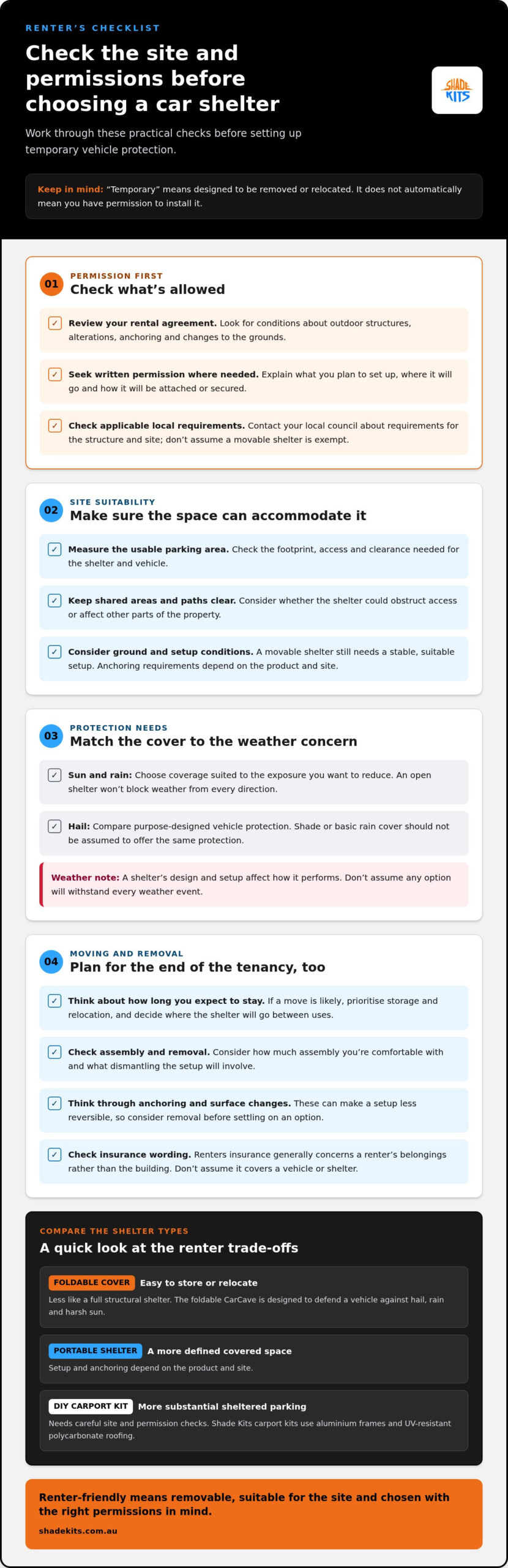
A useful comparison looks beyond the amount of cover. Weigh what the shelter protects against, how it fits your parking area and what happens when your tenancy ends. A temporary carport for renters should suit your current vehicle and site without creating a difficult removal job later.
Use this checklist to compare options:
A more substantial structure can create a defined sheltered parking area, but may involve more assembly and a less straightforward move. Foldable or readily relocatable protection can be easier to pack away, though its coverage may not match a carport. Compare these trade-offs against your expected stay instead of choosing on portability alone.
Read the product information for materials, roof coverage, setup requirements and intended use. Carport kits with aluminium frames and UV-resistant polycarbonate roofing have different components and assembly needs from foldable vehicle protection. Compare the stated dimensions with your vehicle and the usable site, including access and clearance. Don’t assume a product will fit every car or parking layout.
Pay close attention to the limits of any wind, hail or UV claims. Treat them as product-specific, not a promise of protection in every condition. The setup and anchoring method matter too, so use the product guidance to decide whether the site is suitable.
Picture moving day before you buy. Work out where foldable protection or dismantled components could be stored, how they’ll be transported and whether taking the structure down could leave holes or other changes to the site. A solution that’s easy to assemble may still need planning for removal and storage.
The right rental shelter balances coverage, reversibility and site suitability. If a more substantial kit fits your plans, compare the options in the carport kit range before deciding.
The right choice depends on how likely your plans are to change and how much sheltered parking you need. If you may move soon, prioritise a solution that’s straightforward to pack away, store and transport. If you expect to stay longer and have suitable outdoor space, a carport kit may be worth assessing for more substantial sheltered parking.
These options aren’t interchangeable. CarCave is foldable vehicle protection designed to defend against hail, rain and harsh sun. A carport kit is a more substantial structure with aluminium framing and UV-resistant polycarbonate roofing. Neither option removes the need to consider the site, permission and applicable requirements before setup.
For a shorter or uncertain tenancy, portability and storage may matter more than creating a full-size sheltered parking area. Consider how much space you have to store the protection between uses and whether relocating it would be manageable. The foldable CarCave may suit renters looking for a movable option. It isn’t a fixed carport or a promise of protection in every weather event. See CarCave vehicle protection for product-specific information.
Before planning installation, confirm written permission, measure the site and review current local council guidance for applicable requirements. Consider how the structure will be assembled, secured and removed at the end of your tenancy. Shade Kits carport kits are designed for DIY self-installation, so plan for the assembly rather than assuming installation labour is part of the option.
A temporary carport for renters is a sensible fit only if the shelter suits both the parking space and your rental arrangements. If a kit seems right for your needs, review the carport kit range and compare the available structures and materials.
The right temporary carport for renters balances the cover you need with what your tenancy and site allow. If flexibility is your priority, CarCave is a foldable vehicle-protection solution designed for hail, rain and harsh sun. For longer-term sheltered parking, a DIY carport kit offers a more substantial structure with aluminium frames and UV-resistant polycarbonate roofing.
Whichever option you’re considering, review your rental terms, seek permission, and check site suitability and applicable local requirements before setting it up. Plan for storage, disassembly and moving day too. These steps can help you choose protection that fits now without making your next move harder.
Shade Kits offers Australia-wide delivery for its vehicle-protection options. Explore Shade Kits vehicle protection options to compare the foldable CarCave and DIY carport kits, then choose the approach that suits your parking space and plans.
It may be possible, but check your rental agreement, seek written permission and confirm site suitability and applicable local requirements before setting anything up. A temporary carport for renters isn’t automatically exempt from rules because it can be moved. The structure, how it’s secured and where it sits may all be relevant. Check current council guidance for your property before buying or installing a shelter.
Check your lease and get written permission before setting up a portable shelter. Explain what you propose to use, where it will sit, how it will be secured and whether setup or removal could affect the surface. Keep a record of the response and any agreed removal or reinstatement conditions. Landlord approval is separate from applicable council or building requirements, so check those too.
The best choice depends on your expected stay, parking space, protection needs and willingness to assemble or store the shelter. If you may move or need to pack protection away, a foldable option such as CarCave may suit. For longer-term sheltered parking, consider whether a DIY carport kit fits the site and rental arrangements. Compare coverage and setup needs, as these options aren’t interchangeable.
Some options are designed to help protect against these conditions, but no shelter should be assumed to prevent damage in every weather event. CarCave is a foldable vehicle-protection solution designed for hail, rain and harsh sun. Carport kits have UV-resistant polycarbonate roofing, which provides overhead cover. Check the product information for intended use and stated limits, and follow the recommended setup guidance.
There isn’t one answer that applies to every Australian property. Requirements can vary, so check current planning and building guidance from your local council before purchasing or setting up a shelter. The structure and its location may affect which requirements are relevant. Portability or landlord permission doesn’t by itself determine whether council approval is needed.
It depends on the shelter and how it’s installed. Foldable protection such as CarCave is designed to be packed away, while a DIY carport kit may involve dismantling and transporting structural components. Before choosing, consider where parts can be stored, how removal may affect the property and whether the next site will suit the setup. Moving the shelter doesn’t automatically carry over permission or local approvals.