
A standard shade sail might look the part in January, but it often becomes a liability the moment a classic Australian summer storm rolls in. If you have ever had to scramble to save the BBQ or watch your outdoor lounge get soaked through a sagging fabric cover, you know that not all waterproof shade solutions for patios are created equal. It’s frustrating when an investment intended to improve your lifestyle ends up adding to your weekend chores or failing when you need it most.
We believe your outdoor space should be a reliable sanctuary, regardless of what the Bureau of Meteorology predicts. This 2026 buying guide promises to show you how to choose a durable, 100% waterproof patio solution that withstands extreme UV and heavy downpours without the massive price tag of a custom builder. By opting for a smart DIY kit, you can achieve a permanent, stylish finish that protects your furniture and adds genuine value to your home.
We will walk you through the structural benefits of modern aluminium frames, the heat-shielding properties of advanced polycarbonate roofing, and the practical steps to organise your project from permit to completion.
The “Great Australian Backyard” is a central part of our lifestyle, but it faces some of the most punishing weather on the planet. We often focus on blocking the harsh UV rays during a scorching January afternoon, yet we forget that Australian summers are just as famous for sudden, heavy tropical downpours. Without a reliable cover, your outdoor plans are entirely at the mercy of the Bureau of Meteorology. Choosing waterproof shade solutions for patios isn’t just about comfort; it’s about reclaiming the usable floor area of your home and ensuring you can use your outdoor space 365 days a year.
A truly waterproof patio acts as a permanent extension of your living room. It provides a dry, safe zone for kids to play when it’s wet outside and a guaranteed spot for the Saturday BBQ, regardless of the clouds. Beyond the lifestyle benefits, there is the practical matter of protecting your property. Constant exposure to rain can lead to timber rot in expensive decks and cause outdoor furniture fabrics to mildew and fade. A structural solution keeps these investments bone-dry and looking new for years.
Standard shade cloth is designed to breathe, which is excellent for heat but disastrous during a storm. While early Shade Sail Technology focused primarily on UV block, modern homeowners now demand more. It’s vital to understand the difference between “water-resistant” and “100% waterproof” materials. Water-resistant fabrics might shed a light mist, but they often sag under the weight of heavy rain, eventually allowing water to seep through or pool in the centre.
Professional-grade patio kits solve this by using rigid materials like polycarbonate and aluminium. These structures don’t just block the rain; they manage it. Integrated guttering and calculated roof pitches ensure that water is diverted away from your house and into proper drainage points. This prevents the messy “splash-back” that often occurs with temporary umbrellas or low-quality sails.
When you look at property value, a permanent, structural patio cover offers a significantly higher return than a temporary fix. A high-quality aluminium and polycarbonate finish provides a sleek, modern aesthetic that complements contemporary Australian architecture. It looks like a deliberate part of the home’s design rather than a last-minute addition.
As we move into 2026, the trend for “indoor-outdoor” living continues to grow. Buyers are looking for homes that offer versatile, weather-proof zones. By installing a durable, rust-free structure now, you are future-proofing your home. You’re creating a space that won’t require constant tensioning, cleaning, or replacement every few seasons, making it the smartest logistical and financial choice for long-term outdoor living.
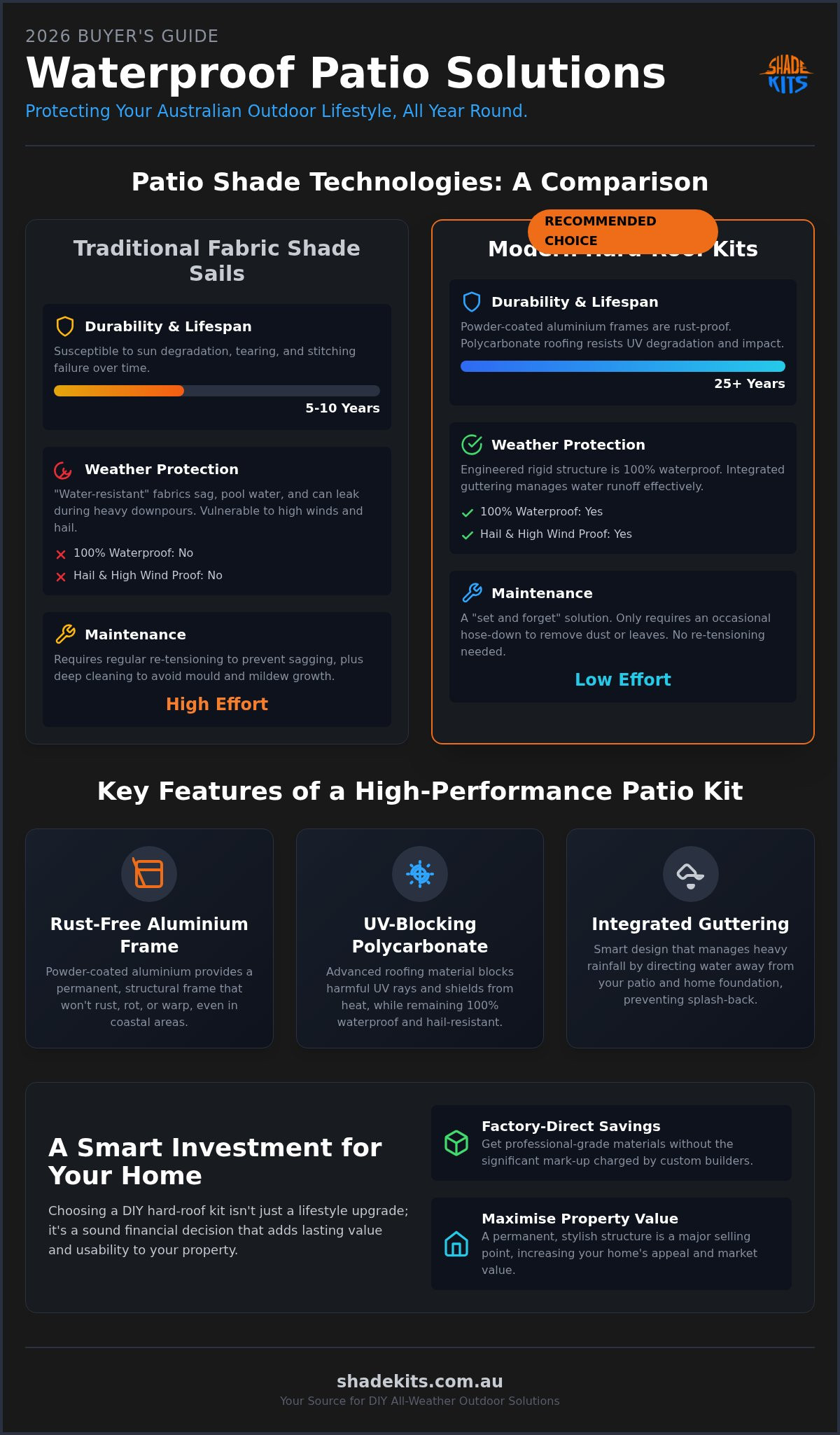
When selecting between a flexible sail and a rigid roof, the decision usually comes down to how much effort you want to put in over the next decade. While both options offer protection, they represent very different philosophies in outdoor design. Fabric sails, even those with high-tech PVC coatings, are susceptible to the elements in ways that aluminium and polycarbonate structures simply aren’t.
Durability is the primary differentiator. A quality PVC-coated sail might give you five to ten years of service before the Australian sun begins to degrade the fibres or the stitching. In contrast, powder-coated aluminium frames are essentially permanent. They don’t rust, rot, or warp. Maintenance requirements also vary wildly. Sails require regular re-tensioning to prevent sagging and deep cleaning to stop mould growth in the fabric grain. A hard-roof kit is a “set and forget” investment that typically only requires an occasional hose-down to keep it looking fresh.
Wind and hail performance also separates these technologies. A flexible sail can act like a giant kite in high winds, putting immense stress on your home’s fascia or support posts. A fixed waterproof shade solution for patios, however, is engineered to stay put. It provides a solid barrier against hail that would easily dent a car or tear through lighter fabrics, giving you peace of mind during the unpredictable storm season.
The biggest challenge with waterproof fabric is the sagging problem. Unlike standard shade cloth, waterproof versions don’t allow water to pass through. During a heavy downpour, water can pool in the centre of the sail if the tension isn’t perfect. This weight puts immense pressure on the mounting points and can permanently stretch the fabric, leading to leaks.
There is also the “oven effect” to consider. Because waterproof fabrics are non-porous, they trap hot air underneath, making the patio feel stuffy on a humid afternoon. Additionally, many homeowners underestimate the installation complexity. To keep a waterproof sail taut enough to shed rain, you often need heavy-duty steel posts and substantial concrete footings that can be more difficult to install than a modular kit.
Hard-roof waterproof shade solutions for patios offer superior heat management and light transmission. Multi-wall or solid polycarbonate sheets are engineered with UV filters that block 99% of harmful rays while still allowing natural light to brighten your outdoor area. This prevents the “cave” feeling often associated with heavy fabric covers.
Structural reliability is where these kits truly shine. They are designed to meet specific Australian wind ratings, ensuring they remain stable during storm season without the need for constant adjustments. If you are considering a similar project for your vehicle, you might find The Ultimate Guide to DIY Carport Kits in Australia (2026) helpful for understanding structural requirements. For those ready to upgrade their entertainment area, browsing our range of durable patio covers is an excellent next step toward a more comfortable home.
Identifying the right components for your outdoor area ensures that your investment lasts decades rather than just a few seasons. When you are comparing various waterproof shade solutions for patios, the focus should be on material science and structural design. High-quality kits distinguish themselves through the use of premium alloys and advanced polymers that are engineered specifically for the Australian climate. This level of detail prevents the common issues of structural fatigue and aesthetic degradation that plague cheaper, generic alternatives.
The frame material is your first point of consideration. Powder-coated aluminium has emerged as the gold standard because it offers an exceptional strength-to-weight ratio while remaining completely immune to rust. Unlike timber, which requires constant staining to prevent rot, or steel, which can succumb to corrosion in coastal air, aluminium remains stable. Modern patio covers utilise this material to provide a sleek, low-maintenance skeleton that supports heavy roofing loads without warping over time.
Australia’s UV levels are among the highest in the world, which can quickly turn standard plastics brittle. Premium DIY kits use polycarbonate roofing infused with high-grade UV inhibitors. these stabilisers prevent the sheets from yellowing or becoming “chalky” after a few summers. While fabric competitors often struggle with heat retention, multi-wall polycarbonate creates an insulating layer of air that keeps the area underneath significantly cooler.
Impact resistance refers to the structural capacity of a roofing material to absorb and dissipate the kinetic energy of hailstones or falling debris without fracturing or losing its waterproof seal. This is a critical safety feature for any permanent structure. By choosing a kit with high-impact ratings, you ensure that your outdoor sanctuary remains intact even after a severe storm passes through.
A truly waterproof solution is only as good as its drainage system. Effective water management relies on a calculated roof pitch, often referred to as the “fall,” which ensures gravity moves rain away from your house. Without a proper slope, water can pool, leading to leaks or structural strain.
You should look for integrated gutter systems rather than simple drip edges. Integrated gutters are built into the frame itself, collecting water and directing it through dedicated downpipes. This design prevents the “curtain of water” effect that occurs when rain simply spills off the side of a roof. Ideally, your kit should allow for a seamless connection to your existing home drainage or garden soakage pits, keeping your patio floor bone-dry even during a tropical deluge.
Taking the leap from choosing your materials to actually planning the build requires a methodical approach. Getting the measurements right is the foundation of a successful project. When determining the height and span for your waterproof shade solutions for patios, you must account for the minimum clearance required for doors and windows, as well as the necessary roof pitch discussed in the previous section. A standard 20 square metre patio requires precise marking out to ensure the posts align perfectly with your existing floor plan and house connections.
Site preparation is often where DIYers save the most money, but it’s also where the most care is needed. Before you break ground for any footings, you must check for underground services like water, gas, or telecommunications. Using the “Before You Dig Australia” service is a non-negotiable first step. Once the site is cleared, ensuring a level foundation is critical. Even a slight tilt in the base can cause structural alignment issues when you reach the roofing phase, potentially compromising the waterproof seal.
Assembling a factory-direct aluminium kit doesn’t require a workshop full of specialised machinery. Most projects can be completed with a standard set of tools, including a cordless drill with hex bits, a spirit level, a string line, a rubber mallet, and a set of sturdy ladders. Having these ready before your delivery arrives will make the process much smoother and prevent unnecessary trips to the hardware store mid-build.
In nearly all cases, a roofed patio in Australia requires a building permit to comply with the Building Code of Australia. While some states offer “exempt development” for very small, unroofed structures, permanent waterproof covers usually fall under regulated construction. Council permit fees typically range from $150 to $300, while the building permit itself can cost between $700 and $2,500 depending on the complexity of the project. You may also need a planning permit, which can range from $500 to $2,000. By following a structured plan, you can ensure your waterproof shade solutions for patios meet all local regulations while providing a professional finish. For a detailed breakdown of what to expect, check out The Essential Australian Carport Checklist.
Success begins the moment your kit is delivered. Your first task should be a thorough inventory check against the packing list to ensure every bolt and bracket is present. We recommend a “two-person rule” for the assembly phase; while the components are lightweight aluminium, holding long beams in place while securing fasteners is a job for two sets of hands. Once the structure is up, the final step involves sealing all joints with high-grade silicone and testing the water flow with a hose to confirm your gutters are working as intended. If you are ready to start planning your build, you can view our range of DIY patio covers to find the right dimensions for your home.
Buying a patio structure shouldn’t feel like a negotiation with a retail salesperson. The traditional home improvement model involves several layers of markups before the product reaches your property. By choosing factory-direct waterproof shade solutions for patios, you are essentially buying from the source. This removes the middleman and ensures that every dollar you spend goes directly into the quality of the aluminium and the grade of the polycarbonate roofing rather than a retailer’s commission.
For those who aren’t looking for a permanent structural addition, the CarCave offers a robust alternative. It provides the same 100% waterproof protection and UV resistance as our fixed structures but with the flexibility of a non-permanent build. Whether you choose a permanent or portable option, having a direct line to the manufacturer means you get technical support from people who actually understand the engineering behind the kit.
Australia-wide delivery has changed the game for regional homeowners. You no longer have to settle for whatever the local hardware store has in stock or pay exorbitant regional surcharges. You can order a precision-engineered kit and have it delivered directly to your property, complete with the instructions and support needed for a successful DIY assembly. This factory-direct approach ensures you receive the same high-end architectural finish regardless of where you live.
The financial benefit of a DIY project is clear when you look at the labour costs associated with a custom builder. Professional installation for a patio cover in Australia currently ranges from $45 to $100 per square metre, which adds thousands to the total bill before a single bolt is turned. When you factor in that these waterproof shade solutions for patios use durable materials that don’t require the constant re-tensioning or replacement of fabric sails, the long-term return on investment becomes even more significant. For a deeper look at the numbers, read our Aluminium Carport Prices Australia: The 2026 DIY vs. Custom Cost Guide.
Choosing between our range of Patio Covers, Pergola Kits, or Awning Kits depends on your specific layout and how you intend to use the space. If you want a full extension of your living room that stays dry in a storm, a patio cover is the way to go. For smaller areas or window protection, an awning might be the smarter fit. Ordering online is straightforward, and our team is available to provide technical guidance if you have questions about dimensions or site prep. Explore our range of waterproof patio kits today and take the first step toward a drier, cooler, and more valuable Australian home.
Reclaiming your backyard shouldn’t be a gamble against the weather. This guide has shown how choosing structural waterproof shade solutions for patios over temporary fabric alternatives ensures your outdoor area remains usable whether it’s a scorching summer day or a sudden tropical downpour. By focusing on durable aluminium frames and UV-resistant polycarbonate roofing, you create a “set and forget” sanctuary that protects your furniture and adds lasting value to your property.
The smartest path to a premium finish is the middle ground between expensive custom builds and flimsy umbrellas. A factory-direct DIY kit allows you to maintain control over your budget while achieving an architectural result that is engineered specifically for our local environment. With a methodical approach to planning and our Australia-wide delivery, a professional-grade transformation is well within your reach.
Ready to upgrade your home? View our factory-direct waterproof patio and carport kits to find a resilient solution that fits your space perfectly. You have the plan and the technical knowledge; now it’s time to build the weather-proof outdoor area you’ve always wanted.
Our kits are 100% waterproof, providing a complete barrier against rain. Unlike water-resistant fabric sails that can eventually leak or allow moisture to seep through under pressure, our solid polycarbonate roofing ensures that your outdoor area stays bone-dry. This is a critical distinction for anyone looking at waterproof shade solutions for patios. The rigid panels are sealed with professional-grade gaskets to prevent any water penetration, even during the heaviest Australian tropical downpours.
You generally don’t need a builder’s licence to install a DIY kit on your own property as an owner-builder. However, Australian regulations vary between states regarding the total value of the project. If the project exceeds a certain cost threshold, you might need to obtain an owner-builder permit. It’s always essential to check with your local council to ensure you meet all structural and legal requirements before starting your installation.
Aluminium kits are engineered to meet strict Australian wind ratings, making them far more resilient than flexible shade sails. The powder-coated aluminium frames provide a rigid skeleton that won’t flap or tear during high-wind events. Because the structures are fixed to concrete footings or existing slabs, they maintain their integrity during classic summer storms. This stability ensures that your waterproof shade solutions for patios remain a safe and permanent fixture of your home.
These kits are specifically designed for DIY installation by homeowners with basic hand tools and a bit of patience. You don’t need to be a trade professional to achieve a high-end result. We recommend a two-person team for certain stages, such as lifting the main beams or positioning the roofing panels. If you can follow a logical set of instructions and use a cordless drill, you can successfully complete the project yourself.
Multi-wall or solid polycarbonate is the premier choice for 2026 because it balances light transmission with total weather protection. This material is virtually unbreakable and provides high impact resistance against hail. Unlike traditional metal roofing that can make a patio feel dark, polycarbonate allows natural light to filter through while blocking 99% of harmful UV rays. It’s the most versatile option for creating a bright, dry, and durable outdoor living space.
A standard DIY patio kit typically takes two people between one and two days to assemble. This timeframe assumes that your site preparation, including footings or slab work, is already complete. The modular nature of the aluminium frame means that components fit together efficiently. While larger or more complex custom layouts might take a little longer, most homeowners find they can transform their outdoor area over a single weekend.
No, advanced polycarbonate is designed to manage heat much more effectively than old-style clear plastics. Multi-wall panels contain air pockets that act as an insulating layer, while integrated UV inhibitors reflect a significant portion of solar radiation. This prevents the greenhouse effect and keeps the temperature underneath comfortable even in the height of summer. It offers a cooler experience than non-porous waterproof fabrics which tend to trap stagnant hot air.
Yes, our patio kits feature integrated guttering systems designed to manage water runoff efficiently. Unlike basic awnings that simply allow rain to spill off the edge, our structures collect water and direct it through dedicated downpipes. This ensures that your patio floor remains dry and prevents water from splashing back onto your furniture. The guttering is built into the frame’s aesthetic, providing a sleek look that matches the modern aluminium finish.