
Why does a quick search for the diy carport cost australia return everything from a few hundred dollars to the price of a small family car? It’s a common frustration for homeowners who want to protect their vehicles from the blistering sun without being blindsided by hidden expenses. You’re likely looking for a straightforward answer that accounts for more than just the frame. It’s about the total investment, including those often-overlooked council fees that can reach $1,500 and the cost of a solid concrete slab, which typically ranges from $60 to $90 per square metre in 2026.
We understand that you want a durable solution that won’t require a weekend of repainting every few years. This pricing guide provides a clear budget roadmap to help you navigate the process with confidence. We’ll break down the real-world expenses of site preparation and permit applications while explaining why factory-direct aluminium kits are the most efficient way to avoid middleman markups. By the end of this article, you’ll know exactly how to plan your project to ensure it stands up to the Australian UV while keeping your budget firmly on track.
The financial reality of home improvements has changed significantly over the last few years. While global supply chains have mostly stabilised, the cost of professional labour in Australia has continued to climb. This has made the Carport a primary focus for homeowners looking to add value without the heavy price tag of a custom builder. Understanding the current diy carport cost australia requires looking beyond the sticker price of the materials. You need to account for the shifting economic landscape of 2026, where “sweat equity” has become a valuable currency.
As extreme weather events, particularly heavy hail and intense UV levels, become more frequent across the country, vehicle protection is no longer a luxury. It’s a practical necessity to prevent insurance premiums from spiking or paintwork from fading. However, setting a realistic budget means recognising that the kit price is your starting point. You’ll also need to factor in site preparation and local regulations to get a true figure for your total investment. The rise of the “Smart DIYer” is a direct response to these costs, as people realise they can achieve a professional finish without paying for a contractor’s overheads.
Speed is the biggest advantage of a modern kit. While a traditional onsite build can drag on for weeks as you wait for various trades to show up, a high quality aluminium kit can often be assembled in a single weekend. Modern engineering has simplified the process so much that the average homeowner doesn’t need specialised tools or a background in construction to achieve a professional result. There’s also a significant emotional payoff. Completing a structural project independently provides a sense of accomplishment that you simply don’t get from signing a cheque for a contractor. It transforms your property while giving you full control over the timeline and quality of the build.
The traditional retail model is often stacked against the consumer. A product typically moves from a manufacturer to a wholesaler, then to a retailer, before finally reaching your driveway. Each of these stages adds a margin that inflates the final price. By choosing factory-direct solutions from Shade Kits, you’re effectively cutting out these unnecessary layers. This transparency is a breath of fresh air compared to the often opaque quotes provided by local tradies, where “incidentals” can suddenly appear on the final invoice. When you choose to buy carports online through a factory-direct model, you see the exact cost upfront. This allows for much tighter budget control and ensures every dollar you spend goes directly into the quality of the materials rather than someone else’s commission.
Deciding between a kit and a custom build often comes down to how much you value your time versus your savings. While a custom build offers bespoke dimensions, the diy carport cost australia is significantly lower when you opt for a precision-engineered kit. For instance, a custom-built single carport can easily set you back between $4,500 and $7,000 once professional installation is included. In contrast, a high-quality kit represents a fraction of that investment. Modern aluminium kits aren’t just about saving money; they are designed to match the sleek aesthetics of custom builds while offering the peace of mind that comes with factory-backed warranties. By skipping the middleman and the custom design fees, you can redirect those funds into higher-quality materials like UV-resistant polycarbonate roofing.
Design flexibility is another area where modern kits have closed the gap. In the past, “off-the-shelf” meant compromising on style. Today, our kits feature clean lines and durable finishes that complement contemporary Australian homes. Because these structures are manufactured in a controlled factory environment, the tolerances are much tighter than what you might find with onsite timber construction. This precision makes the assembly process straightforward for anyone with basic tools. You get a structure that looks like it was designed by an architect, without the architect’s invoice.
In 2026, the hourly rate for a qualified carpenter or builder typically sits between $60 and $110. For a standard carport assembly, you could be looking at $1,000 to $2,500 in labour alone. Beyond the hourly rate, you also have to consider hidden expenses like travel fees and site visits. If a contractor is juggling multiple jobs, your driveway might remain a construction site for weeks. By choosing to handle the assembly yourself, you turn that weekend into “sweat equity” and keep those thousands of dollars in your own pocket. It’s a pragmatic way to ensure the job is done to your satisfaction without waiting on someone else’s schedule.
When looking at the long-term value, a double carport often provides a much better return on investment. A standard double carport measures around 36 square metres (6m x 6m). While the initial kit price is naturally higher than a single, the price-per-square-metre is frequently more favourable. When calculating the diy carport cost australia for your specific block, consider the added resale value of a double structure. Australian buyers often prioritise double carports as they offer flexible storage for boats or trailers. You can see how the dimensions and value compare in our Double Carport Comparison. If you’re looking to future-proof your home, investing in a larger structure now is usually more cost-effective than trying to expand later. You might want to browse our range of carport kits to find the right footprint for your property.
When calculating the diy carport cost australia, many homeowners focus solely on the initial purchase price. However, the material you choose dictates the “maintenance debt” you’ll be paying for years to come. While timber is often marketed as the most affordable entry point, it requires regular sanding, oiling, or repainting every three years to survive the Australian sun. These recurring costs in time and materials quickly eclipse the initial savings. Aluminium, by contrast, offers a set and forget solution. It doesn’t rot, warp, or invite termites, making it the pragmatic choice for a structure that needs to last decades without constant intervention.
Steel is another common contender, but it presents specific challenges for the independent builder. It’s significantly heavier than aluminium, often requiring extra hands or specialised lifting equipment for assembly. Even galvanised steel can eventually succumb to corrosion, especially in coastal regions where salt spray is a factor. Aluminium is naturally corrosion resistant and much lighter, which simplifies the DIY handling process without compromising on structural integrity. This makes the assembly phase safer and more manageable for a two person team working over a weekend.
Powder coated aluminium is essential for homes in high UV or coastal areas where traditional materials fail. Our frames are designed to withstand these harsh conditions without the ever needing a fresh coat of paint. Aluminium 6063 is the industry standard for structural kits, providing the ideal balance of strength and corrosion resistance. This high grade extrusion ensures that your carport remains straight and true, unlike timber which can twist or bow as it dries out. By investing in a high quality metal frame, you’re effectively eliminating future repair costs from your budget while maintaining a premium look.
The roof is your vehicle’s primary line of defence. While traditional corrugated iron is durable, it acts as a heat sink, radiating warmth onto your car’s paintwork long after the sun has set. UV resistant polycarbonate roofing is a superior alternative for the Australian climate. It provides high levels of light transmission while blocking the harmful rays that cause clear coat failure and interior fading. This creates a bright, airy space rather than a dark, hot tunnel. For a deeper look at how these components work together, check out The Ultimate Guide to DIY Carport Kits in Australia (2026). Choosing the right roofing material ensures your carport adds both aesthetic and functional value to your home for the long term, protecting your vehicle’s resale value in the process.
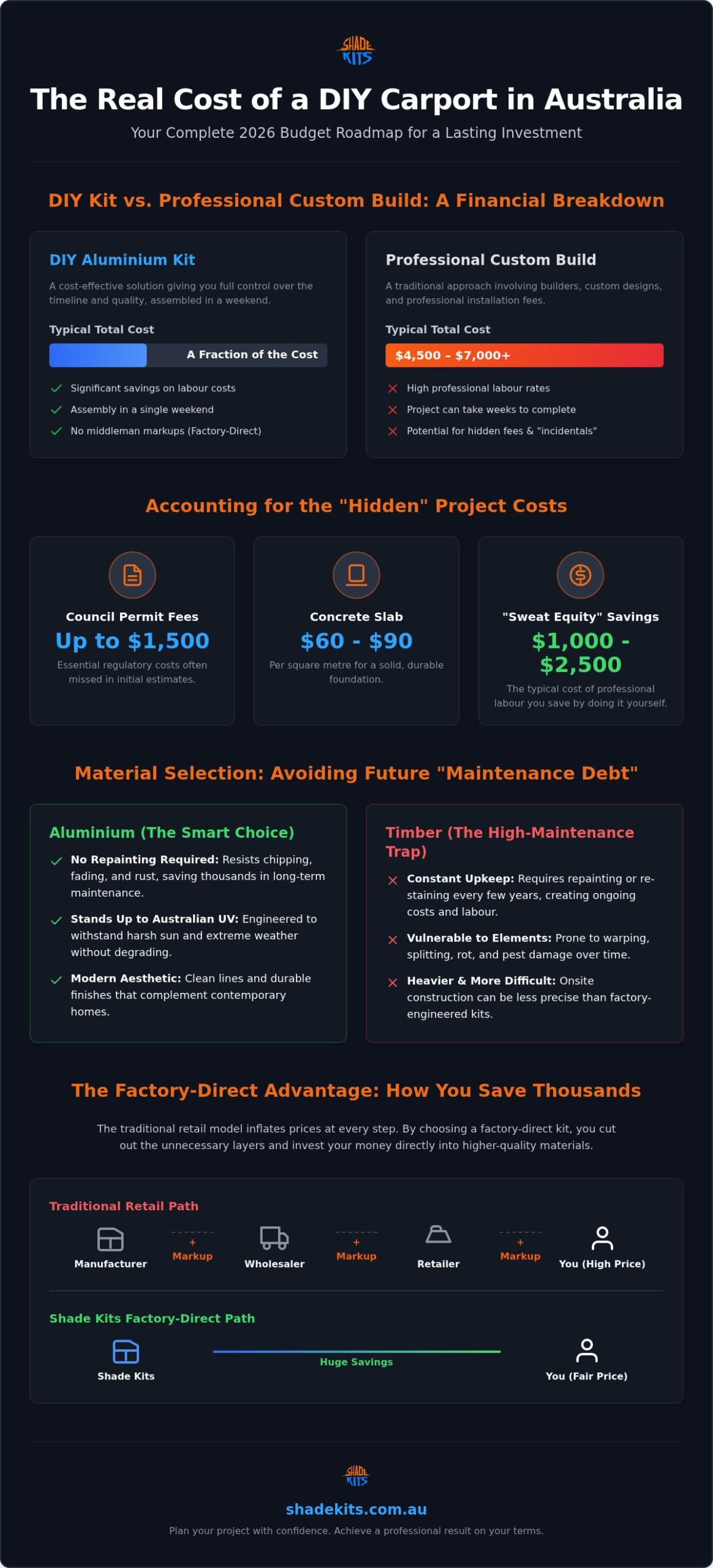
When you sit down to calculate the diy carport cost australia, the figure on your invoice for the kit is only one piece of the puzzle. A successful project requires a holistic view of the entire site. You need to account for what happens below the ground and what the local authorities require before you even pick up a drill. Ignoring these factors can lead to budget blowouts that turn a rewarding DIY weekend into a financial headache. By planning for these “hidden” expenses now, you’ll ensure your total investment remains transparent and manageable.
Preparation is the key to avoiding surprises. Beyond the structure itself, you must consider site accessibility. If a delivery truck can’t get close to your build site, you might spend hours manually moving heavy components, which adds to your “sweat equity” tally. Having a clear staging area organised before the kit arrives will keep the project moving smoothly and prevent damage to your materials or existing landscaping.
In 2026, the regulatory landscape for carports remains a critical variable. Depending on your location, your project might fall under “Exempt Development,” meaning you won’t need formal approval if you meet specific size and setback criteria. However, many homeowners find they require a building permit or planning approval, with council fees sometimes reaching up to $1,500. You’ll also need to factor in the cost of site plans or engineering drawings if your council demands them. Understanding these rules early is vital for staying legal and insured. For a deeper dive into these requirements, read The Essential Australian Carport Checklist to ensure you haven’t missed a step.
A durable carport needs a stable base. If you’re starting with a bare patch of dirt, a 100mm reinforced concrete slab is the gold standard. In the current market, you should budget between $60 and $90 per square metre for professional concrete pouring. For a standard double carport, this foundation alone can cost between $1,500 and $2,500. If your budget is tighter, individual post footings are a viable alternative. This involves digging deep holes for each post and filling them with concrete, which significantly reduces material costs. Regardless of the method, proper drainage is non-negotiable. You must ensure the site levels allow water to flow away from the structure to prevent pooling and long-term soil instability.
To get started on your project with a clear price and no hidden surprises, you can view our transparently priced carport kits today. Having the right tools on hand, such as a high-quality hammer drill, spirit level, and a solid ladder, will also save you from making last-minute trips to the hardware store that eat into your budget and your time.
Choosing to manage your own build is a significant step toward increasing your property’s value while keeping your expenses low. At Shade Kits, we’ve refined the process to ensure the diy carport cost australia remains affordable without compromising on the quality of the components. By shipping factory-direct, we eliminate the retail overheads that usually drive up prices. This means every cent of your budget goes into high-grade aluminium and UV-resistant roofing rather than a showroom’s rent. We deliver Australia-wide, ensuring that homeowners across the country have access to professional-grade structures that are designed specifically for our harsh environmental conditions.
Beyond the materials, we provide the expert guidance needed to navigate the assembly process. We don’t just send you a flat-pack and leave you to figure it out. Our team acts as a mentor throughout your project, providing clear instructions and support to ensure your structure is sound and secure. This level of assistance is often the difference between a stressful weekend and a successful home improvement project. By streamlining the logistics and the engineering, we make it possible for you to achieve a result that looks like it was handled by a high-end contractor.
We recognise that a permanent, slab-mounted structure isn’t always the right fit for every situation. For renters or those with limited space, the financial benefits of a flexible solution are hard to ignore. The CarCave Hail Protection system offers a cost-effective alternative that provides high-level security for your vehicle without the need for council permits or permanent foundations. It’s an ideal choice for car enthusiasts who need reliable protection from unpredictable Australian storms but require the ability to fold the structure away when it’s not in use. This flexibility offers a high return on investment by preventing costly hail damage repairs while maintaining the versatility of your driveway.
Before you make your final decision, it’s worth summarising the total potential savings of the DIY approach. By removing the $1,000 to $2,500 typically spent on installation labour and avoiding the 20-30% markups found in traditional retail stores, you can significantly reduce your out-of-pocket expenses. When you combine this with the zero-maintenance requirements of powder-coated aluminium, the long-term financial picture becomes very clear. If you’re ready to take the next step, you can explore our detailed Aluminium Carport Prices Australia: 2026 Guide to see how different configurations fit your specific needs. We’re here to help you get started with a consultation to ensure you choose the right kit for your site, your vehicle, and your budget.
Planning your project with a clear understanding of the diy carport cost australia is the best way to ensure a smooth and successful build. We’ve explored how the true value of a carport lies in selecting durable materials like powder-coated aluminium and UV-resistant polycarbonate that effectively eliminate long-term maintenance debt. By accounting for site preparation and council requirements early in the process, you can avoid unexpected budget hurdles and proceed with the confidence of a seasoned professional.
Our structures are specifically designed for harsh Australian weather conditions and are built to provide resilience without the need for constant repainting or repairs. With Australia-wide delivery, getting high-quality, factory-direct components delivered straight to your door has never been simpler. If you’re ready to add permanent value to your home while avoiding middleman markups and high labour rates, we’re here to help you every step of the way.
Browse our range of factory-direct DIY Carport Kits today and take the first step toward a professional result you can achieve yourself. It’s time to give your vehicle the protection it deserves with a solution that’s built for the long haul.
Most Australian states require a building permit or planning approval for a carport. While some smaller structures may qualify as Exempt Development depending on your local government area, it’s essential to check before you start. Council fees and building permits can cost up to $1,500 in 2026. Failing to secure the right paperwork can lead to fines or the forced removal of the structure, so always verify the 2026 BCA requirements for your specific site.
The average price for a double carport kit in Australia generally ranges from $2,500 to $5,000 depending on the roof style and materials. A steel double carport with a skillion roof typically starts at $2,000; gable roof versions often range between $3,000 and $4,000. These figures represent the kit itself. You must also factor in additional expenses for delivery, site preparation, and any required council fees to calculate your total investment accurately.
You can certainly install our kits independently as they are specifically engineered for straightforward assembly. You don’t need a trade background or specialised heavy machinery, though we recommend having at least one other person to help with lifting and positioning the frames. Our team acts as a mentor throughout the process, providing clear instructions to help you achieve a professional result. Handling the assembly yourself is the most effective way to manage your project budget.
Purchasing a factory-direct kit is the most affordable way to build a carport. By choosing this route, you eliminate the $1,000 to $2,500 typically charged for professional assembly and avoid the high margins found at traditional retailers. Starting from approximately $1,500 for basic kits, this approach focuses your budget on high-quality materials rather than labour. It’s the most pragmatic path for homeowners looking to minimise the overall diy carport cost australia without sacrificing structural durability.
In 2026, a reinforced concrete slab typically costs between $60 and $90 per square metre. For a standard double carport measuring 36 square metres, you should budget between $1,500 and $2,500 for the foundation. This price covers the materials and professional pouring, which ensures a level surface and proper drainage. If you’re looking for a more budget-friendly alternative, individual concrete post footings can reduce your initial material expenditure while still providing a stable and secure base.
Aluminium is significantly better for the Australian sun because it doesn’t warp, rot, or require repainting every three years like timber does. Our powder-coated frames are paired with UV-resistant polycarbonate roofing designed specifically for high UV levels. This combination protects your car’s paintwork from clear coat failure while resisting the corrosion that can affect steel structures in coastal areas. It’s a set and forget solution that offers far better long-term value than traditional wood or steel.
Adding a carport is a proven way to increase your property’s resale value by providing essential vehicle protection and flexible outdoor storage. Double carports are particularly popular with Australian buyers who often need space for boats, trailers, or multiple vehicles. A well-constructed aluminium structure adds a modern aesthetic to your home while offering the functional benefits that buyers prioritise. It’s a high-ROI project that costs much less than building a fully enclosed garage while adding similar utility.
A two-person team can typically assemble a standard DIY carport kit over a single weekend. Because the components are precision-engineered in a factory, the parts fit together logically without the need for onsite cutting or complex modifications. This is significantly faster than traditional timber construction, which can drag on for weeks. Having your tools organised and the site prepared beforehand ensures you can move through the process efficiently and have your vehicle protected by Sunday evening.