
Most DIY shade structures aren’t built to survive a brutal Australian summer; they’re built to survive a showroom floor. You’ve likely seen the disappointing results of budget options after just one season: yellowed polycarbonate, buckled frames, and rust spots appearing on supposedly weatherproof steel. Finding genuine high durability shade kits that can actually handle our local conditions is often harder than the installation itself. It’s a common frustration for homeowners who want to protect their vehicles or outdoor areas without the eye-watering price tag of a custom construction project.
We agree that your hard work should last for decades, not just until the next big storm rolls through. This guide is designed to help you identify and install professional-grade kits that are engineered specifically for our unique climate. You’ll discover how to spot materials that resist the harshest UV rays and withstand heavy hail without cracking or fading. We’ll also explain why certain frame materials are better suited for coastal environments where salt spray is a constant factor.
We will walk you through the essential 2026 standards for structural integrity, from the benefits of aluminium frames to the latest National Construction Code updates. By the end of this article, you’ll have a clear roadmap for choosing a carport or pergola kit that offers genuine peace of mind and a straightforward assembly process.
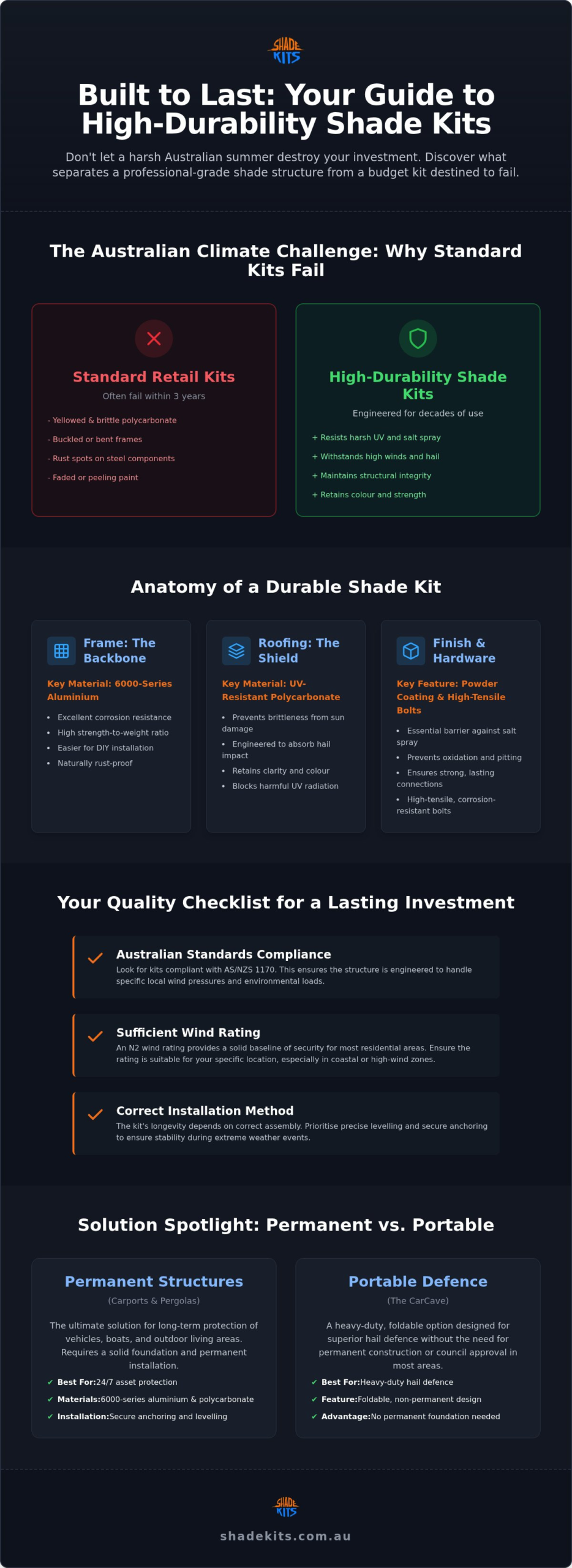
Australia’s climate is notoriously unforgiving. From the scorching heat of the Pilbara to the salty winds of the Gold Coast, our weather puts immense pressure on any outdoor structure. Many homeowners opt for budget-friendly options found at big-box retailers, only to find that these standard kits often fail within three years. They might look great on the day of assembly, but they aren’t engineered for the long haul. Choosing high durability shade kits isn’t just about aesthetics; it’s about structural survival and protecting your assets from the elements.
While The basics of shade sails provide a good foundation for understanding sun protection, permanent structures like carport kits require a higher level of engineering. The financial impact of a low-quality purchase is significant. You aren’t just losing the initial cost of the kit; you’re also losing your time and potentially facing damage to the vehicles or furniture stored beneath it. In 2026, high durability is defined by materials that exceed minimum safety standards, offering resilience against specific local threats like sudden hailstorms and extreme thermal expansion.
In Australia, UV levels are often high enough to cause inferior plastics to become brittle and paints to chalk or peel. When structural components lose their flexibility due to sun damage, they can snap under the slightest pressure. UV-stabilisation is a chemical process where specific additives are integrated into materials like polycarbonate or powder coatings to absorb or reflect harmful radiation, effectively preventing the molecular breakdown that leads to material brittleness. This ensures your investment retains its strength and colour for years, even in the harshest northern sun.
Wind loads vary significantly across the country, which is why understanding regional wind classifications is vital. A kit rated for a sheltered suburban block in Melbourne might not survive a gusty afternoon on the coast. High-quality kits are designed to comply with Australian Standards like AS/NZS 1170, which ensures they can handle the specific pressures of your location. Some kits even carry an N2 wind rating, providing a baseline of security for many residential areas.
Hail resistance is another non-negotiable feature for vehicle protection. While some materials might dent or crack, high-durability roofing is engineered to absorb the impact of sudden storms. There’s a critical difference between structural flex, which allows a building to move slightly under pressure, and structural failure, where the frame buckles or the roof sheets tear away. Investing in high durability shade kits ensures your structure remains standing when the weather turns sour.
To understand why high durability shade kits succeed where others fail, we need to look closely at the raw materials. It isn’t just about the thickness of the beams; it’s about the specific alloys and chemical treatments used during manufacturing. Most professional-grade kits utilise 6000-series aluminium. This specific grade is prized in structural engineering for its excellent corrosion resistance and high strength-to-weight ratio. Unlike heavier steel alternatives, aluminium is far easier for a homeowner to handle during a DIY build without sacrificing the integrity of the finished structure.
Surface finishes also play a vital role in longevity. While raw aluminium is naturally resistant to rust, a high-quality powder-coated finish provides an essential barrier against oxidation, especially in coastal zones where salt spray is a constant threat. This coating isn’t just for aesthetics; it’s a functional layer that prevents the metal from pitting over time. Small components like fasteners and fittings are often where cheaper kits cut corners. A truly durable structure is only as strong as its weakest connection point, so ensure your kit includes high-tensile, corrosion-resistant bolts and brackets.
When comparing materials over a 10-year period, aluminium consistently outperforms timber and steel in a DIY context. Timber requires regular sanding, staining, and oiling to prevent rot and termite damage. Steel, while strong, is prone to rust if the protective coating is scratched. Aluminium requires almost zero maintenance beyond an occasional wash. In fire-prone regions of Australia, aluminium is a safer choice as it won’t ignite like timber and doesn’t lose structural integrity at the same temperatures as some light-gauge steels.
Modern polycarbonate isn’t just a simple plastic sheet. It’s a high-tech material that uses co-extruded UV layers to prevent the yellowing and brittleness common in older products. Multi-wall designs create tiny air pockets that provide thermal insulation, keeping the area beneath significantly cooler than single-layer alternatives. A high-quality hail-rating for polycarbonate panels typically indicates the material can withstand the impact of 25mm hailstones travelling at terminal velocity without shattering or puncturing. This impact resistance is a cornerstone of high durability shade kits designed for the unpredictable Australian climate.
If you’re looking for a structure that balances these advanced materials with ease of use, exploring our range of DIY carport kits is a great place to start. Choosing the right engineering from the outset ensures your outdoor space remains protected for years to come.
Deciding between a fixed structure and a portable one often comes down to your specific property needs and local environmental factors. While both options can fall under the category of high durability shade kits, they serve different purposes. A permanent structure is an investment in your property’s long-term value. A portable solution, however, offers a level of flexibility that fixed carports simply cannot match. Before you make a purchase, it’s essential to assess your site for ground type, wind exposure, and potential council regulations.
Site assessment is the first step in ensuring your structure survives the next decade. If you’re building on a slope or in a region prone to high-velocity winds, a permanent kit with deep-set footings is usually the safest bet. Conversely, if you’re looking for a solution that can move with you when you relocate, a high-quality portable kit is the pragmatic choice. You should also consider the lifespan of each option. Permanent kits typically provide 15 to 20 years of reliable service, whereas premium portable structures are designed to offer intensive protection for up to a decade.
The CarCave represents a significant shift in how we think about temporary vehicle protection. It provides heavy-duty hail defence without the need for a concrete slab or permanent footings. This makes it a perfect solution for renters or those on temporary sites who still require professional-grade protection. The engineering features a clever foldable mechanism that doesn’t compromise on structural strength. It’s built to withstand sudden storms, providing a reliable shield for your car when you don’t have the space or permission for a permanent build.
For those who own their home and want a seamless addition to their outdoor space, fixed-post carport kits are the gold standard. These kits offer superior structural benefits because they’re anchored directly into the ground or a concrete base. This stability allows them to handle higher wind loads and heavier roofing materials. Beyond protection, permanent kits integrate beautifully with existing home aesthetics, often looking like a custom-designed part of the original house. If you’re ready to commit to a permanent installation, check out The Ultimate Guide to DIY Carport Kits in Australia (2026) for a deeper dive into the planning process.
Choosing between these two paths doesn’t mean sacrificing quality. Both permanent and portable high durability shade kits now utilise the same advanced materials we discussed earlier, ensuring that your choice is based on lifestyle needs rather than a compromise on resilience.
A common misconception is that the durability of a kit is determined solely at the factory. In reality, the quality of your DIY installation plays a massive role in how high durability shade kits perform over time. Even the best-engineered aluminium frame can suffer from premature wear if the foundation isn’t perfectly level. Precise levelling ensures that the weight of the structure is distributed evenly across all posts, preventing specific joints from taking more stress than they were designed to handle during a storm.
Water management is another critical factor often overlooked during assembly. Australia’s sudden downpours can dump significant weight onto a roof in minutes. Ensuring your kit has the correct fall—typically a minimum of 5 degrees for most skillion designs—allows water to clear quickly. Without proper guttering and fall, water can pool, leading to sagging sheets and increased strain on the fasteners. Always use a torque wrench to meet the manufacturer’s exact specifications. Over-tightening can strip threads or crush seals, while under-tightening allows for vibration that can loosen the structure during high winds.
Choosing the right anchors depends on your local wind conditions and the substrate you’re building on. For standard residential slabs, Dynabolts are often sufficient, but in high-wind areas or when securing to older concrete, chemical anchors provide a much stronger bond. To keep the structure stable, your posts must be perfectly plumb. If a post is even slightly off-centre, it creates a lateral load that pulls against the anchors. For a detailed guide on preparing your site, refer to The Essential Australian Carport Checklist.
Polycarbonate is a fantastic material, but it expands and contracts significantly as the temperature changes. When installing your roofing, use specialised fasteners with oversized washers that allow the sheets to move slightly without cracking. Ensure all seals at the eaves and joins are watertight to prevent moisture from reaching the frame’s internal channels. This prevents the gradual buildup of debris that can eventually cause issues.
To keep your structure in top shape, follow these steps one month after your installation is complete. First, visually inspect all fasteners for signs of movement or vibration loosening. Second, check that the frame remains plumb and level using a spirit level. Finally, re-tension any bolts that have settled, ensuring you stay within the recommended torque limits. If you’re ready to start your project with a kit designed for easy, long-lasting assembly, browse our range of DIY carports today.
Choosing a factory-direct model is the smartest way to balance cost and quality. When you buy through a traditional retailer, a significant portion of your money goes toward showroom overheads and middleman margins. By bypassing these layers, we can invest more into the raw materials that actually matter. This means higher-grade aluminium, thicker polycarbonate, and more robust fasteners are included in our high durability shade kits without inflating the final price. You’re paying for the engineering and the protection, not the marketing.
Australian-designed engineering provides a level of peace of mind that generic imports can’t match. We understand that a structure in Brisbane faces different challenges than one in Hobart. Our kits are tailored to meet local structural standards, ensuring they remain a permanent asset to your property. Because we specialise in these structures, we can also offer customisation options that allow you to tailor the dimensions and style to your specific site requirements. It’s a professional-grade solution designed for the reality of the Australian landscape.
The old myth that DIY structures are temporary or weak is being dismantled by modern engineering. Today’s kits use the same high-tensile materials as custom builds but are designed for precision assembly. When you perform a cost-benefit analysis, the savings on professional labour are substantial. You get a professional-grade result for a fraction of the investment. For a detailed breakdown of the numbers, see our Aluminium Carport Prices Australia: The 2026 Guide.
We provide national delivery, making it easy to access premium carport kits in Sydney or Melbourne without searching for local specialists. These are heavy structural items, so our logistics network is set up to handle them with care. While we don’t provide on-site labour, you aren’t building alone. Our technical support team is available to guide you through the assembly process, ensuring your project is a success from start to finish. Explore our range of High Durability Shade Kits and protect your assets today.
Building a structure that stands up to the Australian elements doesn’t have to mean hiring an expensive custom contractor. By choosing high durability shade kits engineered with 6000-series aluminium and UV-resistant polycarbonate, you’re investing in materials that won’t yellow or buckle under pressure. We’ve seen how precise installation and proper water management can extend the life of your structure, ensuring it remains a reliable asset for your home. Your hard work deserves a result that stays strong against the sun, wind, and hail for years to come.
Whether you need the permanent protection of a fixed carport or the flexible hail defence of a CarCave, the factory-direct model ensures you get professional-grade quality without the middleman markup. With Australia-wide delivery and materials specifically designed to be hail-proof, your next DIY project is well within reach. Browse our factory-direct High Durability Shade Kits today to find the perfect match for your property.
You have the tools and the knowledge to build something that lasts. Get started on your project with confidence, knowing you’re backed by expert engineering and a structure designed for the reality of our local climate.
Yes, high-quality kits are engineered to comply with Australian Standards for structural design actions. These high durability shade kits are often specified with wind ratings like N2, making them suitable for many residential areas. The key to wind resistance lies in the anchoring system and the precision of the assembly. Ensuring your posts are plumb and your fasteners are torqued correctly allows the structure to distribute wind loads as intended.
You can generally expect a premium polycarbonate roof to last between 10 and 15 years before it requires attention. Modern panels use co-extruded UV layers to prevent the material from becoming brittle or yellowing under the intense Australian sun. While older plastics might fail early, these engineered sheets maintain their impact strength for over a decade. Regular cleaning to remove debris helps prevent surface abrasions that could eventually compromise the material.
Aluminium is naturally resistant to rust, making it the ideal material for coastal environments. Unlike steel, which can oxidise and flake, aluminium forms its own protective oxide layer. Most kits also feature a powder-coated finish, which provides a secondary barrier against salt spray and coastal corrosion. This combination ensures your structure remains structurally sound and visually appealing even if you’re located just a few hundred metres from the surf.
These kits are specifically designed for straightforward DIY installation by homeowners. You don’t need a professional builder, as the components are precision-engineered to fit together with standard tools. While the assembly is manageable for two people, you should always check your local state regulations. Some regions require an owner-builder permit if the project value exceeds a certain threshold, though the physical task remains well within a DIYer’s reach.
The main difference lies in the foundation and flexibility of the structure. A permanent carport is anchored into a concrete slab or deep footings, providing long-term property value and maximum wind resistance. The CarCave is a specialised foldable solution designed for rapid setup without permanent construction. It’s an excellent choice for renters or those who need high-durability hail protection for their vehicles without committing to a fixed building on their site.
Maintaining your kit is a simple process that mostly involves periodic inspections. We recommend washing the frame and roof with mild soapy water every six months to remove salt and dirt. You should also clear the gutters to prevent water pooling and check the tension of all fasteners after the first month and then annually. These small steps ensure your high durability shade kits remain stable and functional for 15 years or more.
Requirements for council approval vary significantly across different Australian states and local government areas. Some small structures are considered “exempt development” if they meet specific height and size criteria, but larger carports typically require a permit. The National Construction Code 2025, which came into full effect in early 2026, sets the baseline standards you must follow. It’s always best to contact your local council before you begin your project.
Yes, professional-grade kits are engineered to withstand the impact of heavy hail during summer storms. Modern polycarbonate roofing is specifically tested for impact resistance, often rated to survive 25mm hailstones without cracking. The CarCave is also built with this threat in mind, using heavy-duty materials to shield your vehicle’s bodywork. Choosing a kit with a verified hail rating is the most effective way to protect your assets from unpredictable weather.