
Have you ever spent a scorching summer afternoon indoors because your patio offered no real relief, or watched a sudden downpour soak your expensive outdoor furniture? Many Australians find that cheap imports often buckle in high winds, while traditional timber structures eventually rot or demand constant oiling. If you’re looking for a permanent, low-maintenance solution, all-weather pergola kits Australia provide a way to reclaim your backyard without the middleman markups or the stress of a custom build.
We know that figuring out council permits and material specifications can be a headache. You deserve a stylish outdoor area that adds genuine value to your property, rather than a DIY project that turns into a disaster. This 2026 guide will walk you through the process of selecting and planning a durable, factory-direct structure. We’ll explain how to choose materials that withstand the intense UV levels and heavy rain common across the country; ensuring your new entertaining space remains a long-term, hassle-free investment.
An all-weather pergola is a structure designed for 365-day climate resilience. While the basic concept of what is a pergola? traditionally refers to an open-framed garden feature, the Australian environment demands something far more robust. A true all-weather system provides a permanent solution that bridges the gap between a simple shade structure and a full home extension.
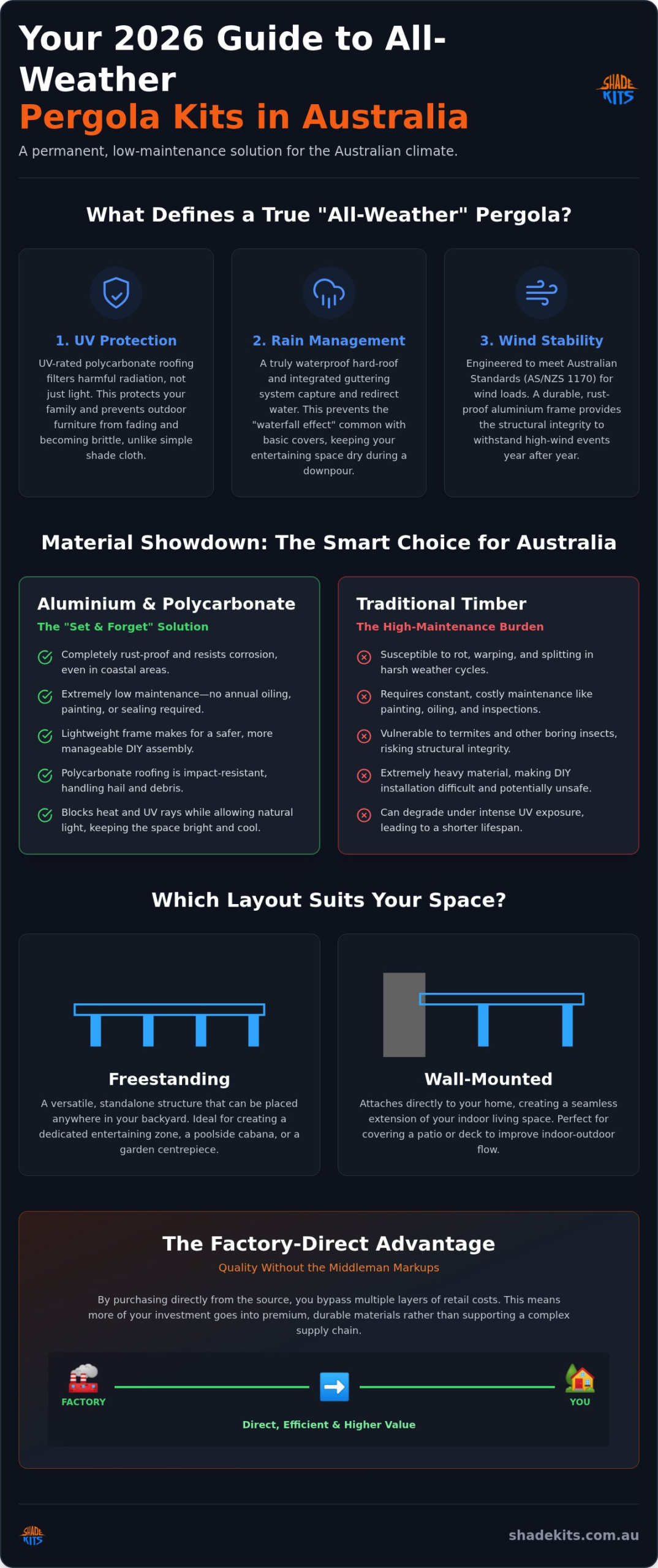
To qualify as “all-weather,” a kit must excel in three specific areas: UV protection, rain management, and wind stability. Many homeowners mistakenly assume that any roofed structure will do the job. However, a standard “shade” pergola often fails during a typical Australian summer downpour. This usually happens because they rely on water-resistant fabrics rather than waterproof hard-roof kits. Water-resistant materials might bead off a light mist, but they’ll eventually soak through or sag under the weight of heavy rain, leaving your entertaining area a soggy mess.
It’s a common misconception that being in the shade means you’re protected from the sun. In reality, the Australian sun is powerful enough to degrade inferior materials like cheap plastics or even high-maintenance treated timber within just a few seasons. UV-rated polycarbonate roofing is the gold standard for all-weather pergola kits Australia because it filters out harmful radiation while still allowing natural light to brighten your space. This level of protection is essential for your family’s safety and also extends the life of your outdoor furniture, preventing the fabrics from bleaching and becoming brittle.
How does a structure handle a sideways storm? Engineering for rain involves more than just a solid roof; it requires an integrated guttering system. Modern kits are designed to capture and redirect water away from the structure, preventing the “waterfall effect” that occurs with basic patio covers. This keeps your outdoor centre dry even when the wind picks up.
Wind ratings are equally important. Every structural kit should be checked against Australian Standards, specifically AS/NZS 1170 for wind loads. A kit that isn’t engineered for these pressures risks becoming a liability during a storm. By choosing a kit with a durable aluminium frame, you’re investing in a structure that won’t rust or rot, providing the stability needed to withstand high-wind events year after year.
Choosing the right materials for all-weather pergola kits Australia is the difference between a structure that lasts decades and one that becomes a constant maintenance burden. While timber has been a traditional go-to for many backyards, the modern preference has shifted toward the combination of aluminium and polycarbonate. This pairing offers a “set and forget” solution that handles the corrosive salt air of the coast and the dry heat of the outback with equal ease.
Aluminium is the pragmatic choice for structural longevity. Unlike steel, it doesn’t rust when the protective coating is scratched; it naturally resists corrosion. For the DIYer, aluminium is also significantly lighter than steel or timber. This makes the assembly process safer and more manageable for two people, as you won’t need heavy lifting equipment to get the frame in place. Once installed, the powder-coated finish provides a durable barrier that stays looking fresh for years.
The hidden costs of timber often outweigh the initial aesthetic appeal. To keep a timber structure safe and looking good, you’re looking at annual oiling, frequent painting, and constant structural checks for rot or warping. In many parts of Australia, termites remain a significant threat to structural integrity, often attacking the core of a post before you notice any damage. Homeowners must also adhere to treated timber safety standards when handling or disposing of materials. Modern aluminium kits have evolved to offer sleek, contemporary designs that complement current architectural trends without the need for a paintbrush.
Regarding roofing, polycarbonate outperforms glass and traditional metal sheets. Metal sheets provide total shade but can turn your patio into a dark cave and radiate heat downward during a heatwave. Glass is heavy, expensive, and prone to shattering. Polycarbonate provides the perfect balance of light transmission and heat block, keeping the area bright while reflecting a high percentage of solar radiation.
It’s also incredibly tough. High-quality polycarbonate is designed for impact resistance, which is vital when the Australian summer brings sudden hail storms. For those concerned about protecting other assets, you can find more information on hail protection for cars to see how these materials perform under pressure. If you’re ready to upgrade your outdoor living space, you can browse durable outdoor kits designed for the local climate.
Deciding between a wall-mounted or freestanding layout is a critical step in planning your outdoor area. When looking at all-weather pergola kits Australia, your choice will usually depend on your existing house structure and how you intend to use the space. A wall-mounted kit is often the go-to for extending a living room, while a freestanding structure allows you to create a separate sanctuary elsewhere on your property. Both options offer distinct structural advantages, but they handle wind loads and tension in different ways.
Wall-mounted kits are highly effective for creating a seamless transition from your back door to your entertainment zone. By attaching one side directly to your home, you gain extra stability and a superior weather seal against the house wall. This setup is perfect for smaller footprints where every square metre counts. You’ll need to consider your wall type; for instance, brick requires different masonry anchors compared to weatherboard or render. It’s also vital to check the exempt development rules for pergolas to ensure your attached structure meets local height and size requirements without needing a full permit.
Choose a freestanding pergola if you want to build a poolside retreat or a central garden feature away from the main building. These structures offer more flexibility in orientation, allowing you to position the roof to capture prevailing summer breezes or block the harsh afternoon sun. Because they stand on four or more posts, they handle wind loads independently of your house. However, they require robust ground fixing. Whether you’re mounting onto a reinforced concrete slab or a sturdy timber deck, the footings must be engineered to prevent uplift during a storm.
Before you order, evaluate your site’s ground surface and house height. A wall-mounted unit needs a clear, flat section of wall at a specific height to maintain the correct roof pitch for rain runoff. Conversely, a freestanding kit needs a level base to ensure the frame remains square during assembly. Each type handles tension differently; wall-mounted kits rely on the house for lateral stability, while freestanding units use reinforced corner joints to maintain their shape. If you’re also considering vehicle protection, the same structural logic applies to durable carport kits, which must be anchored securely to withstand the elements.
Installing all-weather pergola kits Australia doesn’t require a trade qualification, but it does demand a methodical approach. Most homeowners can complete the assembly over a single weekend if they’ve handled the prep work beforehand. Before your kit arrives on the ute, you’ll need a clear workspace and a solid understanding of your local regulations. While many structures fall under “exempt development,” rules vary between states. It’s best to confirm your plans with your local council to ensure your project meets size and boundary setback requirements before you start digging.
Success starts with having the right gear ready to go. You’ll generally need an impact driver, a hammer drill for masonry, a high-quality spirit level, and a couple of sturdy ladders. Having a second person to assist is essential because trying to align long aluminium beams or heavy polycarbonate sheets alone is a recipe for frustration and safety risks. One person holds the structural weight while the other secures the fasteners, ensuring everything stays square and true throughout the build.
The foundation of a professional-looking finish is a perfectly level base. If your ground is uneven, your posts won’t be vertical, and your roof won’t drain correctly. Whether you’re opting for concrete pads or mounting onto an existing deck, your footings must be structural. If you’re digging holes for new footings, always use a utility marking service first. Striking a water pipe or electrical cable is an expensive mistake that will instantly halt your project. Clear the area of any overhanging branches or debris so you have a clean, safe perimeter to work within.
Once you’ve unboxed your components, use the “lay-out” method. This involves grouping similar parts together and checking them against the inventory list before you start. It saves you from searching for a specific bracket mid-way through a task. Following the manual’s sequence is non-negotiable, especially for weatherproofing. These kits are engineered so that the drainage and guttering systems integrate at specific stages. If you skip a step, you might find yourself dismantling the frame to fix a leak later on.
After the main frame is up, perform a final check. Tighten every bolt, apply silicone sealant where specified, and test the guttering with a garden hose to ensure water flows toward the downpipes. These same principles of organisation and precision apply to DIY carport kits Australia, which rely on similar structural logic. If you’re ready to start your project, you can view our range of easy-to-assemble kits and begin planning your new outdoor space today.
Choosing to buy all-weather pergola kits Australia directly from the factory is a strategic move that saves you thousands in retail markups. Traditional showrooms often add significant margins to cover their overheads, but going direct means those funds stay in your pocket or go toward higher-quality materials. Shade Kits maintains a commitment to “Aussie-tough” engineering, focusing on structural integrity that meets local standards for wind and sun resistance. This direct relationship ensures you receive a product designed specifically for our harsh conditions without the inflated price tag.
Logistics are handled with the same level of precision. We offer Australia-wide delivery for our heavy DIY kits, ensuring your order arrives safely regardless of where you’re located. Lead times are kept as short as possible; typically, your kit is dispatched within a clear timeframe communicated at the point of purchase. You’ll receive tracking information so you can organise your weekend project and have your tools ready for the arrival of the delivery truck.
A permanent all-weather structure adds significantly more value to your home than a temporary umbrella or a cheap fabric gazebo. When you compare all-weather pergola kits Australia against temporary shade options, the difference in property appeal is immediate. By installing a durable kit, you’re essentially creating a functional “extra room” that can be used for dining, relaxation, or hosting guests 365 days a year. This added utility is a major drawcard for future buyers. Our aluminium frames are a 10-year+ investment; they won’t warp like timber or rust like low-grade steel, ensuring the structure remains an asset rather than a maintenance liability as the years pass.
The DIY process is only as good as the instructions provided. We pride ourselves on offering clear, Australian-written documentation that speaks your language and addresses the specific tools you’ll find at your local hardware store. This clarity reduces the risk of errors and ensures a smoother assembly experience from start to finish. You also benefit from factory-backed warranties, giving you a direct line to the experts who manufactured your kit. If you’re ready to reclaim your backyard, explore our range of Pergola Kits and start your backyard transformation today.
Creating a year-round entertaining area doesn’t have to be a complex or expensive ordeal. By choosing high-quality all-weather pergola kits Australia, you’re investing in a structure that handles intense sun and sudden storms with ease. The combination of powder-coated aluminium and UV-resistant polycarbonate offers a durable, low-maintenance alternative to traditional timber. This choice saves you from hours of annual oiling while adding genuine, long-term value to your property.
With factory-direct pricing and Australia-wide delivery, you can skip retail markups and focus on the simple joy of a weekend DIY project. Our kits are engineered to be “Aussie-tough,” giving you the confidence that your new outdoor centre will stand strong for years to come. If you’re ready to stop worrying about the weather and start enjoying your backyard, View Our Range of All-Weather Pergola Kits today. It’s time to build the functional, stylish outdoor lifestyle you’ve always wanted.
Approval requirements vary significantly between states and local councils. In New South Wales, structures under 25 square metres are often considered exempt development if they meet specific boundary setbacks. However, in Victoria, a building permit is generally required for any structure with a waterproof roof. Because regulations are subject to change, you must check with your local council before starting your project to ensure you comply with current 2026 standards.
These kits are engineered to meet Australian Standards, specifically AS/NZS 1170 for wind loads. The structural integrity comes from durable aluminium frames and secure anchoring to a concrete slab or reinforced decking. This prevents uplift during high-wind events. Additionally, integrated guttering systems are designed to manage heavy tropical downpours, directing water away from your entertaining area to keep the space dry and safe even during sideways rain.
We strongly recommend having at least two people for the assembly phase. While the components are designed for straightforward DIY installation, handling long aluminium beams and large roofing sheets is difficult and unsafe for one person alone. Having a second set of hands ensures that the frame remains square and level while fasteners are secured. This collaborative approach significantly reduces the risk of accidents and helps you achieve a professional, structural finish.
Traditionally, a gazebo is a freestanding structure with a fully closed roof, while a pergola often has an open-slat design. However, modern all-weather pergola kits Australia bridge this gap by offering solid, UV-resistant polycarbonate roofing. This provides the aesthetic appeal of a pergola with the total rain and sun protection of a gazebo. This hybrid design allows for better light transmission than a traditional gazebo while ensuring your outdoor furniture stays completely dry.
The UV-resistant polycarbonate used in our kits is specifically chosen for its high impact resistance. It is engineered to withstand the typical hail storms experienced across Australia without cracking or shattering like glass or inferior plastics. This durability makes it a pragmatic choice for homeowners seeking long-term protection. For those with specific concerns about severe weather events, this material provides a reliable barrier that maintains its structural strength and clarity over many years.
Aluminium is a “set and forget” material that requires very little upkeep compared to timber. You won’t need to worry about termites, rot, or the annual chore of oiling and painting. To keep your structure looking new, a simple wash with soapy water once or twice a year is usually enough to remove dust or salt residue. This low-maintenance profile ensures your investment continues to add value to your property without demanding your weekends for repairs.
Yes, our range includes various sizes to suit different residential footprints and layouts. Whether you need a compact wall-mounted unit for a small courtyard or a large freestanding structure for a poolside area, there are options to match your requirements. You can select dimensions that align with your house height and available ground space. This flexibility allows you to create a tailored outdoor room that fits perfectly with your home’s existing architecture and entertaining needs.
You will need a few standard tools that most home handymen already own. Essential items include an impact driver, a hammer drill for securing masonry anchors, a high-quality spirit level, and a measuring tape. You’ll also need sturdy ladders and a basic socket set for tightening structural bolts. We provide clear, Australian-written instructions to guide you through the process, and having these tools ready before your kit arrives will ensure a smooth, efficient weekend project.