
Did you know that insured losses from extreme weather events across Australia reached a staggering A$4.8 billion in 2025? This represents a 727% increase from the previous year, with a single storm event in November 2025 alone resulting in nearly 93,000 claims. Most Aussie drivers are all too familiar with the dread that sets in when a summer storm warning pings on their phone, knowing that a few minutes of hail can lead to massive insurance excesses and months of waiting for a panel beater.
It’s a common frustration, but finding effective hail protection for cars doesn’t have to be a complicated or expensive ordeal. We’ve designed this guide to help you discover practical ways to shield your vehicle from costly damage while maintaining its long-term resale value. You’ll learn how to choose a solution that fits your space and budget, ensuring your car stays protected even when the weather turns nasty.
We’ll walk you through the most reliable Australian options, ranging from the streamlined setup of a foldable Car Cave to the structural durability of DIY carport kits. By the end of this article, you’ll have a clear plan to defend your vehicle and the confidence to face storm season without the stress.
When we discuss hail protection for cars, we are looking at any structural or temporary barrier designed to absorb or deflect the kinetic energy of falling ice. It is a specialised form of defence that goes far beyond a simple plastic sheet. To understand the necessity, one must first look at what is hail? and how it forms during the volatile storm cells common to the Australian summer. As storm seasons become increasingly unpredictable, proactive defence has shifted from a luxury to a clear financial necessity for property owners.
Modern vehicles are particularly vulnerable to these events. While older cars might have survived a storm with a few cosmetic dimples, today’s high-tech utes and sedans often feature sensitive sensors, advanced cameras, and large glass surfaces that can shatter under intense impact. A reliable solution must also account for the high winds that typically accompany these storms. If a protection method is not securely anchored or structurally sound, it can become a hazard itself during a gale.
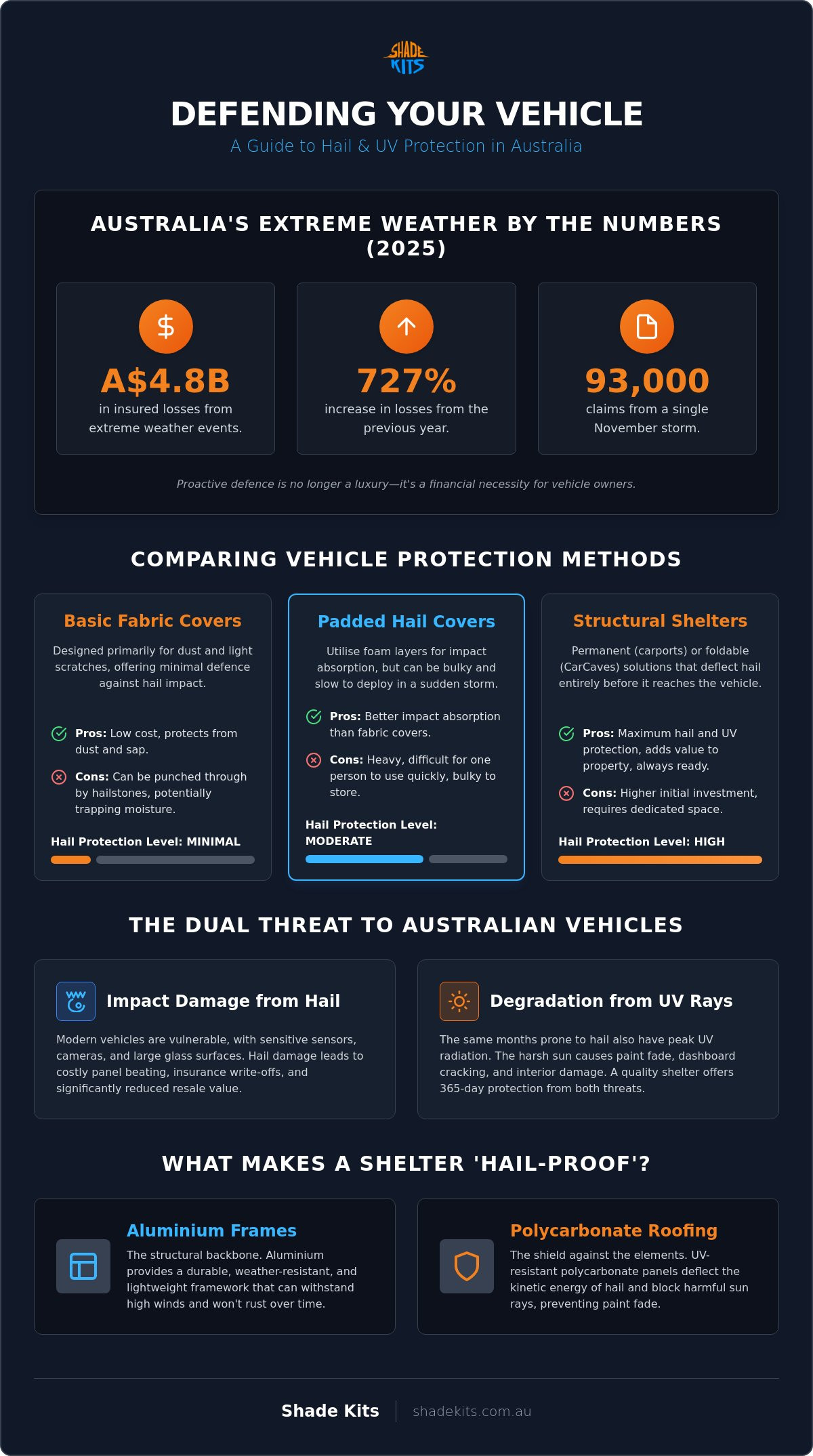
The financial stakes are higher than many drivers realise. In 2025, insured losses from extreme weather in Australia reached A$4.8 billion, with a single storm event in November resulting in nearly 93,000 claims. When a major hailstorm hits a metropolitan area, the cost of labour and specialised panel beating often exceeds the market value of the vehicle. This leads to many cars being “written off” by insurers, even if they are mechanically perfect.
Even if you avoid a total loss, the “hail-damaged” status significantly devalues your asset on the secondary resale market. Potential buyers are often wary of vehicles with a history of structural impact. Setting up a reliable defence provides a level of peace of mind that is hard to quantify until you see the clouds turn that distinctive shade of storm-grey.
One often overlooked benefit of high-quality hail protection for cars is the secondary defence it provides against the harsh Australian sun. The months most prone to hail also coincide with peak UV radiation levels. This means your vehicle is fighting a dual battle against impact damage and paint degradation. Solutions that utilise UV-resistant polycarbonate roofing and aluminium frames offer a 365-day shade solution that prevents paint fade and interior cracking.
A well-designed structure acts as a permanent shield, keeping the vehicle’s surface temperature down during the height of summer while remaining ready to deflect ice at a moment’s notice. By choosing a solution that addresses both hail and UV rays, you are making a long-term investment in the longevity and aesthetic appeal of your vehicle.
Selecting the right hail protection for cars involves balancing your budget, your available space, and the specific level of risk in your region. While any cover is better than nothing, the mechanics of how these solutions handle impact vary wildly. Standard fabric covers are a popular entry point, primarily designed to shield against dust, sap, and minor scratches. However, they offer minimal defence against the kinetic energy of large hailstones, which can punch straight through thin material and dent the metal beneath.
Padded hail covers represent a step up in safety. These utilise layers of foam to absorb impact, but they come with logistical challenges. They are often bulky and heavy, making them difficult for one person to organise quickly when a storm is minutes away. For those seeking a more efficient middle ground, the CarCave offers a specialised foldable car protection solution. It creates a structural “buffer zone” around the vehicle, ensuring that neither the frame nor the fabric touches the car’s paintwork, which eliminates the risk of surface micro-scratches during high winds.
The core difference between a cover and a shelter lies in how they manage force. A fabric cover relies on “impact absorption,” meaning the energy of the hailstone is slowed down but still transferred directly to the car’s panels. In contrast, a structural shelter or carport focuses on “deflection,” stopping the hailstone entirely before it reaches the vehicle.
There is also the issue of the Australian climate. Fabric covers trapped against a car’s surface during a humid summer can lead to moisture buildup and mould growth. Structural solutions provide essential airflow, keeping the vehicle dry and cool. If you want to ensure your daily driver remains in showroom condition, you might explore our range of factory-direct kits designed for maximum ventilation and impact resistance.
Deciding between a portable carport and a permanent structure often comes down to your living situation. Portable options are ideal for renters or those with limited driveway space who need protection that can be packed away. They offer a significant upgrade over fabric covers without requiring a permanent change to the property. If you’re renting or want a flexible setup, learning how to choose and install a portable car shelter suited to Australian conditions is an essential first step before making any purchase decision.
For homeowners, permanent DIY carport kits offer the highest level of hail protection for cars and provide the best long-term return on investment. Modern aluminium kits are designed for straightforward assembly, often taking only a weekend to complete. They add tangible value to your property while providing a robust, year-round shield that traditional timber builds or temporary covers simply cannot match. Before committing to a build, it’s worth understanding aluminium carport prices in Australia and how DIY compares to custom builder costs so you can make an informed decision. Before starting your build, reviewing a comprehensive Australian carport planning and DIY success checklist can help you navigate council requirements and material choices with confidence.
When we talk about effective hail protection for cars, the conversation must move beyond simple padding. While some products suggest that a few millimetres of foam is sufficient, this often fails when faced with the “giant hail” events that have become more frequent in various hail-prone regions across Australia. True protection relies on structural integrity. This means using materials that don’t just absorb impact but actively deflect it while remaining stable during the intense wind gusts that typically accompany Australian supercells.
The science of impact is straightforward. A rigid roof surface distributes the weight and force of a hailstone across the entire frame of the structure. This prevents the “point-loading” effect where a single stone stretches or tears through a soft fabric cover. However, a shield is only as good as its foundation. A hail protection system is essentially useless if it cannot withstand the gales that bring the storm in the first place. This is why we focus on engineered kits with high wind ratings, ensuring your vehicle doesn’t end up damaged by its own shelter.
Longevity is another critical factor. Australia’s extreme UV levels can make inferior plastics brittle in just one or two seasons. Once a material becomes brittle, its impact resistance drops to almost zero. Choosing a solution that combines high-grade aluminium with UV-stabilised roofing ensures your investment remains effective for years, rather than failing during the first major storm of the second season.
Aluminium is the gold standard for outdoor structures in Australia. It offers a superior strength-to-weight ratio, which makes DIY installation manageable for most homeowners without needing heavy lifting equipment. Unlike steel, it doesn’t rust, and unlike timber, it won’t warp or rot in Australia’s diverse and often challenging climates. It provides a sleek, modern aesthetic that complements contemporary Australian home designs, adding professional kerb appeal while serving a vital protective function.
Polycarbonate acts as a high-impact shield that is virtually unbreakable under normal storm conditions. It allows natural light to filter through while blocking up to 99% of harmful UV rays, protecting your car’s interior plastics and delicate paintwork from sun damage. Polycarbonate is a thermoplastic polymer known for its incredible toughness and thermal resistance. This material ensures that even when giant hail strikes, the energy is deflected away from your vehicle, maintaining the structural integrity of the roof and the safety of your asset.
Having the right equipment is only half the battle; you also need a logistical plan to ensure your hail protection for cars is ready when the sky turns grey. Most Australian supercells arrive with little notice, leaving you a narrow window to act. To begin, perform an audit of your parking area to identify the most sheltered spot in your driveway or backyard. Often, one side of a house provides a natural windbreak that can reduce the intensity of a storm’s impact. Positioning your shelter or carport in this “dead zone” adds an extra layer of security for your vehicle.
Knowledge is your best defence. We recommend setting up early warning alerts through the Bureau of Meteorology app to get push notifications before the clouds arrive. Once you receive an alert, every second counts. If you are using a foldable solution like the CarCave, you should be able to complete the setup in under five minutes. Routine maintenance is also vital. Before the peak of the summer storm season, take the time to check that your structure is free of debris and that all components are functioning as they should.
A protective structure is only as reliable as its foundation. For permanent carports, it is essential to secure the frame to a concrete slab or reinforced footings. This ensures the structure remains stationary during the high-velocity gales that often precede a hailstorm. If you are using a portable car shelter designed for Australian weather conditions, don’t overlook the importance of weight bags or heavy-duty pegs. Check for loose bolts or tension straps regularly; a small amount of maintenance now prevents a major failure when the wind picks up. If you need a robust solution that handles these conditions, you can view our storm-ready protection kits here.
When the first warning pings on your phone, follow a structured sequence to ensure nothing is missed. A frantic response often leads to simple mistakes that can result in damage. Use this checklist to stay organised:
By practicing this routine, you turn a high-stress event into a manageable task. This level of preparation ensures that your investment in vehicle protection delivers the results you expect when it matters most.
Finding the right hail protection for cars often comes down to a choice between flimsy retail covers and expensive, custom-built structures. At Shade Kits, we’ve bridged that gap by offering factory-direct solutions that prioritise structural integrity and ease of assembly. By operating on a direct-to-consumer model, we’re able to provide higher-quality materials, such as architectural-grade aluminium and impact-rated polycarbonate, without the retail markup. This ensures you get a professional-grade defence system at a price point that makes sense for the average Australian household.
Our range is designed to be customisable to your specific needs. Whether you’re looking for a single carport to tuck into a narrow driveway or a larger double structure for the family fleet, you can choose the right size and colour to complement your home’s exterior. This isn’t just about utility; it’s about adding a value-adding home improvement project that looks as good as it performs.
The CarCave represents a specialised approach to hail protection for cars, specifically designed for those who need rapid deployment without a permanent footprint. Its foldable design is its greatest asset, allowing you to save precious driveway space when the sun is shining and the storm risk is low. Unlike traditional covers that rest directly on your vehicle, the CarCave provides “no-contact” protection. This creates a rigid canopy that never touches your car, effectively preventing the micro-scratches and swirl marks often caused by fabric covers flapping in high winds.
The frame is constructed from heavy-duty materials tailored for the Australian climate, ensuring it won’t buckle under the pressure of a sudden downpour or intense summer heat. It’s the perfect middle-ground solution for renters or homeowners who aren’t quite ready for a permanent build but refuse to leave their premium paintwork to chance.
Every kit we produce is built on a foundation of resilience. We utilise premium aluminium frames for their rust-free longevity and UV-resistant polycarbonate roofing that remains clear and strong even after years of exposure to the harsh Australian sun. For those seeking a permanent fixture, our DIY carport kits Australia come with comprehensive, easy-to-follow instructions that demystify the assembly process. If you want to understand exactly what you’ll spend before you buy, our detailed breakdown of aluminium carport prices in Australia for 2026 covers everything from roof styles to material grades so you can budget with confidence.
We’ve streamlined the shipping process to ensure your kit arrives safely at your door, ready for a weekend installation. By choosing a permanent solution, you aren’t just protecting your daily driver; you’re enhancing your lifestyle and property value. You can rest easy during the next storm warning, knowing your vehicle is shielded by a structure designed to handle the very best and worst of the Australian weather.
Choosing the right defence for your vehicle is about more than just reacting to a weather alert; it’s about investing in long-term resilience. We’ve explored how structural deflection using rigid materials is far superior to simple foam padding. By prioritising durable aluminium frames and high-impact polycarbonate roofing, you ensure your car remains safe from even the most severe giant hail events common in the Australian landscape.
Reliable hail protection for cars shouldn’t be a logistical nightmare or a financial burden. Our factory-direct approach allows you to access professional-grade materials designed specifically for local conditions without the middleman markup. Whether you need the rapid deployment of a foldable shelter or the permanent security of a DIY carport kit, the right solution is within reach. It’s a straightforward way to add value to your property while eliminating the anxiety of summer storm warnings.
Browse our range of Hail-Ready Carport Kits and the CarCave today to prepare your home. Taking these practical steps now means you can watch the next storm roll in with total confidence, knowing your asset is fully shielded.
Standard fabric covers are generally ineffective against large stones because they lack the structural density to stop kinetic energy from transferring to the panels. While padded versions offer a slight improvement for minor events, giant hail can still cause significant denting through the foam. For reliable hail protection for cars, a structural solution that deflects the impact entirely is the only way to ensure your vehicle remains dent-free.
The CarCave is engineered to handle the typical wind gusts associated with Australian summer storms, provided it is anchored correctly to the ground. Its aerodynamic shape is designed to remain stable during high-velocity gales that often precede a hailstorm. We always recommend ensuring the shelter is fully closed and the tension straps are checked before the peak of a predicted weather event.
Yes, our DIY carport kits are specifically designed for straightforward home assembly without the need for professional trades. Most homeowners find the process manageable over a weekend with basic tools and a second pair of hands to help with the heavier lifting. Each kit includes comprehensive, step-by-step instructions that guide you through the entire process from the frame assembly to the final roofing sheets.
Polycarbonate roofing is an exceptional choice for hail protection for cars because it is virtually unbreakable and designed to flex under intense impact. Unlike some thin metal sheeting that can permanently dent or “oil-can” during a heavy storm, high-quality polycarbonate maintains its structural shape. It also provides the added benefit of blocking 99% of UV rays while still allowing natural light to filter through.
The most effective way to secure your structure is through proper anchoring to a solid foundation such as a concrete slab or reinforced footings. For portable solutions like the CarCave, using heavy-duty pegs or specialised weight bags is essential to prevent uplift during high winds. Regularly checking for loose bolts or tensioned straps ensures the structure remains stable and secure when the weather turns nasty.
Investing in protection for an older vehicle is often a smart financial decision to avoid a total insurance loss. Because repair costs often exceed the market value of older cars, a single storm can lead to an automatic write-off. Maintaining a dent-free body also helps preserve the secondary resale value and prevents the “hail-damaged” status that often makes older utes and sedans difficult to sell.
You can certainly leave a foldable car shelter up all year as it is built with UV-stabilised materials designed for the harsh Australian sun. However, the primary benefit of the foldable design is the ability to reclaim your driveway space when the storm risk is low. Folding the unit away during calm periods can also extend the overall lifespan of the fabric by reducing its constant exposure to the elements.