
Could the quickest way to clean a polycarbonate awning be the one most likely to mark it? If dust, leaf litter, bird droppings or grime are clouding the panels, it’s tempting to reach for a strong cleaner or pressure washer. But knowing how to clean polycarbonate awning sheets safely means using a gentle approach and taking care not to put yourself at risk while reaching the roof.
You’re right to be cautious: polycarbonate can be scratched or its protective surface affected by unsuitable products and tools. This guide explains a simple cleaning routine, what to avoid and how to loosen stubborn marks without scrubbing. It also covers practical checks to reduce grime build-up and how to decide when the awning is too difficult or unsafe to reach. Follow the sheet manufacturer’s care instructions, as they take priority over general advice.
Polycarbonate roofing is made from rigid plastic sheets, unlike the woven or coated textile used for a fabric awning. Some awning roofs also sit within aluminium framing, but the frame and roof are different materials and shouldn’t automatically be cleaned in the same way. Follow the care instructions for each surface.
Dust and pollen settle on outdoor sheets, while wind can carry in leaf litter and other debris. Bird droppings may dry onto the surface and become harder to remove. Regular visual checks and gentle cleaning help keep everyday grime manageable. They’re routine care, not a reason to scrub harder or reach for a stronger chemical.
Polycarbonate is known for impact resistance, but that doesn’t mean its surface is resistant to scratches. The Polycarbonate overview describes its material properties, including this distinction. Abrasive pads or gritty dirt rubbed across a sheet can mark it, so use a light touch even when the roofing feels sturdy.
Fabric covers and aluminium framing have different surface finishes and may need different care. Keep the cleaning method focused on the polycarbonate sheets, and follow the relevant manufacturer’s instructions for each material. For product-specific guidance, the sheet manufacturer’s instructions take priority over general advice.
There’s no single cleaning interval that suits every awning. How quickly grime builds up depends on exposure to nearby trees, airborne dust, pollen and weather. Check the sheets from a safe viewing position and clean when you can see dirt or debris collecting. Visual checks can also help you notice changes in the surface or debris around drainage paths.
Simple rule: when you can see build-up, remove it gently before it becomes more stubborn. Prompt attention is especially useful for droppings or sticky debris, which can dry onto the surface. If you’re learning how to clean polycarbonate awning sheets, first check the access and the manufacturer’s care instructions. Then use a non-abrasive method rather than trying to force marks away.
For routine washing, keep the kit simple: clean water, a small amount of mild detergent and a soft, non-abrasive cloth or sponge. The aim is to loosen grime, not scour it away. Rinse loose dirt off first, as grit trapped under a cloth can scratch the sheet. Use a clean tool as you wash.
Cleaner compatibility can vary between sheets and finishes. Read the sheet manufacturer’s care instructions before using detergent or a stain treatment, even if it’s marketed for household use. If the guidance is unclear, use clean water until you can confirm which products are suitable.
| Gentler choice | Potentially damaging approach |
|---|---|
| Clean water to loosen and rinse away surface dirt | Pressure washing without confirmation that it’s suitable for the sheet and installation |
| Mild detergent diluted in water, if allowed by the manufacturer | Strong or unverified cleaners, including solvents or ammonia-based products |
| Soft cloth, sponge or soft-bristled brush | Abrasive pads, scouring powders, scrapers or rough brushes |
Start by rinsing the roof, then use a soft-bristled brush to loosen remaining debris without pressing hard. Wash with a soft cloth or sponge and mild detergent only if the sheet manufacturer permits it. Test a compatible solution on a small, inconspicuous area first. Rinse the cloth often, then rinse the whole sheet thoroughly so detergent residue doesn’t dry on the surface.
Don’t assume a pressure washer is safe for every sheet or awning installation. Forceful water may affect the surface or drive water into places it shouldn’t go. Household cleaners vary in their ingredients, and an unsuitable chemical can mark or damage polycarbonate. If you’re unsure whether a product is compatible, leave it out and follow the sheet manufacturer’s care guidance.
These choices are the foundation of how to clean polycarbonate awning roofing safely: start with the mildest approved method and avoid adding force when a mark doesn’t lift straight away. Follow a careful washing sequence rather than trying a stronger product or tool.
A safe clean starts before water touches the roof. Check the polycarbonate sheet manufacturer’s care instructions for approved cleaning methods, and assess whether you can reach the panels without climbing onto the awning or stretching from an unstable position. Polycarbonate roofing may not support a person’s weight, so never walk or kneel on it.
Choose a stable position with a clear path around your work area, and keep other people clear while you’re cleaning. Work from the ground or another suitable, secure position without overreaching. If you can’t reach the awning safely, stop rather than climbing onto the roof or improvising access.
Have clean water, a soft cloth or sponge and mild detergent ready, but use detergent only if the sheet manufacturer permits it. Set everything within easy reach so you can work methodically without rushing.
Use this sequence to clean polycarbonate awning sheets without scraping or forceful scrubbing:
If dirt or a dried deposit doesn’t lift, don’t scrape it with a blade or increase the pressure. Wet it again and give it time to soften before repeating a gentle wash. If the mark persists, check the manufacturer’s guidance before trying a different cleaning product.
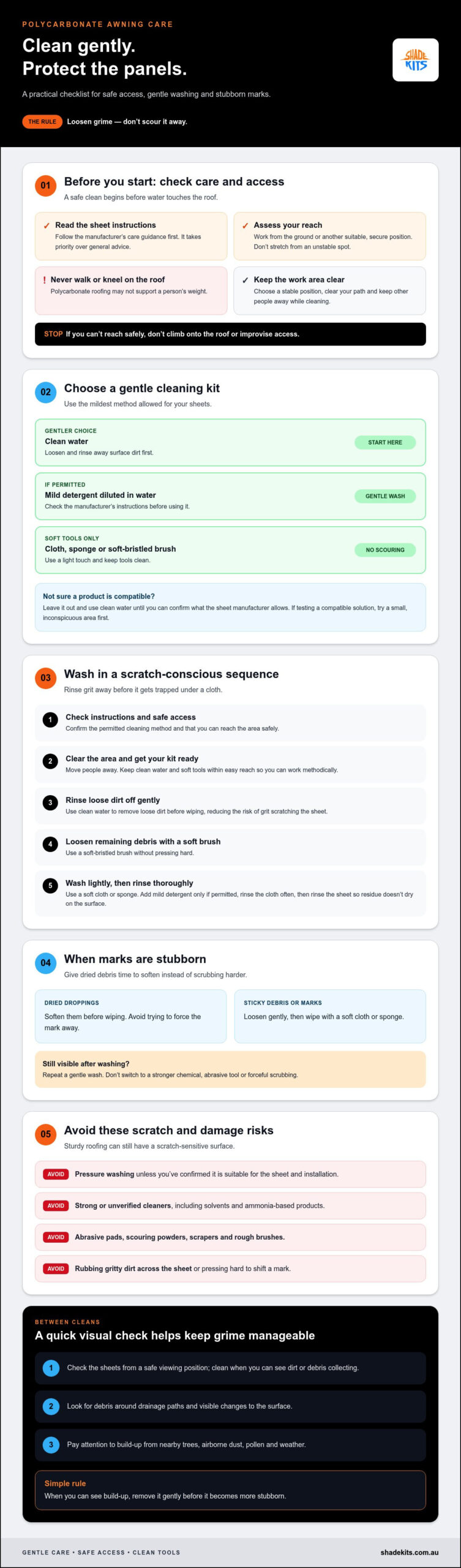
A mark that remains after rinsing may be dried residue rather than ordinary surface dirt. Bird droppings, sap and sticky debris can cling to a sheet as they dry, but extra pressure isn’t the answer. Start with water and give the deposit time to soften before wiping.
Hold a damp, soft cloth against the deposit, or gently wet it with clean water, and allow the moisture to loosen it. Then wipe lightly with a soft cloth or sponge. If residue remains, repeat the process rather than scrubbing harder. This patient approach is safer than reaching for a blade, abrasive pad or unverified solvent.
Some marks may not lift with routine washing, particularly if staining has affected the sheet surface. Don’t assume a stronger cleaner will restore the original appearance. Check the manufacturer’s care instructions before trying a specialist product or treatment, and test a compatible cleaner on an inconspicuous area if the instructions allow it.
Stop cleaning if a panel looks cracked, loose, unusually cloudy or otherwise damaged. Don’t lean on the roof, climb onto it or press harder on a suspect area. From a safe position, review the manufacturer’s maintenance advice before attempting specialised treatment. A change in appearance may need assessment rather than more washing.
Ordinary grime should gradually lift with a gentle wash. Persistent clouding or a mark that doesn’t change after careful cleaning may have another cause, so don’t treat it as dirt by default. Note where the change appears and whether it’s spreading, then use the sheet-specific guidance to decide what to do next. If you can’t inspect the area safely, leave it alone rather than risking a fall or putting weight on the awning.
A quick visual check can help you spot loose debris before it gathers or becomes harder to remove. Look over the accessible parts of the awning after a storm or when you notice leaves, pollen or other debris building up. From a safe position on the ground, check for material resting on the sheets or collecting around drainage paths.
Keep the check straightforward. Look for loose leaves and branches, blocked drainage paths, and visible changes such as new clouding, cracks or movement in a panel. Don’t climb onto the roof to inspect it or lean on the sheets. If you can’t see an area safely, leave it rather than stretching or using an unstable position.
Promptly removing loose debris can make later cleaning easier, because it has less chance to settle or stick to the surface. Use a gentle approach and follow the sheet manufacturer’s care instructions. A routine check isn’t a reason to scrub or apply a stronger cleaner. If a mark persists or the sheet looks damaged, pause and refer to the relevant care guidance before doing more.
Care also helps keep the outdoor area beneath an awning tidy and pleasant to use. Shade Kits supplies DIY awning kits with aluminium frames and UV-resistant polycarbonate roofing, so knowing how to clean polycarbonate awning sheets is useful when looking after this type of outdoor structure. Follow the sheet maker’s maintenance guidance for the specific roofing material rather than assuming all awnings need the same care.
If you’re weighing up materials as well as upkeep, the guide to aluminium awnings offers another perspective on awning choices. You can also explore DIY awning options for an outdoor shade structure.
Knowing how to clean polycarbonate awning sheets comes down to a few careful habits: check access and the manufacturer’s instructions first, use water and compatible gentle cleaning materials, and avoid abrasive tools or forceful scrubbing. Soften stubborn deposits before wiping, and stop if a panel looks cracked, loose or unusually cloudy.
Brief visual checks can help you spot loose debris or blocked drainage paths early, before grime becomes harder to remove. Keep safety in mind: never climb onto the roofing to clean or inspect it.
If you’re planning an outdoor shade structure, Shade Kits’ DIY awning kits feature aluminium frames and UV-resistant polycarbonate roofing, with Australia-wide delivery. Explore DIY awning options and take the next step towards an outdoor space you can care for with confidence.
Rinse loose dirt away with clean water, then gently wash the sheets using a soft cloth or sponge and mild detergent if the manufacturer permits it. Rinse thoroughly to remove residue and let the surface air dry. Check the sheet-specific care instructions before you start, and make sure you can reach the awning safely. Never walk or kneel on the roof, and don’t scrub harder if a mark remains.
Don’t assume a pressure washer is safe for your polycarbonate awning. Forceful water may mark or damage the sheet, and the right approach can depend on the roofing and installation. A gentle garden-hose rinse is a safer starting point for loose dirt. Check the sheet manufacturer’s care guidance before using pressure-washing equipment. If the awning can’t be cleaned from a safe position, stop rather than climbing onto the roof.
Clean water is a gentle first choice for routine dirt. If the sheet manufacturer allows it, use a small amount of mild detergent diluted in water with a soft cloth or sponge. Cleaner compatibility varies, so check the product guidance before applying household cleaners or stain treatments. Avoid abrasive powders, scouring pads and unverified solvents. Rinse the panels thoroughly after washing so detergent residue doesn’t remain on the surface.
Inspect the sheets and clean them when you can see dirt or debris building up, rather than following a fixed schedule that may not suit your home. Nearby trees, pollen, dust and weather can affect how quickly grime collects. Brief visual checks after storms or periods of noticeable debris can help you decide when a gentle clean is needed. Promptly removing loose material may make later cleaning easier.
No. Don’t walk or kneel on polycarbonate roofing, as it may not support a person’s weight. Clean only from a stable, safe position, without leaning on the sheets or overreaching. If the panels can’t be reached safely from the ground or another suitable position, stop and leave the job rather than climbing onto the awning. Safe access is part of cleaning, not a step to improvise once you’ve started.
Soften dried bird droppings with clean water before wiping them away with a soft cloth or sponge. Let the water loosen the deposit, then wipe gently; repeat the mild wash if residue remains. Don’t pick at the mark or use a blade, abrasive pad or stronger cleaner without checking the sheet manufacturer’s instructions. Some staining may not lift with routine cleaning, so avoid force if the surface still looks marked.
Don’t use vinegar or bleach on polycarbonate unless the sheet manufacturer’s care instructions specifically say the product is compatible. Cleaning products can affect sheets differently, and household use doesn’t guarantee they’re suitable for this surface. For ordinary grime, start with clean water and, if permitted, mild detergent. If you’re considering a treatment for a stubborn mark, check the manufacturer’s guidance first rather than testing an unverified chemical on the roof.