
What if the shadiest spot in the backyard isn’t the safest or most practical place for children to play? Choosing child-safe backyard shade ideas means looking beyond the roof or canopy. Consider where children run, climb and play, and how the space works as the sun and weather change.
It’s sensible to want more than a patch of shade. Shade doesn’t replace other sun-protection measures, so Cancer Council advice to check the UV level and use sun protection when it reaches 3 or higher still matters. The right setup can make outdoor play more comfortable and help you plan around everyday family routines.
This guide explores options for different backyard layouts, from umbrellas and shade sails to pergolas, awnings and patio covers. You’ll find practical points to consider around play equipment, clear walkways, stable structures and weather exposure, as well as how clothing, hats and sunscreen can complement shade. The aim is an outdoor space that works for your family, not just a shaded corner.
Most parents want the same things from a backyard play space: somewhere children can enjoy being outside, adults can supervise, and everyday play feels comfortable and practical. The best child-safe backyard shade ideas start with how your family uses the yard, not with choosing a structure. A shaded patch might suit a sandpit but leave a climbing frame or the path to the back door exposed.
Shade helps reduce direct sun exposure, but it doesn’t block every UV ray. UV can reach areas through gaps or reflect off surrounding surfaces, so shade is one layer of protection, not a substitute for other measures. Cancer Council Australia advises using sun protection when the UV Index is 3 or higher. Pair shade with sun-protective clothing, a suitable hat and SPF50 or SPF50+ broad-spectrum, water-resistant sunscreen, applied 20 minutes before going outside and reapplied every two hours. Check the UV forecast as part of your outdoor routine.
The options in this guide suit different yard sizes, play activities and family routines. Start by working out where shade is needed and how the space changes throughout the day.
Before choosing an option, mark the main play zones, outdoor seating, doors and paths. Observe the yard at the times children are most likely to play. A spot that gets morning sun might be shaded by the afternoon, or the reverse. A quick sketch with notes on sun and shade can reveal gaps and help you plan for more than one moment in the day.
Think about supervision, too. Keep sightlines open between play areas and the places adults usually sit or stand. Avoid putting bulky furniture or storage where it blocks the view. If the yard has climbing or swinging equipment, allow space around it and keep routes through the area clear. A general overview of playground safety and common equipment can help you consider play equipment and potential fall concerns as you plan.
Your plan should reflect who uses the yard now and how that might change. A toddler’s play area may need a different layout from a space used by older children with larger equipment. Consider the available footprint, what needs to stay accessible, and whether play is mostly active, quiet or a mix. This helps narrow down which child-safe backyard shade ideas could work for your household.
Treat the shade structure and play area as parts of one plan. A usable setup needs more than overhead cover: consider visibility, clear access at ground level and how the space will be used in different weather. With those priorities in mind, you can compare options against your actual yard rather than assume one solution suits every family.
Different parts of a backyard call for different kinds of shade. A small play corner might benefit from a movable option, while a frequently used outdoor living area may suit a fixed cover. Each of these child-safe backyard shade ideas has practical trade-offs. Consider the play space, how often it’s used and what needs to remain accessible before choosing.
Movable options can help when play shifts around the yard or you want flexibility as the sun moves. They aren’t automatically safer than fixed structures. Check their stability and position carefully, and keep supports and bases out of play areas and busy paths.
Fixed structures can provide a consistent shaded area for regular use, but coverage depends on placement, design and sun direction. Consider how the cover relates to play, access and supervision. A permanent structure also needs sound site planning and attention to applicable local requirements.
Shade Kits’ factory-direct DIY pergola, awning and patio-cover kits feature aluminium frames and UV-resistant polycarbonate roofing. They can form part of a broader backyard plan, but no shade structure removes the need for other sun-protection measures.
A shade option can look generous on paper but miss the play area when children use it. Compare the shaded footprint where it matters, along with flexibility, upkeep and any hazards created by supports or moving parts. Use the table as a starting point, not a safety certification: every setup still needs suitable placement, regular checks and adult supervision.
| Option | Coverage and flexibility | Upkeep | Key safety checks |
|---|---|---|---|
| Tree | Shade varies with position, season and growth; fixed location. | Consider leaf litter and ongoing tree care. | Look for low branches, roots and debris near play. |
| Freestanding umbrella | Localised shade; can be repositioned. | Check fabric and moving parts. | Keep the base stable and out of paths. |
| Shade sail | Can cover an open zone; fixed once installed. | Inspect fabric and attachment points. | Keep ropes and supports away from play routes. |
| Retractable awning | Extends over an attached area; retractable. | Check fabric and operating parts. | Keep children clear while it moves. |
| Pergola | Defines a fixed outdoor zone; coverage depends on its roof. | Inspect the frame and roof surface. | Check edges, fixings and the area below. |
| Patio cover | Fixed coverage for an outdoor living area. | Check roof and frame for visible wear. | Keep access routes clear of supports. |
| Portable play shade | Small, temporary coverage; easy to move. | Check fabric, joints and supports. | Set up securely and keep clear of running paths. |
Assess the shadow across the actual play zone at the times it’s used, rather than relying on a structure’s overall dimensions. A wide cover might shade a dining setting while leaving the sandpit exposed. Consider the upkeep involved: trees need care, fabric may need cleaning, and roof surfaces can collect dirt and leaves. Shade Kits’ kits use aluminium frames and UV-resistant polycarbonate roofing.
Walk around the setup at a child’s pace. Look for an unstable umbrella base, exposed fixings, low edges or supports that narrow a path. Keep guy lines, cords and other trip hazards away from running routes and entrances. Check that movable parts are out of reach during operation, and review the area after play equipment or furniture is rearranged.
Choose shade by the play area it covers, your family’s routine and the upkeep you can manage. No option makes supervision unnecessary, and shade should complement other sun-protection habits, not replace them.
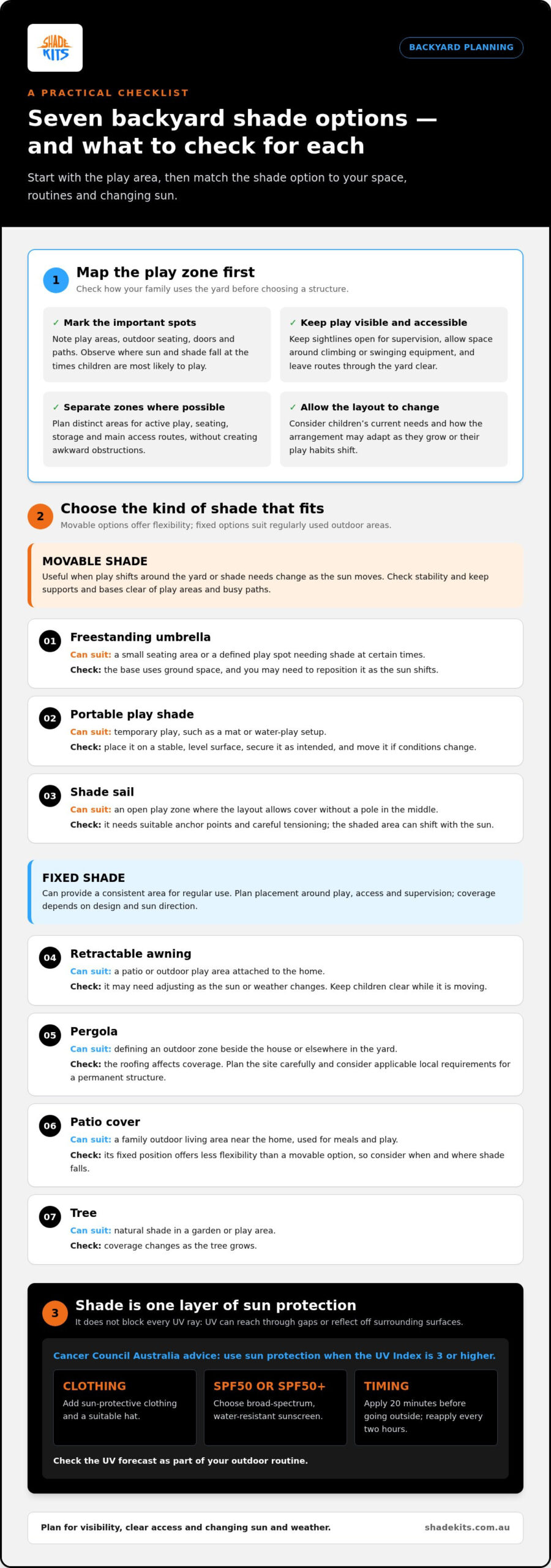
A clear plan can help you choose a shade structure that fits the yard, rather than squeezing play around a structure chosen first. Work through the steps from observing daily use to checking the finished setup. Requirements for planned structures can vary by location and design, so check the relevant local council and building approval information before work begins.
Start by measuring the play area and nearby seating, paths and access points. Note where the sun falls when children usually play, and where adults can supervise from the house or outdoor seating. Sketch the proposed footprint and check that it won’t obstruct doors, walkways or the movement of play equipment.
Once you’ve chosen an option, follow its product instructions and appropriate safety practices during setup. Pay particular attention to supports, fixings and clear space around the play zone. After strong weather, look for movement, loose components or visible damage before children use the area again.
A useful pre-installation check is simple: confirm the placement, clear access and adult sightlines before committing to the setup. These checks help keep the play area practical without treating shade as a replacement for supervision or other sun-protection habits.
For outdoor routines, use the Bureau of Meteorology’s current UV information to help plan when children play outside and when sun protection is needed. A thoughtful layout and regular checks can make your chosen child-safe backyard shade ideas work better for everyday family life.
If a fixed shade structure suits your plan, explore DIY pergola, awning and patio-cover kits as options for your outdoor space.
Once you know where shade is needed and how the play area will work, a fixed structure may suit part of the plan. Shade Kits offers factory-direct DIY pergola, awning and patio-cover kits for Australian homes. Their aluminium frames and UV-resistant polycarbonate roofing provide a defined overhead-cover option, but a structure is only one element of a family-friendly outdoor area. It isn’t a child-safety guarantee or a replacement for supervision and other sun protection.
Think about which part of the yard needs consistent coverage. A pergola or patio cover may suit an outdoor living zone used regularly for meals, relaxed play or family time. Positioning it near the house can connect indoor access with outdoor use, while the layout still needs clear paths and sightlines for supervision.
An awning is another option beside the home, particularly if you want shade over an adjoining patio or outdoor area. Its position should suit when the space is used and the direction of the sun. Consider how the extended cover relates to doors, windows and nearby activity, and keep its operating area clear while it’s adjusted.
Each structure relates to the yard differently. A pergola or patio cover creates a fixed zone, while an awning can be extended or retracted. The right fit depends on the shape of the play area, household routines and the coverage you want. Compare the proposed shaded footprint at the times children are outside rather than choosing by appearance alone.
Before settling on a kit, review the details that will make the plan work day to day:
Shade Kits’ kits are designed for straightforward self-installation, giving homeowners a DIY option for planned outdoor coverage. Follow the relevant product instructions and review local requirements for a structure before setting up. After installation, assess the finished area from a child’s perspective, checking for clear access and visible hazards. Continue supervising play and using other sun-protection measures as part of your family’s routine.
If a fixed structure fits your plan, you can explore backyard shade kits as one way to shape a more comfortable outdoor living area.
Treat your shade plan as something that can evolve with your household. Children’s favourite activities change, equipment gets rearranged, and a spot that suits a quiet afternoon may not work for active play. Keep the layout adaptable where possible, and revisit it as routines shift. This keeps child-safe backyard shade ideas grounded in how the yard is actually used, rather than turning them into a one-off design decision.
Before committing to a larger change, note the area your family uses most and what would make it more practical: extra overhead cover, clearer movement through the yard, or a comfortable place nearby for an adult to sit. A shade structure should support that everyday purpose, while supervision and sun-protection habits remain part of the routine. The aim is to make a considered improvement that works for your family.
When you’re ready to explore a permanent shade option, Explore backyard shade kits and consider which structure fits your plans. Start with the area you want to cover and choose a DIY shade solution that supports your outdoor routine.
Start by matching the shade to where children actually play, then assess the whole area, not just the overhead cover. Check that supports are stable, paths are clear and adults can see the play space from their usual supervision spots. Keep loose cords and other trip hazards away from play routes. Shade doesn’t block all UV, so combine it with suitable clothing and sunscreen, and continue supervising children.
No. Shade reduces direct sun exposure, but scattered or reflected UV can still reach children, and protection varies with the shade and its surroundings. A pale paved area or reflective surface may affect exposure beneath a cover. Check the UV Index when planning outdoor time and follow current Australian sun-safety advice, including guidance from Cancer Council Australia. Don’t treat a shaded spot as complete protection during longer play sessions.
Yes, a shade sail can be part of a well-planned play area, but the fabric itself doesn’t make the space safe. Check that ropes and anchor points aren’t beside a scooter route or climbing equipment, and look for edges or fixings within children’s reach. Follow the product instructions and inspect the setup periodically. If a support shifts or a fitting looks damaged, keep children away until it’s addressed.
Neither is automatically better. The right choice depends on the space and how your family uses it. A tree may suit a garden play corner if you’re happy to wait for it to grow and manage its branches and leaf litter. A structure can be positioned for a particular outdoor zone, but needs careful setup and upkeep. Compare how each option fits your play routine and the coverage you need.
Choose child-safe backyard shade ideas by noting where play happens and when direct sun reaches that spot. In a compact yard, sketch the space and mark doors, paths, furniture and equipment before deciding where shade could go. A movable option may suit play that shifts during the day, while a fixed cover may work for a regular activity zone. Make sure the arrangement preserves access and adult visibility.
Follow current Australian sun-protection guidance rather than relying on shade alone. A roof, tree or umbrella may reduce direct sun but won’t necessarily prevent scattered or reflected UV exposure. Check the UV Index and consider the child’s clothing, time outdoors and surrounding surfaces when planning play. Use sunscreen according to its label and trusted Australian health advice, alongside other protective measures. Keep supervision part of the routine.