
Why spend your precious weekends sanding and oiling a timber structure that the harsh Australian sun is destined to degrade anyway? Most homeowners crave a stylish outdoor room but feel stuck between the eye-watering costs of custom tradespeople and the relentless maintenance of traditional materials. You want a durable space where the kids can play safely under UV protection, yet the thought of managing council permits or complex blueprints often feels overwhelming. Choosing high-quality aluminium pergola kits allows you to bypass these frustrations while creating a professional-grade retreat that actually lasts.
In this guide, you’ll discover how to plan and install the perfect structure to transform your backyard into a low-maintenance sanctuary. We’ll demystify the 2026 state-specific building regulations, explain why aluminium is the smartest choice for our climate, and provide a clear roadmap for a successful DIY assembly. By the end of this article, you’ll have the confidence to build a permanent structure that adds genuine value to your property and provides a cool, shaded haven for years to come.
An aluminium pergola kit is a pre-engineered, factory-cut outdoor structure designed for straightforward home assembly. Unlike traditional construction where a carpenter cuts timber on-site, these kits arrive with every component measured and drilled to millimetre precision. In 2026, we’re seeing a massive shift away from ‘stick-built’ timber structures. Homeowners are tired of the constant cycle of sanding, staining, and worrying about termites. High-quality aluminium pergola kits provide a permanent, structural solution that handles the extreme Australian climate without the heavy lifting or specialised tools required for steel or wood.
Whether you live in a scorching inland suburb or a coastal town facing salt-heavy winds, aluminium is the most resilient material available. It doesn’t rust, warp, or crack under the intense UV radiation that often destroys timber finishes within a single season. This durability is why modern kits have become the go-to choice for those wanting to add long-term value to their property without committing to a lifetime of maintenance.
Understanding the components makes the assembly process feel far less daunting. A standard kit consists of three primary structural elements: heavy-duty posts, primary beams, and the rafters that support the roofing. Each part is designed to fit together logically, much like a large-scale assembly project.
The real magic of aluminium lies in its weight-to-strength ratio. It’s incredibly strong yet light enough for two people to handle comfortably. This makes it the ideal material for a DIY project. While steel offers strength, it’s prone to corrosion and is difficult to move without machinery. Aluminium, by contrast, is a ‘set and forget’ material. Once your aluminium pergola kits are bolted into place, they require nothing more than an occasional wash with a garden hose to look brand new.
You also have significant flexibility with customisation. You can choose from various frame colours to match your home’s existing trim and select roofing tints that balance natural light with heat reduction. This level of control allows you to create a bespoke outdoor room that feels like a natural extension of your home rather than a bolted-on afterthought. It’s about achieving a professional result through a streamlined, manageable process.
When selecting a structure for your backyard, the material you choose dictates how much time you’ll spend enjoying the space versus maintaining it. While timber offers a traditional look, it’s a magnet for termites and rot in many Australian regions. Steel is incredibly strong but heavy and prone to rust if the surface is compromised. Modern aluminium pergola kits provide a middle ground that excels in durability without the high-maintenance drawbacks of organic materials.
One of the biggest advantages is the powder-coated finish. Unlike timber, which requires annual sanding and oiling to prevent grey-out and cracking, aluminium is virtually maintenance-free. You won’t need to spend your weekends with a paintbrush in hand. For eco-conscious builders, aluminium is also 100% recyclable. This makes it a sustainable choice that doesn’t sacrifice performance or structural longevity.
Thermal performance is another area where aluminium shines. Heavy steel structures tend to hold onto heat long after the sun goes down, radiating warmth into your seating area like a thermal battery. Aluminium dissipates heat much faster. This ensures your outdoor room remains comfortable even during a late afternoon summer scorcher. If you’re ready to upgrade your outdoor space with a resilient structure, browsing our range of durable pergola solutions is a great place to start.
For those living near the coast, salt air is a silent killer for many building materials. Aluminium forms a natural oxide layer that protects it from corrosion, making it the gold standard for seaside properties. In bushfire-prone zones, the non-combustible nature of metal provides an extra layer of safety that timber simply can’t match. Structural integrity, within the scope of Australian wind ratings, is the capacity of the pergola to withstand extreme pressure without compromising its physical form or safety.
The roofing material is just as vital as the frame. High-quality kits use UV-resistant polycarbonate roofing designed to block 99% of harmful rays while still allowing natural light to filter through. You can customise your comfort by choosing different tints based on your backyard’s orientation. A clear tint maximises light, while a grey or opal tint can significantly reduce heat transmission. You can explore these choices in detail in our guide to Pergola Roofing Options. Selecting the right tint ensures your aluminium pergola kits provide a cool, usable space regardless of the UV index.
Deciding between a fixed-roof structure and a louvred system is one of the most important choices you’ll make when planning your outdoor area. Many homeowners are initially drawn to the high-tech appeal of motorised louvres, but the practical reality of the Australian environment often makes fixed-roof aluminium pergola kits the superior choice. A fixed roof offers structural simplicity because it has no moving parts to jam, break, or require expensive repairs. While louvres allow you to toggle between sun and shade, they introduce mechanical complexity that can become a liability over time.
Weatherproofing is another critical factor. A solid polycarbonate roof provides a continuous, leak-proof barrier against the elements. Even the best louvred systems rely on seals between individual blades that can eventually perish under intense UV exposure or fail during a typical tropical downpour. If you’re still weighing up your material choices beyond just the roof style, our guide on Aluminium vs Timber Pergolas provides a deeper look at long-term performance.
From a purely financial perspective, fixed-roof kits are hard to beat. They typically cost between 40% and 60% less than their louvred equivalents. This price gap exists because you aren’t paying for complex internal gearboxes, motors, or remote-control systems. This simplicity also extends to your installation budget. Because there are no motors involved, you won’t need to hire an electrician to run power to the structure, saving you hundreds in trade costs. In many Australian LGAs, simpler structures are also easier to navigate through the council approval process, as they fall more clearly under exempt development categories due to their non-mechanical nature.
Simple is often better, especially for homes in coastal areas where salt air can wreak havoc on motorised components. Avoiding the ‘motor headache’ means you’ll never have to worry about a jammed roof when a storm is rolling in. Maintenance is also far more straightforward. Keeping a polycarbonate roof clean usually requires nothing more than a quick hose-down to remove dust and leaves. By contrast, louvred systems require you to clean both sides of every individual blade to prevent grime build-up in the tracking system. Most high-quality aluminium pergola kits come with a 10-year structural warranty, giving you peace of mind that your investment is protected without the need for ongoing mechanical servicing.
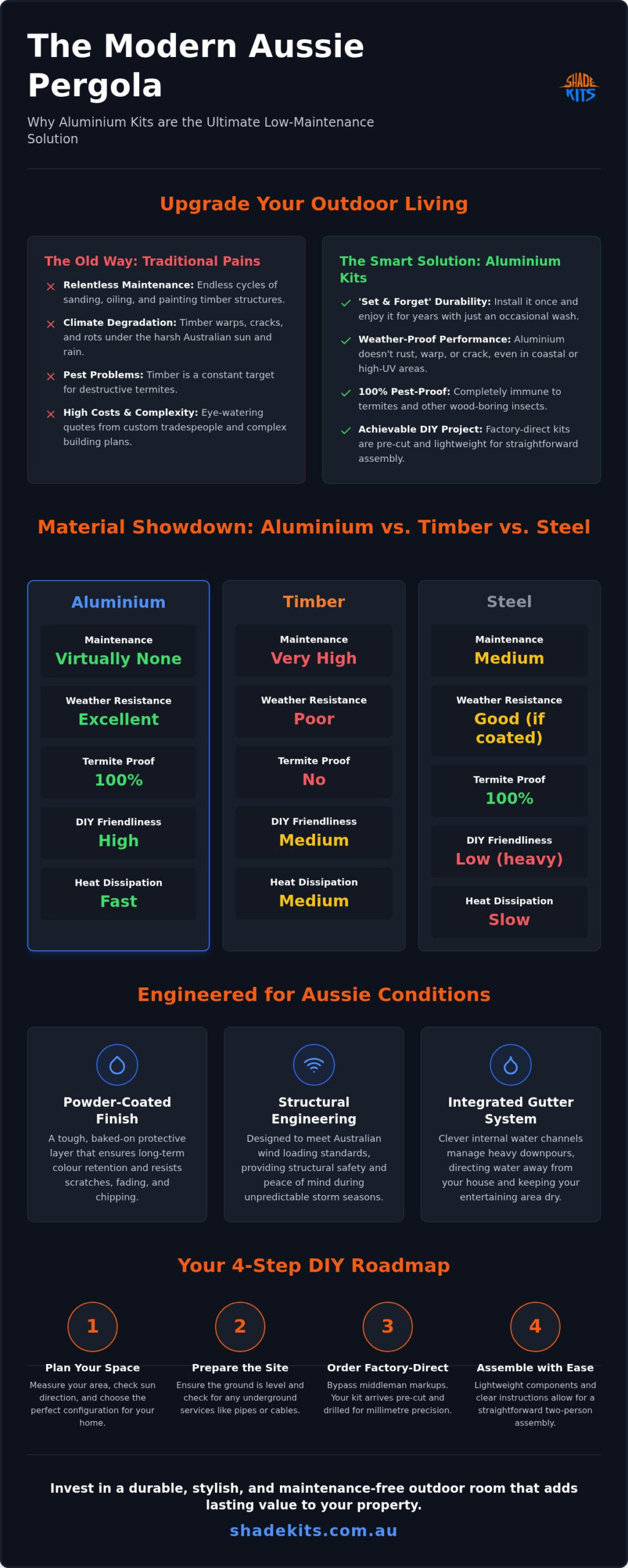
Success with aluminium pergola kits starts long before the delivery truck arrives at your driveway. A methodical approach to planning ensures that your installation is safe, legal, and structurally sound. Your first task is to measure your intended space accurately and check for underground services. Contacting ‘Dial Before You Dig’ is a critical step; you don’t want to discover a gas line or NBN cable halfway through digging a footing.
Once the site is clear, you need to choose your configuration. Attached structures are excellent for extending your living room, while free-standing kits allow you to create a separate destination in the garden. You also need to navigate local council regulations. In New South Wales, a pergola is often considered an exempt development if it’s under 25 square metres and meets specific height requirements. By contrast, Western Australia typically limits exempt structures to 20 square metres. Always verify these details with your local LGA to avoid unnecessary fines.
Before you begin, gather the right tools. You’ll need a high-quality drill, a spirit level, a sturdy ladder, and a reliable mate to help with the heavy lifting. Finally, ensure your site is prepared with either a level concrete pad or secure footings. If you are ready to start your project, you can view our range of easy-to-install kits to find the right fit for your home.
When measuring, you must calculate the ‘fall’ to ensure rainwater drains effectively off the roof. A standard rule is a minimum 5-degree pitch, which prevents water from pooling and causing long-term issues. You should also check clearing heights. Ensure the lowest point of the frame won’t block window views or interfere with the swing of your back doors. For a deeper dive into these technicalities, read our DIY Pergola Kits Guide.
Modern aluminium pergola kits operate on the ‘Meccano’ principle. Every piece is factory-cut and pre-drilled, which removes the guesswork and reduces the risk of error. Safety is paramount; always wear gloves when handling aluminium extrusions and use proper fall protection if working on a ladder. Having a two-person team is essential for the frame-raising stage to ensure the structure remains stable and level while the primary beams are secured to the posts.
Choosing factory-direct aluminium pergola kits represents a significant shift in how Australians approach home improvement. By bypassing the traditional retail showroom, you’re effectively cutting out several layers of markup that typically inflate the price of outdoor structures. This direct-to-consumer model ensures your budget goes toward high-quality materials rather than the overheads of a middleman. It’s a pragmatic choice for anyone looking to maximise their investment while maintaining total control over the project.
Quality control is where factory-engineered kits truly outshine on-site builds. When a structure is cut and drilled in a controlled environment, the level of precision is far higher than what can be achieved with a hand saw in a backyard. This accuracy means that every component aligns perfectly during assembly, resulting in a more stable and professional-looking structure. Beyond the frame, these kits arrive as a complete package. Every bracket, bolt, and screw is accounted for, which saves you the frustration of multiple trips to the local hardware store for missing components.
Investing in a permanent, stylish structure also pays dividends when it comes to property value. A well-designed outdoor room increases ‘backyard appeal’ and can be a major selling point for future buyers. It transforms an underutilised lawn into a functional living space, effectively increasing the usable square metreage of your home without the high cost of a traditional extension.
The supply chain for factory-direct products is simple. The kit moves from the factory floor straight to your front gate. By removing the retail layer, you often save thousands of dollars that would otherwise be spent on showroom commissions and storage fees. When you combine these savings with the fact that you’re providing the DIY labour, the total cost of the project becomes much more manageable. For those looking to protect their vehicles as well as their entertaining areas, exploring our range of cantilever carport kits Australia homeowners trust can provide a total home shade solution using the same cost-effective, post-free design.
You don’t need years of trade experience to achieve a professional finish. Because aluminium pergola kits are engineered for simplicity, the hardest part of the job—the measuring and cutting—is already done for you. There is a profound psychological reward in building your own outdoor entertaining space. Standing back to look at a completed, high-quality structure that you assembled yourself provides a sense of accomplishment that a hired crew simply can’t deliver. If you’re ready to take the next step in your backyard transformation, Explore our range of Aluminium Pergola Kits today and start planning your new sanctuary.
Creating a durable and stylish outdoor room doesn’t have to be a complicated or expensive ordeal. By choosing aluminium pergola kits, you bypass the maintenance headaches of timber and the high costs of custom trades. A fixed-roof design ensures your space remains weatherproof and reliable; it’s a structural solution that handles the Australian sun with ease. You aren’t just adding a shade structure; you’re creating a permanent extension of your home that adds genuine property value.
Our factory-direct model provides a complete solution. Every kit features durable powder-coated aluminium frames and UV-resistant polycarbonate roofing. With Australia-wide delivery, getting your project started is straightforward regardless of your location. Taking the DIY route gives you the satisfaction of a professional finish without the retail markup or the stress of managing a construction crew. You’ve got the plan and the knowledge; now it’s time to make it a reality.
View our factory-direct Aluminium Pergola Kits and start your backyard transformation
Whether you need approval depends on your state’s specific building codes and the size of your structure. In New South Wales, for example, a pergola is often an exempt development if it is under 25 square metres, while in Victoria and Western Australia, the limit for exempt work is typically 20 square metres. You should always verify the current height and boundary setback rules with your local council before you begin your project.
Most homeowners can complete the assembly of standard aluminium pergola kits within one to two days. If you have a prepared concrete base and a second set of hands to help with the heavy lifting, the process is very efficient. The factory-cut components and pre-drilled holes mean you won’t waste time on-site measuring or cutting, which significantly speeds up the build compared to traditional timber construction.
You shouldn’t attempt to assemble the frame alone, as the structural beams require at least two people to lift and secure safely. While the aluminium extrusions are lightweight, holding a long beam level while simultaneously fastening it to a post is a two-person job. Having a mate help ensures the structure remains square and plumb during the critical early stages of the assembly, which prevents alignment issues later on.
Standard kits are engineered to meet the National Construction Code (NCC) requirements for wind loading in most Australian residential areas. However, if you live in a designated cyclonic region like North Queensland or the Kimberley, you must ensure the specific kit is rated for Region C or D wind speeds. These specialised kits often feature reinforced internal ribbing and heavy-duty fixing brackets to withstand extreme weather events.
Maintenance is incredibly simple and usually involves nothing more than a quick wash with a garden hose and mild detergent every few months. This prevents salt and dust build-up, which is particularly important for homes near the coast. You should also clear any leaves from the gutter system and perform a quick annual check of the structural bolts to ensure everything remains tight and secure as the seasons change.
Yes, many aluminium pergola kits are designed for wall-mounted or attached configurations using a structural ledger beam. This is a popular choice for extending an existing indoor living area into the backyard. You must ensure the house wall is structurally sound and that you use the correct flashing to prevent water from entering the gap between the house and the new pergola roof.
A pergola is typically a rectangular structure designed to provide shade over a deck or patio, and it is often attached to the home. A gazebo is almost always a freestanding structure, frequently octagonal or round, with a solid pitched roof. While pergolas focus on creating a seamless indoor-outdoor flow, gazebos are usually intended as a separate decorative feature or a standalone destination within a larger garden space.
Aluminium dissipates heat much faster than steel or timber, so the frame doesn’t stay hot once the sun moves or a breeze kicks in. The temperature under the structure is mostly dictated by your choice of roofing. Using UV-resistant polycarbonate with an opal or grey tint can block a significant amount of solar heat, ensuring your outdoor room remains a comfortable temperature even during the peak of an Australian summer.