
Sun exposure is a key cause of car damage in Australia: it can fade paint and crack or fade interior materials. Hail can dent bodywork, while heavy rain, tree sap, bird droppings and windblown debris bring other risks. An all weather car protection solution should suit the hazards around where you park.
It’s easy to focus on one threat, such as hail, but everyday exposure matters too. The right protection depends on whether your car sits in direct sun, beneath trees or in a spot exposed to rain and debris.
This guide explains common sources of damage and how to choose protection that fits your vehicle and parking conditions. You’ll learn what to consider when comparing covers, how to reduce scratch risks, and what affects the protection, cost and upkeep of different options. We’ll also look at when a covered parking structure may make more sense than a removable cover, so you can make a practical choice for your car.
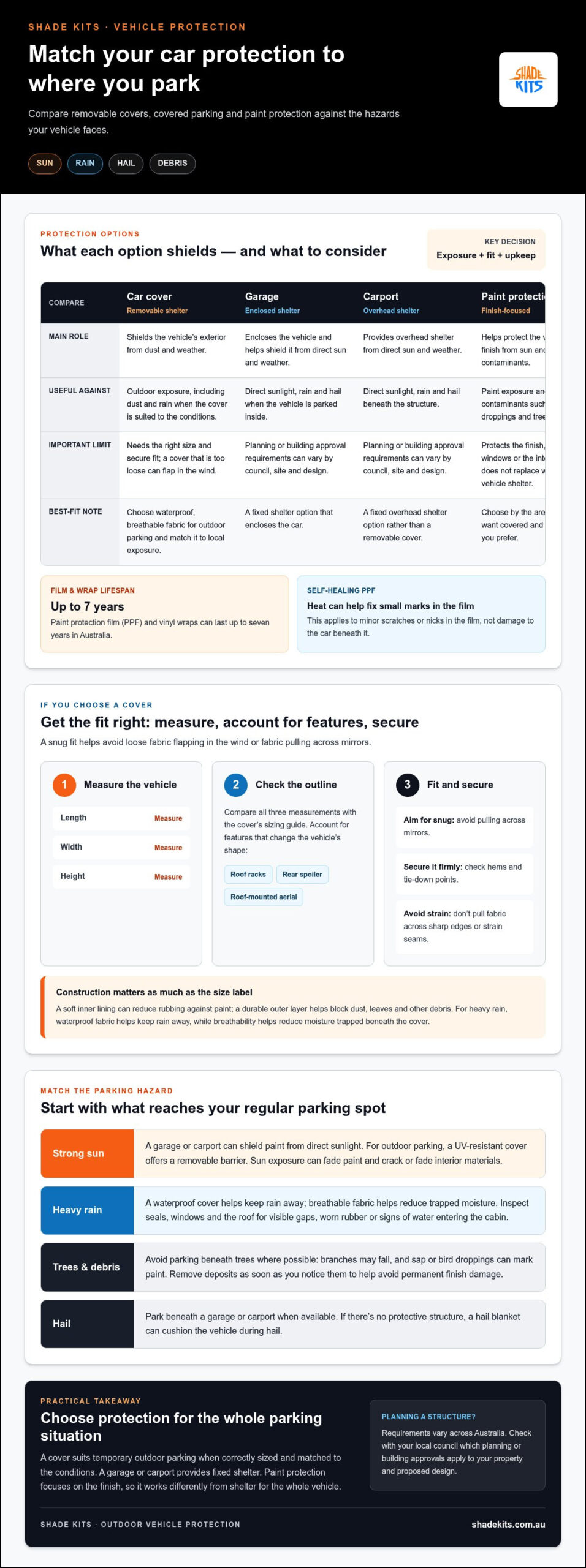
The best all-weather protection depends on where your vehicle is parked and which hazards it faces. A correctly fitted, waterproof and breathable cover suits temporary outdoor parking, while a garage or carport provides overhead shelter from sun, rain and hail. Paint protection can help defend the finish, but it won’t cover windows or interiors.
How do you choose the right size? Measure your vehicle’s length, width and height, then compare all three with the cover’s sizing guide. Account for features that change its outline, such as roof racks, a rear spoiler or a roof-mounted aerial. The cover should fit snugly without pulling across mirrors or leaving loose fabric that can flap in the wind.
Fit matters in different Australian climates. In a sunny, exposed driveway, a UV-resistant cover can help shield paint and the interior from fading and cracking. In a spot prone to heavy rain, choose breathable fabric that repels moisture. A waterproof cover helps keep rain away, while breathability helps reduce moisture trapped beneath it.
Look closely at construction, not just the size label. A soft inner lining can reduce rubbing against paint, while a durable outer layer helps block dust, leaves and other debris. Check how the cover secures around the vehicle, including its hems and tie-down points. Secure it firmly, but don’t strain the seams or pull the fabric across sharp edges.
What are the best all-weather car protection solutions in Australia? For a parked vehicle, practical options include a correctly sized, waterproof and breathable cover, or overhead shelter from a garage or carport. The right fit depends on exposure, how often you use the car and whether you need removable or fixed shelter.
How do covers, garages, carports and paint protection compare? Covers are removable and shield the vehicle’s exterior from dust and weather; garages enclose it, while carports provide overhead shelter. Paint protection focuses on the finish, so it doesn’t replace shelter for the whole vehicle.
What planning approvals or council rules apply to a carport or garage? Requirements vary across Australia and may depend on the council, site and proposed structure. Before building, ask your local council which planning or building approvals apply to your property and design.
How can you protect a car from hail in Australia? Park beneath a garage or carport when available. If there’s no protective structure, a hail blanket can cushion the vehicle during hail.
Prolonged Australian sun exposure can fade vehicle paint and crack or fade interior materials. Dashboard surfaces, seat coverings and steering-wheel finishes all face repeated heat and light when a car sits outdoors. Reducing direct exposure helps preserve the vehicle’s appearance and limit interior deterioration.
Start with your parking conditions. A garage or carport can shield paint from direct sunlight, while a UV-resistant car cover offers a removable barrier for outdoor parking. Protective coatings can also help guard paint against contaminants such as bird droppings and tree sap. Remove deposits as soon as you notice them, as leaving them untreated can permanently damage the finish.
Paint protection film (PPF) and vinyl wraps are another option for the vehicle’s exterior. In Australia, they can last up to seven years. The final choice depends on how much of the vehicle you want covered and whether you prefer a clear protective layer or a changed exterior finish.
PPF can be self-healing: heat can help fix small scratches or nicks in the film. This applies to minor marks in the film, not damage to the car beneath it. Professional application is recommended because DIY work can leave bubbles and imperfections or damage the film. Proper application helps the film sit evenly across the vehicle’s panels.
How should you maintain PPF? Follow the film’s care instructions, and inspect its edges and surface during routine cleaning. Heat can help address small scratches in self-healing film, but it doesn’t replace proper cleaning or repair for deeper damage. Coatings and films serve different purposes, so consider the finish and areas you want to protect.
When should you seek professional paint repair? Arrange an assessment if a chip or scratch exposes bare metal, as it needs more work than a surface-only mark. Deep marks may need professional assessment before touch-up paint is applied. Prompt attention helps prevent exposed metal from becoming a larger repair concern.
Paint protection helps maintain the finish by reducing exposure to sun and contaminants. For a practical all weather car protection solution, combine a suitable paint treatment with covered parking where possible. Choose based on your vehicle’s exposure, the areas that need protection and the maintenance you can manage.
Australia’s changing conditions expose parked vehicles to UV rays, heavy rain, windblown dirt and falling debris. Each affects different parts of a car. Sun can fade paint and interior materials, while rain can contribute to rust on metal surfaces. A useful protection plan matches shelter and maintenance to the conditions at your regular parking spot.
For protection from direct sun and rain, parking beneath a garage or carport helps shield the paint. A UV-resistant cover can protect the exterior when a vehicle sits outdoors. Avoid parking beneath trees where possible: branches may fall, while sap and bird droppings can mark paint. Shade away from trees can reduce direct sun exposure without adding those hazards.
Heavy rain can contribute to water damage, interior mould or mildew, and rust on metal surfaces. Start by inspecting the car’s seals, windows and roof. Look for visible gaps, worn rubber or signs of water entering the cabin, particularly after wet weather. A breathable cover that repels moisture can help limit dampness around the vehicle. Covers that trap moisture may create conditions for mould or mildew to develop.
Glass treatments address a different part of the problem. Automotive glass coatings and rain repellents are applied to windows, where they help water bead and run off. They can complement sheltered parking in rainy weather, but they don’t protect paint, prevent water entering through damaged seals or shield the whole vehicle from hail. Treat glass protection as one layer in a broader plan, not a substitute for overhead shelter.
Prolonged exposure can also wear components such as rubber seals, potentially leading to leaks. Check the windscreen edges, doors and roofline for visible deterioration, and watch for damp carpets or musty smells after rain. Keeping debris clear from the windscreen and surrounding areas helps maintain a clear view and makes it easier to spot damage or water entry early.
Choose protection according to where the vehicle is parked and what reaches it. For example, a car beneath a tree may need a different parking spot to avoid sap and falling branches; an exposed driveway may benefit from overhead shelter from rain, hail and sunlight. A windshield cover can help protect against frost and UV damage. Combining suitable shelter, a moisture-repelling cover and glass treatment creates a more practical all weather car protection solution than relying on just one measure.
UV-resistant car-cover materials can shield Australian vehicle paint from sun damage. Protective coatings can help guard paint against environmental contaminants such as bird droppings and tree sap.
Preventing paint damage starts before you park. Check a weather app or website when strong winds or storms are forecast, then choose a sheltered spot away from trees. Branches, loose debris and falling objects can strike the vehicle, while parking beneath foliage can expose it to sap and bird droppings. Choosing a safer spot reduces these risks.
Before fitting a cover, make sure the vehicle is clean and dry. Dust or grit trapped between the cover and paint can rub against the finish as the fabric shifts. Moisture beneath a cover can also encourage mildew. If the car has been driven on dusty roads or through heavy rain, clean and dry the relevant surfaces before covering it.
Handle the cover carefully, too. Shake off loose dirt and debris before putting it back on the vehicle; particles left in the fabric could scratch paint during its next use. Lower the cover gently rather than dragging it across the bonnet or roof. Smooth it into place and secure it so wind can’t make loose fabric flap against the bodywork.
Take care when removing bird droppings and tree sap. Don’t scrape or rub dry deposits, as grit and hardened residue can mark the paint. Soften each spot with a wet cloth, then wipe gently. Use a clean part of the cloth as you work, so you don’t drag removed residue across another area.
A waterproof cover can help keep rain off, but the car should still be dry before you cover it. Choose breathable material that repels moisture rather than trapping damp air against the vehicle. In heavy rain, check that water isn’t entering through the car’s seals, windows or roof. A cover won’t fix leaks or prevent existing water damage.
If hail is forecast and a garage or carport isn’t available, use a hail blanket to cushion the vehicle. Fit it according to its instructions and secure it to limit movement in the wind. For everyday use, a well-maintained cover can help protect your vehicle from dust and debris, but careful parking and clean handling remain important for preventing scratches.
After removing a cover, check the paint and fabric for trapped grit or signs of rubbing. Clean small deposits gently, and repair minor cover damage before it worsens. These simple steps help prevent the cover itself from causing scratches, particularly after dusty conditions or heavy rain.
Compare protection by purchase cost, coverage and how often it needs attention. These options differ in application and maintenance, so the lowest starting price isn’t the only factor when choosing an all weather car protection solution.
Paint protection film and vinyl wraps have different costs because the area covered matters. These films and wraps can last up to seven years. Compare the area being treated with the level of protection you want, rather than comparing a small-panel price with a full-vehicle treatment.
How should you weigh repeat applications against a larger initial outlay? Wax needs more frequent renewal, so include the ongoing effort when deciding whether it suits you. Sealants and ceramic coatings may involve different application processes, while film and wraps protect selected surfaces or more of the vehicle. Match the option to your parking conditions, exposure to contaminants and willingness to maintain it.
Longevity also depends on care. Bird droppings and tree sap can permanently damage paint if left untreated, so remove them as soon as you notice them. Wash the car regularly to clear contaminants, and follow the product’s care instructions. For ceramic coating, proper application using applicator pads and buffing techniques is essential to maximise its effectiveness.
A garage reduces direct exposure to sun and rain, while a car cover can be put on and removed as needed. These approaches differ from wax, sealant, film and coatings, which focus on the vehicle’s surface. Consider the weather where you park, the areas you want to protect and how much upkeep fits your routine.
Use those figures as starting points for comparing paint-focused products, not as a complete measure of value. For example, a driver who keeps a car in a garage may prioritise surface protection and regular care. A vehicle parked outdoors may need a broader plan for sun, rain, dirt and debris. Protection works best when the method suits the car’s exposure and the maintenance you’ll realistically keep up, backed by quality solutions from Shade Kits.
Shade Kits offers Carport Kits for drivers who want fixed overhead shelter instead of putting on and removing a vehicle cover. A carport can help shield your car’s paint from direct sunlight, rain and hail, making it a practical option for exposed driveways or regular outdoor parking.
Consider how the structure will suit your parking space, vehicle access and the weather exposure around your home. A carport provides overhead protection, but it doesn’t enclose the vehicle like a garage or replace care for paint, glass and seals. If you’re comparing a removable cover with fixed shelter, a kit offers a way to plan for ongoing protection at home.
To explore whether a Carport Kit suits your vehicle and property, contact Shade Kits.
The most useful next step is to match protection to your everyday parking routine. Consider where your vehicle stays overnight, how often it faces harsh weather and whether you prefer a removable cover or a fixed structure. This practical assessment can help you choose an all weather car protection solution that fits your home and how you use your car.
For drivers considering permanent overhead shelter, Shade Kits offers Carport Kits. Pergola Kits and Awning Kits provide shade for other outdoor areas around the home, each with a different purpose. Choosing the right structure starts with identifying the space you want to cover and how you’ll use it.
Take the next step at your own pace. Contact Shade Kits for advice about a suitable shade structure for your property. A considered choice can make protecting your vehicle part of a more practical home setup.
Prolonged sun exposure can gradually damage a car, fading paint and cracking or fading interior materials. Bird droppings and tree sap can also mark paint if left in place. During storms, hail can dent bodywork, while windblown debris may scratch the finish. A practical all-weather car protection solution should address the hazards around your usual parking spot, not just one dramatic weather event.
Australian sun can fade paint and damage interior surfaces; hail can dent the body. Heavy rain may contribute to water entering the cabin, mould or mildew, and rust on metal. Wind can carry debris or bring down branches. In coastal air, salt residue can promote corrosion on exposed metal, so rinse affected areas and inspect them during regular cleaning.
Car cover, carport and garage costs depend on factors such as size, materials and coverage; structure costs also depend on the property and design. Paint protection costs vary with the product and area treated. Compare the initial outlay with ongoing care: wax needs regular reapplication, while films and coatings have different application and maintenance needs. For a useful comparison, separate paint-treatment costs from parking-shelter costs.
Follow each product’s care instructions. Wash the car regularly, remove bird droppings and sap promptly, and clean covers as directed. Air-dry covers fully before folding or storing them, as trapped moisture can encourage mildew. Warranty coverage depends on the written product terms, while insurance exclusions depend on the policy. Read both documents for details about covered damage, maintenance conditions and exclusions before relying on protection or making a claim.