
A pergola can feel inviting by day but difficult to use after dark without suitable lighting. The best lighting ideas for under a pergola depend on how you use the space: fairy and festoon lights create a softer atmosphere, while portable lamps and lanterns offer flexibility. Mains, low-voltage and solar options suit different setups.
It’s easy to see why string lights are a popular choice, but they’re only one way to make an outdoor area more comfortable and practical at night. Warm white lighting, around 2700 to 3000 K, is a useful starting point for a relaxed residential setting. This guide compares lighting styles and power sources, explains how lighting can help make paths and steps more visible, and explores what to consider when choosing lights for your pergola, including the sunlight available for solar panels.
Key Takeaways
- Plan light placement around how you use the pergola, with rafters and posts offering practical spots for hanging string lights.
- Choose fairy lights for a soft glow, or portable lights and lanterns when you want flexible placement and an easy-to-change look.
- Compare mains, low-voltage and solar power based on the pergola’s setup and the sunlight available for solar panels.
- Festoon lights can define the space; thoughtful spacing and suitable outdoor fixtures help create a comfortable, practical setup.
1. Why does my pergola need lighting?
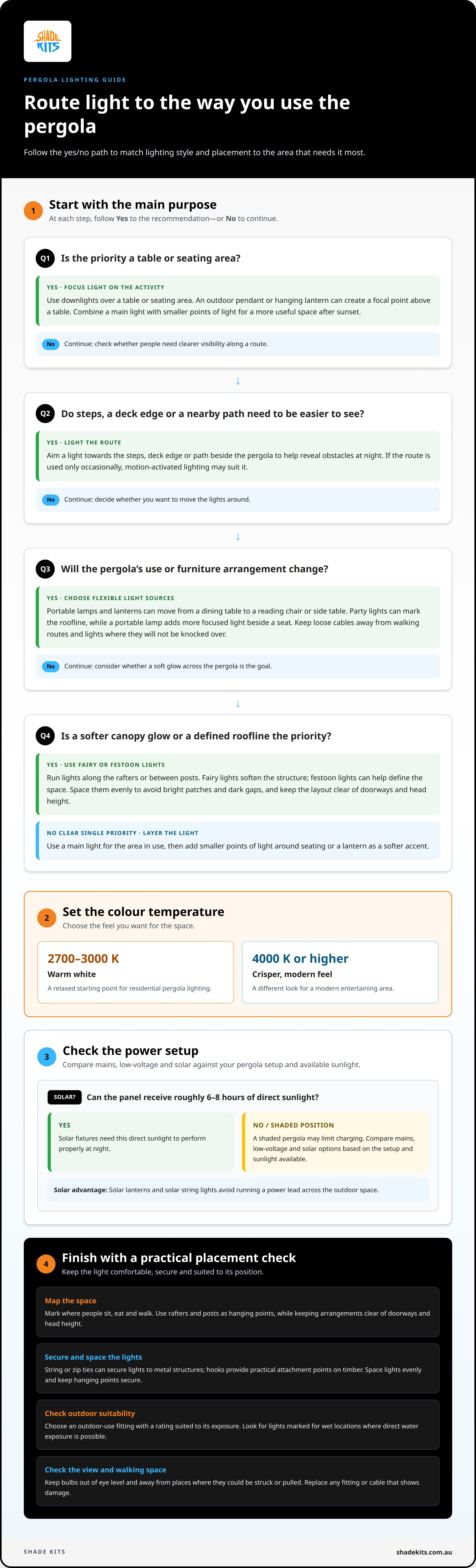
String and festoon lights create an even, welcoming glow, while downlights focus illumination over a table or seating area. Lanterns add a softer accent. Combining a main light with smaller points of light can make an outdoor space more useful after sunset.
Outdoor lighting can also make walking areas easier to see. Aim a light towards steps, a deck edge or the path beside the pergola to help reveal obstacles at night. Motion-activated lights switch on when their sensors detect movement, which can suit a route used only occasionally.
Start by mapping where people sit, eat and walk. Then choose hanging points along the pergola rafters or between posts, keeping the arrangement clear of doorways and head height. Softer lighting helps limit glare, while warm white between 2700 and 3000 K is a relaxed starting point for residential settings. For a crisper, modern entertaining area, lighting at 4000 K or higher gives a different feel.
On a metal structure, string or zip ties can secure lights along rafters and posts. On timber, hooks provide practical attachment points. Space lights evenly to avoid bright patches and dark gaps. Outdoor pendants and hanging lanterns can create a focal point above a table, while pendant festoon lights combine a suspended line with visible bulbs. Check that each fitting is made for outdoor use and suits its position.
What IP rating should outdoor pergola lights have in Australia? Choose a rating that suits the fixture’s exposure, and look for lights marked for wet locations where direct water exposure is possible. These luminaires are tested to withstand direct water exposure.
How much does it cost to install pergola lighting in Australia? The cost depends on the number and type of fittings, wiring requirements and access to mounting points. A simple hanging arrangement involves different work from a setup with concealed wiring.
How many lumens are needed to light a pergola? The right output depends on the area and how you use it. Aim light over task areas such as a dining table, then add softer light around seating rather than relying on one bright fitting.
How can you protect pergola lighting from rain, wind and UV damage? Choose outdoor-rated fittings, secure hanging points to the structure and use products suited to their location. Keep lights away from places where they could be struck or pulled, and replace any fitting or cable that shows damage.
2. Fairy lights wrapped around rafters and posts
Fairy lights soften a pergola’s strong lines and give the space a relaxed look. For an even pattern, run a string along each rafter, then continue it down selected posts. Leave space between each pass so the bulbs remain visible. A single line across the rafters creates a simple effect, while wrapping several beams adds a brighter canopy for entertaining.
Plan the route before hanging the lights. Start near the power source, follow the rafters, then finish at the furthest post. This makes the cable route easier to follow and avoids awkward crossings above seating. Keep bulbs facing into the pergola rather than towards a neighbouring window. Warm-white fairy lights suit a dining area, while a more neutral colour can make the structure feel crisp.
On a timber pergola, follow the beam edges and keep each turn consistent. On a metal frame, guide the string along the rafters without pulling it tight around corners. A little slack helps prevent the cord from being pinched where beams meet posts. Keep hanging lines clear of chairs, doorways and walking routes. A perimeter arrangement, for example, can define the seating area without placing bulbs directly above people’s heads.
Curtain-style fairy lights create a different effect. Hang a horizontal string along an outer beam, then let the vertical strands fall between posts. This creates a glowing backdrop behind a bench or outdoor dining table. Use the curtain on one side of the pergola rather than across every opening, so the view and access remain clear. A shorter drop suits a low beam; longer strands work best where they won’t brush furniture.
You can also combine outdoor fairy lights with curtain lights. Use a string across the rafters for an overhead glow, then add a curtain to one post bay as a focal point. Keep the arrangement simple: matching bulb shapes create a consistent look, while contrasting patterns can make the structure feel busy. For example, place a fine fairy-light line above the table with a curtain-style panel behind the seating.
Before switching on the lights, walk beneath the pergola and check the layout from each seat. Look for sagging cords, strands that catch on a door or bulbs aimed directly at eye level. Adjust the spacing to balance the glow across the rafters and posts. For a flexible entertaining setup, hang lights so they can be removed or rearranged when you move the table or seating.
3. Party lights, portable lights and lanterns
Party lights, portable lamps and lanterns let you shape the pergola’s atmosphere without relying on one fixed fitting. Use a string of lights to mark the roofline, then place a portable lamp beside a lounge chair for more focused light. Lanterns work well on a table or near a post, where they illuminate the space without taking up room overhead. When entertaining, group a few light sources around the seating rather than crowding the centre.
Portable lights are useful when the pergola serves different purposes. Move a lamp beside the dining table for dinner, then shift it towards a reading chair later. A lantern can provide a gentle accent on a side table or low shelf. Keep loose cables away from walking routes, and place each light where chairs or serving dishes won’t knock it over. This makes the arrangement easy to adjust for a quiet evening or a gathering.
Solar lanterns and solar string lights avoid running a power lead across the outdoor space. Their performance depends on where the solar panel sits: allow roughly 6–8 hours of direct sunlight for solar fixtures to perform properly at night. A shaded pergola may limit charging if its panel sits beneath the roof. Position a separate panel where it receives sun, while keeping it connected to the lights as intended.
For a simple solar layout, place lanterns near the pergola posts and run solar string lights along an exposed edge. This creates points of light at seating level and a gentle line above. Solar-powered walkway lights can also switch on at dusk, helping define the route between the pergola and the house. Focus light on the areas you use instead of aiming every fitting towards the centre.
Paper lanterns add colour and a soft decorative finish. Attach them to festoon lights for a romantic mood, or hang them in a row above an outdoor dining area. Space the lanterns so the string looks balanced and the paper shades don’t bunch together. A restrained palette can complement timber or metal structures; brighter shades make the lanterns a feature for a party.
Before settling on an arrangement, view it from the table, lounge seating and entrance. Check that lanterns don’t block the view across the pergola or hang where people might brush past. For a layered effect, combine solar lanterns at post level with string lights overhead. Each source then has a clear role, making the pergola comfortable for conversation and movement after dark.
4. Mains, low-voltage and solar power
The power source affects how pergola lights are installed, controlled and used outdoors. Mains-powered fittings can suit a permanent arrangement, while low-voltage systems and solar options provide other ways to light a garden. Consider the pergola’s location, weather exposure and available sunlight before choosing.
Do pergola lights need a licensed electrician in Australia? For fixed mains wiring, use a licensed electrician rather than modifying household wiring yourself. Plug-in lights and solar fixtures don’t involve the same fixed-wiring work, but follow the product’s installation instructions.
What Australian electrical rules apply to outdoor lighting under a pergola? Requirements depend on the work involved and applicable state or territory rules. For fixed mains-powered lighting, have a licensed electrician determine how to complete the installation safely.
Mains power can suit fixed lights over a dining area or along pergola beams. Concealed wiring can be planned within posts, beams or an insulated roof during construction. This makes the build stage a practical time to decide where switches, fittings and cable routes should go. Retrofitting may require a different approach, depending on the structure and existing electrical supply.
Low-voltage lighting is another wired option. Depending on the system, fittings can be arranged around seating or directed towards a garden feature. The power supply and wiring still need to suit the product and installation. Choose the layout first, then position fittings to keep cables clear of doorways and walking routes.
Solar lighting can work where electricity isn’t connected to the pergola. Solar fixtures need roughly 6–8 hours of direct sunlight to perform properly at night. Place the panel where trees, roof sections or nearby buildings won’t cast shadows across it. A separate panel can help when the pergola itself stays shaded, provided it connects to the light as designed.
Solar panels can also power pergola lights on structures with louvred roofs. Solar spotlights at the base of posts can cast light upwards across timber, while walkway lights can come on at dusk. These options can create an inviting route from the garden to the seating area without lighting cables crossing the ground.
Before choosing a system, consider its Ingress Protection rating, power-source safety and weather resistance. These details matter for fittings exposed to rain or changing outdoor conditions. Match the power supply to the pergola’s position: mains for a fixed wired layout, low voltage for a suitable wired system, or solar where panels receive direct sun.
5. Festoon lights on pergola structures
Festoon lights make the pergola’s frame part of the lighting plan. Their visible bulbs trace a roofline, cross an open span or define a dining area. A single run creates a simple outline; a zigzag pattern spreads light across a wider area. Choose a layout that suits the structure and keeps sightlines across the outdoor space clear.
Start by deciding where you want the light to fall. For a table, run festoon lights above its centre, keeping the bulbs evenly spaced. To define a lounge area, follow the outer rafters instead. Spacing matters: widely separated bulbs create distinct points of light, while closer bulbs give a brighter, more continuous effect. Keep the pattern consistent across each beam.
How do you install festoon lights safely under a pergola? Plan the route first, then secure the string with a suspension kit, hooks, siding clips or hangers suited to the structure. On timber, hooks can provide attachment points. For other structures, choose a suitable fastening method and avoid pulling the cable taut.
Let the cable follow the frame without hanging over places where people walk or sit. A shallow zigzag between the rafters, for example, can create atmosphere above a dining setting, while a straight perimeter run keeps the centre open. Make sure bulbs clear the furniture and aren’t positioned at eye level. If the arrangement crosses several beams, map each turn before attaching the string.
Festoon lighting can complement other fixtures without competing with them. Pair a roofline run with a small lantern on a side table, or use one festoon line over the table and leave the rest of the pergola open. Avoid adding multiple bright strands if you want a softer atmosphere. A balanced outdoor setup should feel distinct from indoor lighting, with light directed towards gathering areas.
Check the finished layout from the entrance and each seat. Make sure the bulbs create an even pattern, the cable is supported at its turns and the arrangement doesn’t obstruct movement. On a wooden pergola, hooks can help guide the string’s route; a suspension kit can create a defined line across an open span. Make adjustments before using the lights.
A well-planned festoon layout starts with the pergola’s beams, seating position and desired brightness. Sketch the route, choose the attachment method, then set the spacing to suit the atmosphere you want. This keeps the lighting deliberate rather than cluttered, whether it frames an entertaining area or highlights one table.
Shade Kits: Pergola Kits
Shade Kits offers DIY Pergola Kits for creating a defined outdoor space where you can plan lighting around the structure. If you’re choosing a pergola as well as its lights, consider how its beams and posts can suit your preferred arrangement, from festoon lights across the rafters to lanterns near the seating. Thinking about the structure and lighting together can help you plan a more cohesive space. A DIY Patio Cover may suit a different layout where overhead shelter is the priority. Explore Shade Kits’ pergola options and choose a structure that fits your outdoor space.
Plan your pergola lighting around how you’ll use it
Before choosing fittings, picture an ordinary evening in the space. Decide where people will sit, where you’ll serve food and which routes need to stay clear. These lighting ideas for under a pergola can help shape your plan, but the most useful setup is the one that suits your routine and structure.
Think beyond the first arrangement, too. A dining area might later become a quiet reading spot, or furniture may shift with the season. Leave room to adjust portable lights and focus fixed lighting on the areas that matter most. A considered layout can make your outdoor space ready for everyday use, not just special occasions.
If a pergola is part of your plans, Shade Kits can help you consider the structure alongside your outdoor space. Contact Shade Kits about your pergola to take the next step and shape an outdoor area that works for you.
Frequently Asked Questions
Why does my pergola need lighting?
Pergola lighting helps you use the space after daylight fades and see its layout more clearly. A light near an outdoor dining table, for example, can help with meals, while illumination near steps can make changes in level more visible. Think about what you want to do after dark, then place lights where they support those activities without shining into people’s eyes.
What are the best lighting ideas for under a pergola?
The right choice depends on the mood and function you want. Fairy lights add a gentle decorative glow, festoon lights define a roofline or dining area, and downlights focus illumination on a specific spot. Lanterns and portable lights are easy to move when furniture changes position. For a practical combination, use a fixed source for general lighting and a portable one beside a chair or table.
What are the best solar-powered lights for an Australian pergola?
Solar string lights suit a roof edge, while solar lanterns or spotlights can highlight posts and seating. Choose based on where the light needs to fall and whether the solar panel can receive direct sun. If the pergola is shaded, a panel in a sunnier position may work better than a fixture beneath the roof. Solar walkway lights can help mark the route to the house.
How do I choose warm or cool colour temperature for pergola lighting?
Choose warm white for a relaxed feel around outdoor dining or lounge seating. Cooler white can give the area a crisper, more contemporary appearance and may suit task-focused lighting. Consider the pergola’s materials and nearby indoor lighting so the outdoor glow feels consistent from inside. If you want a uniform look, avoid mixing noticeably different tones in a small area.
How do I position pergola lights to avoid glare and shadows?
Position lights so they illuminate tables, paths and steps without pointing directly towards seated people. For a dining area, spread light across the tabletop instead of placing one bright source at eye level. Shadows can be softened by using more than one direction of light, such as overhead illumination paired with a lantern near seating. Check the arrangement from each chair and adjust any fitting that causes glare.
How many lumens are needed to light a pergola?
The right light output depends on the area and how you use it. Aim light at task areas such as a dining table, then add softer lighting around seating rather than relying on one bright fitting.