
What if the next severe weather warning didn’t mean a frantic search for a public undercover car park or a local shopping centre? For many Australian drivers, the sound of a rumbling sky brings immediate anxiety about devastating panel damage and skyrocketing insurance premiums. You shouldn’t have to deal with the logistical nightmare of repair backlogs or exorbitant excess fees just because you lack a traditional garage. Investing in a reliable hail proof car shelter is the most practical way to secure your vehicle without the high cost of a permanent brick structure. It’s about finding a solution that fits your space while providing industrial-grade protection.
We’ve designed this guide to help you discover the most effective ways to defend your vehicle using durable, Australian-engineered shade solutions. You’ll learn how to achieve total peace of mind during severe weather warnings with a cost-effective, long-lasting alternative to a garage. We’ll walk through the latest DIY kits, explain the National Construction Code regulations for carports, and show you how easy-to-install protection can add genuine value to your home. By the end of this article, you’ll have a clear roadmap for choosing a structural solution that stands up to the harshest Australian storms.
The Australian climate is becoming increasingly unpredictable, with recent studies showing a 40% increase in hailstorm frequency across several major metropolitan areas over the last few decades. To understand why robust protection is so critical, we need to look at what hail is and how it develops into a destructive force. While a standard carport provides basic shade, a genuine hail proof car shelter is an engineered structure designed to deflect or absorb high-velocity ice impact. This distinction is vital because a simple roof or a thin sheet of plastic isn’t enough to handle the kinetic energy of large ice stones falling from the upper atmosphere.
Recent data indicates that as the atmosphere warms, we’re likely to see larger hailstones more often. In some regions, stones measuring 10cm in diameter, once considered a rare event, are projected to occur more frequently. When you consider that insurance claims from hail events across the country topped A$1.9 billion in 2025 alone, the need for a structural solution becomes clear. Relying on luck is no longer a viable strategy for protecting your vehicle’s value and your own peace of mind.
The financial impact of a storm goes well beyond a few dents. While repairing a single panel might cost between A$150 and A$400 for light damage, a severe storm can easily result in repair bills exceeding A$15,000. For many older vehicles, this cost quickly passes the “total loss” threshold, meaning your car is written off by the insurer. Even with comprehensive insurance, you’ll still face a significant excess fee and the likely loss of your no-claim bonus. Beyond the money, there’s the emotional stress of losing a reliable car and the logistical headache of being without transport for weeks or months while repair shops deal with a massive backlog of claims.
Many drivers turn to padded fabric covers as a quick fix, but these often provide a false sense of security. Fabric simply doesn’t have the structural integrity to neutralise the impact of golf-ball-sized hail. The force of the ice can still deform the metal panels underneath, even through several centimetres of padding. There’s also the risk of secondary damage; in high winds, fabric covers can flap or vibrate against the vehicle, causing paint abrasions and fine scratches. A structural hail proof car shelter, such as a fixed carport or a specialized Car Cave, creates a physical barrier that never touches the car’s surface. This ensures that the vehicle remains untouched by both the ice and the protective structure itself.
When you decide to invest in a hail proof car shelter, the first choice you’ll face is between a permanent structure and a portable solution. Both options provide a significant upgrade over fabric covers, but they serve different logistical needs. A permanent carport becomes a fixed part of your home’s infrastructure, while a portable unit offers flexibility for those who might move or have limited space. Choosing the right one depends on your property type, your long-term plans, and how quickly you need to respond to a storm warning.
Longevity and wind resistance are the primary technical differences here. A permanent carport kit is engineered to withstand consistent weather patterns and carries a higher wind rating because it’s anchored into concrete footings. Portable units are designed for speed and convenience; they can be deployed in minutes when the Bureau of Meteorology issues a severe weather warning. While both use high-grade materials to deflect ice impact, the permanent version offers “set and forget” security, whereas the portable version provides protection on demand.
For many Australians, especially those renting or living in townhouses with strict body corporate rules, a permanent build isn’t always possible. This is where a foldable system like the CarCave provides a professional-grade alternative. It operates on a concertina-style frame that allows the shelter to be retracted when not in use. It’s a clever way to maintain your driveway space while having a robust hail proof car shelter ready at a moment’s notice.
The beauty of this system lies in its DIY nature. You don’t need to pour concrete or hire a builder; the unit can be secured to existing hardstands or weighted down depending on the model. Because it isn’t a permanent fixture, you can pack it up and take it with you if you move house. It effectively bridges the gap between a flimsy car cover and a full-scale garage, providing a structural shield that keeps your vehicle’s panels safe from impact without the commitment of a construction project.
If you own your home, a permanent structure is often the more strategic choice. Adding a fixed shelter doesn’t just protect your vehicle; it adds tangible value to your property. Modern carport kits are designed for longevity, using powder-coated aluminium frames and UV-resistant polycarbonate roofing. These materials are selected specifically for the Australian environment because they don’t rust, warp, or become brittle under the intense summer sun.
Aluminium provides a high strength-to-weight ratio, making it manageable for a DIY enthusiast to assemble without specialized lifting equipment. When paired with polycarbonate, which is virtually unbreakable under hail impact, you create a fortress for your car. If you’re looking for a lasting solution that integrates with your home’s aesthetic, exploring our range of durable carport kits is an excellent place to start your project planning.
A reliable hail proof car shelter is only as good as the science behind its construction. In the Australian climate, your shelter faces a dual threat: high-velocity ice impact and intense, degrading UV radiation. Engineering a structure to survive these conditions requires a careful selection of materials that offer both flexibility and structural rigidity. It isn’t just about blocking the stones; it’s about ensuring the materials don’t become brittle or weak over time. High-quality kits focus on components that maintain their integrity for decades, even when exposed to the harshest environmental stressors.
Most people are familiar with metal or glass roofing, but polycarbonate is the clear winner for modern vehicle protection. This engineered thermoplastic is roughly 250 times stronger than glass while remaining significantly lighter than steel. When a large hailstone hits a polycarbonate panel, the material’s molecular structure allows it to flex slightly, absorbing the kinetic energy rather than resisting it until it shatters. This “impact memory” means the panels can withstand significant force and return to their original shape without denting or cracking.
The Australian sun is a major factor in material failure. Standard plastics often turn yellow and become brittle after a few seasons of exposure. A professional hail proof car shelter uses panels treated with advanced UV stabilisers. These additives block 99% of harmful UV rays, protecting your car’s paintwork while preventing the roofing itself from losing its impact resistance. Despite this heavy-duty protection, polycarbonate still allows natural light to pass through, keeping your parking area bright and accessible without the cave-like feel of a solid metal roof.
While the roofing handles the impact, the frame provides the essential structural support. Aluminium is the preferred choice for Australian backyards for several pragmatic reasons. Unlike timber, aluminium doesn’t warp, rot, or attract termites. It also outperforms steel in coastal environments because it naturally resists corrosion. When steel is scratched, it begins to rust almost immediately; aluminium forms its own protective oxide layer, making it virtually maintenance-free for the homeowner.
From a DIY perspective, aluminium is a game-changer. It offers an exceptional strength-to-weight ratio, meaning the components are light enough for one or two people to handle during assembly. You don’t need heavy lifting equipment or a professional crew to get your frame standing. This ease of handling, combined with the material’s longevity, makes it the most efficient choice for anyone building their own shelter. If you’re planning a project, choosing a kit with a durable aluminium frame ensures your investment stays structural and attractive for the long haul.
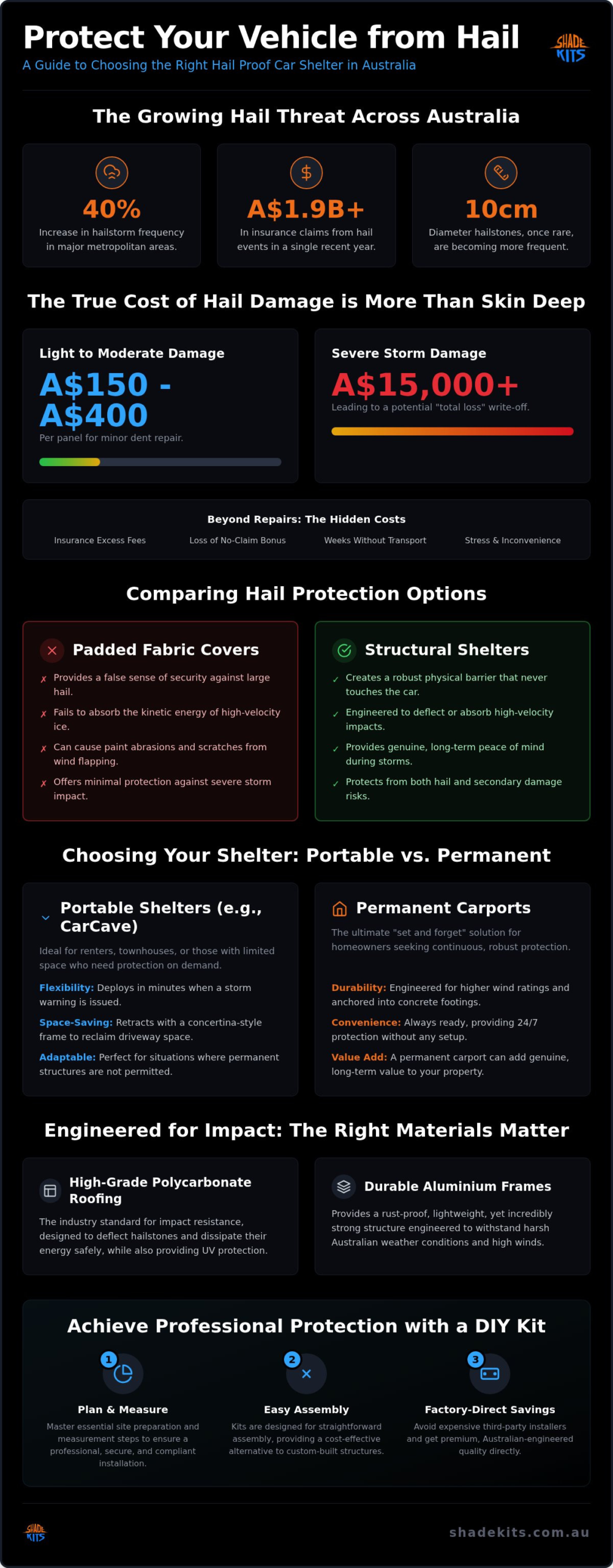
A successful installation starts long before the first bolt is tightened. While our kits are designed for straightforward assembly, the longevity of your hail proof car shelter depends on careful site preparation and accurate measurements. Taking the time to organise your workspace and verify your dimensions will prevent common logistical hurdles during the build. Before you begin, follow this essential preparation checklist:
Anchoring is the most critical step for ensuring wind resistance. For permanent carport kits, this usually involves pouring concrete footings or bolting the posts into an existing reinforced slab. If you’re using a portable solution, you’ll need to use the specific weights or anchors provided to ensure the structure remains stable during high-wind events. You should always check with local authorities regarding exempt development rules to ensure your project complies with regional building codes.
Don’t rely on the manufacturer’s vehicle specifications; grab a tape measure and check your car’s actual footprint. It’s vital to allow enough clearance for SUVs, 4WDs, and vehicles fitted with roof racks or snorkels. We recommend adding at least 500mm of clearance on each side of the vehicle to allow for comfortable door opening and easy access.
Site selection should also account for the prevailing direction of storm winds. In many parts of Australia, severe storms approach from the south or west. Positioning your shelter to take advantage of existing windbreaks, such as your house or a sturdy fence, can provide an extra layer of protection. A level surface is non-negotiable for structural integrity; if the base is uneven, the weight of the roof won’t be distributed correctly across the aluminium frame.
Understanding the legal requirements is just as important as the physical build. Under the National Construction Code, carports are generally classified as Class 10a buildings. Many councils offer “Exempt and Complying Development” codes, which allow for certain structures to be built without a full development application, provided they meet specific size and height limits.
Portable structures like the CarCave often fall into a different category because they aren’t permanent fixtures, making them an excellent choice for those looking to avoid complex paperwork. For a deeper dive into the regulations and technical requirements for your project, consult The Essential Australian Carport Checklist. If you’re ready to secure your vehicle’s future, you can browse our range of DIY carport kits to find the right fit for your property.
Shade Kits understands the unique challenges of the Australian landscape, where a clear afternoon can turn into a destructive storm in minutes. By removing the middleman, we offer factory-direct pricing on a range of structures that don’t compromise on material quality or engineering standards. Investing in a hail proof car shelter shouldn’t be a logistical hurdle; it should be a straightforward home improvement task that provides long-term value and immediate protection for your vehicle.
Our approach focuses on transparency and dependability. We provide the components and the expert guidance, allowing you to take control of your property’s weather readiness. Whether you need a temporary solution for a rental property or a permanent addition to your family home, our kits are designed to be manageable, resilient, and perfectly suited to our local environmental conditions.
The CarCave is our specialised answer to rapid-onset weather events and limited parking spaces. Its unique foldable design acts as a protective cocoon, defending your vehicle against hail, heavy rain, and the punishing summer sun. Because it’s designed for a fast DIY setup, it’s the ideal choice for anyone who needs structural protection immediately without waiting for a construction crew or pouring permanent footings.
This system allows you to maintain the versatility of your driveway. You can retract the shelter when it’s not needed, then deploy it in seconds when the clouds start to turn. It’s a pragmatic solution that bridges the gap between basic covers and fixed buildings. You can find all the technical details and product specifications for the CarCave on our dedicated product page.
For those seeking a permanent fixture, our aluminium carport kits are engineered for maximum durability and ease of assembly. These kits are designed specifically for self-installation, meaning you save significantly on labour costs while still achieving a professional, council-compliant result. Our range includes various sizes to suit your property’s aesthetic, all featuring the impact-resistant polycarbonate roofing that defines a true hail proof car shelter.
With Australia-wide delivery, we ensure that every driver has access to high-quality defence, regardless of where they live. As we move into the 2026 storm season, the logical choice is to move away from temporary, ineffective covers and toward a structural solution that lasts. Don’t leave your vehicle’s safety to chance; explore the full range of Carport Kits today to find the perfect fit for your home.
Choosing the right protection for your car is no longer a matter of chance; it’s a strategic decision to safeguard one of your most significant assets. We’ve explored how structural integrity, specifically through the use of impact-resistant polycarbonate and durable aluminium, provides a level of security that fabric covers simply cannot match. Whether you opt for the flexibility of a portable unit or the long-term value of a permanent carport, the goal remains the same: total peace of mind when the storm clouds gather.
By selecting a factory-direct hail proof car shelter, you’re investing in a solution that’s been specifically engineered for the unique challenges of the Australian climate. With Australia-wide shipping and straightforward DIY assembly, professional-grade protection is now accessible to every homeowner and renter across the country. Don’t wait for the next severe weather warning to find out if your current setup is enough. You can protect your vehicle today with the CarCave foldable hail shelter and enjoy the confidence that comes with a reliable, structural defence. Taking this step now ensures your car remains dent-free and your insurance premiums stay manageable for years to come.
Yes, a high-quality hail proof car shelter like the CarCave is specifically engineered to handle the kinetic energy of falling ice. Unlike standard fabric covers that transmit force directly to the car’s panels, these structures use a structural frame and heavy-duty materials to create a physical barrier. This design ensures that even large hailstones are deflected or absorbed before they can cause costly damage to your vehicle’s paintwork or glass.
In most cases, portable and foldable structures don’t require formal council approval because they aren’t classified as permanent buildings. However, regulations can vary significantly between different local government areas. It’s always a pragmatic step to check your local “Exempt and Complying Development” codes. Since the CarCave can be retracted or moved, it is generally viewed as a temporary fixture rather than a permanent Class 10a structure like a fixed carport.
Most homeowners can complete the assembly of a single carport kit over a weekend. While the process is designed to be straightforward for anyone with basic tools, we recommend having a second person available to help with the initial frame positioning. The total time depends on your site preparation and experience level. Most kits come with pre-drilled components and clear instructions to ensure the structural assembly moves along at a methodical and manageable pace.
Polycarbonate is often superior for hail protection because of its unique “impact memory” properties. While metal roofing can suffer permanent aesthetic dents from large ice stones, high-grade polycarbonate flexes under impact and then returns to its original shape. This makes it a highly resilient choice for a hail proof car shelter. Additionally, it provides excellent light transmission while blocking harmful UV rays, preventing your parking area from feeling dark or enclosed.
The most reliable method is to anchor the structure directly into a reinforced concrete slab or deep concrete footings. For portable units, you must use the manufacturer-recommended weighting systems or heavy-duty anchors to ensure stability. Proper anchoring is essential for maintaining the structure’s wind rating and ensuring it remains secure during severe weather events. Always verify that your chosen site is level to allow for even weight distribution across the aluminium frame.
Yes, our shelters provide comprehensive protection against the harsh Australian sun. The polycarbonate roofing is treated with advanced UV stabilisers that block 99% of harmful rays, which prevents paint fading and interior cracking. By providing consistent shade, these structures also significantly reduce the ambient temperature inside your vehicle. This makes your car much more comfortable to enter on hot summer days while protecting the longevity of your car’s rubber seals and plastic components.
The CarCave is designed to accommodate a wide range of vehicle sizes, including many popular 4WD models and SUVs. It’s important to measure your vehicle’s height and width accurately before ordering, especially if you have fitted accessories like roof racks, snorkels, or lift kits. We recommend allowing for extra clearance on all sides to ensure you can open doors comfortably. This ensures the structure provides full coverage without interfering with your daily access.
We offer Australia-wide delivery to both metropolitan and rural locations across the country. Our logistics network is set up to handle the transport of large DIY kits safely and efficiently. Whether you’re located in a coastal town or a remote inland area, we can arrange for your shelter to be delivered directly to your property. This national coverage ensures that all Australian car owners have access to factory-direct pricing and professional-grade vehicle protection.