
Did you know that adding a well-built carport to your home can boost your property value by up to $20,000? While that financial return is a fantastic bonus, most homeowners start searching for how to choose a carport kit because they’re tired of watching the Aussie sun bake their paintwork or fearing the next summer hailstorm. It’s a sensible investment, but the technical jargon and shifting council regulations can make the process feel much more complicated than it needs to be.
We agree that finding a reliable shelter for your Ute or SUV shouldn’t be a stressful ordeal. You want a durable, stylish structure that you can actually assemble yourself without worrying about missing parts or flimsy materials. This guide will help you master the selection process by balancing vehicle clearance, material longevity, and DIY simplicity specifically for our unique climate.
We’ll walk you through the latest 2026 building standards, explain why aluminium frames offer the best rust resistance for coastal living, and help you navigate local permit rules so your project stays on the right side of the law from the very first day.
A Carport kit is a pre-engineered, flat-pack structure designed to provide high-quality vehicle protection without the complexity or cost of a custom-built garage. When you’re learning how to choose a carport kit, the process starts long before you pick a frame colour. You need to look closely at your available space and how you actually use your vehicle on a daily basis. Many homeowners make the mistake of measuring only the “footprint” of the car, but a functional shelter requires more than just covering the roof panels.
You must consider the “swing zone” for your doors. There is no point in installing a sturdy structure if you can’t fully open the driver’s side door to get the kids out of their car seats or unload the shopping. Site selection is another critical factor. While our kits are designed for straightforward DIY assembly, they require a level foundation to ensure long-term structural integrity. If you have an existing concrete slab, check it for cracks or significant slopes that might affect how the base plates sit. If you’re starting from scratch, levelling the ground is the most important part of your site preparation.
It’s also worth thinking about future-proofing your investment. You might drive a compact car today, but will you upgrade to a larger SUV or a dual-cab Ute in a few years? Choosing a kit with a bit of extra breathing room now is a much smarter move than having to upsize your entire shelter later. This extra space often becomes a handy spot for storing wheelie bins, bikes, or even a small garden workbench out of the rain.
Deciding between a single or double capacity is a major turning point in the planning process. A standard single carport kit is typically 3 metres wide. This provides ample room for one vehicle and enough space to walk around it without brushing against the support posts. For multi-car households, a double kit at 6 metres wide is the most practical choice. Even if you only have one car, a double unit provides a dedicated “dry zone” for unloading the boot during a summer downpour, keeping you and your gear protected from the elements.
Height is where many standard designs fall short, especially for the modern Australian driver. A minimum clearance of 2.4 metres is generally required for most SUVs and 4WDs, but you need to account for your specific accessories. If your rig has a lift kit, a snorkel, or roof racks with a mounted tray, those extra centimetres matter. We suggest measuring your vehicle at its highest point when it’s fully loaded for a weekend trip. Don’t forget to check the height of your UHF antennas and any roof-top tents. Adding a small buffer for suspension travel as you drive over the entry lip will ensure you never have a heart-in-mouth moment when pulling into your driveway.
Australia’s climate is famously unforgiving. Between the searing heat of the outback and the corrosive salt spray of our coastal suburbs, your choice of material is the difference between a lifetime investment and a structure that degrades within a few years. When you are researching how to choose a carport kit, you’ll quickly encounter a debate between steel and aluminium frames. While steel has long been a traditional choice, modern aluminium frames have emerged as the superior option for residential DIY projects. They provide a high strength-to-weight ratio and naturally resist the oxidation that plagues untreated metals in humid environments.
Regardless of the frame material, the finish is a critical factor. High-quality powder-coating is essential for maintaining the colour of your structure and adding an extra layer of protection against the elements. This is particularly vital for homeowners living within five kilometres of the ocean, where salt air can accelerate corrosion. Beyond aesthetics, your kit must meet the structural standards outlined in the National Construction Code (NCC). This ensures the structure is engineered to handle local conditions, including the weight of heavy rain and the pressure of high winds.
Aluminium is a game-changer for the home handyman. Its lightweight nature means you don’t need a crane or a five-person crew to lift the beams into place during assembly. This makes the build process significantly safer and more manageable for a two-person weekend project. Unlike timber, which requires regular staining to prevent rot, or non-galvanised steel, which can succumb to rust, aluminium is virtually maintenance-free. It doesn’t warp, crack, or attract termites. It remains a “set and forget” solution for protecting your Ute or SUV from the harsh Aussie sun.
Standard metal roofing is durable, but it often creates a “greenhouse effect” that traps heat underneath. This can leave your vehicle’s cabin feeling like an oven on a 40-degree January day. UV-treated polycarbonate roofing is the preferred alternative for modern homes. It blocks 99% of harmful UV rays, which prevents your vehicle’s paintwork and interior plastics from fading. More importantly, it allows soft, natural light to filter through while reflecting a significant portion of solar heat. This balance keeps the sheltered area bright and usable without the stifling temperatures associated with solid metal sheets. For maximum protection and comfort, consider looking at aluminium carport kits that feature these high-performance materials.
Choosing a roof style is where structural engineering meets visual appeal. When you’re deciding how to choose a carport kit, you need to think about how the new structure will sit alongside your existing home. A well-integrated design looks like a natural extension of the property rather than a bolted-on addition. This isn’t just about kerb appeal; the roof shape directly influences how wind passes over the structure and how rainwater is managed during a tropical storm or a winter deluge. If the pitch is too shallow in a high-rainfall area, you risk water pooling, which can lead to long-term drainage issues.
In many Australian suburbs, the goal is to create a seamless transition between the house and the carport. To achieve this, we recommend matching the frame and trim colours to your existing gutters, fascia, or window frames. Most modern kits offer a range of powder-coated finishes that align with popular Australian colour palettes. By aligning these details, the carport becomes a cohesive part of your home’s architecture, which is a key factor in maximizing the return on your investment. You should also consider the orientation of the roof to ensure that water is directed into your existing drainage system rather than onto a neighbour’s property or your own front porch.
Flat or skillion roofs are excellent choices for modern, minimalist homes. A skillion roof features a single, gentle slope that is particularly effective at directing water away from your house. These designs are often easier to assemble and offer a clean, unobtrusive profile. If you live in a more traditional Australian home, a gable roof might be necessary to match the existing roofline. While gable designs are slightly more prominent, they offer superior internal height and a classic aesthetic that complements older architectural styles while providing excellent ventilation.
Not every homeowner is ready or able to commit to a permanent building project. If you are a renter or have a multi-use driveway where space is limited, the CarCave offers a brilliant alternative. It provides high-level hail protection for cars without the need for council permits or concrete footings. Its unique fold-away design means you can protect your vehicle during a storm and then retract the shelter to reclaim your driveway space. This flexibility makes it a pragmatic choice for those who need immediate protection without the permanence of a traditional kit.
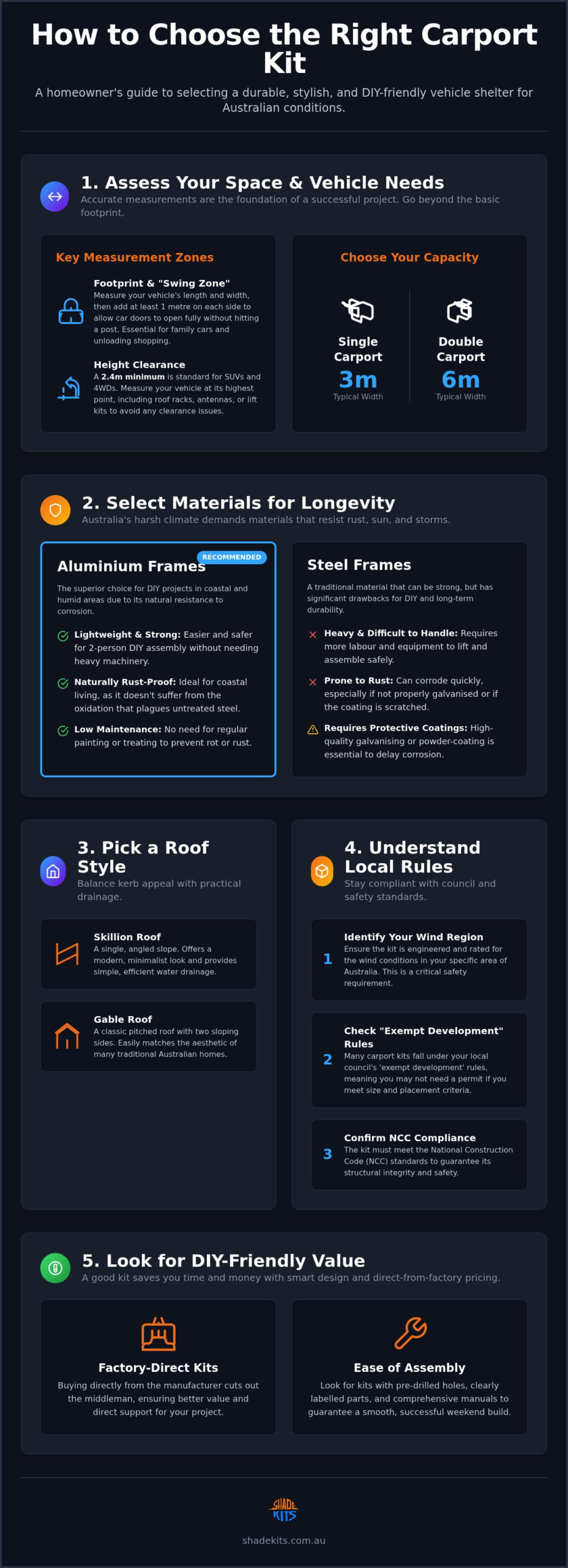
One of the most common questions we hear when homeowners are learning how to choose a carport kit is whether they need to deal with the local council. It’s often the biggest perceived hurdle, but the reality is frequently simpler than people expect. Many councils allow for “exempt development,” which means you can install a structure without a formal planning application if it meets specific criteria. For instance, in New South Wales, a carport under 20 square metres that stays behind the front building line often won’t require a permit. However, rules change depending on your street address, so checking your local council’s website for “setback rules” and “size limits” is a vital first step.
Searching for local regulations doesn’t have to be a headache. Most council websites have a dedicated section for “minor residential works” or “Class 10a buildings.” If you are looking at carport kits in Perth, you’ll benefit from the July 2026 regulation change that raised the registered builder threshold to $50,000, making DIY projects much more straightforward. Meanwhile, those browsing carport kits in Adelaide should be aware that development approval is generally required if the roof area exceeds 15 square metres. A pre-engineered kit is usually much faster to get approved than a custom build because the manufacturer provides the structural drawings and engineering certifications upfront.
Australia is divided into four distinct wind regions: A, B, C, and D. Most suburban areas fall into Region A, where N1 or N2 ratings are standard. If you live in a coastal or cyclonic area, you’ll need a kit with a higher N3 or C-rating. The kit’s structural integrity depends on post thickness, the gauge of the aluminium, and the quality of the bracing. These elements work together to resist wind uplift, which is the aerodynamic force that tries to pull the roof off the frame during high-velocity gusts. Our polycarbonate roofing is secured with specific heavy-duty fasteners designed to prevent this uplift even in testing conditions.
Safety also comes down to what’s happening underground. Your kit will require specific footing depths or a minimum concrete slab thickness to ensure it stays anchored. Every kit we provide comes with an engineering certification that details these requirements, ensuring your project meets the 2025 National Construction Code standards. If you’re ready to find a structure that meets your local safety requirements, explore our range of certified carport kits today.
The final stage in mastering how to choose a carport kit involves looking at the practicalities of the build itself. While the structural specifications and aesthetics are vital, they mean very little if the assembly process is so complex that it requires a team of engineers. We focus on the “DIY ROI,” which is the return on investment you gain by doing the work yourself. When you consider that professional labour costs for installation can range between $60 and $110 per hour, tackling the project as a weekend warrior can save you thousands of dollars while still adding up to $20,000 to your property’s market value.
To ensure your project is a success, you need a kit that arrives with everything you need for a smooth assembly. High-quality carport kits should feature pre-drilled holes and comprehensive, easy-to-follow manuals. Most successful two-person builds can be completed using a basic tool kit you likely already have in the shed. You will typically need a cordless drill with a socket set, a spirit level to ensure the posts are perfectly vertical, a sturdy ladder, and a reliable measuring tape. Having these tools ready before the delivery truck arrives will prevent unnecessary trips to the hardware store mid-build.
A truly DIY-friendly kit prioritises modular components that are light enough for two people to handle without heavy machinery. This is why aluminium is such a popular choice; its weight-to-strength ratio allows for a “bolt-together” assembly that eliminates the need for professional welding or specialised cutting. Whether you are ordering carport kits in Sydney or carport kits in Melbourne, look for a supplier that provides video guides alongside their manuals. These visual aids demystify the process and provide a steady, expert hand to guide you through each connection and fastener.
Choosing a factory-direct model is the most effective way to secure high-end materials without the premium retail price tag. By skipping the traditional showroom and the various middlemen involved in retail distribution, you ensure that more of your budget goes into the actual quality of the aluminium and the UV protection of the roofing. This model also allows for efficient Australia-wide shipping, ensuring that homeowners in regional or rural areas receive the same precision-engineered components as those in the major cities. If you are ready to protect your vehicle with a durable, easy-to-assemble structure, view our range of factory-direct DIY Carport Kits and start your project today.
Protecting your vehicle from the harsh Australian elements is a smart investment that pays dividends in both daily convenience and long-term property value. By now, you should feel confident in how to choose a carport kit that balances structural integrity with DIY ease. It’s essential to prioritise height clearance for your specific 4WD accessories and select materials like aluminium and UV-resistant polycarbonate. These components are specifically engineered to survive our climate without rusting or degrading under the intense sun.
By opting for a factory-direct solution, you eliminate middleman markups and gain access to premium, pre-engineered components designed for a straightforward build. Whether you need a permanent double structure or a flexible shelter like the CarCave, the right kit makes the entire process manageable and rewarding. Our frames are built to withstand the unique challenges of the Aussie UV index while offering a seamless “bolt-together” experience that any home handyman can master over a weekend.
Don’t let the summer heat or unpredictable hailstorms damage your pride and joy. Browse our durable, factory-direct Carport Kits to find the ideal match for your home and start your project today. You’ve got the knowledge; now it’s time to get building.
Permit requirements depend on your state and local council regulations. In Victoria, a building permit is almost always required regardless of the structure’s size. New South Wales often allows for “exempt development” if the carport is under 20 square metres and meets specific setback rules. Always contact your local council to confirm their current 2026 regulations before you purchase your kit to ensure you stay compliant with local laws.
You can certainly install a kit on an existing slab, provided the concrete is in good condition and meets the required thickness for structural anchoring. Most pre-engineered kits include base plates that bolt directly into the concrete using heavy-duty masonry anchors. If your driveway is thin or cracked, you may need to cut out specific sections and pour deeper footings to ensure the structure remains stable during high winds.
Most homeowners complete the assembly over a single weekend with the help of one other person. The process is streamlined because the aluminium components are lightweight and the holes come pre-drilled from the factory. Once your site is prepared and the footings are ready, the actual structural build typically takes six to ten hours. Having a clear manual and watching our video guides beforehand will help you maintain a steady pace.
The primary difference lies in the intended use and the roofing material. A carport is designed specifically for vehicle protection and features a solid, UV-resistant roof like polycarbonate to block sun and rain. A pergola kit is traditionally an outdoor living structure often used for entertaining. While they look similar, carports are classified as Class 10a buildings and must meet specific engineering standards for vehicle clearance and wind uplift resistance.
Yes, aluminium kits are exceptionally strong, provided you select a version with the correct wind rating for your specific location. When researching how to choose a carport kit, check if the model is rated for Region A, B, C, or D. Aluminium has an excellent strength-to-weight ratio and is engineered to resist wind uplift. Our kits meet the 2025 National Construction Code requirements, ensuring the frame and fasteners remain secure during severe weather.
A well-constructed carport can add up to $20,000 to your property’s market value. Beyond the financial gain, it provides a significant lifestyle benefit by protecting high-value assets like SUVs and Utes from hail and UV damage. In the competitive Australian real estate market, off-street covered parking is a highly sought-after feature that can make your home much more attractive to potential buyers when it is time to sell your property.
Maintenance is remarkably low, which is a major advantage of modern aluminium kits. You should occasionally wash the roof with mild soapy water and a soft cloth to remove dust, bird droppings, or salt spray if you live near the coast. Avoid using abrasive cleaners or stiff brushes that could scratch the UV-protective coating. Keeping the gutters clear of leaves and debris will also ensure that rainwater drains efficiently and prevents any overflow.
Standard kits are pre-engineered to specific dimensions, but some minor adjustments to the height can often be accommodated during the assembly process. If you’re wondering how to choose a carport kit for a unique space, it’s best to consult with us first to see which standard size offers the best starting point. Significant changes to the width or length may void the engineering certification and affect the structural wind rating of the unit.