
What if a pergola’s real return isn’t what it adds to your sale price, but how often you use it? If you’re asking, “is a DIY pergola a good investment?”, the answer depends on whether it makes your outdoor space more useful and whether the project suits your budget, skills and expectations for upkeep.
Look beyond the initial appeal. Resale value is difficult to predict, and a pergola that rarely gets used may not feel worthwhile, even if it looks good. A well-planned structure can make a spot for meals, relaxing or spending time outdoors more comfortable. A DIY kit can also give a capable home renovator a more structured way to plan the build.
This guide will help you assess everyday value, compare a DIY pergola with other shade options, and account for materials, tools, approvals and maintenance when estimating costs. You’ll find practical ways to judge whether the work suits your experience, including what to consider with aluminium frames and UV-resistant polycarbonate roofing. Check the requirements that apply to your property before planning the build, then weigh the trade-offs against how you want to use your outdoor area.
A DIY pergola can be worthwhile when you’ll use it regularly, the design suits your property and the full project is manageable for your skills and budget. Its value isn’t limited to what it might add to a future sale. A more comfortable place to eat, a sheltered spot to relax or a better connection between indoors and outdoors can improve everyday use of your home.
So, is a DIY pergola a good investment? Start with how it will work for your household, not a predicted resale return. The effect on property value varies with the home, design and buyer preferences. Treat resale appeal as a possible benefit, not a guaranteed financial outcome.
Think of value in two parts. Daily-use value is the comfort and function you gain: shade over an exposed seating area, shelter for a patio or a more inviting place to eat outside. Resale appeal is separate and less certain. A pergola’s design and condition may influence how buyers view an outdoor area, but there’s no set return that applies to every home.
The word “pergola” can describe different structures and designs. For a general overview of their features and types, see What is a Pergola? For your own project, focus on the amount of shade or shelter you need, where it needs to fall and when you expect to use the space.
Definition: Pergola investment value is the practical benefit a structure brings through comfort, usable outdoor space and function, balanced against the effort and ongoing care it requires.
A DIY build may suit you if you have a suitable space, a clear purpose and the time and capability to assemble the structure safely. For example, a household that regularly eats outdoors may value cover over a patio more than one that rarely uses the yard. A kit-based design can make the project more structured, but it still calls for careful measuring, preparation and assembly.
Be realistic about your experience. Consider whether you’re comfortable following assembly instructions, using the required tools and working with a second person where needed. If the project involves structural work beyond your abilities, include appropriate professional assistance in your plan rather than pushing ahead.
Australian sites and conditions differ. Sun direction, exposure to wind and rain, available space and the layout of the home all affect whether a design will work well. Shade Kits’ DIY pergola kits feature aluminium frames and UV-resistant polycarbonate roofing. To compare material and design considerations, explore the aluminium pergola kits guide. Before committing, check the requirements that apply to your property with your local council and relevant Australian authorities.
A pergola’s clearest return may be an outdoor space you use more often. Shade over a dining setting can make a meal outside more comfortable; shelter beside the house may give you a place to sit when the weather turns. The benefit depends on your sun exposure, household routines and the structure’s design. A pergola that shades the wrong area or sits unused may add little practical value.
Start with what currently limits your outdoor area. Is it too exposed for meals on a sunny afternoon? Is there room for the kids to play, but nowhere comfortable for adults to relax nearby? A well-positioned pergola can make an existing space more functional for dining, family time or a quiet break. The value comes from how well the shade and shelter fit your routine, not from assuming a particular financial or health outcome.
A tidy, well-integrated outdoor area may appeal to some buyers, but preferences and sale outcomes vary by home and market. Better presentation does not guarantee a higher sale price. Personal-use value is the comfort and function you enjoy now; resale value is a possibility, not a promise. Treat buyer appeal as a potential bonus rather than the basis for deciding whether the project makes sense.
A kit can provide a more structured route for a capable DIYer, with components designed to work together and assembly planned around the supplied design. You’ll still need to allow for measuring, site preparation, tools, time and the work of putting it together. Custom construction may suit an unusual layout or specific design requirements, but can involve more decisions and coordination. A simpler shade option, such as a shade sail or umbrella, may be preferable if you need flexible cover or aren’t ready for a fixed structure. The site and your skills should guide the choice.
Material choice affects the care a structure needs and how it suits your site. Aluminium frames paired with UV-resistant polycarbonate roofing offer a durable-material option for practical outdoor use, but no material removes the need for upkeep. Exposure to sun, wind and rain, the quality of assembly and regular care all affect condition. Include cleaning and inspection in your maintenance plan, follow the product instructions, and consider how the roof and frame will suit your local conditions.
If a kit-based approach fits your project, explore DIY pergola kits as one option for creating more usable outdoor space.
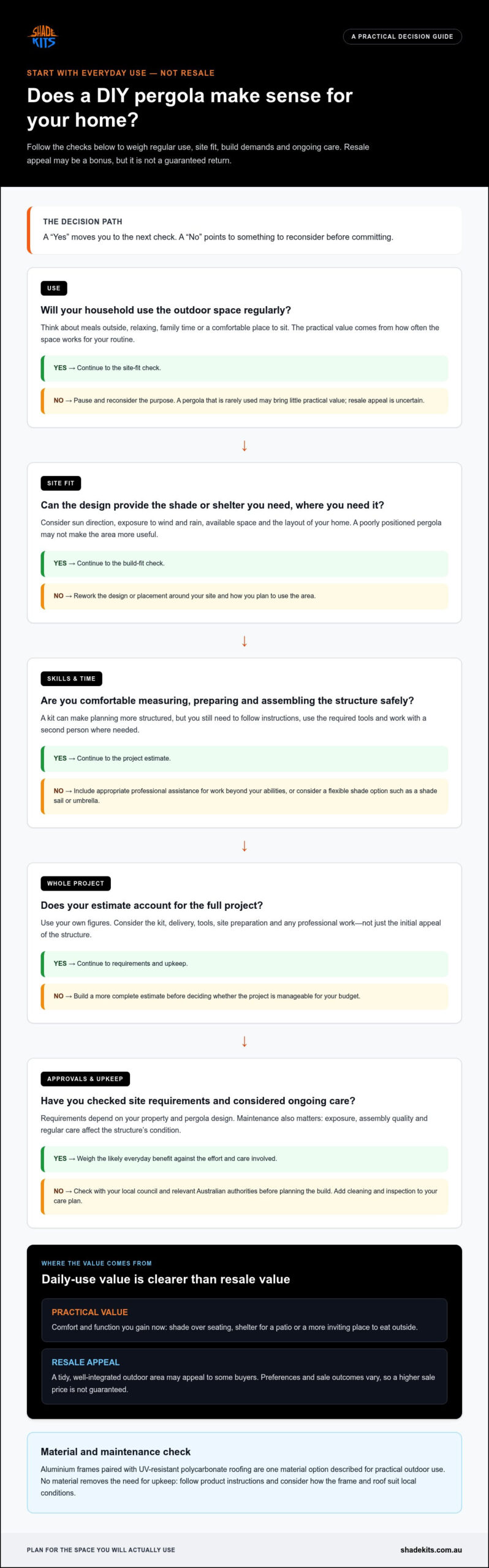
Use your own project details rather than a generic price guide. A realistic estimate should account for the full job, including your time and any site-specific requirements. This gives you a clearer basis for deciding whether the comfort and use you expect are worth the total outlay.
List each likely cost, then note the time involved and any tasks that may need help. Depending on your site and design, include:
Don’t assume every property needs the same preparation or work. Approval and structural requirements depend on your property, pergola design and jurisdiction. Check what applies with your local council and relevant Australian authorities before starting, and include any applicable costs in your estimate.
Once you have a working total, compare it with realistic use. This is a personal planning tool, not a forecast of financial return:
For example, if you expect to use the pergola mainly for weekend meals, count those occasions rather than assuming daily use. If the result only feels worthwhile under an optimistic estimate, revisit the design, project scope or expected usage. Asking “is a DIY pergola a good investment?” becomes easier when your figures reflect how you’ll actually live.
To shape your estimate around a kit-based project, explore DIY pergola kit options.
Turn your value assessment into a practical plan by working through four decisions: what the pergola needs to do, where it will sit, what requirements apply and which kit suits the site. Working through them in this order helps you assess whether a design fits your space and intended use before you commit to it.
Start with the purpose. Decide whether you want cover for outdoor dining, a place to relax or shade beside the house. Measure the proposed area and consider how people will move through it. Check access for bringing components into position, nearby buildings or other structures, and whether the ground or existing surface needs preparation. Also consider where water drains so the planned structure and site work together.
Next, check the building, planning and structural requirements that apply to your property and design. These can vary by location and project, so verify them with your local council and relevant Australian authorities before starting. Finally, consider your site’s exposure to sun, wind and rain when comparing frame and roofing options. The right configuration depends on local conditions as well as the cover you want.
Before assembly, read the kit information carefully and make sure you understand the components, tools and preparation involved. Organise the work area, prepare the site and plan how you’ll handle each stage. A kit-based project gives capable DIYers a defined set of components and a planned assembly process, but careful measuring and following instructions remain essential.
Shade Kits supplies factory-direct DIY pergola kits for Australian homes, featuring aluminium frames and UV-resistant polycarbonate roofing. Use the aluminium pergola kits guide to explore material and planning considerations, then compare the project with your site, skills and intended use. That preparation makes it easier to judge whether is a DIY pergola a good investment for your circumstances, rather than relying on resale assumptions alone.
Compare kit options for your outdoor area at Explore DIY pergola options, and consider how each design could fit your property and plans.
So, is a DIY pergola a good investment? It can be if you’ll use the space regularly, the design suits your property and the full project effort fits your skills and budget. Focus first on everyday value, such as making an outdoor area more comfortable, rather than counting on a particular resale return.
Before committing, estimate the whole project using your own figures, including delivery, tools, site preparation and any help you’ll need. Think realistically about how often you’ll use the pergola, the care it will need and whether its materials suit your conditions. Check applicable council and building requirements for your site before starting.
Shade Kits supplies factory-direct DIY pergola kits for Australian homes, with aluminium frames and UV-resistant polycarbonate roofing. Designed with Australian homes and weather conditions in mind, a kit-based option can help capable DIYers plan a more structured build. Explore DIY pergola options and compare them with your space, plans and priorities. With a clear purpose and realistic preparation, you can choose an outdoor improvement that feels right for your home.
The question “is a DIY pergola a good investment?” has no guaranteed resale answer. A well-maintained pergola that suits the home may improve the presentation and usefulness of its outdoor area, which could appeal to some buyers. Preferences, property features and market conditions vary. If you plan to sell, weigh the cost against the practical enjoyment you’ll get before listing, and treat possible buyer interest as a bonus rather than a promised return.
A pergola may add buyer appeal, but that doesn’t confirm it will increase your property’s sale price. Buyers may appreciate a functional, well-presented outdoor area, while others may prioritise different features or prefer another design. The result depends on the property, the pergola’s condition and how well it fits the home. Consider usability and appearance when planning, but don’t base your budget on an assumed increase in value.
Start by adding your estimated costs for the kit, delivery, tools, site preparation, any applicable professional work and maintenance. Then estimate how often you’ll realistically use the pergola each year and choose a planning period. Divide the total by expected uses over that period to get a personal cost-per-use guide. It isn’t a financial return forecast, but it can help you decide whether the comfort and function justify the effort and outlay.
You may be able to assemble a DIY pergola if the design suits your experience and you can follow the instructions, use the required tools and prepare the site safely. Kit-based designs provide a planned assembly process, but DIY doesn’t remove the need for careful measuring or sound construction. Consider access, ground conditions and the work involved. If a task exceeds your skills, include appropriate help in your plan before starting.
Approval requirements vary across Australia and depend on your location, property and the proposed structure. Size, height, attachment to the house, roofing and site conditions may affect which rules apply, so don’t rely on a general guide or assume your pergola is exempt. Before buying materials or starting work, check the relevant requirements with your local council and the appropriate building authority for your jurisdiction and design.
An aluminium pergola may suit households looking for a frame material that can be practical for outdoor use, but its value depends on the design, site exposure and upkeep you’re prepared to do. Shade Kits’ DIY pergola kits feature aluminium frames with UV-resistant polycarbonate roofing. Consider how the materials suit your local conditions, and follow care and cleaning guidance. Installation and ongoing maintenance also affect the structure’s condition over time.
Include the pergola kit and delivery, along with tools you need to buy or hire. Allow for site preparation, such as clearing the area or preparing the surface and foundations where applicable. Add any required approvals, design or structural work, and assistance for tasks you can’t safely complete yourself. Remember to account for your time and likely maintenance, too. Costs and preparation needs depend on the property and project, so use your own current estimates.