
The most permanent-looking patio cover isn’t automatically the best choice. When weighing up pergola vs awning for patio shade, start with how you want sunlight, shelter and outdoor space to work day to day, not just which structure looks right from the garden.
Appearance is only one factor. Australian sun and sudden weather can affect how comfortable your patio feels, while upkeep, durability and installation matter over time. A pergola can define an outdoor living area, while an awning offers a different way to shade a space beside the house.
This guide compares pergolas and awnings by shade behaviour, weather protection, structure and DIY suitability, so you can match an option to your patio and how you use it. You’ll also find practical checks to make before choosing a kit, including measurements, fixing points and project requirements. Shade Kits’ DIY options feature aluminium frames and UV-resistant polycarbonate roofing. The right choice starts with understanding what your patio needs.
Both a pergola and an awning can make a patio more comfortable, but they create shade in different ways. A pergola is a supported overhead structure, usually formed by posts and beams. An awning projects out from a building to cover the space beside it. This affects how each cover connects to your home and how you define the patio area.
A pergola creates shade from an overhead frame; an awning extends shade outwards from the house. That’s a useful starting point for the pergola vs awning for patio decision, but neither term describes just one design. Pergolas can have open or covered roofs, and awnings can be fixed or retractable. The amount of shade and shelter depends on the configuration, not the label alone.
Posts support beams that carry the overhead roof, creating a defined structure over part or all of the patio. The roof design influences how much light filters through and how much cover the area receives. An open design can let more sun and sky through, while a roofed configuration provides a different level of overhead cover. For a general overview of the structure, see What is a pergola?
A pergola kit may suit homeowners who want to establish a distinct outdoor living area for dining or relaxing. Its frame can give the patio a clear boundary, even where the space is open at the sides.
An awning projects from the home over an adjacent outdoor area, so its coverage is connected to the building rather than carried by a separate row of posts at the outer edge. Depending on its design, it may be fixed in place or able to retract. It can be a practical option when you want shade close to the house, such as outside a living room or beside a doorway.
The fixing point and projection help determine which part of the patio sits under cover. Consider how the awning aligns with nearby doors and windows, and whether the area you want shaded sits within its reach. For more on awnings and their design considerations, read this Australian aluminium awning guide.
In short, consider whether you want a framed overhead feature that defines the patio or a cover that extends from the house. Next, compare how each option performs for shade, shelter and everyday use.
Which option gives your patio the more useful cover? A pergola’s overhead roof can shade a defined area, while an awning projects from the house to cover the space beside it. Neither guarantees the same result at every home. Roof design, material, orientation and exposure all affect how much sun and weather reach the patio.
| Feature | Pergola | Awning |
|---|---|---|
| Shade coverage | Set by the position and design of its overhead roof. | Extends out from the home over an adjacent area. |
| Structure | Supported by posts and beams. | Attached to the building, with its covering projecting outwards. |
| House connection | Can be positioned to define a patio beside the home. | Relies on a suitable connection to the home. |
| Patio use | Can frame a distinct outdoor living zone. | Can shade the area directly beside the house. |
The best option depends on your patio’s exposure and intended use. For the pergola vs awning for patio decision, think about where shade needs to fall and how you use the covered area, rather than assuming one structure is always better. Actual shelter also depends on roof material and configuration, as well as the site’s orientation and exposure to wind and rain.
Coverage depends on more than the type of structure. A pergola’s roof covers the area beneath its footprint, while an awning shades the space within its projection from the house. As the sun moves, the shaded area can shift. Before choosing, note the patio’s dimensions, the direction of afternoon sun and any nearby trees, fences or walls that cast shade. These details help you estimate what each design may cover at different times, rather than assuming either will provide all-day shade.
Start with how people will use the space. A dining table needs enough room for chairs to move back, while an entertaining area may need clear paths between the house, seating and outdoor access. A pergola can establish a defined living zone; an awning may suit a layout centred on the house, such as a table near the back door. Sketch the furniture and walking routes before settling on coverage. For broader planning context, see this online reference.
Once you’ve matched coverage to the way you use the patio, compare material and maintenance needs. Explore DIY pergola and awning kits as options for planning a self-installed shade structure.
Material choice and site conditions can matter as much as the structure itself. Strong sun, driving rain, wind exposure and nearby trees all affect what your patio cover needs to handle, and how often you may need to inspect or clean it. For the pergola vs awning for patio decision, compare the particular design and materials rather than assuming either category is maintenance-free.
| Option | Potential advantages | Points to plan for |
|---|---|---|
| Pergola | Can define a distinct outdoor area, with roofing choices that influence light and cover. | Its footprint, roof configuration and exposure affect the shade and shelter it provides. Include the frame and roof in inspection and cleaning plans. |
| Awning | Projects from the home to cover an adjoining patio area. | Its fixing point, projection and exposure influence suitability. Consider how its design and materials may need care over time. |
These are general planning considerations, not guarantees of performance. Compare the selected product’s material and performance information with the conditions at your home. Structural suitability also depends on the site and the chosen design.
Roofing affects how much light reaches the patio, the feel of the space and the degree of overhead shelter. A more covered design changes the experience compared with a roof that allows more light through. Think about how you want to use the area as well as how you want it to look.
Shade Kits’ pergola and awning kits feature aluminium frames and UV-resistant polycarbonate roofing. These are useful details to include in your comparison, but don’t assume a particular level of shade, weather resistance or performance without checking the relevant product information. For another perspective on planning roof and frame choices, see this outdoor structure reference.
Before settling on a layout, note which parts of the patio receive strong sun, where rain tends to reach, how exposed the site is to wind and whether overhanging trees drop leaves or debris. Orientation can change how useful the covered area feels at different times of day. Routine checks and cleaning are sensible parts of ownership, but the appropriate care depends on the design, materials and conditions at your home.
Approval and structural requirements can vary with the project and location. Check the current requirements that apply to your property before building, and ensure the chosen design is suitable for its site conditions.
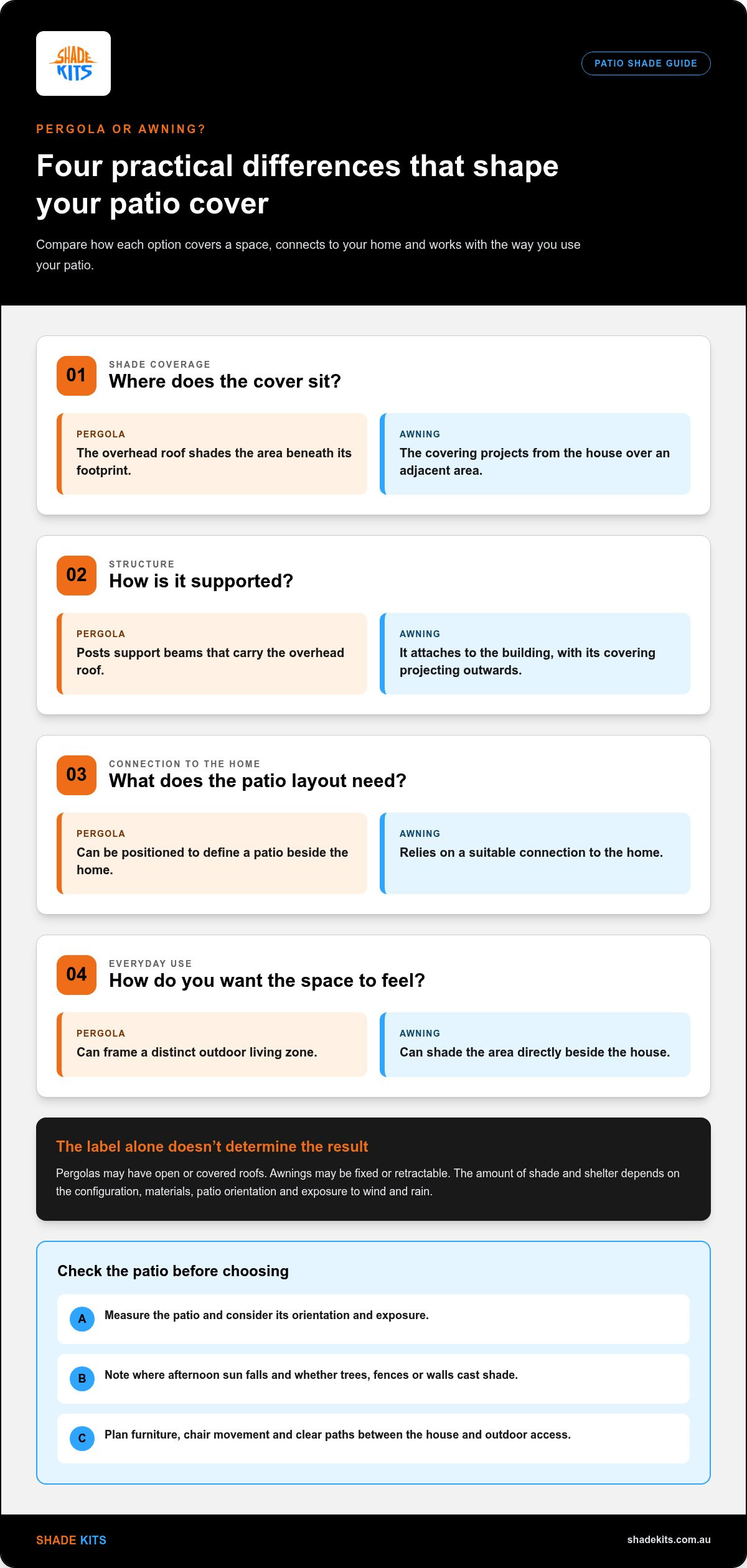
A practical choice starts with your patio, not a product label. Use this checklist to connect the structure to the space, the shade you need and the work involved.
Measure at the intended location rather than estimating from a plan. Note the height available beneath eaves or other obstructions, identify suitable fixing areas and consider how components can be brought into the space. Sketch drainage paths too, so the proposed layout accounts for where water flows across or around the patio.
A pergola may suit you if defining an overhead outdoor living area is a priority. An awning may be a better fit if you want shade to project from the house over an adjoining space. Neither is automatically the better option: the final choice depends on your layout, exposure and desired coverage.
Choose the structure that meets your patio’s actual coverage needs. That’s the simplest way to approach the pergola vs awning for patio decision and avoid choosing by appearance alone.
Once you’ve worked through the measurements and requirements, explore DIY pergola and awning kits as options for planning and assembling your patio cover.
Once you’ve settled on the type of cover, compare the kit with your measurements, site and ability to manage the assembly. Factory-direct DIY pergola and awning kits suit homeowners planning to install their own patio shade. A careful review before choosing can help you spot mismatches between the kit layout and the space you want to cover.
Start with the frame and roofing materials, then consider the available configurations and how each could suit your patio. Shade Kits’ kits feature aluminium frames and UV-resistant polycarbonate roofing. Review the product details for the specific kit you’re considering, and compare its intended layout with the area you measured.
Assembly planning matters too. Read the supplied guidance so you understand the process and any requirements for tools, access and help from another person. Consider how components will reach the patio and whether the ground and attachment points suit the proposed arrangement. Don’t rely on a kit’s general dimensions alone: compare them with available height, clearances and the patio’s shape.
Before deciding, organise these checks:
Keep a short project note with the patio’s length, width and available height, the area you want covered, its main use and your observations about sun, rain and wind exposure. Use it to compare the kit requirements against your site, and verify any approval or structural requirements that apply before purchase or assembly.
If you’re still weighing up the two options, the aluminium pergola kit guide offers broader pergola-planning information, while the aluminium awning guide covers awning considerations. Read the guide that matches the structure you’re leaning towards, then return to your measurements and intended use before settling on a kit.
A good choice fits both the patio and the project you’re prepared to take on. Explore Shade Kits’ outdoor shade solutions to compare pergola and awning kit options for your home.
The right patio cover comes down to how you want to use the space and where you need shade. A pergola can create a defined overhead outdoor area, while an awning projects cover from the house. Neither is automatically better: your patio’s dimensions, orientation and exposure should guide the choice.
Before choosing a kit, measure the area, consider furniture and access, and review site conditions and project requirements. Then compare the kit’s layout, materials and assembly guidance with your plans. This practical approach makes the pergola vs awning for patio decision clearer and helps you choose with confidence.
Shade Kits offers factory-direct DIY pergola and awning kits with aluminium frames and UV-resistant polycarbonate roofing, with Australia-wide delivery. Explore Shade Kits pergola and awning kits to compare options for your home. With your measurements and priorities in hand, you’re ready to plan a more comfortable patio.
Neither is automatically better; the right choice depends on your patio and how you want to use it. A pergola can suit a homeowner looking to create a defined overhead outdoor living area, while an awning projects shade from the house. For the pergola vs awning for patio decision, compare your patio’s dimensions, sun exposure and preferred coverage, then consider which structure fits the space and project requirements.
A pergola can provide overhead shelter if its roof design and materials are suited to that purpose, but not every pergola offers the same cover. Some configurations allow more light or exposure. Review the specific kit information and consider how drainage, wind exposure and patio layout affect your plans. Don’t assume a pergola is fully weatherproof based on its name alone; check product details and project requirements.
An awning may provide suitable shade for a patio beside the house, but coverage depends on its size, projection and position, as well as the direction of the sun. Measure the area you want shaded and consider how sunlight moves across it during the times you’ll use the patio. Compare those needs with the awning’s actual specifications rather than relying on the product category to predict the result.
Neither is automatically easier to install; the work depends on the kit design, site conditions, instructions and help available. Pergolas and awnings have different structural and fixing requirements. Before choosing, read the assembly guidance, measure carefully and assess access, attachment points and ground conditions. Then consider whether you have the tools, time and practical support to manage the DIY project safely.
Approval requirements can depend on the proposed structure, your property and the rules that apply to your location. There isn’t one answer that safely covers every Australian project. Before buying or assembling a pergola or awning, check current guidance relevant to your property and design. Avoid assuming that a structure is exempt or requires approval based only on its general type or size.
Maintenance depends on the design, materials and conditions around your home, so neither option is automatically maintenance-free. Compare the specific frame and roofing materials, consider how easily you can reach them for cleaning, and follow the product’s care guidance. Shade Kits’ kits feature aluminium frames and UV-resistant polycarbonate roofing. Check the relevant product information for care details rather than assuming a fixed maintenance schedule.
DIY installation may suit you if you can follow the kit instructions, measure accurately and manage assembly safely. Before deciding, assess site access, fixing points, ground conditions, tools and the help available for the work. Shade Kits supplies DIY pergola and awning kits designed for straightforward self-installation. Review product guidance and any applicable project requirements before starting.