
Could the clearest roof be the wrong choice for your patio? It’s understandable to want plenty of daylight while also thinking about heat and glare. Polycarbonate patio covers come in different panel styles and finishes, so transparency alone won’t tell you how the roof will suit your outdoor space.
This guide explains the benefits and limitations of polycarbonate roofing, how it compares with other common options, and how to choose a light level that fits the way you use your patio. You’ll also find practical steps for measuring your space and planning a DIY cover.
Panel choice is only part of the decision. Weather exposure, the structure and local approval requirements all matter in Australia. If you’re considering a complete kit, understanding how its frame and roof panels fit your plans can help you make a more confident choice.
A polycarbonate patio cover is a roofed outdoor structure with polycarbonate panels supported by a frame. The panels form the roof, while the frame and its connections make up the complete cover. In short, polycarbonate roofing panels are the roof material, while a polycarbonate patio cover is the whole structure that uses those panels to shelter an outdoor area.
Polycarbonate is a type of thermoplastic, and its uses and material properties are outlined in Polycarbonate. In a patio setting, panels sit overhead to shelter an outdoor dining area, lounge setting or walkway beside the house. How well a complete cover performs in particular weather depends on its design and installation.
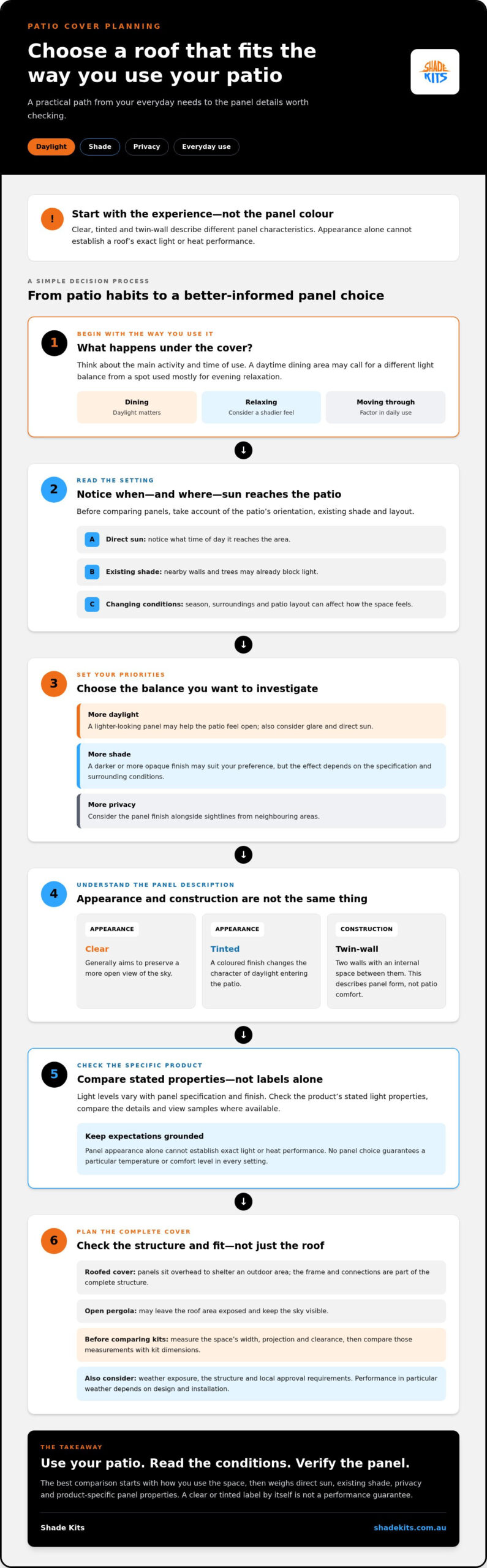
How much daylight reaches the patio depends on the panel specification and finish. Clear, tinted and multi-wall panels can create different levels and qualities of light. Consider what you want to do underneath the cover, then compare product details rather than choosing by appearance alone.
A roofed cover has panels overhead; an open pergola may leave the roof area exposed. That difference affects day-to-day use: a roof provides overhead shelter, while an open structure keeps the sky visible. The structure’s design and your intended use matter when deciding which suits your space. If you’re weighing a broader structure, explore this aluminium pergola kit guide.
Clear describes a panel’s appearance and generally aims to preserve a more open view of the sky. Tinted panels have a coloured finish that changes the character of daylight entering the patio. The actual light level depends on the product specification, so don’t assume every clear or tinted panel behaves alike.
Twin-wall describes how a panel is constructed: it has two walls with an internal space between them. It tells you about the panel’s form, not how comfortable the patio will feel. When comparing options, look beyond the name and finish. Check the panel’s construction and stated light properties, then match those details to your preferred balance of daylight and shade.
A bright patio can feel open and welcoming, especially if you use it for meals, reading or enjoying the garden. A more shaded space may better suit lounging or reduce direct light entering the area. With polycarbonate patio covers, the result depends on more than whether the panel looks clear or coloured. Construction and product-specific performance details also matter.
Think about comfort as a combination of factors. Direct sun, glare and warmth can change with the time of day, season, surrounding buildings and trees, and the patio’s layout. No panel choice guarantees a particular temperature or level of comfort in every setting.
Start with the patio’s orientation, existing shade and main use. Notice when direct sun reaches the area and whether nearby walls or trees already block light. A dining space used during the day may need a different light balance from a covered spot used mostly in the evening.
Panel appearance alone cannot establish a cover’s exact light or heat performance. Compare the product specification and view samples where available. The same colour label doesn’t necessarily mean identical results across products.
Decide what matters most: daylight, a more shaded feel, privacy from nearby properties or how the cover suits the activities underneath it. Thomasnet’s listing of polycarbonate patio cover suppliers and manufacturers provides industry context. For a purchase decision, compare the specifications of the particular panels and cover you’re considering.
Use this short list to frame your decision:
Roofing is only one part of comfort. Furniture placement, the direction the patio faces and nearby shade can all affect how the area feels. Weigh these conditions against the product specification and the way you plan to use the space. To compare a complete DIY option, browse Shade Kits’ patio cover options.
Start with the experience you want beneath the roof. Do you want daylight to pass through, a more enclosed feel or an open view of the sky? Polycarbonate panels, metal roofing and open-roof pergola designs each shape the patio differently. The right fit depends on your preferred light level, how you’ll use the area and the conditions around it, rather than a universal ranking of materials.
Use this comparison as a starting point. Panel finishes, roof designs and care requirements vary, so check the product details for the option you’re considering.
| Option | Light and shade | Visual feel | Upkeep considerations | May suit |
|---|---|---|---|---|
| Polycarbonate roofing | Panels can allow daylight through; the amount depends on the specification and finish. | Can create a bright, covered space while keeping some sense of openness. | Care needs depend on the panel and system. Follow the product’s cleaning and maintenance guidance. | Spaces where overhead cover and daylight are both priorities. |
| Metal roofing | Standard opaque roofing blocks direct light through the roof, creating a different shade level from translucent panels. | Gives the patio a more solid, roofed appearance. | Consider the roof finish, surrounding conditions and the manufacturer’s care instructions. | Homeowners who prefer a solid roof and less light entering from above. |
| Open-roof pergola | Leaves the roof area open, so the amount of shade depends on the structure and surroundings. | Preserves an open-sky feel. | Maintenance depends on the structure’s materials and design. | Those who value an open overhead space over a continuous roof. |
Consider polycarbonate if you want daylight to enter through the roof as well as overhead cover. A standard opaque metal roof creates a more enclosed, shaded experience because it doesn’t transmit light in the same way. Neither choice is automatically more durable or comfortable. Compare the specific roofing products and consider how direct sun and existing shade affect your patio.
An open pergola may suit you if keeping the sky visible matters more than having a continuous roof overhead. For outdoor dining or a sitting area, consider how often you want overhead cover and what level of shade feels right. These are design preferences, not guarantees about weather protection or year-round comfort.
Make your shortlist based on how you’ll use the space, then compare the roof details and care guidance for each option. If your main goal is adjustable shade rather than a fixed patio roof, awnings may also be worth considering.
Planning before ordering can help you avoid mismatched dimensions and make DIY assembly more manageable. Work through these steps, from defining how you’ll use the patio to checking the site and kit requirements.
Before ordering, note the patio’s width, projection and clearance, identify doors and obstructions, and decide how you’ll use the space and what light level you prefer.
Measure the area the cover needs to span, then check the available height at the intended position. Confirm where the structure will meet the house, if applicable, or where it will stand over the patio. Allow for door swings, windows, roof edges and other obstacles so the planned footprint works with the way you move through the area.
Compare your measurements with the kit’s stated dimensions rather than relying on a visual estimate. Custom sizes are subject to engineering confirmation and a quote.
Consider the supporting surface as part of your plan. Note what the structure will stand on and whether the intended fixing points are suitable for the design. Building requirements vary with the structure and location. In Australia, the National Construction Code provides a baseline, while state and local approval rules differ. A roofed patio may also be treated differently from an open pergola. Check current requirements with your local council before starting work.
Shade Kits supplies DIY kits designed for assembly, with hardware and clear instructions included. Review the instructions and parts information before beginning so you can organise the work area and understand the assembly sequence. Plan access for moving components into position, safe handling and suitable help during assembly.
Once your measurements, site considerations and assembly plan are in place, explore Shade Kits’ patio cover options and compare the listed details with your project.
If you’re weighing up polycarbonate patio covers, a complete DIY kit brings the frame and roof panels together. Shade Kits’ Aluminium Patio Cover has an aluminium frame and twin-wall polycarbonate roof panels, with listed dimensions of 3 m × 3 m × 2.5 m and a price of $1,855.00. Compare those measurements with your available space and intended use before choosing a cover.
The factory-direct process is straightforward: choose the style, size and colour that suit your plans, arrange delivery, then assemble the kit yourself or hire a professional. The kit is designed for DIY assembly, so consider your measurements, site and assembly plan before ordering.
DIY kits include hardware and clear assembly instructions. Read the instructions as part of your preparation, and make sure you understand the assembly sequence before work begins. Plan where the delivered components will be received and stored, and allow clear access to the work area. Shade Kits offers Australia-wide delivery, so you can plan for the kit to arrive at your home.
Shade Kits’ support team can help with sales, delivery, instructions and warranty enquiries. Review the applicable product information for warranty details. The kit is supplied for DIY assembly; if you don’t plan to assemble it yourself, you can hire a professional.
Pricing is one price, with no hidden freight fees and no surprise add-ons at checkout. Delivery is included, so you can plan around the listed price without adding a separate freight estimate.
Before deciding, bring your project details together. Confirm how you’ll use the covered area, check the available width, projection and clearance, choose a colour, and decide who will assemble the kit. Then compare the listed dimensions and kit information with your space and plans.
Need a different size? Custom-size requests are subject to engineering confirmation and a quote. Have your measurements ready when exploring that option, so you can clearly describe the outdoor area you want to cover.
When you’re ready to compare options, explore Shade Kits’ DIY shade solutions.
Before choosing among polycarbonate patio covers, spend time observing the spot you want to improve. Notice when direct sun reaches it, where shade falls and how you’d arrange furniture. These observations can turn a broad preference for “more light” or “more shade” into a practical brief for comparing options.
Next, picture how you’d like the finished space to feel. Think about the view from indoors, the atmosphere you want for meals or quiet time, and which compromises you’re comfortable making. A patio roof should support the way you use your outdoor area, not just look appealing in a product image. Keep those priorities in mind as you compare styles and dimensions.
Explore Shade Kits’ DIY shade solutions and compare the options with your measurements and plans. With a clear sense of what matters most, you can choose a cover that suits the way you want to use your outdoor space.
Some polycarbonate roofing products are designed with UV-resistant properties, but the level of protection depends on the specific panel. Check its product information rather than assuming every sheet performs the same way. A roof can add shade, but it doesn’t make the whole outdoor area UV-safe: sunlight can still reach you from the sides or reflect off nearby surfaces. Use sun protection suited to your activity and conditions.
Rain may be audible on a polycarbonate roof, but the sound you notice depends on factors such as rainfall, panel construction, roof design and how the panels are supported. There isn’t one reliable noise level for every patio cover. If sound is a concern, consider where the patio sits in relation to bedrooms or living areas, and review the specific roofing system’s information before deciding.
Possibly, but don’t assume an existing patio or its supports are suitable for an added roof. It depends on the current structure, its condition, dimensions, attachment points and the proposed cover’s design. Check how the new frame would be supported and whether the existing layout leaves enough clearance for doors and windows. Confirm applicable building requirements before work begins.
They can change in appearance over time, depending on the panel’s material, finish, exposure and care. UV-resistant properties don’t necessarily mean a panel will remain unchanged indefinitely. Check the product information for care guidance and any stated limits, and avoid abrasive cleaning methods that could mark the surface. Include the manufacturer’s maintenance advice when comparing panels.
Polycarbonate is generally more impact-resistant than standard glass, but “stronger” depends on the type of force and the specific material and design. Thickness, panel construction, support spacing and installation all matter. A material comparison alone can’t establish whether a complete roof is suitable for a particular site or load. Use the product’s technical information and applicable design requirements to guide your choice.
Approval may be required, and the answer varies with your state or territory, council, structure size, height, location and whether the cover is attached to the house. A roofed patio can be treated differently from an open pergola, so don’t rely on exemption rules for another structure or area. Before ordering or building, check current requirements with your local council and the relevant building authority.
Follow the panel manufacturer’s cleaning instructions first, as suitable methods vary by product. A cautious routine is to rinse away loose dirt, then use clean water and a soft cloth or sponge. Avoid abrasive pads and harsh solvents unless the product guidance specifically permits them. Don’t walk on roof panels while cleaning. Plan access from a safe position, and clear leaves or debris without scraping the surface.