
The most expensive part of protecting your car isn’t always the steel; it’s often the council red tape you didn’t see coming. Most Australian homeowners simply want a reliable spot to keep the harsh sun and sudden hail off their vehicle without spending months and thousands of dollars on permit applications. Choosing a portable carport can often be the smartest way to bypass these hurdles, but it’s essential to know if a relocatable structure can truly withstand our local weather conditions.
Whether you’re navigating evolving building regulation changes across Australia or seeking an exempt development status with your local council, understanding your options is the first step toward a stress-free build. At Shade Kits, we’ll help you discover the key differences between portable and permanent structures so you can find the most cost-effective and durable protection for your home. You’ll gain a clear understanding of which setup suits your land tenure, how to ensure weather-resistance against high winds, and how to complete a straightforward DIY project that adds immediate value to your property.
As we move through 2026, the way Australians think about home improvement is shifting. With property prices remaining high and weather patterns becoming more unpredictable, vehicle protection is no longer just about a slab of concrete and some timber. Many homeowners are now questioning whether a permanent structure is the best use of their capital. This is where the portable carport comes into play, offering a versatile alternative that fits modern lifestyles. Whether you’re a homeowner looking to add value or a tenant needing to protect a pride and joy, the choice between a fixed and relocatable structure is more significant than it first appears.
The ‘permanent’ label can be a financial trap because it ties your investment to a single location. In a market where Australians are moving more frequently for work or lifestyle changes, a fixed structure doesn’t always offer the best return on investment. If you’re renting or living in a temporary arrangement, you shouldn’t have to sacrifice your car’s paintwork to the elements. Understanding What is a carport? in its various forms is essential before committing to a build that you can’t take with you.
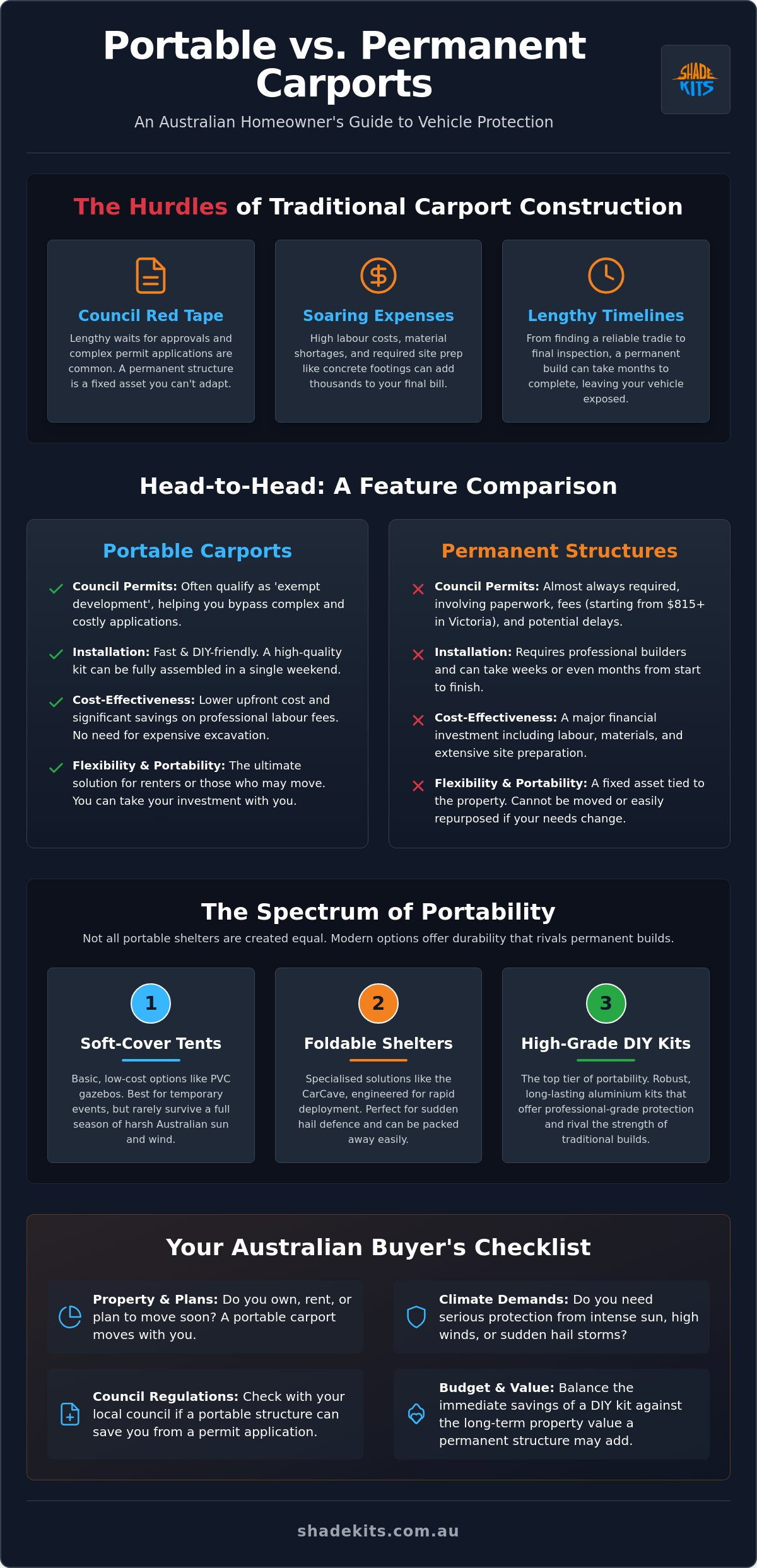
Traditional construction is currently plagued by high labour costs and a shortage of reliable tradespeople. Even if you secure a builder, you’re often looking at lengthy wait times for council approvals. In Victoria, building permit fees for small structures start at $815 and climb based on project value. A permanent carport is a fixed asset that can’t be modified or taken with you, potentially limiting future property plans.
Beyond the permit fees, there’s the hidden cost of site preparation. Permanent structures usually require professional excavation and concrete footings, which can add thousands to your final bill. In contrast, the rise of “renting-friendly” car protection solutions means you can get high-quality shelter without the heavy-duty groundwork. This shift is particularly visible in Western Australia, where the government has recently raised the threshold for registered builders to $50,000 for Class 10a buildings to help cut through the typical construction red tape.
Portability is trending because it provides immediate protection against the intensifying Australian sun. Factory-direct DIY kits have empowered the ‘weekend warrior’ to take control of home improvements without hiring expensive contractors. These solutions are perfect for multi-vehicle households where garage space is limited. A portable carport can be set up quickly for a second car or boat, then relocated if you need to repurpose your yard later.
This flexibility is the ultimate goal for most modern households. Instead of waiting months for a contractor to finish a project, you can have a functional shelter ready in a single weekend. It sets the stage for a head-to-head comparison where we weigh the long-term durability of aluminium against the rapid deployment of foldable shelters, helping you decide which path offers the best value for your specific patch of Australia.
In 2026, a portable carport is defined as a non-fixed vehicle shelter engineered for efficient assembly, disassembly, and relocation without compromising structural safety. It bridges the gap between a fully permanent garage and a basic fabric cover. Unlike a permanent build, these structures don’t require deep concrete footings or a lifetime commitment to a specific spot on your driveway. They offer a sophisticated solution for those who value the ability to take their investment with them when they move house or renovate.
The CarCave represents a specialized sub-category of this protection, serving as a foldable, rapid-deployment shelter specifically engineered for hail defence. This distinction is crucial because not all relocatable shelters are created equal. While many people associate portability with flimsy materials, modern engineering has introduced high-grade kits that rival the strength of traditional builds while remaining entirely modular.
The market is generally divided into three distinct tiers of portability. At the entry level, you’ll find soft-cover “party tents” or basic PVC gazebos. These are fine for a weekend event, but they rarely survive a season of intense Australian sun or high winds. The middle tier includes foldable shelters like the CarCave, which can be deployed in seconds when a storm warning hits and tucked away just as quickly.
The top tier consists of semi-permanent DIY kits. These structures use rigid frames and roofing but are designed to be unbolted from a concrete slab or ground anchors if necessary. If you’re looking for something that combines the longevity of a permanent structure with the legal and logistical benefits of being relocatable, exploring high-quality carport kits is often the most pragmatic path forward.
Modern portable designs rely on materials that can handle our harsh environment without adding excessive weight. Powder-coated aluminium has become the gold standard because it won’t rust in coastal areas and provides a high strength-to-weight ratio. This makes the assembly process manageable for two people while ensuring the frame remains stable during a typical afternoon squall.
By choosing these durable materials, you ensure your portable carport remains a long-term asset rather than a temporary fix. It’s about finding that sweet spot where ease of use meets uncompromising protection for your vehicle.
Choosing between a portable carport and a permanent structure often comes down to how you balance immediate costs against long-term resilience. While a basic soft-cover portable might only last 2 to 5 years under the punishing Australian sun, a high-quality aluminium kit or a permanent build can easily exceed a 20-year lifespan. This durability gap is largely due to material degradation; PVC and fabric simply can’t compete with the structural integrity of powder-coated aluminium and polycarbonate panels.
From a financial perspective, a permanent build usually requires a higher upfront investment because of professional labour and extensive site preparation. However, it typically adds more to your property’s resale value. A DIY kit serves as the ideal middle ground. It offers the strength of a permanent build without the heavy labour markup, making it a highly cost-effective way to protect your vehicle. You get the benefit of factory-direct pricing while avoiding the “financial trap” of permanent construction mentioned earlier.
In Australia, wind and hail are the primary threats to your vehicle’s paintwork and glass. Foldable shelters like the CarCave are specifically engineered for hail defence, providing a specialised barrier that absorbs impact. For a standard portable carport, wind resistance depends heavily on anchoring. Whether you’re bolting to a slab or using ground anchors, proper securing is non-negotiable to prevent the structure from shifting during a storm.
Permanent aluminium carports are the “set and forget” champions. They’re designed to meet specific regional wind ratings and can handle heavy rain and UV exposure year-round with minimal oversight. While portable units offer flexibility, the peace of mind provided by a rigid, anchored frame is hard to beat during peak storm season. For a deeper look at how to defend your vehicle against Australia’s increasingly severe weather events, our comprehensive guide on hail protection for cars covers everything from material choices to rapid-deployment solutions.
The DIY kit advantage is most apparent during the installation phase. You can achieve professional-grade results in just 1 to 2 days. In contrast, a custom permanent build often drags on for weeks as you wait for contractor availability and site inspections. This speed doesn’t mean you’re sacrificing quality; it just means the engineering work has been done for you at the factory.
For a standard assembly, you generally only need a few common tools:
This streamlined process eliminates the uncertainty of hiring trades and ensures you know exactly how your structure is put together. By taking the DIY route, you’re effectively trading a weekend of your time for thousands of dollars in saved labour costs.
Before you commit to a specific structure, you must understand the legal and environmental landscape of your specific block. In Australia, building regulations are notoriously localized, and what works for a neighbor in New South Wales might not fly in Victoria. A portable carport often provides a strategic advantage here because many councils view non-permanent or relocatable structures through a different lens than they do traditional construction.
Your choice also depends heavily on your land tenure. If you’re a long-term homeowner, a permanent kit might be the goal. However, if you’re currently renting or planning to sell in the next few years, the ability to pack up your shelter and take it with you is a significant financial safeguard. It ensures your investment remains your property, not a permanent gift to the next occupant or your landlord.
The “10-square-metre” rule is a common guideline across many states, suggesting that structures under this size might not require formal approval. However, the reality is more nuanced. In New South Wales, for example, a carport may be considered an “exempt development” if it covers 20 square metres or less and sits at least 900mm from the property boundary. This exemption can save you from the headache of a Development Application (DA).
In contrast, Victorian residents should be aware that a building permit is almost always required regardless of size, with fees starting at $815 for builds under $5,000. By opting for a portable carport that doesn’t involve permanent concrete footings, you may find a path toward “temporary structure” status in some jurisdictions. Always check your local council’s specific set-back distances and height restrictions before starting, as these are the most common points of friction during inspections.
Australia’s climate is famously punishing on building materials. If you live within 5 kilometres of the coast, salt-air corrosion will eat through standard steel in a matter of years. This is why powder-coated aluminium is essential; it’s naturally resistant to rust and maintains its structural integrity without constant repainting. For those in high-hail zones like South East Queensland or parts of Sydney, the roofing material is your most critical choice.
Choosing the right materials ensures your vehicle stays cool and protected regardless of what the Bureau of Meteorology throws your way. If you’re ready to secure your vehicle with a structure designed for these exact conditions, explore our range of factory-direct carport kits today.
Selecting the right vehicle protection is no longer a simple choice between a temporary tent and a permanent brick garage. In 2026, the decision hinges on your specific lifestyle needs, your property tenure, and the level of weather intensity you face. Whether you require a specialized portable carport for immediate storm protection or a more robust DIY structure that rivals a custom build, the goal is to achieve maximum durability without the traditional construction headaches. By matching the structure to your specific land use, you ensure your investment provides value for years to come.
The Shade Kits advantage lies in our commitment to factory-direct quality and national delivery. By cutting out the middleman, we provide premium materials that are often reserved for high-end custom builds at a fraction of the cost. We focus on empowering you to take control of the installation process, providing clear guidance so that your weekend project results in a professional-grade finish that stands up to the Australian elements.
If your primary concern is the sudden, violent hail seasons that sweep across the country, the CarCave offers a unique solution. This specialized portable carport features a foldable design that allows for rapid deployment when a storm warning hits your phone. Because it doesn’t require a permanent footprint or ground penetration, it’s often the only viable option for renters or those living in townhouses with strict body corporate rules. To understand the full scale of hail damage risk across Australia and explore the complete range of hail protection for cars available to Australian drivers, our dedicated guide provides an in-depth breakdown of every solution.
For homeowners looking for long-term protection and a structure that complements their home’s architecture, our DIY Carport Kits are the logical choice. These kits use premium powder-coated aluminium frames and UV-resistant polycarbonate roofing, providing the aesthetic appeal of a permanent structure without the five-figure contractor bill. They’re designed for the “weekend warrior” who wants a straightforward assembly process and a result that adds genuine resale value to the property.
Our direct-to-consumer model ensures you get the best value for money in 2026. You can customise your kit to match your home’s colour and style, ensuring the new addition looks like a planned part of the property rather than an afterthought. Once your kit arrives via our national delivery network, you’re only a few hours of assembly away from having a sturdy, weather-resistant shelter that protects your vehicle from the relentless Australian sun and rain. Secure your vehicle today by choosing a solution that fits your land, your budget, and your climate.
Finding the right shelter for your vehicle involves balancing immediate logistical needs with long-term durability. As we’ve explored, a portable carport offers a strategic way to bypass council red tape while providing essential flexibility for renters or homeowners with evolving plans. Whether you opt for the rapid hail defence of a foldable CarCave or the architectural appeal of a rigid DIY kit, the key is choosing a structure that matches your specific land tenure and local climate.
By prioritising factory-direct pricing and durable aluminium and polycarbonate construction, you can achieve professional results without the typical contractor markups. Our streamlined approach ensures that high-quality vehicle protection is accessible to everyone, backed by reliable Australia-wide delivery. You don’t have to navigate the complexities of traditional construction to get a result that lasts for decades.
Explore our range of DIY Carport Kits and CarCaves at Shade Kits to find the perfect fit for your driveway. You’re just one straightforward DIY project away from total peace of mind and lasting protection for your vehicle.
Council approval requirements vary by local government area, but many portable structures are classified as exempt developments if they meet specific criteria. In NSW, for example, structures under 20 square metres often don’t need a permit if they follow setback rules. However, in Victoria, you’ll likely need a building permit regardless of the portability of the structure. Always check with your local council before installation to avoid unexpected fines or removal orders.
Yes, a high-quality portable carport can withstand heavy hail if it features impact-resistant materials like polycarbonate roofing. Unlike basic fabric tents that can tear or sag, rigid polycarbonate panels are engineered to absorb the force of hailstones without shattering. For those needing rapid protection, specialized foldable shields like the CarCave provide a physical buffer that prevents hailstones from ever making contact with your vehicle’s glass or paintwork.
You must secure your structure using either heavy-duty bolt-down anchors for concrete or specialized ground augers if you’re installing on soil. Proper anchoring is the most critical step in ensuring your carport doesn’t become a sail during a summer storm. Most kits are designed to meet specific wind ratings, but these ratings are only valid if the frame is correctly fastened to a stable surface according to the manufacturer’s instructions.
Most DIY kits are designed for two people to complete within one to two days using common household tools. You don’t need specialized trade skills; a cordless drill, a sturdy ladder, and a spirit level are usually enough to get the job done. The components arrive pre-cut and drilled, which simplifies the process and ensures that the structure is aligned correctly for maximum stability and weather resistance.
You can install a portable carport on grass, provided you use the correct anchoring system for soft ground. While a concrete slab offers the most stable base, heavy-duty ground augers or deep-earth pegs can secure the frame effectively into the soil. It’s important to ensure the ground is level to prevent structural stress on the aluminium frame and to allow for proper water runoff during heavy rain.
Aluminium DIY kits typically outlast standard steel carports in the Australian climate because aluminium is naturally resistant to rust and corrosion. This is a critical advantage for homes within five kilometres of the coast where salt air is prevalent. While steel may require repainting or treatment to prevent decay, a powder-coated aluminium structure provides a durable, low-maintenance finish that can easily last over 20 years.
A portable structure adds functional value by providing immediate vehicle protection, though it may not increase property value as much as a permanent brick garage. For many buyers, the presence of a high-quality aluminium carport is a desirable feature that suggests the property has been well-maintained. If you’re renting, the primary value is the ability to take the structure with you, protecting your personal investment regardless of where you live.
The CarCave is a freestanding foldable structure that provides a physical buffer, whereas a standard car cover sits directly on your vehicle’s paintwork. This design prevents the scratches and swirl marks often caused by wind-blown fabric covers rubbing against the car. Furthermore, the CarCave offers superior impact protection against hail and falling debris, which a thin layer of fabric simply cannot provide during a severe Australian storm. If you’re weighing up your options and want a step-by-step guide to selecting and setting up the right portable car shelter for Australian conditions, our dedicated resource walks you through every consideration from materials to anchoring.