
Why should you have to choose between a bright, light-filled home and an outdoor area that feels like a furnace by midday? Most Australian homeowners love the idea of an outdoor room, but the reality often involves a frustrating trade-off. Solid roofing can leave your interior living spaces feeling dark and gloomy, while open timber structures offer little protection from the blistering summer sun or sudden downpours. Finding the right balance is essential for a space you will actually use. These 15 inspiring pergola with polycarbonate roof ideas demonstrate how you can maintain natural light while blocking harmful UV rays and keeping your patio cool.
We understand that you want a durable, weather-proof solution that does not require a massive budget or weeks of professional labour. It is about more than just shelter; it is about curating the right vibe for your backyard through clever light diffusion and modern aesthetics. In this article, we will explore various designs that handle everything from hail to intense heat. You will learn how to select the right tints to manage temperature and see how DIY-friendly aluminium kits can provide a sleek, professional finish. Whether you are looking for a contemporary attached structure or a freestanding garden retreat, these designs offer a practical path to a better outdoor lifestyle.
Polycarbonate is often misunderstood as just another type of plastic. In reality, it is a high-impact, lightweight thermoplastic that has transformed how we design outdoor spaces. When you are looking for pergola with polycarbonate roof ideas, you are likely trying to solve a specific problem: how to stay protected from the elements without living in a cave. Polycarbonate sheets are engineered to be incredibly tough while remaining translucent, making them the ideal choice for the varying Australian climate.
The primary advantage lies in solving the “light versus heat” dilemma. Traditional materials like corrugated iron are excellent for shade, but they block every bit of natural light, often plunging the adjacent indoor rooms into darkness. Glass offers clarity but is heavy, expensive, and can shatter. Polycarbonate provides a middle ground. It allows a generous amount of soft, diffused light to pass through while blocking 99.9% of harmful UV rays. This means you can enjoy the brightness of a summer afternoon without the sunburn or the oppressive heat trap of an unventilated solid roof.
One of the biggest regrets homeowners have after installing a solid patio cover is the loss of natural light inside their house. If your pergola is attached to your main living area or kitchen, a solid roof will significantly darken those internal spaces. Polycarbonate prevents this by acting as a giant skylight for your entire outdoor area. It creates a seamless transition where the boundaries between your garden and your lounge room feel less rigid. Polycarbonate represents the ultimate balance of structural durability and light transmission for 2026 Australian homes.
Our weather is notoriously unpredictable. From intense summer hailstorms in Sydney to falling gum branches in rural areas, a pergola roof needs to be resilient. The unique properties of polycarbonate give it an impact resistance that is significantly higher than glass or standard acrylic. It does not just survive a storm; it maintains its structural integrity under pressure. This makes it a reliable long-term investment for families who want a safe, weather-proof entertaining area.
Modern pergola with polycarbonate roof ideas also account for thermal expansion. In the peak of an Australian summer, materials expand as they heat up. High-quality DIY kits are designed with this movement in mind, using specific fixing methods that allow the sheets to “breathe” without cracking or leaking. This precision engineering ensures that your roof remains watertight and quiet, even when the temperature swings from a 40-degree day to a cool evening breeze. Choosing this material means you are opting for a roof that is designed to work with the environment, rather than just struggling against it.
Selecting the right tint is the most important decision you’ll make when exploring pergola with polycarbonate roof ideas. The colour of your roof sheets acts as a climate control system for your patio. Clear sheets offer maximum light transmission. These are perfect for south-facing areas that need a brightness boost during the winter months. However, they can create a greenhouse effect under direct northern exposure. Grey and bronze tints are the workhorses of the Australian backyard. They significantly reduce glare. This is essential if you plan on reading or using a tablet outside. Opal or “milk” sheets provide a soft, white glow. They are excellent for privacy if your neighbours have a two-storey home overlooking your deck.
The profile of your sheeting determines both the drainage efficiency and the final aesthetic of the structure. Corrugated polycarbonate is the classic choice. It is cost-effective and handles heavy rain by directing water quickly into the gutters. For those seeking a sharper, more industrial look, Greca and 5-Rib profiles provide a structural geometric pattern that complements modern architecture. If you want a premium finish, multiwall polycarbonate is the top-tier option. It uses multiple layers to trap air, providing superior insulation. This profile creates a sleek, flat-panel appearance that mimics high-end glass without the weight or fragility.
Advanced polycarbonate technology now includes solar control layers. These sheets contain microscopic particles that reflect infrared heat while still allowing visible light to pass through. It’s a high-tech solution for the modern home. Orientation is the key factor here. A north-facing pergola gets hit with the most intense sun. For these areas, a bronze tint is highly effective; a bronze tint can reduce solar heat gain by up to 50% compared to clear sheets.
When planning your build, ensure your design complies with local standards, such as Queensland’s Building Regulation 2021, which outlines the necessary approvals for permanent structures. Choosing the right combination of tint and profile is the secret to a comfortable year-round space. You can explore a variety of high-quality pergola kits that feature these advanced roofing options to find the perfect match for your home. By matching the sheet type to your specific micro-climate, you ensure your outdoor room remains a cool sanctuary even in the peak of February.
Modern backyard design has moved away from the basic, clunky structures of the past. Today, homeowners are looking for sleek lines and integrated features that make an outdoor space feel like a true part of the home. When exploring pergola with polycarbonate roof ideas, the goal is to create a structure that is as visually striking as it is functional. Here are five design concepts currently leading the way in Australian architecture.
A major benefit of a polycarbonate roof is the protection it offers for your outdoor tech and plants. Because the roof is watertight, you can safely install hanging fairy lights or permanent outdoor LED strips along the rafters without worrying about rain damage. You can also use the transparent ceiling to create a “greenhouse” effect for delicate patio plants that need brightness but can’t handle the direct Australian sun. Many homeowners are now using the structure to support “green walls” or vertical gardens that frame the view, creating a lush, private sanctuary.
While the roof and frame provide the structure, the surrounding materials ground the design. Pairing factory-direct aluminium kits with natural timber decking creates a beautiful contrast between industrial precision and organic warmth. It is a smart way to get the best of both worlds. While timber looks great underfoot, choosing Aluminium vs Timber Pergolas for the overhead structure ensures longevity and removes the need for constant painting or staining. To finish the look, consider using large-format stone pavers or polished concrete to add a high-end, sophisticated feel to your new outdoor room.
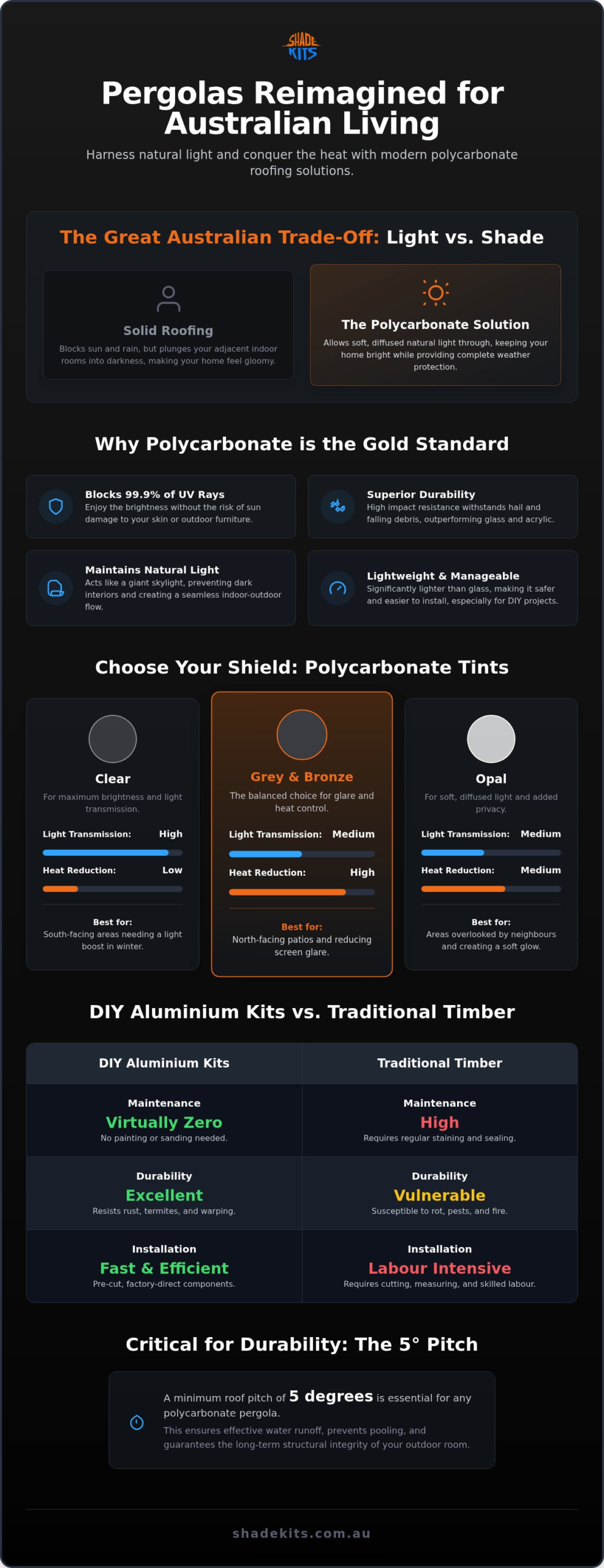
While looking through various pergola with polycarbonate roof ideas is the fun part of any renovation, the long-term success of your build depends on the technical details. A beautiful structure is only as good as its ability to shed water and withstand a sudden summer storm. One of the most critical factors is the roof pitch. You need a minimum of 5 degrees of fall to ensure that rainwater flows effectively into your gutters. If the roof is too flat, water will pool, and dirt will settle in the ribs. This leads to unsightly algae growth and potential leaks. A slight angle allows the sheets to be largely self-cleaning with every downpour, keeping your outdoor room looking fresh with minimal maintenance.
The structural backbone of your pergola consists of rafters and purlins. These must be spaced correctly to support the wind loads specific to your region. Australian Standards dictate how structures should handle wind actions, and ignoring these can lead to sagging sheets or structural failure during a gale. Purlin spacing is particularly important for polycarbonate; if they are too far apart, the sheets will flex and “drum” in the wind. Correct spacing keeps the roof rigid and quiet. To manage the noise of rain, ensure your sheets are fixed firmly with high-quality seals. This reduces the “tapping” sound that can otherwise become a distraction during a typical Aussie thunderstorm.
Thermal expansion is another reality of the Australian climate. As the sun beats down, polycarbonate sheets expand. If they are fixed too tightly, they can crack or buckle. Using the right fasteners with slightly oversized pre-drilled holes allows the material to move naturally as it heats and cools. This simple step prevents structural stress and extends the life of your roof by several years.
Proper drainage is essential to protect your home’s foundations. Your pergola should ideally integrate its own gutter and downpipe system rather than simply letting water spill onto the lawn or patio. When laying the sheets, pay close attention to the overlap. The side-lap should always be positioned away from the prevailing wind direction to prevent water from being blown under the seam. If you are attaching the structure to your house, using metal flashing is the only way to create a truly water-tight seal against the wall, preventing moisture from seeping into your internal plasterwork.
Before you start digging holes, you must check your local regulations. In Victoria, any pergola with a solid roof is classified as a verandah and requires a building permit regardless of its size. If you are in South Australia, development approval is usually necessary, with application fees often ranging between $200 and $800. You may also need engineering certification, which typically costs between $300 and $800 depending on the complexity of the design. Using a professional pergola kit from a reputable supplier like Shade Kits is a smart move. These kits are engineered specifically for Australian conditions, ensuring your project meets local safety standards while simplifying the approval process. Getting the paperwork right at the start saves a lot of stress and potential fines later on.
Choosing to build an outdoor room shouldn’t involve months of saving or weeks of messy construction. While exploring various pergola with polycarbonate roof ideas, you’ll quickly realise that the delivery method is just as important as the design itself. A DIY aluminium pergola kit represents the most efficient way to bridge the gap between a designer vision and a completed project. By opting for a factory-direct model, you remove the middleman and the high labour costs associated with custom builders. This allows you to allocate your budget towards higher-quality finishes rather than just paying for someone’s time on site. If you want a comprehensive overview of planning and installing the perfect structure, our ultimate guide to aluminium pergola kits covers everything from state-specific regulations to step-by-step DIY assembly.
Precision engineering is what sets these kits apart from a standard hardware store run. Instead of wrestling with various bits and pieces that may or may not fit together, every component in a quality kit is pre-cut and pre-drilled. This ensures a perfect fit every time. It also drastically reduces installation speed; most homeowners can erect their structure over a single weekend. Because the frame is aluminium, it won’t rot, warp, or require the constant painting and staining that timber demands in our harsh climate. It is a durable, set-and-forget solution for the modern Australian backyard.
Shade Kits offers a streamlined approach to home improvement by providing factory-direct quality with Australia-wide delivery. Every kit includes UV-resistant polycarbonate as standard, ensuring your roof provides the high-level protection discussed earlier in this guide. We focus on supporting the DIYer with clear, logical instructions and a supportive team ready to assist. Our goal is to provide a professional result that you can achieve independently without the stress of traditional construction methods.
Investing in a well-designed outdoor space adds significant long-term value to your property. By balancing natural light with robust weather protection, you create a room that remains usable even in the peak of summer. Whether you’ve been inspired by minimalist monochrome looks or the soft glow of a tropical pavilion, the right materials make all the difference. You can browse our full range of Pergola Kits to find a durable, stylish solution that fits your lifestyle and your budget. Start your project today and enjoy a better outdoor lifestyle for years to come.
Creating a functional outdoor space is about more than just adding a roof; it’s about enhancing how you live at home. We’ve explored how the right tint can block intense heat while keeping your internal rooms bright, and how modern aluminium frames offer a maintenance-free alternative to traditional timber. These pergola with polycarbonate roof ideas prove that you don’t have to sacrifice style for durability. By focusing on smart design choices like roof pitch and solar control layers, you can build an area that handles the Australian elements with ease.
Choosing a factory-direct kit is the most efficient way to achieve a professional, engineered result without the high costs of custom builders. We provide durable aluminium frames designed specifically for AU weather and deliver them Australia-wide with easy-to-follow DIY installation guides. It’s a straightforward path to a weather-proof entertaining area that adds real value to your property. Browse our range of DIY Pergola Kits with Polycarbonate Roofing today to find the perfect fit for your backyard. Your new outdoor room is closer than you think.
It depends largely on the tint you choose and the amount of ventilation in your structure. While clear sheets can create a greenhouse effect by letting in maximum light, tinted or solar-control versions are designed to reflect infrared heat. A bronze tint, for example, can reduce solar heat gain by up to 50 percent compared to clear alternatives. Ensuring your pergola has open sides also allows for natural airflow, which prevents hot air from becoming trapped.
You can typically expect a high-quality polycarbonate roof to last between 10 and 20 years in Australian conditions. Most modern sheets are treated with a UV-resistant coating that prevents them from becoming brittle or yellowing under the intense sun. Choosing a reputable supplier ensures the material is engineered for high impact resistance. This helps it withstand typical summer hailstorms and falling debris without cracking or losing structural integrity.
Polycarbonate is naturally more resonant than insulated panels, so you’ll hear a distinct tapping sound during a downpour. However, you can significantly reduce this noise by ensuring the sheets are installed correctly with the right spacing and high-quality rubber seals. These seals act as a buffer, dampening the vibrations caused by rain. Many homeowners find the sound of light rain on the roof to be quite a pleasant, atmospheric feature.
Grey, bronze, and opal tints are the most effective options for creating a shaded, comfortable environment. While clear sheets are great for brightness, they don’t provide the glare reduction needed for a mid-summer lunch. An opal or milk tint is particularly popular because it diffuses the light evenly, creating a soft glow while blocking a significant amount of heat. This makes it an ideal choice when exploring pergola with polycarbonate roof ideas for north-facing yards.
You should never walk directly on a polycarbonate roof as the sheets are not designed to support concentrated body weight and may crack or slip. If you need to access the roof for cleaning or maintenance, always use a crawl board or a sturdy ladder positioned against the supporting frame. Walking on the sheets is dangerous. It can also lead to scratches or structural damage that compromises the water-tight seal of your pergola.
Yes, most roofed structures in Australia require council approval or a building permit. In Victoria, any pergola with a solid roof is classified as a verandah and always needs a permit regardless of its size. In South Australia, development approval is usually required, and application fees can range from $200 to $800. It’s essential to check with your local council before starting any work to ensure your project complies with regional building codes.
The best way to clean your roof is by using a soft microfibre cloth or a sponge with lukewarm, soapy water. Avoid using abrasive cleaners, squeegees, or stiff brushes, as these can easily scratch the UV-protective layer on the surface of the sheets. Simply rinse the roof with a garden hose first to remove loose grit, then gently wipe the surface and rinse again. Regular cleaning every six months will prevent dirt build-up.
Single-skin polycarbonate is a solid or corrugated sheet that provides excellent light transmission and impact resistance at a lower price point. In contrast, multiwall polycarbonate features a hollow, cellular structure that traps air between multiple layers. This design offers far superior thermal insulation and a sleeker, flat-panel appearance. When considering pergola with polycarbonate roof ideas, multiwall is often the preferred choice for those wanting a more modern look with better temperature control.