
What if you could build a professional-grade outdoor entertaining area that blocks 99.9% of UV rays without the hefty price tag of a full construction crew? Many Australian homeowners dream of a stylish backyard retreat but hesitate because they fear the roof will yellow or crack under our intense sun. You might also feel overwhelmed by the thought of navigating council approvals or the perceived complexity of a weekend build. It’s a common worry, especially when you want a result that looks modern and lasts for the long term.
This guide is designed to help you master everything you need to know about DIY polycarbonate patio roof kits in 2026. You’ll learn how to select high-impact materials that withstand the elements while saving significantly on labour costs. We will walk you through the essential planning steps, from checking local building permits to the final assembly of your weather-resistant aluminium frame. By the end of this article, you’ll have a clear, step-by-step roadmap to transform your backyard into a durable, sun-safe sanctuary for years to come.
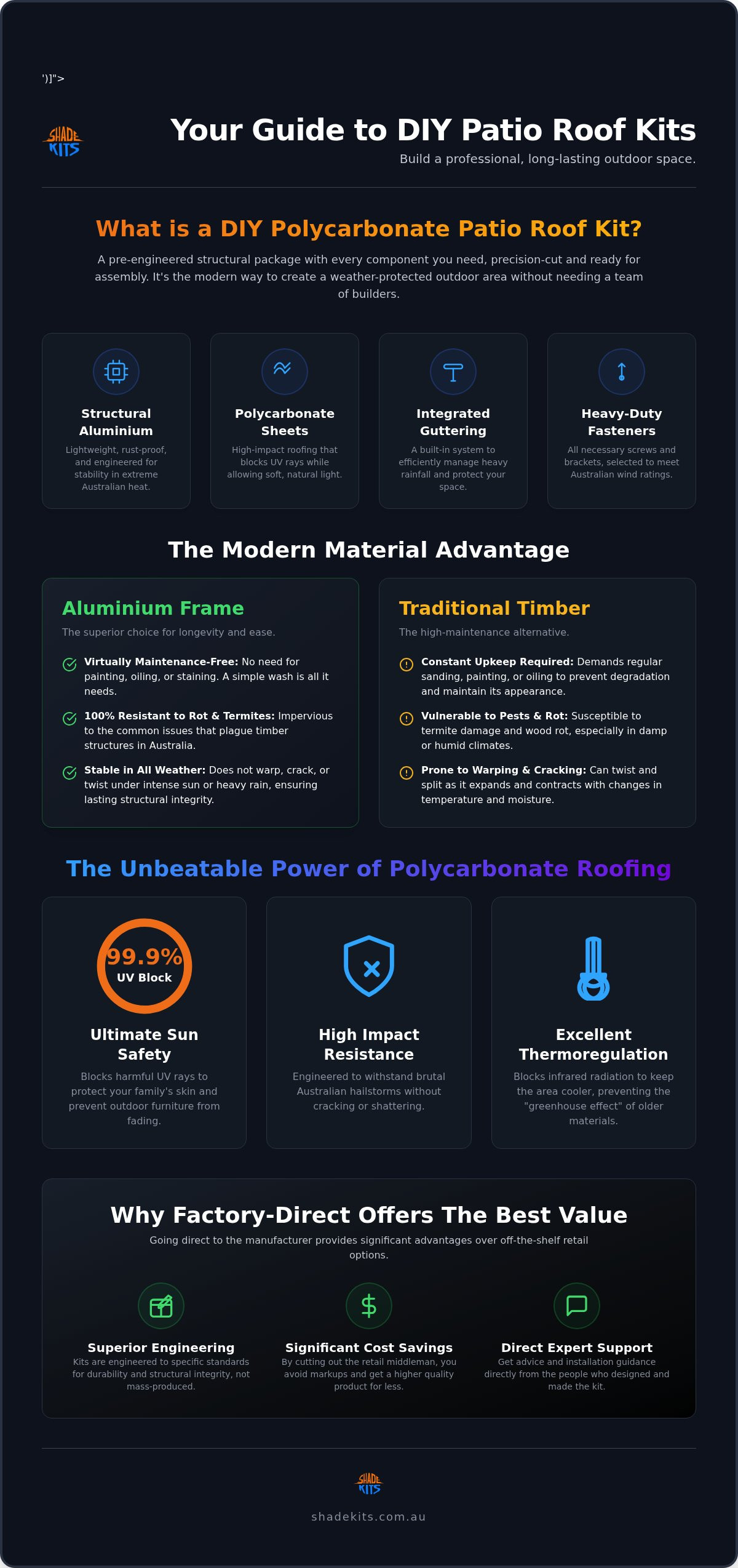
A DIY polycarbonate patio roof kit is a pre-engineered structural package that arrives at your doorstep as a complete assembly set. It includes the structural frame, roofing sheets, and all the necessary hardware to finish the job. Unlike traditional construction projects where you might spend days measuring and cutting timber, these kits are manufactured to exact specifications. This factory-precision ensures that every piece fits together perfectly, which is vital for maintaining structural integrity in our harsh environment.
The main purpose of these kits is to provide a reliable, weather-protected outdoor living or entertaining space. Whether you want to cover a deck for summer BBQs or create a dry play area, DIY polycarbonate patio roof kits offer a professional result without the expense of a custom builder. We’ve seen a major shift from timber to modern aluminium kits because they are virtually maintenance-free. They won’t rot, warp, or attract termites, making them a smarter long-term investment for Australian homes. Most importantly, these kits are engineered for easy assembly by two people using basic tools like a drill, ladder, and level.
A high-quality kit isn’t just a pile of materials; it’s an integrated system. The core components typically include:
Polycarbonate has become the go-to material for outdoor roofing across Australia for several practical reasons. First, its weight is a massive advantage for DIYers. It’s far lighter than glass or steel, which makes it much safer and easier to handle when you’re working on a ladder. If you’re curious about the technical side, you can learn more about what is polycarbonate to see why its chemical structure makes it so resilient.
Second, its impact resistance is legendary. Australian hailstorms can be brutal, but high-impact polycarbonate is designed to survive these events without shattering. Finally, this material is incredibly versatile. While it’s most common for patios, the same engineering principles apply to carports and pergolas. It provides 99.9% UV protection while keeping the area underneath significantly cooler than traditional metal roofing.
Australia’s climate is famously unforgiving. Our intense UV radiation and corrosive coastal air can quickly degrade inferior building materials, leading to costly repairs. When you choose DIY polycarbonate patio roof kits, you’re investing in a system specifically designed to handle these extremes. The combination of powder-coated aluminium and high-tech polymers provides a level of durability that traditional timber simply cannot match. While timber requires constant sanding, oiling, or repainting to prevent rot and termite damage, aluminium remains stable and rust-free for decades with almost zero maintenance.
One of the biggest concerns for homeowners is the fear of their roof yellowing or becoming brittle over time. Modern polycarbonate avoids this through advanced co-extruded UV-resistant coatings. These layers act as a permanent shield, ensuring the sheets remain clear and flexible even after years of exposure to the Queensland or Western Australian sun. This material also excels at thermoregulation. It effectively blocks the infra-red radiation that causes heat build-up while still allowing soft, natural light to illuminate your outdoor area. This creates a comfortable environment that feels open and airy without the greenhouse effect of older materials.
The primary advantage of these materials is their ability to block 99.9% of harmful UV rays. This protection is vital for your family’s skin safety and prevents your outdoor furniture and decking from fading or cracking. UV-stabilisation in polycarbonate is the chemical process of integrating UV absorbers into the material during manufacturing to prevent long-term degradation and maintain structural clarity. Depending on your specific shade needs, you can choose from several finishes:
In many parts of Australia, hailstorms are a regular seasonal threat that can shatter glass or dent thin metal roofing. Polycarbonate is engineered to absorb high-velocity impacts without breaking, making it effectively 250 times stronger than glass. This resilience is a key reason why it is the standard for high-wind regions and storm-prone areas. If you’re also considering protection for your driveway, you can read our guide on hail protection for cars to see how these materials defend against severe weather.
These kits are engineered to meet strict Australian Standards for wind loads, ensuring the structure remains secure during intense summer storms. Because aluminium is lightweight yet incredibly strong, it puts less stress on your home’s existing foundations while providing a rock-solid overhead cover. If you’re ready to upgrade your backyard, exploring the range of durable carport and patio solutions is an excellent way to add long-term value to your property.
Selecting the right structure for your backyard is about more than just finding shade; it’s about architectural harmony. When browsing DIY polycarbonate patio roof kits, you need to consider how the new addition will integrate with your existing home. It’s a structural investment that should look like a planned part of the original build rather than an afterthought. Getting the design right ensures that your outdoor area remains functional and visually appealing for years.
Size selection is often the first practical hurdle. Most Australian homes feature patios between 15 and 25 square metres, providing ample space for a dining set and a BBQ. You’ll want to measure your footprint carefully to ensure there’s enough room for movement without crowding the rest of your backyard. Colour coordination is equally vital for a professional finish. Modern powder-coated aluminium frames allow you to match your new structure to existing gutters, window trims, or fascia, creating a unified look that adds genuine value to your property.
Height is another critical factor that homeowners sometimes overlook. A higher roofline encourages better airflow, allowing hot air to rise and escape, which keeps the area significantly cooler during a January heatwave. If you have a low eaves line, you might need to consider specific mounting options to ensure the final structure provides enough clearance for comfort and ventilation.
Flat roofs are a popular choice for their cost-effectiveness and sleek, minimalist profile. They work exceptionally well with modern, low-line architecture and in smaller urban spaces where you want to keep the visual impact subtle. They are straightforward to install and offer a clean, contemporary look. Conversely, gable roofs offer a classic aesthetic that perfectly complements Federation-style homes or any property with a pitched roof. The peaked design provides superior airflow and a sense of volume, making the outdoor area feel much larger than its actual footprint.
Deciding where your patio sits changes the dynamic of your backyard. Attached kits are the standard for most homeowners because they create a seamless transition from your indoor living area to the outdoors. This setup is ideal for those who treat their patio as an extension of the kitchen or lounge. If you have a larger property, a freestanding kit offers more flexibility. These are perfect for creating a poolside cabana or a quiet garden retreat away from the main house. For more inspiration on layout and aesthetics, check out our pergola designs roundup to see how different configurations can transform your space.
A successful build starts long before you pick up a drill. When working with DIY polycarbonate patio roof kits, the most critical factor for longevity is a level base. Whether you are bolting your structure to an existing concrete slab or digging new footings, the foundation must be perfectly square. If your posts aren’t aligned, the roof sheets won’t sit correctly, which can lead to leaks or structural stress during high winds. You should also take the time to identify any underground services like water or gas pipes before you start digging.
Preparation also includes gathering the right gear. You’ll need a high-quality cordless drill, a long spirit level, a sturdy ladder, and most importantly, a helping hand. While these kits are engineered for simplicity, the physical size of the beams means assembly is a two-person job. Expect the project to take a full weekend: one day for the frame and another for the roofing and finishing touches. Always keep the manufacturer’s specific manual close by. Following these instructions to the letter isn’t just about ease of assembly; it’s essential for maintaining your structural warranty.
Before you start, check your local council’s regulations regarding “exempt development.” In many parts of Australia, like New South Wales, structures under 25 square metres that meet specific height limits often don’t require a full Development Application. However, rules vary significantly between states like Victoria and Queensland. You must also plan for drainage. Ensure that water runoff is directed into existing stormwater systems and away from your house foundation to prevent soil erosion or dampness issues over time.
Once your site is ready, the build follows a logical sequence. Start by setting your posts and ensuring they are perfectly plumb; even a few millimetres of tilt at the base will be magnified at the roofline. Next, install the main beams and rafters to create the skeleton of your structure. Finally, secure the polycarbonate sheets using the fasteners provided in your kit. To ensure complete water tightness, you must overlap the polycarbonate sheets by at least one full corrugation or follow the specific interlocking glazing bar instructions provided. Once you’ve mapped out your space, you can browse our range of engineered kits to find the perfect fit for your backyard.
Choosing to buy DIY polycarbonate patio roof kits direct from the factory is a strategic decision that bypasses the retail middleman. Standard hardware stores often add significant markups to cover their massive showroom overheads and staffing costs. By removing these layers, you can secure a higher-grade structural system for a much more reasonable investment. It’s not just about the upfront saving; it’s about getting more value in terms of aluminium thickness and the quality of the polycarbonate coatings that protect against the Australian sun.
Engineering standards also differ between factory-direct models and mass-market retail options. Many off-the-shelf kits found in big-box stores are designed for a global market and might not account for the specific wind regions found across Australia. A factory-direct kit is typically engineered with local conditions in mind, ensuring it meets the necessary structural requirements for your specific postcode. With national delivery available, these professional-grade components are delivered straight to your doorstep, whether you’re in a major metro centre or a regional town.
Many homeowners choose timber because the initial material cost seems lower, but the hidden expenses quickly add up. Timber requires a cycle of sanding, oiling, and repainting every few years to prevent rot and sun damage. Over a decade, these maintenance costs can easily exceed the original price of the structure. Aluminium kits provide a much better return on investment because they require zero maintenance and maintain their structural integrity indefinitely. This longevity also helps protect the resale value of your home. For a deeper look at how these costs compare, you can explore our guide on Aluminium Carport Prices Australia.
When ordering DIY polycarbonate patio roof kits, getting the measurements right is the first step toward a stress-free build. Always measure your site twice and consider the height of your home’s eaves to ensure the new roof has the correct fall for drainage. When you’re ready to buy, look for a warranty that specifically covers UV stability and structural integrity. A reliable kit should give you peace of mind that the roof won’t yellow and the frame won’t buckle. At Shade Kits, we act as your expert mentor, providing the engineering and support you need to achieve a professional result on your own. You can browse our range of DIY Carport and Patio Kits to find the right shade solution for your backyard today.
Building a durable outdoor retreat doesn’t have to be a complicated or expensive ordeal. By choosing DIY polycarbonate patio roof kits, you’re opting for a structural solution that combines the resilience of low-maintenance aluminium with the essential protection of UV-resistant roofing. You’ve learned that site preparation and following a methodical assembly process are the keys to a professional finish that stands up to the Australian sun. These kits offer a pragmatic way to add value to your home while ensuring your family stays protected from the elements.
Selecting a factory-direct kit ensures you get the highest engineering standards without paying for unnecessary retail markups. With durable frames that won’t rot or warp and Australia-wide delivery available, you have everything needed to upgrade your backyard with confidence. It’s time to move past the worry of yellowing roofs or complex council hurdles and start enjoying a modern, stylish entertaining area. We are here to act as your expert mentor, providing the reliable components required for a successful build.
If you’re ready to take the next step in your home improvement journey, view our range of factory-direct DIY Patio and Carport Kits. We provide the guidance and high-quality materials you need to create a backyard sanctuary that lasts for decades. You’ve got the plan; now it’s time to build it.
You will likely need a building permit depending on your state’s current regulations. In Victoria, a permit is almost always mandatory for any roofed structure regardless of its size. In Queensland, approval is required for attached patios over 10 square metres or those taller than 2.4 metres. Many projects in New South Wales fall under “Exempt Development” if they are smaller than 25 square metres. It’s vital to check with your local council before you begin construction.
Most homeowners can complete the installation over a single weekend. You should plan for one full day to set the posts and assemble the aluminium frame correctly. The second day is typically dedicated to securing the polycarbonate roofing and installing the integrated guttering system. This timeline assumes you have a level base ready and a helping hand to assist with lifting the heavier beams into place safely.
Polycarbonate is naturally quieter than traditional corrugated metal roofing because the material doesn’t resonate as loudly. While you will still hear the sound of heavy rain, the cellular structure of the sheets helps dampen the acoustic impact. If you choose multi-wall or twin-wall polycarbonate, the air gaps between the layers provide even better sound insulation. Proper installation with the correct fasteners and rubber washers also prevents the sheets from rattling during windy weather.
Yes, you can install a patio kit on an existing concrete slab provided the concrete is in good structural condition. The slab must be thick enough to support the weight of the posts and meet local engineering requirements for wind uplift. You will need to use heavy-duty masonry anchors to secure the post bases firmly. If your slab is uneven or cracked, you might need to pour specific footings instead to ensure long-term stability.
Maintenance is straightforward and only requires a wash with lukewarm soapy water and a soft cloth or sponge. Avoid using abrasive cleaners, squeegees, or stiff brushes, as these can scratch the UV-protective coating. Simply rinse the roof with a garden hose to remove loose debris, then gently wash away any stubborn dirt. Regular cleaning every six months helps maintain light transmission and prevents the buildup of organic matter in your gutters.
Modern sheets are engineered with co-extruded UV-protective layers that prevent yellowing and brittleness for up to 20 years. These high-quality DIY polycarbonate patio roof kits are specifically designed for the harsh Australian climate. While older or cheaper plastics might discolour, professional-grade polycarbonate remains clear and structurally sound. This ensures your entertaining area stays bright and stylish without the aesthetic degradation often seen in low-quality materials.
You will need a standard set of home improvement tools to complete the assembly. These include a high-quality cordless drill with masonry and metal bits, a long spirit level, a tape measure, and a sturdy ladder. A chalk line or string line is also helpful for ensuring your posts are perfectly aligned. Because the aluminium beams are pre-cut in these DIY polycarbonate patio roof kits, you won’t need heavy-duty cutting equipment or specialised machinery.
Aluminium is an ideal material for coastal environments because it is naturally resistant to corrosion and salt spray. Unlike timber, which can rot in humid air, or steel, which is prone to rust, aluminium develops a protective oxide layer that shields the metal. When finished with a high-quality powder coating, these frames offer exceptional longevity. This makes them a reliable choice for homes near the ocean where salt air typically accelerates material degradation.