
The heaviest steel roof isn’t automatically the best shield against violent summer storms. In reality, genuine impact protection comes from resilient deflection rather than sheer metal bulk. When sudden supercells roll across the horizon, choosing dependable hail resistant carports Australia can rely on comes down to understanding how modern materials absorb kinetic energy before panel damage occurs.
There’s nothing quite as gut-wrenching as watching jagged ice batter your car panels and crack windscreens while you listen helplessly from indoors. Sorting through conflicting impact ratings, confusing council rules, and inflated contractor quotes often makes vehicle protection feel far too complicated. You shouldn’t have to hire an expensive building crew just to keep your car secure from severe weather.
This 2026 guide shows you how to select high-impact roof panels, understand durable structural aluminium framing, and confidently assemble a factory-direct DIY carport kit independently. We will examine critical engineering standards, compare modern protective materials, and outline the exact steps required to safeguard your vehicle throughout Australia’s most volatile storm seasons.
Every storm season, intense supercells sweep across the country, subjecting outdoor structures to immense mechanical stress. Many traditional shelters rely on static weight capacity to claim storm resilience, yet static dead-load ratings mean very little when ice projectiles strike at terminal velocity. Understanding the science of hail shows that real-world protection requires absorbing kinetic shock rather than simply offering a rigid, immovable surface.
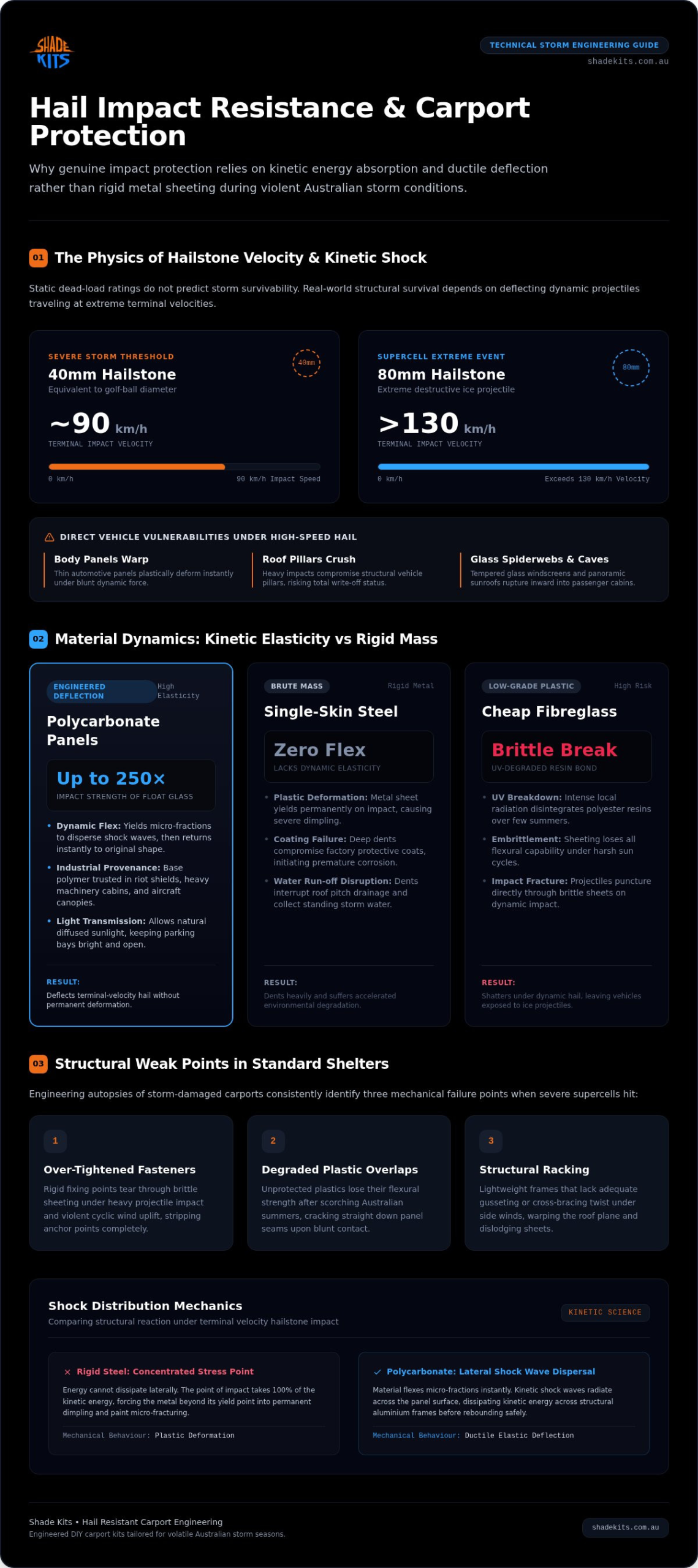
Why do standard shelters buckle under pressure? Most off-the-shelf carports use thin, single-skin steel sheeting. While steel feels robust to the touch, rigid metal lacks elasticity. When large stones strike thin steel profiles, the material plastically deforms. This leaves behind severe dimpling, weakens factory protective coatings, and initiates premature corrosion. Meanwhile, cheap fibreglass sheets present an even greater hazard. Extended exposure to intense local ultraviolet radiation breaks down the polyester resins in low-grade plastics, causing them to turn brittle and shatter on impact. When investing in engineered DIY carport kits, selecting materials built to deflect dynamic energy is crucial.
Hail size dictates destructive potential. A 40mm golf-ball-sized hailstone plunges at roughly 90 kilometres per hour, while an 80mm stone can exceed speeds of 130 kilometres per hour. Vehicle bodywork stands little chance against these velocities. Thin automotive panels warp instantly, structural roof pillars crush, and tempered glass windscreens or panoramic sunroofs spiderweb and cave inward. Considering the sharp spike in insurance excess costs and the frustration of write-offs during declared storm catastrophes, dependable vehicle protection is a necessity rather than an afterthought.
Standard canopies consistently succumb to predictable mechanical weak spots when severe weather strikes:
Investing in genuine hail resistant carports Australia requires looking past heavy, dent-prone steel mass and focusing on engineered impact deflection that handles both high-speed ice and violent wind gusts simultaneously.
Selecting roofing for high-risk storm zones often brings a tough decision between flexible elasticity and dense steel mass. While traditional builders frequently recommend corrugated metal as the default option, rigid materials react poorly to violent kinetic shock. Advanced polycarbonate absorbs and redistributes high-velocity impacts through ductile flex, returning instantly to its original shape. For broader tactics on shielding your vehicle during storm season, check out our hail protection for cars guide.
Metal sheeting functions via brute resistance. When heavy hailstones hit a thin steel sheet, the surface yields permanently, leaving visible dimples that disrupt water run-off and crack the topcoat. Polycarbonate works on a completely different physical principle. The material yields micro-fractions on impact to disperse shock waves before bouncing back unharmed. Because polycarbonate lets natural diffused sunlight through, it also keeps parking spaces bright and open rather than feeling like a dark, enclosed cave.
Modern polycarbonate boasts an impact strength up to 250 times greater than standard float glass. It is the exact same base polymer trusted in riot shields, heavy machinery cabins, and aircraft canopies. Multi-wall and solid profiles flex under high-speed impacts, absorbing blunt force that would easily buckle traditional building sheets. Advanced co-extruded UV barriers filter out harsh solar rays, preventing the material from yellowing or weakening over long, hot summers. Because the sheets do not splinter under stress, you eliminate the risk of jagged debris raining down onto your vehicle during a storm.
Roofing durability means little if the supporting structure weakens from within. Powder-coated structural aluminium framing provides clear engineering benefits over treated steel:
Evaluating hail resistant carports Australia homeowners can build independently shows that modern polymers combined with architectural aluminium offer unmatched weather resilience. If you are ready to upgrade your driveway defense without paying excessive builder fees, explore the durable options available at shadekits.com.au to find a complete package built for tough local climates.
Erecting a storm-ready vehicle shelter doesn’t require a commercial building crew or specialised machinery. By opting for pre-engineered modular components, homeowners can bypass inflated installation quotes and assemble a dependable structure over a single weekend. For an in-depth breakdown of planning, council approvals, and tools, consult the ultimate guide to DIY carport kits before unboxing your materials.
True storm resilience starts from the ground up. If the frame is misaligned or poorly anchored, even the highest-rated roofing panels won’t perform as intended. Approaching each phase systematically guarantees your structure can handle the dynamic wind loads and falling ice typical of Australian thunderstorms.
Survey your building envelope before touching a tool. Check the fall of your driveway using a string line and spirit level to ensure proper water runoff. Next, establish solid footing points:
Lay out the powder-coated uprights, perimeter rafters, and support beams on drop sheets or grass to protect the factory finish. Modern DIY kits feature pre-punched holes that line up naturally, removing the guesswork from squaring the structure. Stand the primary support posts, loosely fasten the baseplates, and raise the crossbeams using a step ladder and an extra pair of hands. Check plumb on every post with a level, tighten the stainless-steel structural bolts to torque recommendations, and verify frame rigidity before moving to the roof.
Correct panel attachment prevents tear-outs when cyclonic winds accompany severe hail. Slide the protective rubber isolation gaskets into the rafter channels first; these prevent friction squeaks and accommodate natural material expansion during hot days. Slide the polycarbonate sheets into the structural aluminium channels, then fasten the impact-rated retaining caps. Never over-tighten fasteners, as driving screws too deep pinches the sheets and restricts their natural flex. Complete the install by attaching the integrated aluminium guttering to channel deluge downpours away from vehicle bays.
Taking this structured approach ensures that factory-direct hail resistant carports Australia homeowners assemble will stand rock-solid through the most punishing storm seasons.
Every homeowner faces a distinct set of property boundaries, council guidelines, and parking layouts. While fixed posts bolted into concrete provide a lasting solution, not every living situation accommodates a permanent building project. Choosing the best setup means weighing long-term structural value against the flexibility of portable vehicle defense. Both pathways offer reliable protection against violent storms, yet they serve different living arrangements.
Permanent installations typically require navigating local council approvals. Under the National Construction Code, fixed carports fall under Class 10a structures. While recent state updates have streamlined approvals for owner-builders in places like Western Australia, Brisbane City Council has tightened site-width minimums for double carports. Navigating these requirements takes time. If you own your block and want permanent coverage, browsing our complete DIY carport kits range is the logical starting point.
A permanent freestanding carport adds substantial visual appeal and genuine resale value to a property. Powder-coated aluminium posts resist coastal salt spray and wet weather effortlessly, eliminating the regular repainting demands of timber or treated steel. Before committing to a permanent build, verify your property boundary setbacks, storm drainage connections, and slab dimensions by running through our essential carport checklist.
What happens if you rent your home, live under strict strata bylaws, or park in a tight courtyard where permanent footings are out of the question? A permanent shelter simply isn’t an option. Foldable vehicle shelters solve this challenge cleanly without involving private certifiers or council planning departments.
The CarCave foldable shelter provides immediate physical defense against sudden summer cells:
Whether you need a permanent architectural fixture or a flexible accordion shelter, selecting engineered hail resistant carports Australia trusts ensures your vehicle stays protected year-round. Check out shadekits.com.au to compare shelter footprints and match the right storm-tested canopy to your driveway.
Securing genuine vehicle defense against sudden supercells shouldn’t require paying inflated contractor margins or enduring months of trade delays. Shade Kits operates on a direct-to-consumer model, supplying factory-direct DIY carport kits, pergola kits, awning kits, and portable shelters straight to your property. By cutting out third-party brokers and retail middlemen, we focus resources entirely on premium structural engineering and severe-weather durability.
Every shelter is purpose-built to handle harsh regional microclimates, from coastal sea-spray zones to intense inland heat belts. Supplying dependable hail resistant carports Australia property owners can assemble themselves ensures you gain complete control over your installation timeline, project budget, and vehicle safety.
Standard imported shelters often cut corners on structural alloys and protective coatings, leading to rust streaks and premature panel failure. Our systems are engineered around resilient material science:
Waiting weeks for available local trades can leave your vehicles exposed right through peak storm season. Shade Kits bypasses supply bottlenecks by delivering complete, pre-machined kits directly to your driveway across the country. All structural uprights, perimeter beams, and roof channels arrive pre-cut and pre-drilled, matching comprehensive step-by-step assembly guides designed for an achievable two-person weekend build.
You don’t need trade certification or specialised heavy plant to achieve professional structural squareness. Backed by accessible customer technical guidance to help you verify slab dimensions, anchor selections, and bay clearances, assembling hail resistant carports Australia wide gives you total confidence in your shelter’s strength and long-term performance.
Waiting for the weather radar to turn purple is the worst time to think about vehicle defense. Selecting engineered shelter comes down to understanding flexible impact deflection, choosing rust-free aluminium framing, and securing panels that withstand sudden seasonal downpours. By opting for modular DIY construction, you avoid contractor markups and complete a durable build on your own schedule.
When searching for reliable hail resistant carports Australia property owners can assemble with confidence, Shade Kits delivers an uncompromised standard. Every kit combines heavy-duty architectural aluminium framing with shatterproof UV-stabilised polycarbonate roof panels, engineered specifically to handle extreme sun and violent storms. With nationwide direct-to-consumer delivery across Australia, safeguarding your vehicle has never been more straightforward.
Take charge of your driveway protection today. Explore our factory-direct hail-resistant carport kits to find the ideal setup for your home, and enjoy lasting peace of mind whatever the skies bring.
Yes, engineered multi-wall and solid polycarbonate panels easily deflect golf-ball-sized stones. The polymer possesses up to 250 times the impact resistance of float glass. Instead of denting permanently like thin sheet metal or shattering like brittle fibreglass, polycarbonate absorbs kinetic energy through micro-flexing. It bounces back to its original shape immediately, leaving your vehicle completely protected beneath.
In most cases, yes, because permanent carports are classified as Class 10a structures under the National Construction Code. Certain jurisdictions offer exemptions for minor footprints under specific heights, but setback boundaries and site coverage rules still apply nationally. Always check with your local council or a private building certifier before commencing work to confirm the development application requirements for your property.
Two capable adults can comfortably assemble a standard single or double carport kit over a single weekend. All structural components arrive pre-cut and pre-drilled, which removes complex site fabrication. As long as your concrete slab or footing holes are prepared and cured ahead of time, frame assembly and panel installation take roughly eight to twelve working hours.
A permanent carport kit features fixed aluminium posts bolted to ground footings, providing an architectural fixture that adds long-term value to your property. In contrast, the CarCave is a specialised foldable car shelter designed for rapid, tool-free deployment. It offers immediate hail and UV protection without requiring concrete works or council approval, making it ideal for renters or space-constrained townhomes.
No, architectural aluminium does not rust. Unlike untreated or galvanised steel, which can corrode around cut edges, fasteners, and weld points, aluminium forms its own protective oxide layer. Finished with a tough, baked-on powder coating, aluminium frames resist coastal sea mist, intense summer humidity, and persistent rainfall without peeling, chalking, or requiring routine repainting.
Structural stability relies on correct baseplate anchoring. For existing reinforced concrete slabs, use heavy-duty masonry expansion bolts or chemical studs drilled to the specified engineering depth. If securing into ground footings, pour mass concrete piers that reach stable subsoil below the topsoil layer. Reliable hail resistant carports Australia homeowners erect depend on these solid anchor points to counter intense storm uplift.
Yes, modular carport kits are specifically designed for straightforward component replacement. Because the roof assembly uses independent aluminium channel profiles and secure capping strips rather than continuous, glued sheeting, individual panels can be unscrewed and slid out. If an abnormally heavy tree limb damages a single section, you can swap that panel out without dismantling the surrounding roof.