
Imagine fumbling for your house keys while a sudden summer downpour soaks through your shirt and the expensive timber of your front door begins to swell. It’s a frustratingly common Australian experience that does more than just ruin your afternoon; it actively devalues your property over time. You likely agree that the combination of intense UV radiation and unpredictable storms can quickly turn a stylish entrance into a maintenance headache of faded paint and warped frames.
This guide is designed to help you master the selection and installation of a durable polycarbonate door canopy to protect your home’s most vulnerable points. We will show you how to bypass the high cost of custom-built permanent awnings by choosing factory-direct kits engineered for local conditions. You’ll learn everything from verifying wind ratings to achieving a professional finish with basic tools. By the end, you will have the confidence to create a weather-proof entrance that adds long-term value and serious street appeal to your home.
The Australian sun is relentless. It doesn’t just heat your home; it actively wears down your building materials through constant UV exposure. Installing a polycarbonate door canopy provides a structural solution that stops thermal energy before it reaches your glass or timber. By intercepting these rays early, you reduce the heat transfer that often makes hallways feel like saunas during the peak of summer.
Beyond temperature control, these canopies create a reliable dry zone. We’ve all experienced that moment of getting drenched while searching for keys during a sudden afternoon storm. A well-designed shelter ensures you, your guests, and your home deliveries stay dry. It also prevents water from pooling at the base of your door, which is a leading cause of threshold rot and internal flooring damage.
A front door is a significant investment, especially if it features high-quality timber or custom glass inserts. Constant exposure to the elements causes timber to expand and contract; eventually leading to warping and sticking. High-grade materials leverage the unique properties of polycarbonate to block up to 99% of harmful UV rays. This protection ensures that your door’s paint or stain remains vibrant and the structural integrity of the frame stays intact for decades.
Effective shading also manages the greenhouse effect caused by sidelights and glass panels. Without a canopy, these glass sections allow heat to build up inside your entryway, forcing your air conditioning to work harder. A structural awning acts as a permanent shield, reducing maintenance costs and lowering energy bills throughout the year while meeting residential wind load standards.
Gone are the days of clunky, heavy porch covers. Modern designs utilise sleek aluminium frames that offer a minimalist profile suitable for both contemporary and traditional Australian homes. Using translucent polycarbonate sheets allows you to maintain natural light levels within your home while still achieving maximum heat rejection. This balance is crucial for keeping your entryway bright and welcoming without the associated solar glare.
Many homeowners find that these installations serve as the perfect starting point for broader home improvements. You can easily coordinate the style and finish of your door shelter with larger structures like pergolas to create a cohesive look across your property. Choosing a factory-direct kit ensures that your home benefits from high-quality components that look professional and stand up to the toughest weather conditions.
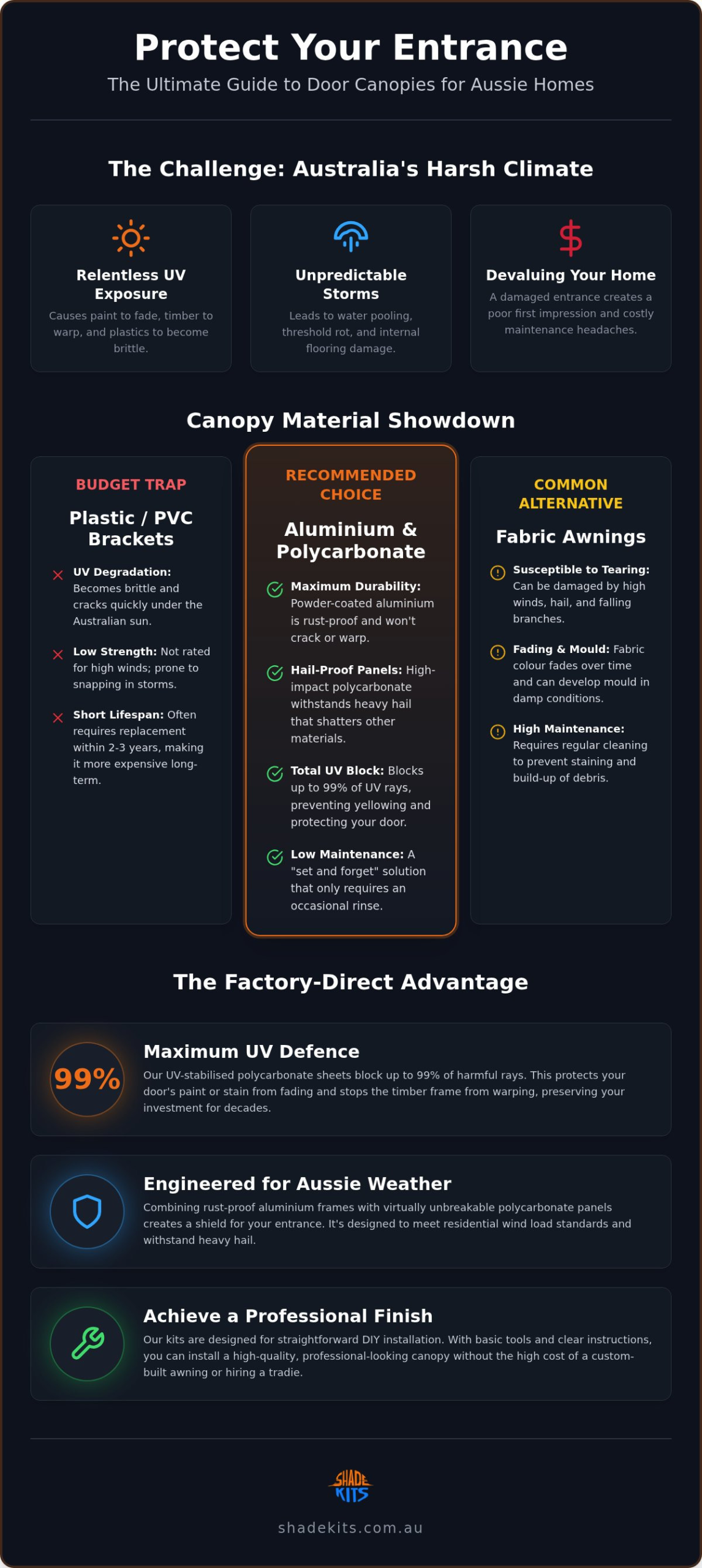
Selecting the right materials for your polycarbonate door canopy determines whether the structure lasts for two years or twenty. In the harsh Australian climate, “cheap” often becomes expensive when plastic brackets snap or fabric covers tear during a summer storm. While some retailers suggest that plastic components are sufficient, they often fail to account for the intense UV degradation that occurs in our local environment. Hard-roof systems built with metal frames are the pragmatic choice for homeowners seeking a permanent solution.
Aluminium is the gold standard for structural integrity in residential awnings. Unlike plastic or PVC brackets that become brittle and crack under the sun, powder-coated aluminium remains stable and rust-proof. This is particularly vital for coastal properties where salt spray can quickly corrode inferior metals. Aluminium also offers an excellent weight-to-strength ratio; it’s light enough for a straightforward DIY installation but strong enough to meet Australian wind load standards. It’s essentially a “set and forget” material that requires nothing more than an occasional rinse to maintain its appearance.
Not all transparent panels are manufactured to the same standard. High-quality kits utilise UV-stabilised sheets that are specifically engineered to prevent yellowing or becoming opaque after years of exposure. This material is a staple in the industry because of the unique benefits of polycarbonate in building and construction, most notably its incredible impact resistance. High-grade polycarbonate is virtually unbreakable and is designed to withstand heavy hail that would shatter glass or permanently dent thin metal sheeting.
Modern panels also incorporate heat-blocking technology through specialised tints. These tints reflect a significant portion of infrared radiation, keeping your doorstep significantly cooler without sacrificing natural light. This balance ensures your entryway stays bright and welcoming while providing a genuine thermal barrier against the midday heat.
When you compare these structural systems to fabric alternatives, the difference in longevity is stark. Fabric awnings are prone to mould, sagging, and fading, often requiring complete replacement every few years. A structural system using aluminium and polycarbonate handles high wind speeds and heavy downpours with ease, providing much better long-term value. If you want to ensure your home’s entrance is protected for the next decade, investing in quality awning kits is the most reliable path forward.
Choosing a polycarbonate door canopy involves more than just picking a design that looks good on your wall. It’s a structural decision that requires you to account for your home’s specific orientation, local weather patterns, and the physical dimensions of your entryway. A kit that works perfectly for a shaded southern entrance might be completely inadequate for a door that faces the full force of the afternoon sun. By taking a methodical approach to your selection, you ensure the final result provides genuine protection rather than just a cosmetic upgrade.
Size is your first technical hurdle. We recommend that your canopy width extends at least 200mm to 300mm beyond the door frame on both sides. This extra coverage prevents rain from blowing in sideways during a typical Aussie storm. You must also check your clearance heights; ensure the canopy sits high enough so the door doesn’t strike the frame when it swings open, but low enough to provide effective shade. For areas prone to heavy weather, look for kits engineered to meet AS/NZS 1170.2:2021 standards for wind actions to ensure the structure remains secure during high-wind events.
The direction your door faces dictates the projection depth you’ll need. West-facing entrances are particularly challenging because they bear the brunt of the intense, low-angle afternoon sun. For these doors, a deeper projection is essential to block heat before it hits your glass inserts. In contrast, North-facing canopies can be optimised to block the high summer sun while still allowing the lower winter sun to provide some natural warmth to your hallway. This careful planning creates a “micro-climate” at your doorstep, which can noticeably lower the temperature inside your home during January heatwaves.
The visual success of your project depends on how well the materials integrate with your existing architecture. Modern homes often suit sleek, cantilevered profiles with grey or tinted panels, while more traditional brick homes might benefit from a curved design with bronze tints. Tints aren’t just for show; a grey or bronze tint significantly reduces solar glare compared to a clear sheet. It’s also worth matching your frame colours to your existing gutters or window frames to create a cohesive look. Many homeowners use these structural awnings to complement larger additions like carport kits, ensuring a consistent design language across the entire property.
Don’t overlook the importance of hail resistance during the selection process. While standard polycarbonate is tough, you should verify the impact rating of your chosen kit. High-quality solid sheets are virtually unbreakable and can withstand the heavy hail common in Australian storm seasons without cracking or denting. This durability is what separates a professional-grade kit from a temporary retail alternative.
Installing your own polycarbonate door canopy is a rewarding project that can be completed in a few hours with basic equipment. You don’t need specialised trade skills; you simply need a methodical approach to ensure the structure remains secure during high-wind events. Before you begin, gather a cordless drill with the appropriate bits, a spirit level, a tape measure, and a high-quality silicone gun. Safety is paramount when working at heights. Always use a stable ladder and have a second person assist when lifting the aluminium frame into position to prevent accidents or damage to the panels.
The “Measure Twice, Order Once” rule is vital when working with factory-direct kits. Start by identifying the structural mounting points on your wall. If you are fixing to a brick or rendered surface, avoid drilling into the mortar joints as these lack the necessary holding power; instead, aim for the centre of the brick. For weatherboard homes, use a stud finder to locate the internal timber framing. Fixing your brackets directly into these studs is the only way to ensure the canopy can handle the uplift forces of a summer storm. Mark your heights clearly, ensuring you have enough clearance for the door to swing freely without striking the frame.
Once you have confirmed your measurements, unbox your kit and organise the components. Laying everything out on a flat, clean surface allows you to verify that all fasteners and gaskets are present. This preparation prevents the frustration of stopping mid-build to search for a missing screw. It also gives you a chance to inspect the polycarbonate sheets for any transit damage before they are raised onto the wall.
Start by fixing your first wall bracket. Use your spirit level to ensure it is perfectly vertical before marking and drilling your holes. Once the brackets are securely anchored, you can begin assembling the aluminium frame. Most kits allow the polycarbonate panels to slide into pre-cut grooves within the frame, which keeps the assembly process simple and clean. Ensure the UV-protected side of the panel faces upwards; this is usually clearly marked on the protective film. After the frame is slotted into the brackets and tightened, apply a neat bead of outdoor-grade silicone along the join where the canopy meets the wall. This final step is crucial for creating a leak-proof seal that prevents water from trickling down behind the unit and damaging your door frame.
Taking the time to follow these steps ensures your home’s entrance remains protected for years to come. If you’re ready to upgrade your entrance with a professional-grade solution, explore our range of durable awning kits designed specifically for the tough Australian climate.
Choosing a factory-direct polycarbonate door canopy is a strategic move for the modern Australian homeowner. By skipping the retail middleman and tradie markups, you access professional-grade materials that are typically reserved for commercial builds. This model ensures that every dollar you spend goes directly into the structural quality of the aluminium and the UV-resistant properties of the panels. It’s a pragmatic way to secure high-end home improvements without the unnecessary overheads associated with traditional retail.
Factory-direct doesn’t just mean better value; it means more consistent quality control. When you source directly from the supplier, you benefit from a unified set of component standards. There’s no risk of receiving mismatched brackets or inferior fasteners that haven’t been tested for local wind loads. You also gain access to expert support from specialists who understand the specific challenges of our climate. Our guides are designed for the local DIYer, providing clear, actionable advice that generic retail staff often can’t provide.
Managing the logistics of bulky, structural kits is another area where factory-direct models excel. National delivery ensures your kit arrives safely at your doorstep, regardless of where you’re located in Australia. This reliable supply chain, combined with the structural integrity of the components, makes the DIY route the most efficient way to enhance your home’s entrance without the long wait times often associated with custom contractors.
The return on investment for a DIY canopy kit is significantly higher than a custom-built alternative. While a contractor might charge high labour fees for a bespoke installation, a structural kit provides the same level of protection and aesthetic appeal for a much lower total project cost. When comparing these kits to “big box” hardware store alternatives, the difference is found in the longevity of the materials. Powder-coated aluminium and high-impact polycarbonate systems easily outlast cheaper timber or fabric versions, which are prone to rotting, fading, or tearing within just a few seasons.
Integrating your door canopy with other property improvements creates a comprehensive shield against the elements. The peace of mind provided by hail-resistant materials is invaluable during our increasingly volatile storm seasons. Once you’ve secured your entryway, it’s logical to consider how these same durable materials can defend other high-value assets on your property. You can explore hail protection for cars to ensure your entire home and vehicle setup is prepared for whatever the Australian weather delivers next.
Protecting your home starts with choosing materials that are specifically engineered to handle the local climate. By opting for a structural aluminium frame and high-impact panels, you aren’t just adding shade; you’re actively preserving your door’s integrity against warping and intense UV damage. A high-quality polycarbonate door canopy provides a permanent solution that stands up to heavy hail and unpredictable summer storms far better than temporary fabric or brittle plastic alternatives.
Mastering the DIY installation process allows you to achieve professional results while avoiding unnecessary trade markups. It’s a straightforward project that adds immediate street appeal and long-term property value. With durable aluminium frames designed for the Australian sun and hail, our kits offer the resilience your home deserves. We make the process simple with Australia-wide delivery and expert support for every step of your build. You now have the knowledge to create a weather-proof entrance that will serve your family for decades.
Browse our range of factory-direct DIY Canopy Kits today and take the first step toward a more comfortable, protected home.
In most Australian states, a small door canopy is classified as “exempt development” if it is under 10 square metres in total area. This means you typically won’t need a formal council permit for a standard residential installation. However, you should always check with your local council if your property is heritage-listed or located in a designated bushfire zone, as specific regulations regarding materials and setbacks might apply to your project.
While you can assemble the components of a polycarbonate door canopy alone, we strongly recommend having a mate assist you during the mounting phase. Having a second person to hold the aluminium frame level while you secure the fasteners makes the process much safer and more accurate. This is especially important when working on a ladder to ensure the brackets are perfectly aligned before the final tightening.
Polycarbonate outperforms fabric awnings by using specialised tints and UV-stabilised coatings to block up to 99% of harmful rays. While fabric can trap heat and eventually mould or sag, a structural polycarbonate system reflects infrared radiation to keep your entryway significantly cooler. This results in better thermal performance for your hallway and prevents the “greenhouse effect” often associated with older, unshaded glass entryways.
Maintaining your canopy is straightforward and only requires a quick clean twice a year to preserve the UV-protective layer. Use a soft cloth or sponge with mild, non-abrasive soap and lukewarm water to remove dust and salt spray. Avoid using harsh chemicals, squeegees, or abrasive scouring pads, as these can scratch the surface of the panels. A simple rinse with a garden hose is usually enough to keep the frame looking new.
Yes, high-quality polycarbonate is engineered for extreme impact resistance and is virtually unbreakable under standard Australian hail conditions. Unlike glass which can shatter or thin metal which can permanently dent, the inherent flexibility and strength of polycarbonate allow it to absorb the energy of large hailstones. This makes it the most reliable material for protecting your expensive timber doors and glass sidelights during the volatile summer storm season.
You can certainly install these kits on second-storey doors or balconies, provided you have a solid structural mounting point. The lightweight nature of the aluminium frame makes it easier to transport upstairs compared to heavy timber alternatives. Safety is the priority here; ensure you use appropriate fall protection or stable scaffolding, and never attempt a high-level installation during windy conditions or without a second person to assist.
Most DIYers can complete the installation of a single polycarbonate door canopy in approximately one to three hours. The total time depends largely on your wall type; drilling into solid brick or concrete takes slightly longer than fixing to timber studs. Because our kits arrive factory-direct with pre-cut components and clear instructions, you can easily finish the project in a single morning without needing to hire professional tradespeople.